Calathea watering is a two-variable problem disguised as one: how much water the plant gets, and what kind of water it is. Get both right and the plant pushes a new leaf every 4 to 8 weeks during the growing season and the variegation on patterned varieties stays sharp. Get either wrong and you’ll see leaf curl, brown edges, or yellowing within days, and the failure mode looks identical regardless of which variable you missed.
The core rule: water a Calathea when the top 1 inch / 2.5 cm of soil feels dry — and pair the watering routine with the humidity range and the light placement your variety needs, water thoroughly until it drains from the bottom, and use filtered, distilled, or 24-hour-aged tap water. Most Calathea problems blamed on “watering too much” or “watering too little” are actually sensitivity to chlorine, chloramine, or fluoride in tap water, which burn the leaf tips and root tips long before the soil dries out enough to cause the symptom you’re seeing.
This page covers how to read soil moisture in a real Calathea pot, the failure modes for each kind of water, and the seasonal shift that catches most new owners off guard.
How to Tell When a Calathea Actually Needs Water
The “1 inch dry” rule is a starting point, not a calendar. Soil moisture depends on pot size, soil mix, light exposure, humidity, and the plant’s growth phase, so a Calathea in a 4-inch pot in bright indirect light in July may need water every 3 days while the same plant in a 6-inch pot in lower light in January may go 10 to 14 days between waterings.
To check, push your finger into the soil up to the first knuckle. If the top 1 inch / 2.5 cm feels dry to the touch and the soil below feels lightly moist (not bone dry, not soggy), water. If the top inch is still damp, wait 2 to 3 days and check again. A moisture meter set to read at 2 to 3 inches depth is more accurate for a large pot and tells you the same thing in 5 seconds instead of 5 minutes.
Weight is the most reliable check for a Calathea in a plastic nursery pot. Lift the pot right after a thorough watering and remember that weight. Lift it again a few days later — when the pot feels noticeably lighter, water. The difference between a fully watered Calathea and one that needs water is enough to feel even in a 6-inch pot.
For the full breakdown, see our houseplant watering schedule by species.
How to Water a Calathea Without Causing Root Rot
Calathea roots are thin and rot fast in soil that stays wet. The fix isn’t to water less — it’s to water thoroughly when you do water, and use a soil mix that drains fast enough that the roots don’t sit in soggy soil between waterings.
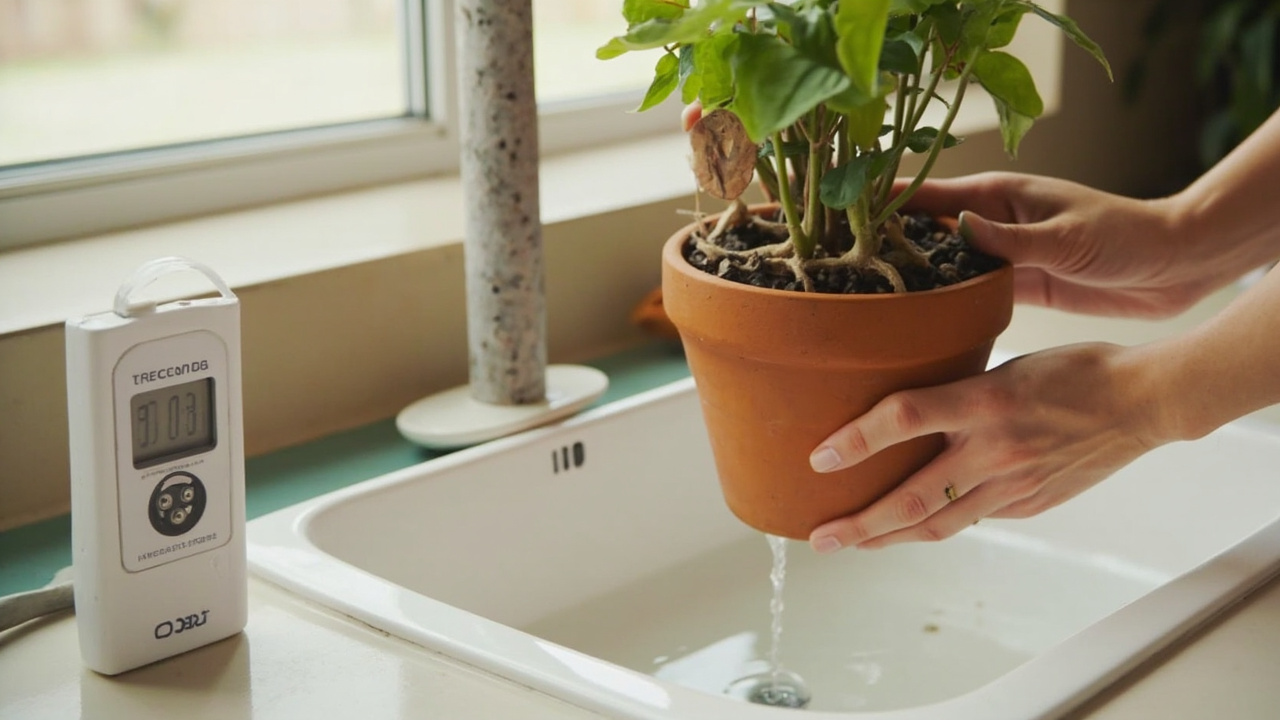
Take the plant to a sink, water with room-temperature water until it runs freely from the drainage holes, and let it drain for 5 to 10 minutes before putting it back in its decorative pot or saucer. If the pot sits in a saucer, dump any water that collects in the saucer within 30 minutes — a Calathea in standing water for more than an hour is at risk of root rot, and the symptom won’t show on the leaves for 1 to 2 weeks.
Bottom watering works for Calathea as long as you don’t do it exclusively. Set the pot in 1 to 2 inches of room-temperature water for 15 to 20 minutes, let the soil wick up moisture from the bottom, then remove and let drain. Bottom watering alone, however, lets salts and mineral deposits accumulate at the top of the soil where the roots are most active, so alternate between top and bottom watering to flush the soil every 2 to 3 weeks.
Why Tap Water Causes Calathea Leaf Problems
Calathea is one of the few common houseplants that visibly reacts to dissolved solids in tap water. Fluoride, chlorine, chloramine, and the calcium and magnesium that make water “hard” all build up in Calathea leaf tips over time and burn the tissue. The damage is cumulative — one watering with tap water won’t kill the plant, but 6 months of weekly tap waterings will produce brown, crispy leaf tips that don’t recover when you fix other variables.
The fix is to use water that has had the dissolved minerals removed. In order of practicality:
Filtered Water (the practical choice for most homes)
A pitcher-style filter like a Brita or PUR removes most chlorine and some heavy metals but doesn’t remove fluoride reliably. For most municipal water that’s chlorinated but not fluoridated heavily, filtered water is enough to stop the worst leaf-tip burn. Refill the pitcher every 2 to 3 days because the filter loses effectiveness as it saturates.
Distilled or Reverse-Osmosis Water (the safest choice)
Distilled water and reverse-osmosis water have had virtually all dissolved minerals removed, and Calathea watered with either will not develop tip burn from water quality. The trade-off is cost and availability — distilled water runs about $1 per gallon at grocery stores, and a Calathea in a 6-inch pot uses about a quarter-gallon per watering, so plan on $4 to $8 per month for one plant.
24-Hour-Aged Tap Water (free, but partial)
Letting tap water sit uncovered for 24 hours lets chlorine gas off, but it does nothing for chloramine (which is now used in most US municipal water systems), fluoride, or dissolved minerals. This is a partial fix and will slow the damage but not stop it. Use aged tap water only if you have a known soft-water source and your municipal supply uses chlorine, not chloramine.
Rainwater (free and excellent, but be careful)
Collected rainwater has almost no dissolved minerals and Calathea love it. The trade-off is that roof runoff can carry dust, pollen, bird droppings, and (in suburban areas) lawn chemicals that damage the leaves. Use a clean collection surface and filter through a fine mesh before using on the plant.
Seasonal Watering Adjustments
Calathea watering frequency changes dramatically between summer and winter. In the growing season (April through September for most of the Northern Hemisphere), a healthy Calathea in a 6-inch pot with bright indirect light will use water fast enough to need a watering every 5 to 7 days. In winter with shorter days and lower light, the same plant may go 10 to 14 days between waterings.
The mistake most new Calathea owners make is to keep the same watering schedule year-round. The plant doesn’t need less water in winter because it’s “dormant” — Calathea don’t go fully dormant, they just slow down. It needs less water because lower light means less photosynthesis means less water uptake means the soil stays wet longer. The fix is to check the soil every 4 to 5 days in winter and water only when the top inch is dry, not on a calendar schedule.
Heated homes in winter also drop humidity sharply, which means the soil surface can look dry while the soil 2 inches down is still moist. The fix is to use a moisture meter at 2 to 3 inches depth, not just the finger test at the surface, in winter.
Signs Your Watering Is Off (and Which Way)
Calathea are unusually honest about watering problems. The pattern of the damage tells you which direction the problem goes.
Overwatering (most common, most dangerous)
Lower leaves turn yellow and drop while the rest of the plant still looks healthy. The soil stays wet for more than 7 to 10 days between waterings. The stems feel soft at the base when you gently squeeze them. Lift the plant out of the pot and inspect the roots — healthy Calathea roots are white or light tan and firm; rotted roots are brown or black and mushy and may smell sour.
The fix is to stop watering, remove the plant from the wet soil, trim any rotted roots with sterile scissors, and repot in fresh, fast-draining soil. If more than a third of the roots are rotted, the plant is at risk and may not recover even with treatment.
Underwatering
All the leaves curl inward and the plant looks “tired” — the petioles droop and the leaves lose their usual rigid structure. The soil pulls away from the sides of the pot and feels bone dry to the finger test. The fix is a thorough bottom-watering session: set the pot in 2 to 3 inches of room-temperature water for 20 to 30 minutes, let the soil wick up moisture from the bottom, then remove and let drain.
Water quality (the sneaky third option)
Leaf tips and edges turn brown and crispy while the rest of the leaf stays green. The soil moisture is fine, the watering frequency is fine, but the damage is consistent across all the leaves regardless of age. The fix is to switch to filtered, distilled, or rainwater and trim the brown tips with sterile scissors for cosmetics. The damage that has already happened will not green up, but new growth will come in clean if the water is fixed.
Quick Watering Checklist
Use this to confirm your Calathea is watered correctly before chasing other variables:
1. Water when the top 1 inch / 2.5 cm of soil is dry, not on a calendar schedule.
2. Water thoroughly until it drains from the bottom, and don’t let the pot sit in standing water.
3. Use filtered, distilled, rainwater, or 24-hour-aged water — not straight tap water if your municipality adds chlorine, chloramine, or fluoride.
4. Adjust frequency seasonally: every 5 to 7 days in summer growing season, every 10 to 14 days in winter with low light.
If all four are true, the watering is dialed in. If the plant is still showing leaf curl, brown tips, or yellowing, the problem is more likely humidity or light than watering — and the next step is to check the placement and room humidity, not to water more or less. Calathea watering is the variable most new owners over-manage and least need to. The plant will tell you when it’s thirsty; you just have to check.
From Bank Statement to QuickBooks-Ready File
That manual cleanup you just read about? This tool skips it. Turn your PDF into QBO for QuickBooks without storing your data anywhere.
Start Converting