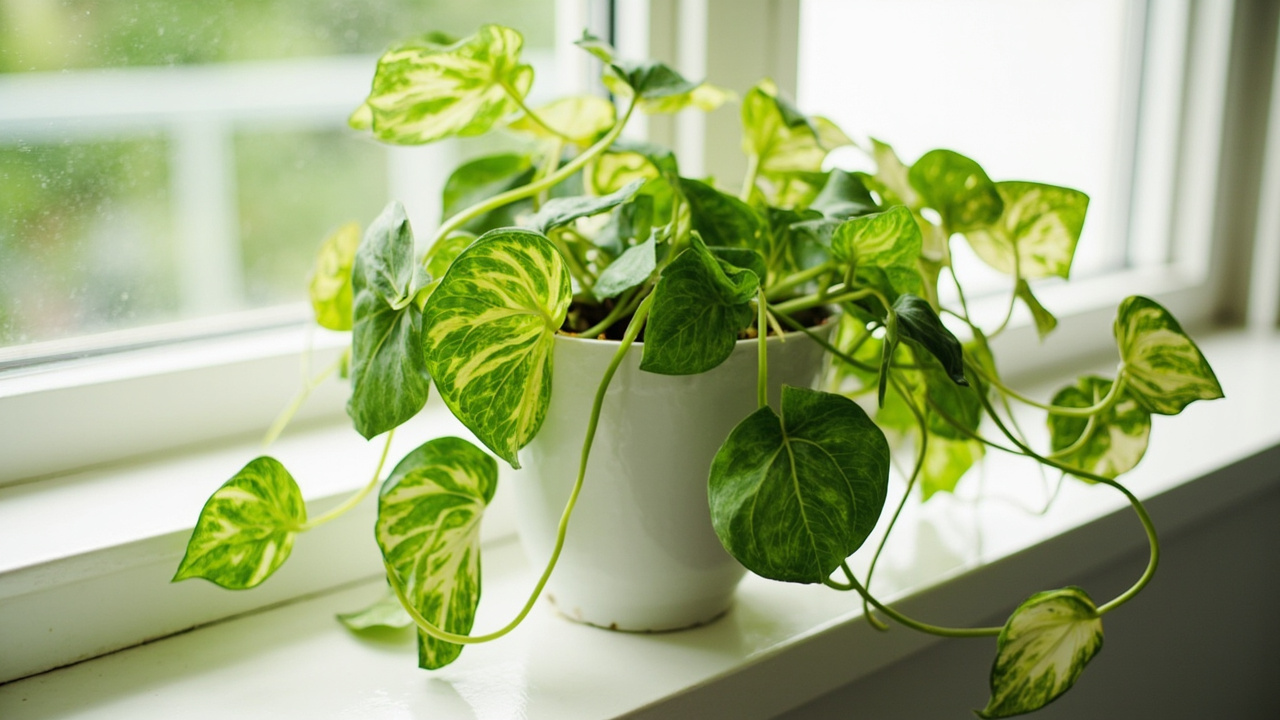

Money plants (Epipremnum aureum) grow faster than most houseplants — adding 12-18 inches of vine per month during peak season — and that speed has a biological cost: they deplete their potting soil of nutrients more quickly than slower-growing species. Fertilizing money plants is not optional maintenance, it is a requirement for the plant to keep performing at the level it should.
The good news: money plants are not fussy about fertilizer type, and the schedule is simple. Get these two things right and your plant will reward you with vigorous growth and large, healthy leaves.
Why Money Plants Need Fertilizer
Potting soil contains nutrients, but those nutrients wash out over time with repeated watering. In a 6-inch pot, most of the available nitrogen, phosphorus, and potassium is depleted within 60-90 days of planting. After that, the plant is relying entirely on whatever you add. If you are not fertilizing, growth slows, new leaves come in smaller, and the plant’s overall vigor declines.
This is confusing for people who do not fertilize and see their money plant looking fine — the plant will still grow and stay alive without fertilizer, but at a fraction of its potential. The difference between a fertilized and unfertilized money plant in the same pot after 6 months is significant. Within 12 weeks of starting a regular feeding schedule you should expect to see new leaves emerging 30-50% larger than the previous batch.
N-P-K: What the Numbers Mean
Most liquid fertilizers show three numbers on the label — 10-10-10, 20-20-20, etc. These represent the ratio of nitrogen (N), phosphorus (P), and potassium (K). A balanced fertilizer has equal or near-equal amounts of all three. Money plants do well on balanced fertilizers because all three nutrients are needed.
Nitrogen drives leaf growth and green color. Phosphorus supports root development and flowering. Potassium maintains overall plant health and disease resistance. All three are necessary — nitrogen drives the visible leaf growth, but without phosphorus the roots cannot sustain the larger leaves, and without potassium the plant cannot regulate water and pest resistance. Choose a fertilizer with all three in roughly equal ratio if you want a single product for the whole growing season.
When to Fertilize
Growing Season (Spring Through Early Fall)
Fertilize from March through September when the plant is actively growing. A monthly application of liquid fertilizer at half the label’s recommended strength works well. Half strength is important — money plants are not heavy feeders compared to some houseplants, and full-strength fertilizer can cause salt buildup that damages roots within 2-3 weeks of regular application.
The signs that fertilizer is needed: growth slowing despite good light and watering, new leaves coming in smaller than older ones, the plant looking healthy but not growing. These are nutrient depletion signals in an otherwise well-maintained plant. Once you see these signs, expect 2-3 weeks of feeding before the new growth resumes at full size.
Winter (October Through February)
Do not fertilize during winter. Growth slows or stops, the plant’s metabolic rate drops, and it uses significantly less water and nutrients. Fertilizer applied in winter accumulates as mineral salts in the root zone because transpiration is reduced. Salt buildup damages the roots and defeats the purpose. Resume feeding when you see new growth resuming in spring — typically in early March once daylight hours exceed 12 hours per day.
How to Apply Fertilizer
Water the plant the day before you fertilize. This pre-wetting ensures the soil is already moist, which prevents the fertilizer from burning the roots — a risk when applying concentrated nutrients to dry soil. Apply the diluted fertilizer solution as you would when watering normally, until it flows from the drainage holes. Approximately 8-12 fluid ounces of diluted solution is enough for a 6-inch pot.
What not to do: don’t apply fertilizer to bone-dry soil. Don’t apply full-strength fertilizer. Don’t fertilize a stressed plant that is wilted from drought or root issues.
Dilution: The Half-Strength Rule
Most liquid fertilizers say to use 1 teaspoon or a capful per gallon of water. For money plants, use half that — 1/2 teaspoon per gallon. This is enough to provide nutrients without overwhelming the plant’s system. If you are unsure of the concentration, less is more. An under-fertilized money plant recovers quickly once you resume feeding; an over-fertilized one can take months to recover.
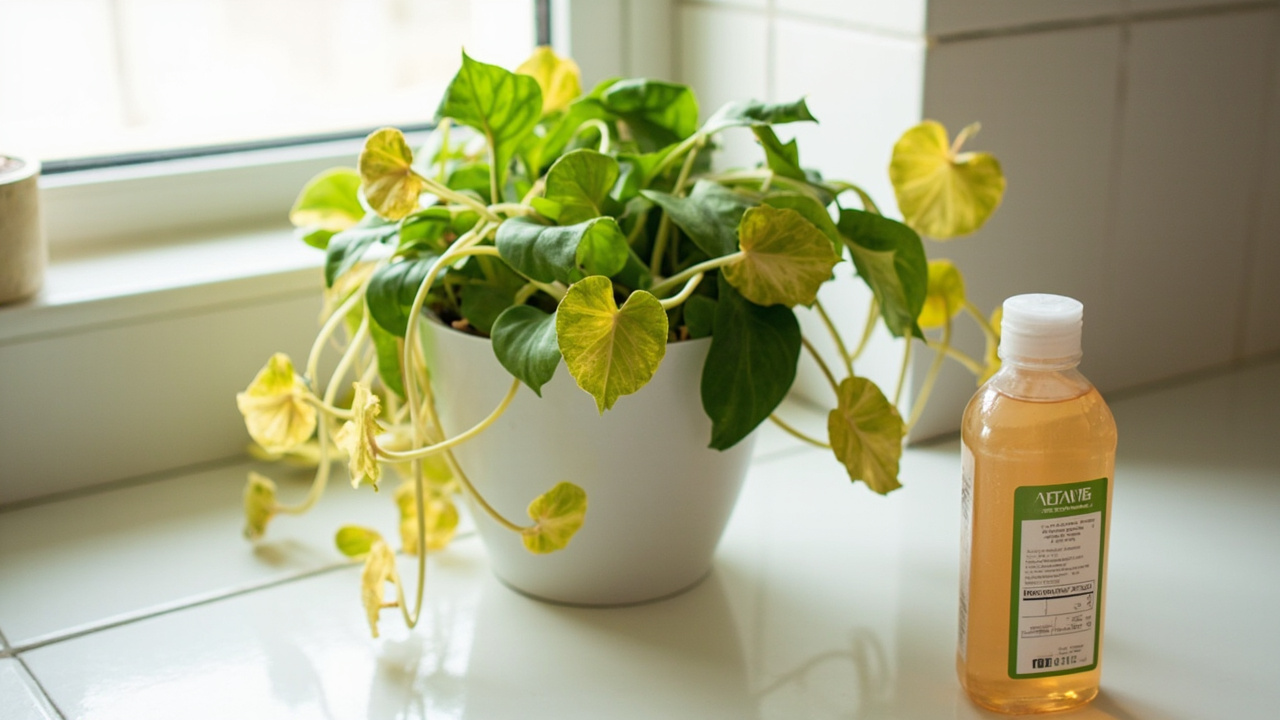
Signs of over-fertilizing: crispy brown leaf edges that look like tip burn, white salt crust forming on the soil surface within 1-2 weeks of application, sudden wilting despite adequate moisture. If this happens, flush the soil thoroughly with 2-3 times the pot volume of clean water and stop fertilizing for 4-6 weeks.
Slow-Release Fertilizers
Granular or slow-release fertilizers applied at planting time are an alternative to liquid feeding. They release nutrients gradually over 3-6 months depending on the product. This removes the need for monthly liquid applications but requires you to track when the nutrients will be depleted.
For money plants in permanent pots, slow-release is a reasonable option. Reapply as directed on the product label when growth begins to slow — typically every 4 months. However, slow-release struggles in pots that get heavy watering because nutrients wash out faster than they release.
Organic Alternatives
If you prefer organic feeding, worm casting tea, diluted fish emulsion (1 tablespoon per gallon), or compost top-dressing work well. These release nutrients more slowly than synthetic fertilizers and add beneficial microbes to the soil. The trade-off is they have lower nutrient concentrations so results take longer to show — expect 3-4 weeks before seeing growth improvements versus 1-2 weeks with synthetic fertilizer.
The Bottom Line
Fertilize monthly during active growth at half strength. Do not fertilize in winter. Flush the soil once a year with clean water to remove salt buildup. That is the complete money plant fertilizer protocol.
The signs you have it right: new leaves that are 30-50% larger than the previous batch, vibrant green color, consistent vine growth of 12-18 inches per month throughout the growing season. If those three things are happening, the feeding is working.
For more on money plant care, see our bamboo growing guide and our lucky bamboo soil versus water comparison.
Turn PDF Bank Statements Into Workable Spreadsheets
Your bank statement is a mess of numbers, but your books shouldn't be. Use our converter to get Excel, CSV, or QBO files — ready for QuickBooks.
Try It Free Now