
Three grow media work for almost any home hydroponic setup in 2026, and the right one for a given reader is determined by their system type, water source, crop mix, and willingness to do prep work or maintenance, not by which one has the most YouTube reviews or the strongest manufacturer sponsorship. The all-purpose roundup approach that ranks one medium at the top of every list treats a DWC bucket and an NFT channel as if they were the same problem, which is why readers buy rockwool cubes and find out six months later that clay pebbles would have given them the same lettuce with half the maintenance.
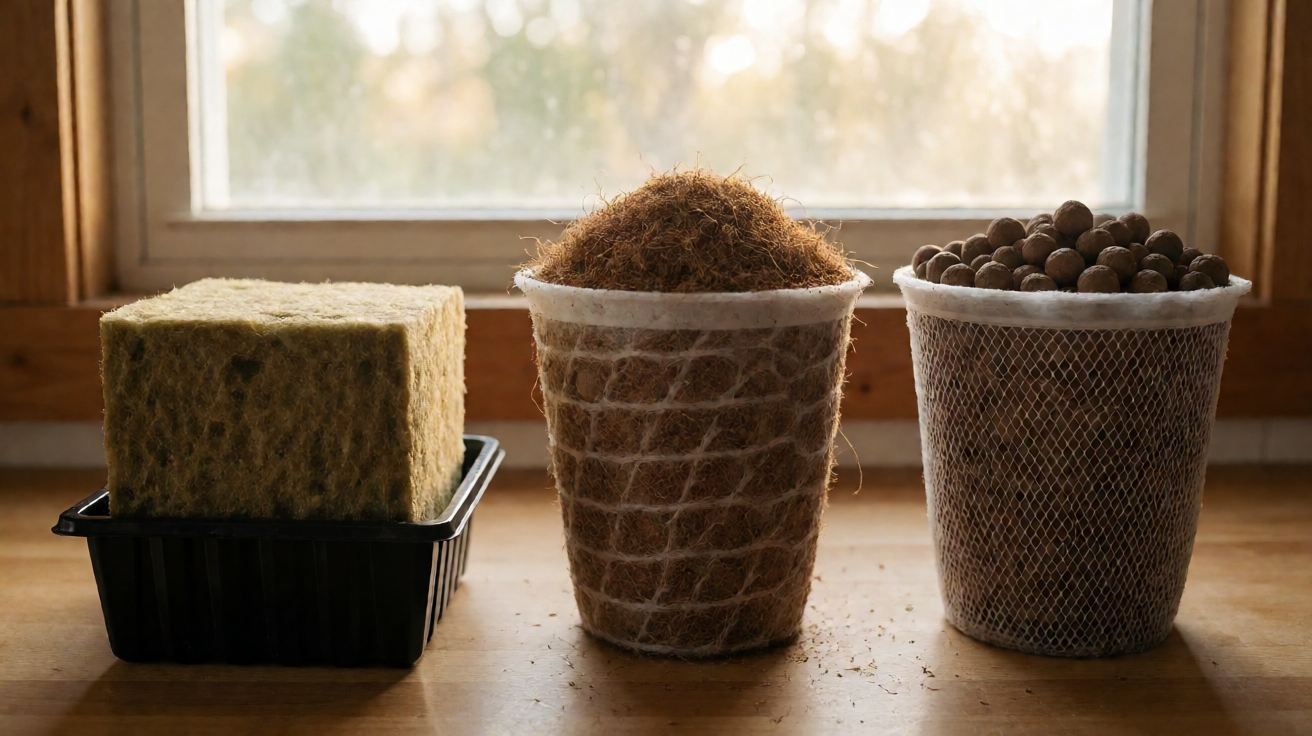
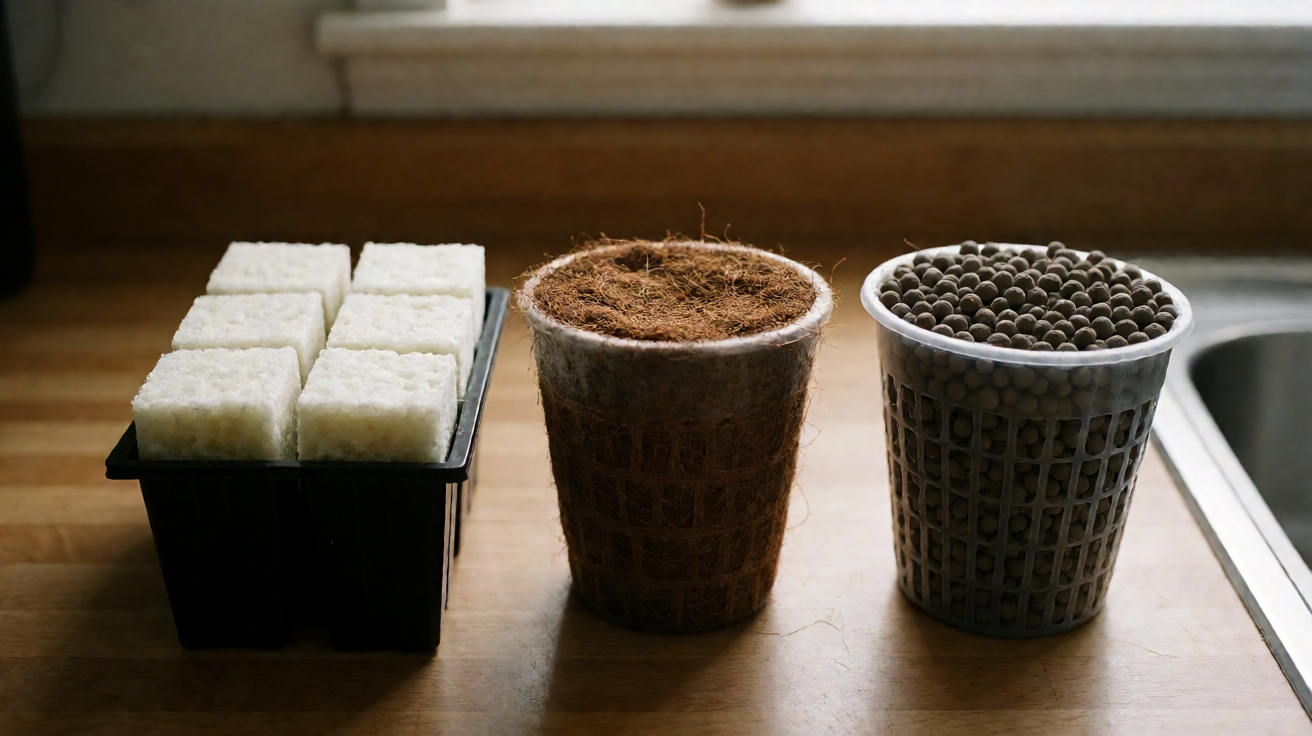
The three media that work for almost any home hydroponic setup are rockwool (mineral wool cubes and slabs, popular in commercial greenhouses), coco coir (coconut fiber, the sustainable alternative), and clay pebbles (light expanded clay aggregate, also called hydroton or LECA). Each medium has a specific system type it fits, a specific water source it handles best, and a specific maintenance rhythm the reader should know about before purchase. None of the three is universally better; the choice depends on five questions the reader has to answer first.
The five questions are: what system type the reader is running (DWC vs NFT vs ebb and flow all favor different media), what water source the reader has (hard tap water vs soft rainwater vs RO water each behaves differently with each medium), what crops the reader wants to grow (leafy greens vs fruiting crops vs propagation clones), what budget the reader has for the initial purchase (clay pebbles cost 3-5x more per liter than rockwool or coco), and how much prep work or maintenance the reader is willing to do (rockwool needs a 24h pre-soak; coco needs initial buffering; clay pebbles need first-time washing). The comparison matrix at the end of this page answers all five for each of the three media. The detailed sections in between walk through each medium’s cost, pH behavior, water holding, oxygenation, reusability, and disposal in the same order, and the broader hydroponic grow media comparison covers additional media like perlite and vermiculite for readers who want the full substrate matrix.
Why There Is No Universal Best Grow Medium
The grow medium market has consolidated around three to four main substrates plus a long tail of specialty options (perlite, vermiculite, pumice, peat), but the roundups treat the market as if every reader has the same system, water source, and crop mix. A reader with a DWC bucket and hard tap water has nothing in common with a reader with an NFT channel and rainwater collection, except that both are searching for “best grow medium for hydroponics.” Recommending rockwool to both readers is the marketing default, not the engineering default.
The honest comparison separates readers by their constraints before recommending a medium. The four constraints that matter are system type (DWC favors a high-water-holding medium like rockwool or coco; NFT and ebb and flow favor a high-oxygenation medium like clay pebbles), water source (hard tap water has high calcium and magnesium that buffers coco coir’s natural pH drift; RO water has no buffering and requires either pH-adjusted rockwool or buffered coco), crop mix (leafy greens and herbs tolerate the full range; fruiting crops like tomatoes and peppers need the higher oxygenation of clay pebbles during flowering), and budget (clay pebbles cost 3-5x more per liter upfront but last 5+ years; rockwool is cheapest per liter but lasts only 1 cycle).
The five rating criteria are cost per liter in USD (a comparison unit that lets a 1-cubic-foot rockwool bale and a 1-cubic-foot bag of clay pebbles be compared fairly), pH behavior with adjustment notes (rockwool needs a 24h pH 5.5 pre-soak; coco needs initial buffering; clay pebbles are pH-neutral out of the bag), water holding capacity in percent (WHC, the percent of water the medium holds at saturation), oxygenation at the root zone (air porosity, the percent of pore space filled with air rather than water), reusability in cycles (rockwool 0-1 cycles; coco 2-3 cycles; clay pebbles 5+ cycles), and disposal impact (rockwool landfill-only; coco compostable; clay pebbles reusable indefinitely).
The five criteria let a reader score each medium against their specific constraints in a few minutes. A reader with a DWC bucket, hard tap water, and leafy greens scores rockwool high on water holding and price, but lower on reusability and disposal. A reader with an NFT channel, RO water, and fruiting crops scores clay pebbles high on oxygenation and reusability, but lower on water holding and price. A reader with an ebb and flow system, rainwater, and herbs scores coco coir high on pH behavior and reusability, but lower on oxygenation. The matrix at the end of this page maps medium to system type; the rest of the page walks through each medium in detail, and the hydroponic medium setup guide covers the per-medium first-time setup steps (rockwool pre-soak, coco buffering, clay pebble wash) in one consolidated checklist.
Rockwool: High Water-Holding, High Maintenance
Rockwool is the most popular grow medium in commercial greenhouses, which is why many home hydroponic growers default to it. It has the highest water holding capacity of the three media at 80-90 percent (a rockwool cube stays saturated longer than a coco cube or a clay pebble), the lowest air porosity at 10-15 percent (the tight fiber structure holds more water than air, which is the opposite of what most readers want), and a neutral-to-alkaline pH of 7.0-8.0 fresh out of the bag. The pH behavior is the main prep requirement: rockwool must be pre-soaked in pH 5.5 water (with the nutrient solution added) for at least 24 hours before use, or the high pH will lock out calcium and magnesium and cause deficiency symptoms even when the nutrients are present.
The cost is $0.20-0.40 per liter, which makes rockwool the cheapest of the three media per liter. A standard 1-cubic-foot bale (about 28 liters) costs $6-12 and fills roughly 50-100 starter cubes or 4-6 slabs, depending on size. The reusability is the lowest of the three at 0-1 cycles: the rockwool fiber structure holds onto the root mass and salt buildup from the first cycle, and attempting to reuse it without thorough composting and re-buffering leads to nutrient imbalances and root rot. Most commercial growers treat rockwool as a single-use medium.
The two main failure modes are the pre-soak skipped (the rockwool goes into the system at pH 7.5, the plants show calcium deficiency within a week, and the grower blames the nutrient solution when the actual cause was the medium) and the disposal problem (rockwool is not biodegradable; it sits in landfills indefinitely because the mineral fiber structure does not break down). The disposal issue is the main reason rockwool is controversial for home use even though it works well commercially: a 1-cubic-foot bale per year per small home system adds up to meaningful landfill impact. The full rockwool pre-soak protocol has the exact pH 5.5 soak recipe and the 24-hour timing details for readers who want to use rockwool correctly.
The right home system for rockwool is a DWC bucket, hard tap water, and leafy greens (lettuce, basil, herbs) where the high water holding capacity is an asset (the bucket can go 1-2 weeks between top-offs) and the disposal impact is acceptable to the reader. The wrong home system is an NFT channel with hard water (the low air porosity means the roots sit in water and rot), or any reader who is concerned about landfill impact and prefers the compostable alternative.
Rockwool is also the right medium for a reader who is starting from scratch and wants the cheapest per-liter option and is willing to do the 24h pre-soak ritual. The wrong reader is one who wants to skip the prep work, switch media mid-grow, or compost their spent medium at the end of the season.
Coco Coir: Sustainable, Forgiving, Requires Buffering
Coco coir is the sustainable alternative to rockwool, made from coconut husk fiber that would otherwise be a waste product. It has a moderate water holding capacity of 60-75 percent (less than rockwool but more than clay pebbles), a moderate air porosity of 20-25 percent (better than rockwool but less than clay pebbles), and a slightly acidic pH of 5.5-6.5 native, which is closer to the nutrient solution’s ideal pH range than rockwool. The pH behavior is the main quality consideration: unbuffered coco has a high cation exchange capacity that pulls calcium and magnesium out of the nutrient solution and binds them to the coco fiber, which causes nutrient deficiencies unless the coco is pre-buffered with calcium nitrate.
Buffered coco coir (sold as “buffered coco” or “pre-charged coco”) has been pre-treated with calcium nitrate to saturate the cation exchange sites, which means the coco will not strip calcium and magnesium from the nutrient solution during the grow. Buffered coco is the right choice for most home hydroponic growers because it removes the buffering step from the setup process. The coco coir buffering guide has the calcium nitrate recipe for readers who buy unbuffered coco and want to do the buffer themselves, plus the EC thresholds to check before and after buffering. Unbuffered coco is cheaper per liter but requires a 24-hour soak in a calcium nitrate solution (about 1 tablespoon per gallon) before use, which adds a prep step that most home growers skip or do incorrectly.
The cost is $0.15-0.35 per liter, which makes coco coir competitive with rockwool and significantly cheaper than clay pebbles. A standard 1-cubic-foot compressed brick costs $5-10 and expands to 8-10 liters when hydrated. The reusability is 2-3 cycles: the coco fiber structure holds up reasonably well through multiple grows if flushed with pH 5.5 water between cycles, but the calcium buffering depletes after 2-3 cycles and the coco should be replaced or composted. The disposal is the main advantage over rockwool: coco coir is compostable and breaks down in 6-12 months in a home compost bin, which makes it the right choice for readers who prioritize sustainability.
The two main failure modes are the unbuffered coco problem (the grower buys unbuffered coco to save money, skips the calcium nitrate soak, and sees calcium deficiency within 2-3 weeks), and the coco that is too wet (coco at 75 percent water holding capacity stays wetter than rockwool at 80 percent, but the difference is small; the failure mode is growers who assume coco behaves like rockwool and overwater, leading to root rot in the lower root mass). Both are preventable: buy buffered coco, and use the chopstick moisture test before each watering just like with soil-based plants.
The right home system for coco coir is a DWC bucket or ebb and flow tray, hard or soft water, and leafy greens or herbs where the moderate water holding and air porosity fit the system. The wrong home system is an NFT channel with hard water (the coco’s moderate air porosity can lead to root rot in high-flow systems) or any reader who wants the highest oxygenation for fruiting crops during flowering.
Clay Pebbles: High Oxygen, Low Water, Reusable Forever
Clay pebbles (also called hydroton or LECA) are the high-oxygenation option, made from lightweight expanded clay aggregate that is pH-neutral, reusable indefinitely, and the most expensive per liter. They have the lowest water holding capacity of the three media at 20-30 percent (a clay pebble holds much less water than a rockwool cube or a coco coir fiber), the highest air porosity at 60-70 percent (the round pebble structure leaves large air gaps between the pebbles, which is ideal for root oxygenation), and a pH-neutral behavior of 7.0-7.5 out of the bag, which means no pre-soak or buffering is needed.
The cost is $0.50-1.20 per liter, which makes clay pebbles 3-5x more expensive per liter than rockwool or coco. A standard 1-cubic-foot bag costs $15-35 and fills roughly 4-6 net cups per system depending on the net cup size. The reusability is the highest of the three at 5+ cycles: clay pebbles do not break down, do not absorb salts, and can be boiled or pressure-washed between cycles. A $30 bag of clay pebbles can last 5+ years in a home system, which makes the cost-per-year lower than rockwool or coco despite the higher upfront cost. The clay pebbles cleaning guide covers the first-time wash, the quarterly boil-clean, and the storage protocol between cycles for readers who want maximum lifespan from the pebbles.
The two main failure modes are the low water holding (clay pebbles dry out faster than rockwool or coco, which means a DWC bucket needs more frequent top-off or a higher flow rate in NFT), and the first-time dust (new clay pebbles arrive covered in clay dust from the manufacturing process, and the dust needs to be washed off before use or it clogs pumps and air stones). Both are manageable: a top-off schedule of every 3-5 days instead of every 7-10 days for rockwool or coco, and a 10-minute wash with a hose or in a bucket before the first use.
The right home system for clay pebbles is an NFT channel, ebb and flow tray, or Dutch bucket where the high oxygenation supports fruiting crops like tomatoes, peppers, and strawberries during the flowering stage. The wrong home system is a passive wick system (the low water holding means the wick cannot keep up with the plant’s water demand) or a DWC bucket where the reader wants the lowest maintenance and is willing to top off more often.
Clay pebbles are also the right medium for a reader who plans to keep the same system running for 5+ years and wants the lowest long-term cost despite the higher upfront cost. The wrong reader is one who wants the cheapest upfront medium and does not care about 5-year cost amortized.
The Comparison Matrix: Three Media, One Decision
The three media map to three system types. Rockwool fits a DWC bucket with hard tap water and leafy greens, where the high water holding is an asset and the disposal impact is acceptable. Coco coir fits a DWC bucket or ebb and flow tray with hard or soft water and leafy greens or herbs, where the moderate water holding and moderate air porosity match the system demands. Clay pebbles fit an NFT channel, ebb and flow tray, or Dutch bucket with hard or RO water and fruiting crops during flowering, where the high oxygenation supports the higher metabolic demand of fruiting.
The three media also map to three reader types. Rockwool is the right pick for a commercial-minded home grower who prioritizes per-liter cost and is willing to do the 24h pre-soak. Coco coir is the right pick for a sustainability-focused home grower who wants compostable disposal and is willing to buy buffered coco or do the calcium nitrate soak. Clay pebbles are the right pick for a long-term hobbyist who wants the lowest 5-year cost amortized and values reusability over per-liter price.
The three media also map to three maintenance commitments. Rockwool needs a 24h pre-soak before first use, single-cycle use (no reuse), and quarterly replacement for systems that rotate crops. Coco coir needs an initial buffering (if unbuffered) or none (if buffered), 2-3 cycles of reuse, and replacement when the cation exchange capacity depletes. Clay pebbles need a first-time wash before use, 5+ cycles of reuse with quarterly boil-clean, and replacement only when pebbles are physically crushed or lost.
The three media also map to three water source behaviors. Hard tap water (high calcium, high magnesium) pairs well with coco coir because the calcium and magnesium in the tap water supplement the coco’s natural buffering and reduce the need for additional calcium nitrate. Soft tap water or RO water (low minerals) pairs better with rockwool or clay pebbles because both media have low cation exchange and will not strip minerals from the nutrient solution. Rainwater (variable mineral content depending on the collection surface and roof material) pairs best with coco coir or clay pebbles because both are forgiving of variable input water.
The honest ranking by cost per liter is: coco coir (cheapest), rockwool (middle), clay pebbles (most expensive). The honest ranking by 5-year cost amortized is: clay pebbles (cheapest over 5 years due to reusability), rockwool or coco coir (similar, depending on number of cycles per year). The honest ranking by ease of first-time setup is: buffered coco (no prep), clay pebbles (just wash), unbuffered coco or rockwool (24h pre-soak required). The honest ranking by sustainability is: coco coir (compostable), clay pebbles (reusable), rockwool (landfill only).
The First 30 Days With Whatever Medium You Pick
The first 30 days after choosing a medium are the same maintenance rhythm scaled to the medium type. Day 1 is setup: hydrate rockwool in pH 5.5 water for 24h; hydrate buffered coco in plain water for 1h; wash clay pebbles and let them dry. Day 2-7 is the first planting: seed or transplant into the medium, water with quarter-strength nutrient solution, monitor pH and EC. Day 7-14 is the first pH check: rockwool should now be at 5.8-6.2; coco at 5.8-6.5; clay pebbles at 5.8-6.2 (the pebbles are neutral so the nutrient solution pH is unchanged).
The weekly maintenance rhythm after day 14 is the same as the system maintenance rhythm from the broader hydroponic maintenance schedule: check water level, check pH, check for algae, check the pump. The medium-specific additions are: rockwool systems need a quarterly full replacement (the rockwool cannot be reused safely), coco systems need a flush with pH 5.5 water between cycles to remove salt buildup, and clay pebble systems need a quarterly boil-clean to remove organic matter that accumulates in the pore spaces. The hydroponic maintenance schedule consolidates the weekly, monthly, and quarterly rhythm across all three media for readers who want a single checklist.
The four signs that the medium is failing are: yellowing lower leaves (pH drift; flush and recheck), slow growth despite proper nutrients (cation exchange depletion in coco; switch to fresh coco or buffered coco), visible salt crust on the medium surface (flush with pH 5.5 water or replace the top layer), and smell from the medium (anaerobic decomposition; replace the medium). All four are preventable with the weekly maintenance rhythm and the quarterly medium-specific care.
This page is the head-to-head comparison of rockwool, coco coir, and clay pebbles as grow media; the per-medium setup guides (rockwool pre-soak protocol, coco buffering guide, clay pebble cleaning guide) cover each medium’s first-use steps in detail, the broader hydroponic maintenance schedule covers the weekly rhythm that applies to all three, and the Aqualogi water quality guide covers the input water considerations that affect medium choice.
Turn any PDF statement into a clean sheet
Skip the typos and the hours of copying. Our converter handles any bank statement format and outputs Excel, CSV, or QBO for QuickBooks. No file retention, free to try.
Convert your statement