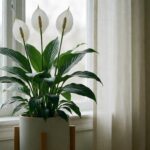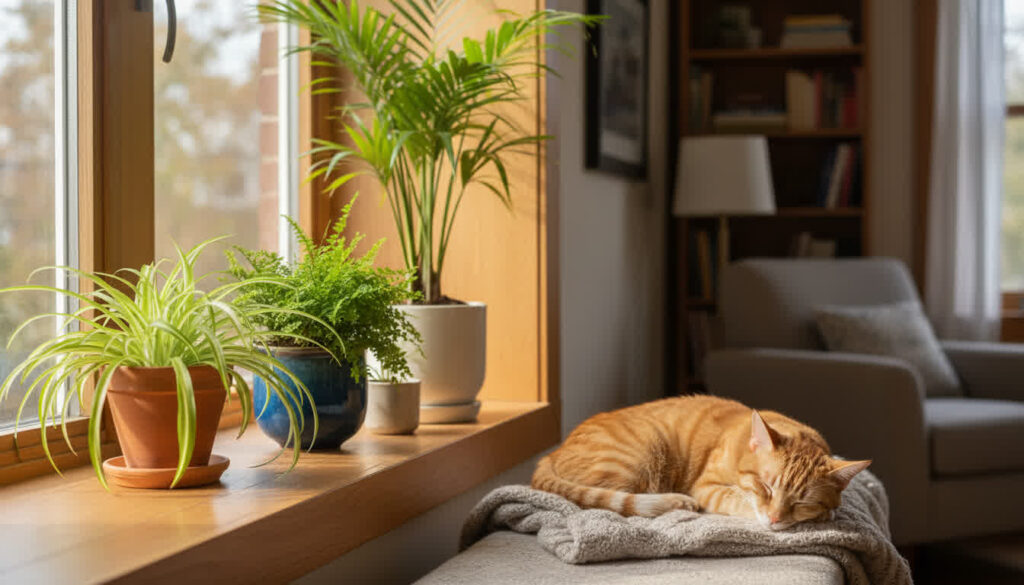

pet safe house plants are the quickest way to enjoy greenery at home without putting curious cats and playful dogs at risk.
Choosing the right non-toxic species and matching light, humidity, and placement to your pet’s behavior cuts the chance of gastrointestinal upset and emergency vet visits.
This page lists vetted pet-friendly plants, explains how plant toxins (like calcium oxalate) cause symptoms, and gives practical care and placement advice so you can keep an attractive, cat-friendly and dog-friendly indoor garden.
Why pet owners choose non-toxic house plants
Non-toxic house plants reduce poisoning risk because many common indoor species contain irritant saps or crystals that cause oral pain, drooling, vomiting, or swelling.
Understanding toxicity level and which plant parts are dangerous (leaves, stems, sap, or roots) helps you predict symptoms and act quickly if ingestion happens.
How plant toxicity usually affects cats and dogs
Cats often show strong oral pain and pawing at the mouth after chewing plants with calcium oxalate crystals, while dogs are more likely to eat larger amounts and show vomiting or diarrhea.
Severity depends on toxicity level, plant part eaten, and pet weight — a small nibble of a mildly irritating leaf is different from a large ingestion of a sap-rich stem.
Spider plant : a top pet-safe pick
Spider plant (Chlorophytum) is widely rated as pet-safe; toxicity level: none known for cats and dogs, plant parts: leaves and pups, symptoms if ingested: usually mild gastrointestinal upset at worst, care difficulty: easy, light needs: bright indirect to moderate, pet safety rating: 5/5.
If your cat chews a lot of the long leaves, expect some vomiting or loose stool but not severe poisoning in most cases; monitor your pet and call the vet if symptoms worsen.
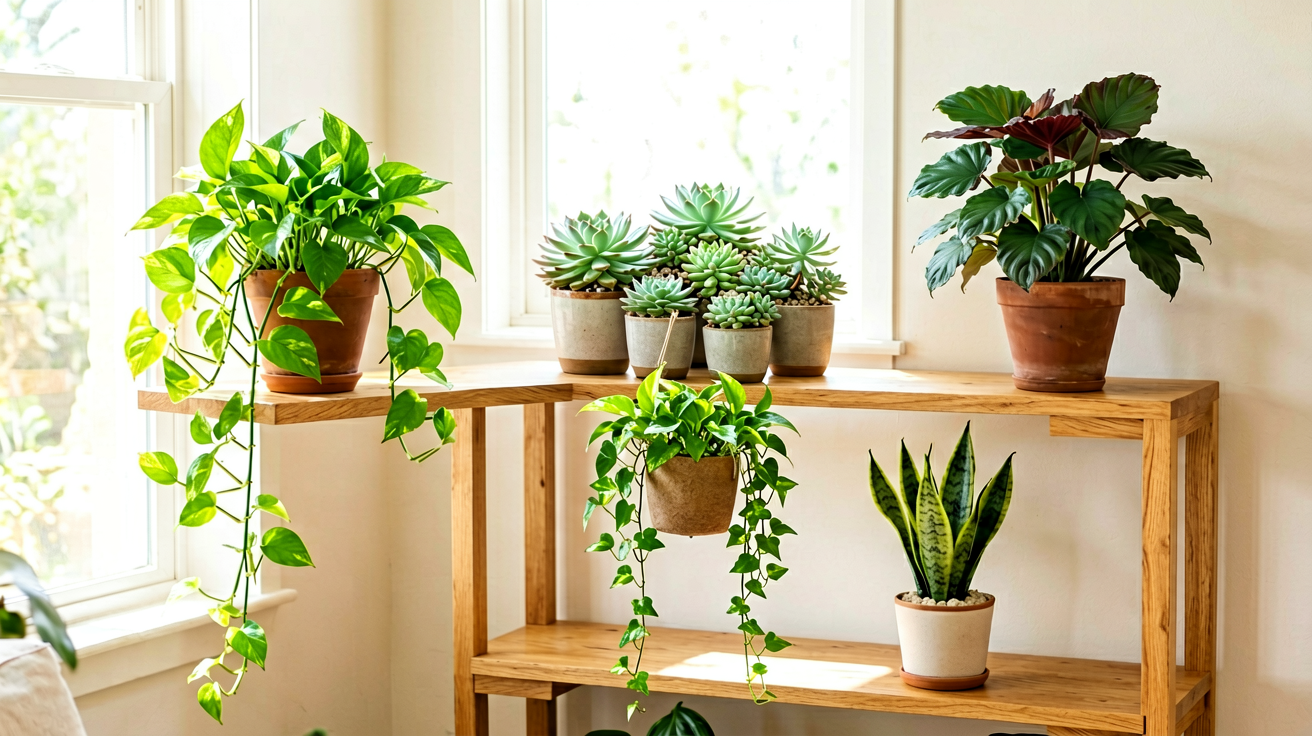
Placement tip: hang spider plants or set them on high shelves to discourage chewing, and refresh the potting mix with perlite for good drainage to keep the plant healthy.
See: Repair and propagate spider plant pups.
Boston fern and other safe ferns
Boston fern has no known toxic compounds to cats or dogs; toxicity level: non-toxic, plant parts: fronds, symptoms if ingested: rare mild stomach upset, care difficulty: moderate (humidity-loving), light needs: indirect light, pet safety rating: 4/5.
Ferns require steady moisture and higher humidity, which is a trade-off: safer plant chemistry but more daily care compared with succulents.
Prayer plant and Calathea : patterned, pet-safe foliage
Maranta (prayer plant) and Calathea are on many ASPCA-friendly lists; toxicity level: non-toxic, plant parts: leaves, symptoms if ingested: usually mild GI upset, care difficulty: moderate, light needs: low to medium indirect light, pet safety rating: 4/5.
Keep fertilizer light and consistent moisture to avoid leaves tasting more tempting to nibbling pets.
Read more: Calathea care guide.
Safe succulents: Haworthia and Echeveria
Haworthia and Echeveria are succulents generally considered pet-safe; toxicity level: non-toxic for typical cultivars, plant parts: leaves and offsets, symptoms if ingested: mild stomach upset or mechanical irritation from sharp edges, care difficulty: easy, light needs: bright light, pet safety rating: 4/5.
Succulents need fast-draining soil and are low-maintenance, but some look-alike species (like certain Kalanchoe) are toxic — always confirm the Latin name before bringing a plant home.
Read more: Easy succulents and beginner houseplants.
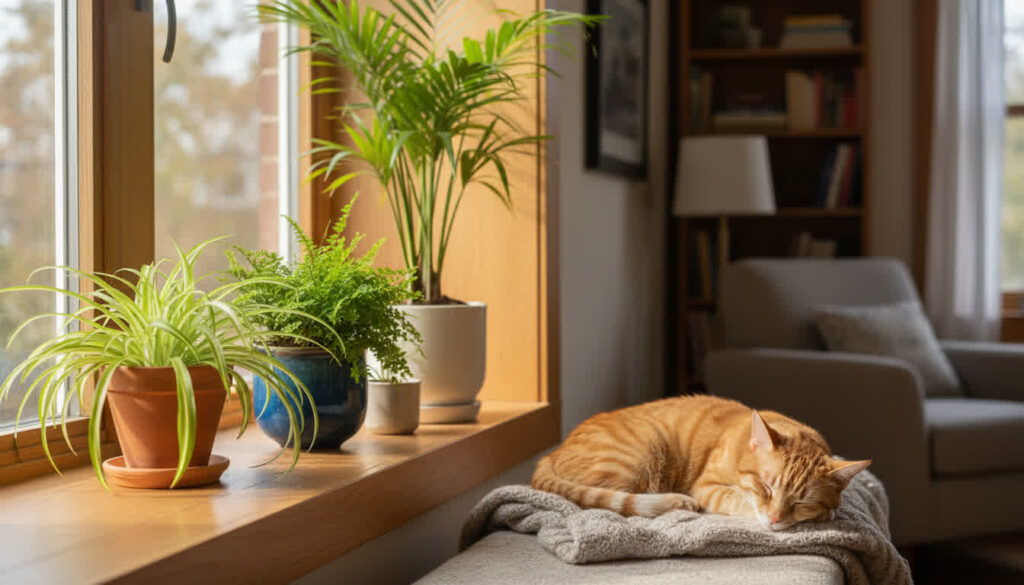
Parlor palm and ponytail palm : tall options that are pet-friendly
Parlor palm and ponytail palm are generally listed as non-toxic; toxicity level: non-toxic, plant parts: fronds/trunk, symptoms if ingested: rare mild GI upset, care difficulty: easy–moderate, light needs: low to bright indirect, pet safety rating: 4/5.
Taller plants are useful for keeping greenery out of reach and are good for households where pets are very curious.
See: Style-forward, low-maintenance plant ideas.
How to verify plant safety before you buy
Check authoritative databases like the ASPCA Toxic and Non-Toxic Plants list to confirm species toxicity before you purchase or accept plants.
Confirm species identity by leaf shape and venation, and avoid relying on common names or mislabelled nursery tags; cultivar differences sometimes change plant chemistry.
Plants that look safe but are toxic
Plants such as philodendron, dieffenbachia (dumb cane), and some pothos contain calcium oxalate crystals or irritating saps that cause strong oral pain and swelling — toxicity level: moderate to high, plant parts: leaves and stems, symptoms if ingested: intense oral irritation, drooling, vomiting, possible airway swelling, pet safety rating: 1–2/5.
Visual similarity is risky: do not assume a plant is safe because it resembles a pet-friendly species; always verify the Latin name.
What to do if your pet eats a plant
Separate your pet from the plant, remove any remaining plant material from the mouth, and identify the species using photos or tags to give the vet clear information.
Note symptoms (drooling, vomiting, lethargy), amount eaten, and pet weight, then call your veterinarian or a poison control hotline such as the Pet Poison Helpline for next steps; do not induce vomiting without professional advice.
Recommended pet-safe plants at a glance
- Spider plant — Light: bright indirect; Care difficulty: easy; Pet safety rating: 5/5.
- Boston fern — Light: indirect; Care difficulty: moderate; Pet safety rating: 4/5.
- Prayer plant / Calathea — Light: low–medium; Care difficulty: moderate; Pet safety rating: 4/5.
- Haworthia / Echeveria — Light: bright; Care difficulty: easy; Pet safety rating: 4/5.
- Parlor palm / Ponytail palm — Light: low–bright indirect; Care difficulty: easy; Pet safety rating: 4/5.
- Peperomia, African violet — Light: moderate; Care difficulty: easy; Pet safety rating: 4/5.
FAQ : quick answers to common pet owner questions
Are ALL parts of spider plants safe?
Yes — spider plant leaves and pups are generally non-toxic, but eating a lot can still cause mild gastrointestinal upset or vomiting.
What if my cat eats a lot of a plant?
If your pet eats a large quantity, call your vet or poison control immediately; bring a photo or sample and note the pet’s size and symptoms to help them assess risk quickly.
How do I know if a plant is toxic?
Use trusted resources like the ASPCA database and Cornell University’s poisonous plants database, confirm the Latin name, and look for reported symptoms such as drooling, vomiting, or pawing at the mouth after ingestion.
Which succulents are pet-safe?
Haworthia and many Echeveria cultivars are pet-safe, but confirm each species — some succulents (for example certain Kalanchoe or Aloe species) can be toxic to pets.
What about plants that look similar but ARE toxic?
Visual ID can be misleading; always verify the Latin name and cross-check with a toxicity database before assuming a plant is safe for pets.
Final choice: pet safe house plants that fit your home
Pet safe house plants let you enjoy indoor greenery without high risk when you match species choice to light, care difficulty, and pet behavior; balance safety (low toxicity level) against the trade-off of extra care like humidity or watering.
When in doubt, choose species with strong pet safety ratings and place plants out of reach — high shelves, hanging baskets, or enclosed planters reduce both temptation and risk.
From PDF to Excel in one click
Forget retyping line by line. Upload any bank statement, get a spreadsheet you can actually use. Your files are never stored, and you can test the converter with 3 free conversions.