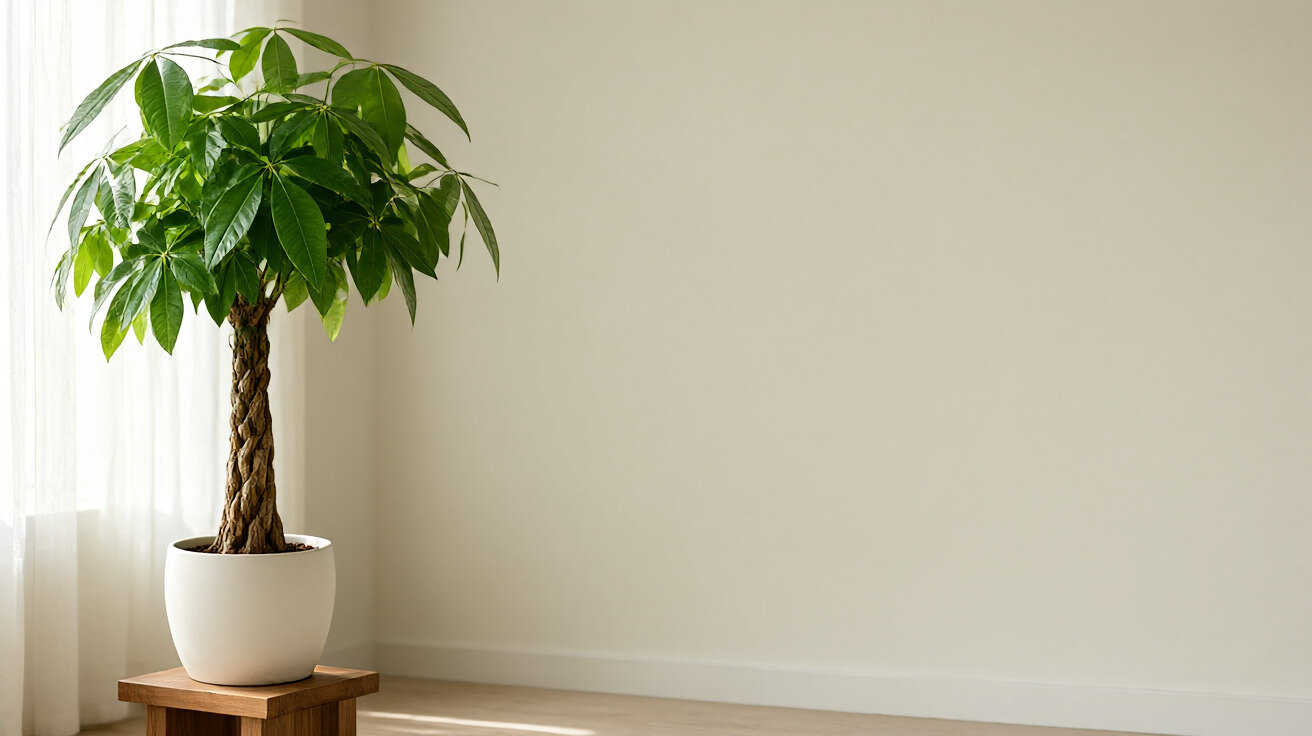

Money tree feng shui is not a mystical practice. It is a placement-and-care protocol, and the placement only works if the plant is healthy enough to grow. In classical feng shui the money tree (Pachira aquatica) belongs in the wealth corner of a home or office, which is the far-left corner from the entrance, in the southeast sector of the room. The reason is mechanical, not magical: that corner is the wood element in the Bagua, the tree is a wood-element plant, and the alignment is what the system calls supportive. The tree itself has to stay green, full, and upright for the symbolism to mean anything, and that is a care problem, not a feng shui one.
This page covers the placement rules that classical feng shui masters agree on, the rooms that work and the rooms that do not, and the care thresholds that keep the tree alive in the spot you chose. The plant-care rules, including the light, water, and temperature targets, are the same rules that keep any money tree alive, and they are set out on the money tree care guide.
Where to Place a Money Tree for Feng Shui
The wealth corner is the first thing to find. Stand at the main entrance of the home or office and face inward. The far-left corner of the room is the southeast sector, and that is where a money tree goes if you only have one. The same rule works at a smaller scale for a single room: stand in the doorway of a home office or study, face in, and the back-left corner is the wealth area of that room. A tree placed there is said to support financial growth and new beginnings.
The wealth corner and the Bagua
The Bagua is a three-by-three grid laid over a space, and the southeast sector is the wood element, the same element as a living tree. That match is the whole reason the placement is recommended. The east sector is the second-best option, because it is also a wood area, associated with family and health rather than wealth. A tree in the east still reads as supportive, only with a different emphasis. The two sectors are the only ones that a classical feng shui master would call correct for a money tree, and a tree placed outside them is not doing the work the placement is supposed to do.

The East and Southeast Sectors
Both sectors have to be read against the actual light in the room, because feng shui placement and plant survival have to agree. A southeast corner with a window and bright indirect light is the ideal case, and a southeast corner that is dark is not. The tree cannot survive a spot that has no light, and a dying tree in the wealth corner is worse than no tree at all, because the symbolism inverts: a struggling plant reads as a struggling household.
The light test before you place it
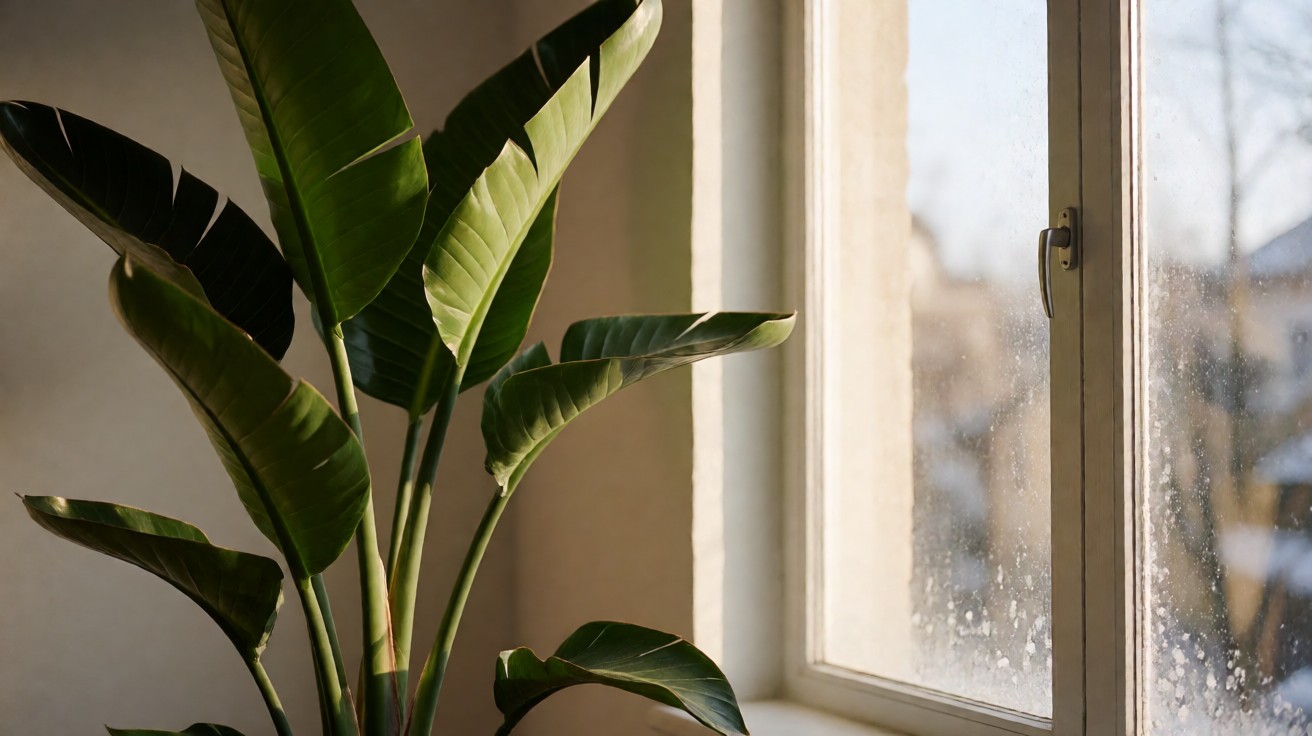
Check the spot at noon on a bright day. If you can read a book in that corner without turning on a lamp, the light is adequate. If you cannot, the tree will not survive there, and the placement has to move to the next-best lit spot, even if that spot is outside the wealth corner. The full light requirements, including the six hours of bright indirect light the tree needs, are in money tree light requirements.
Rooms That Work and Rooms That Do Not
The room matters almost as much as the corner. A money tree wants to be in a space that people actually use, because the chi, or life energy, of a room is what the placement is meant to circulate through. A tree in a spare room does nothing, because no one is there to move the energy.
Where it belongs
The living room is the first choice, because it is the heart of the home and the place where the tree is seen every day. A home office is the second, especially the wealth corner of the desk, where the tree is said to support the work that produces the income. The southeast corner of either room is the spot. A bathroom can work if it has a window, because the humidity is what the tree wants, but bathrooms are not wealth areas and the placement is weaker there. The temperature band the tree needs, eighteen to twenty-seven degrees C, is the same in every room, and it is in money tree temperature tolerance.
Where to keep it out of
Bedrooms are the main room to avoid. The energy of a money tree is said to be too stimulating for a space meant for rest, and the practical version of that is simpler: the tree drops leaves and the debris ends up where you sleep. Kitchens and bathrooms with no window are out, because the light is wrong. Hallways and corners behind doors are out, because the energy stagnates there and the tree sits in a draft. Dark passages with limited daylight are the worst spot of all, because the tree will slowly decline and the placement will read as a dead symbol.
The Care Rules That Make the Placement Work
A feng shui money tree that is yellowing, dropping leaves, or leaning is not attracting anything. The placement only has value while the plant is thriving, and thriving is a matter of four numbers: light, water, humidity, and temperature. Get those right and the tree will hold its shape and its leaves for years.
The four numbers
Six hours of bright indirect light a day, from an east or west window, or a south window filtered by a sheer curtain. Water when the top two to three centimeters of soil are dry, never on a fixed weekly schedule. Relative humidity above fifty percent, which in most homes means grouping the plant with others or running a humidifier through winter. Room temperature between eighteen and twenty-seven degrees C, kept away from radiators and air vents. The watering rhythm that the humidity and temperature feed back into is in the money tree watering guide.
How the Braided Trunk and the Leaves Fit In
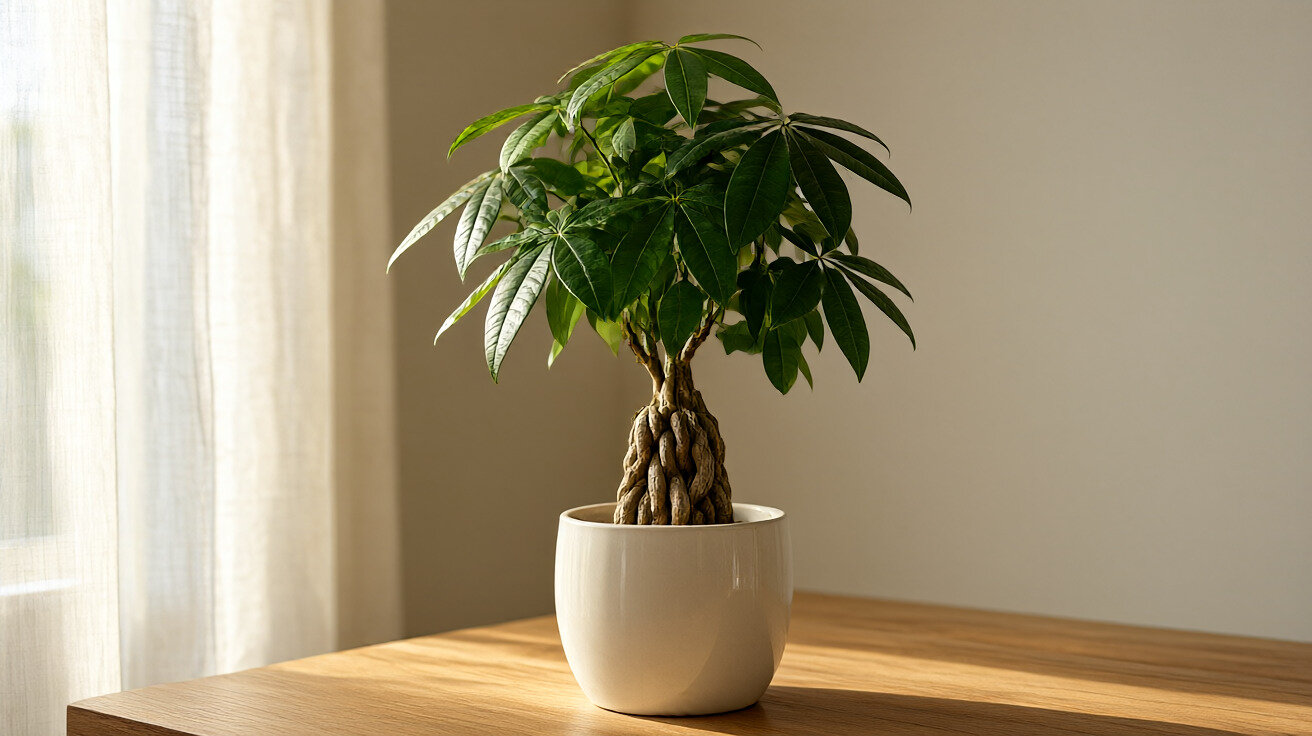
The money tree is usually sold with three to five trunks braided together, and the braid is part of the symbolism. Three trunks represent the three types of luck, five represent the five elements, and a single trunk is just a tree. The braid is not a defect and it does not need to be cut, but it does need to be kept vertical and braced, because a leaning braid twists the young trunk over time.
Leaf count and what a healthy tree looks like
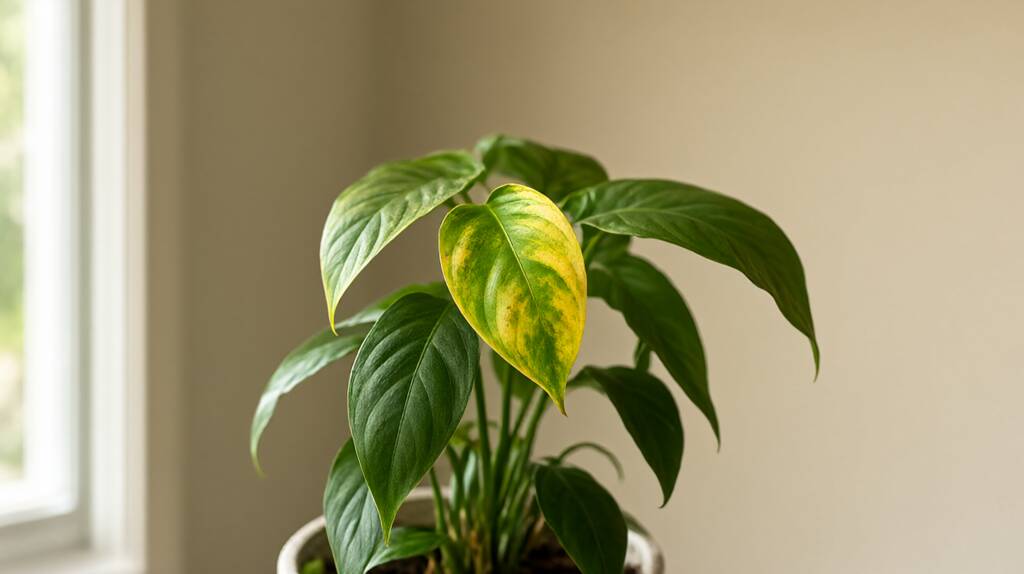
A healthy money tree carries palmate leaves with five to seven leaflets, and the count is sometimes read symbolically, with five leaves for the five elements. The number is less important than the condition: full, glossy, dark green leaflets with no yellowing or brown edges. A tree with seven leaflets that is yellowing is not a better feng shui object than a tree with five that is green. If the leaves start to drop, the cause is almost always light or water, and the diagnosis is in money tree dropping leaves. The pruning rules that keep the braid tidy after the tree settles are in money tree pruning.
What Not to Do
The list of wrong spots is shorter than the list of right ones, and it is worth more, because a money tree in the wrong spot declines slowly and the decline is easy to blame on the plant rather than the placement.
The seven placement mistakes
One, placing it in a dark corner to follow the wealth corner rule, when the corner has no light. Two, putting it under a heavy shelf or beam, which is said to create oppressive pressure and which in practice also limits the air movement the leaves need. Three, keeping it in a bathroom with no window, where the humidity is right and the light is not. Four, leaving it in a draft from a door or air vent, which drops the leaves within weeks. Five, setting it on top of a radiator or near a heating vent, which dries the soil out in a day. Six, letting clutter build up around the base, which blocks the circulation the placement is supposed to support. Seven, choosing a pot with no drainage hole, which is the single most common way a feng shui money tree dies, because the soil stays saturated and the roots rot. The pot and mix that prevent that are in money tree soil and pot, and the rescue rules if it has already happened are in money tree root rot.
A Placement Checklist by Room
The table pairs each room with the spot to choose, the spot to avoid, and the care note that matters most there. Read it as a decision guide, not a decoration guide.
| Room | Place it here | Avoid | Care note that decides it |
|---|---|---|---|
| Living room | Back-left (southeast) corner, near a bright window | Dark corners, behind furniture | Six hours of bright indirect light |
| Home office | Back-left corner of the desk or room | Under shelves, next to a vent | Humidity above 50 percent |
| Bedroom | Not recommended | Bedside table, foot of the bed | Energy too stimulating for sleep |
| Bathroom | Window sill, if there is a window | Interior bathroom, no window | Humidity helps, light decides it |
| Kitchen | Bright counter, away from the stove | Near heat sources, dark pantry | Temperature swings, not humidity |
| Hallway | Not recommended | Behind doors, in drafts | Stagnant energy and cold drafts |
When to Move It
A money tree should not be moved often, because each move is a stress event, and the placement is meant to be stable. The two legitimate reasons to move it are a change in the light, when the original spot stops working, and a repot, when the tree has outgrown its container and the move is part of the repotting process. Both are care decisions that override the placement decision, and both are temporary.
Repotting and placement together
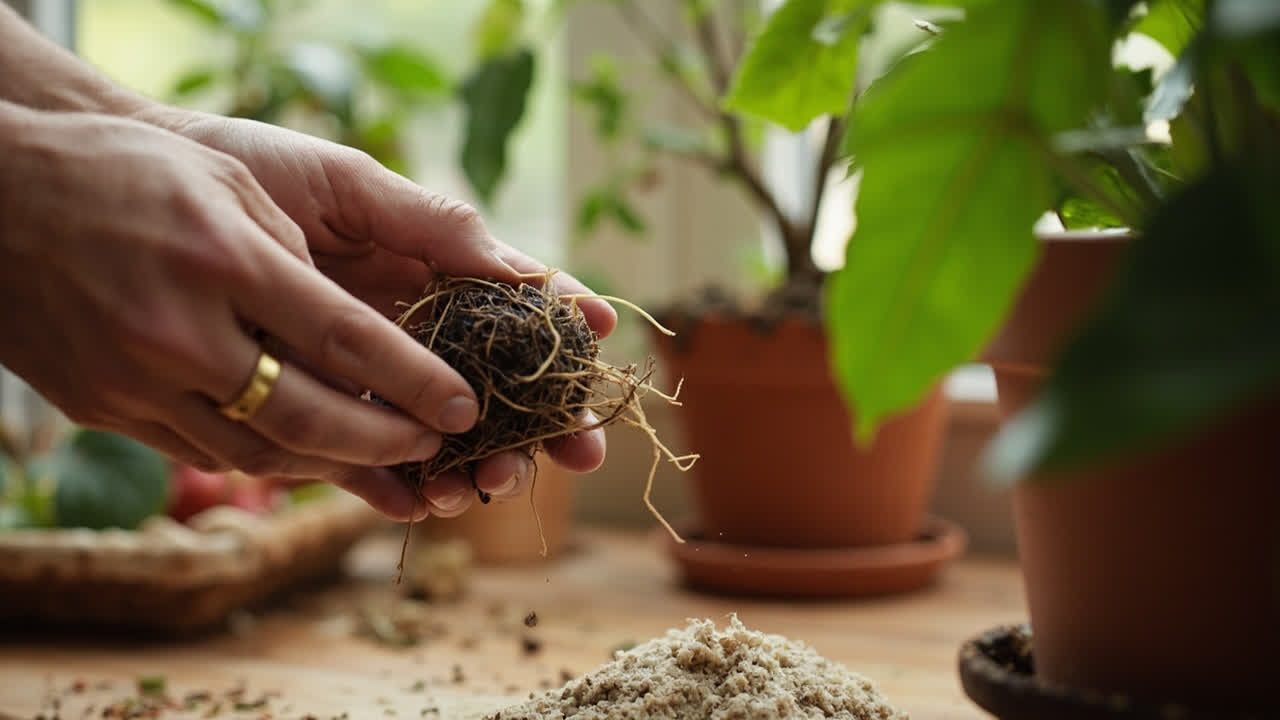
When the tree is repotted, the new pot is larger and the spot it sat in may no longer fit it. Pick the new spot using the same southeast rule, and give the tree two to three weeks to settle before judging whether the placement is working. If the tree drops leaves in the first week, the cause is the repot, not the placement, and the rules for the move are in money tree repotting. The move itself is the bigger stress than the new corner.
Sources and further reading
New York Botanical Garden, Mertz Library horticulture reference on Pachira aquatica, covering the braided-trunk storage tissue, the palmate leaf structure, the indoor light and temperature needs of this species, and the placement rules that keep it healthy.
University of Missouri Extension, interior plant and houseplant care publications, covering the light, water, humidity and temperature thresholds that keep a tropical foliage plant alive indoors, and the role of placement in meeting them.
Clemson Cooperative Extension, interior plant care bulletins on drainage, potting mix texture, and the placement requirements for tropical foliage plants kept in containers.
University of California, Division of Agriculture and Natural Resources, houseplant maintenance guidance on indoor light levels, humidity management, and the placement of plants away from drafts and heat sources.
Last reviewed on 11 November 2026