
Winter is the hardest season for a spider plant indoors. Light drops, heating strips moisture from the air, and growth slows. The plant does not need more care in winter; it needs less, applied more carefully. Overwatering a dormant plant in a dry room is the most common winter mistake, and it kills more spider plants than cold does.
This guide covers what changes in winter, what to adjust, and what to leave alone. It is written for Chlorophytum comosum grown indoors in temperate climates.
What Changes in Winter
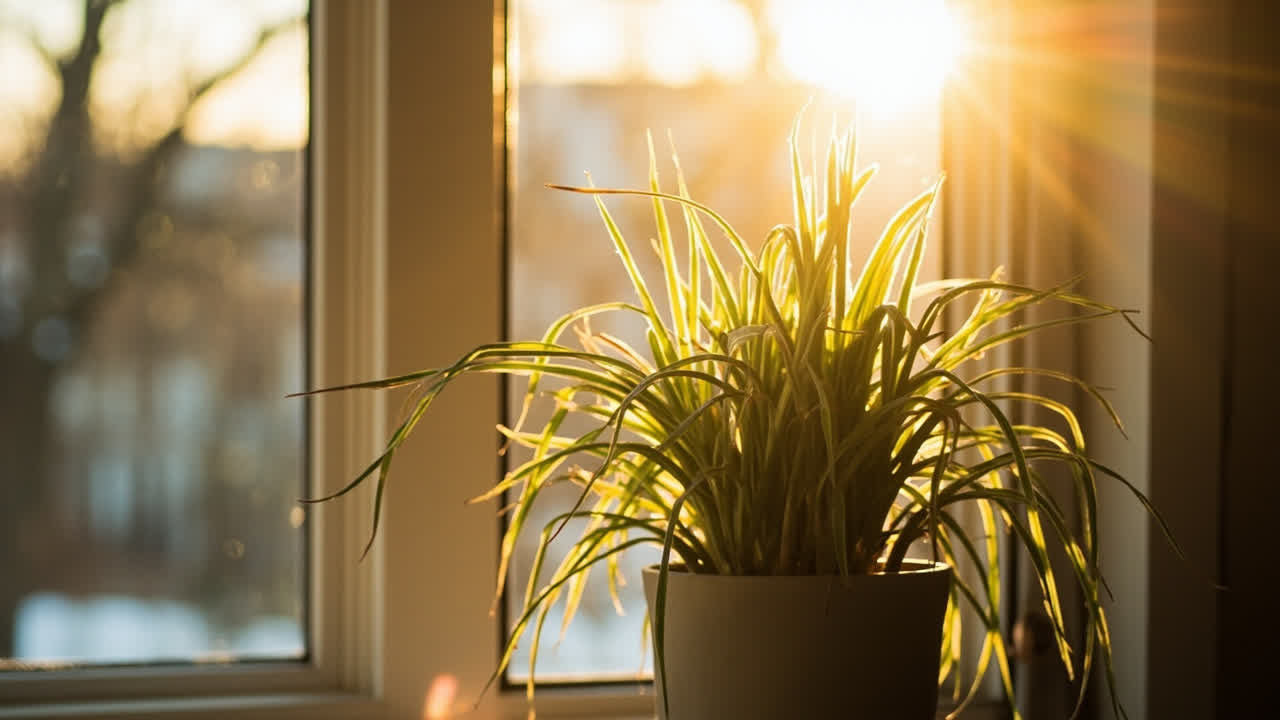
Light intensity and duration both drop. A window that delivered bright indirect light in July may deliver weak light in December, even on a sunny day, because the sun is lower and days are shorter. The plant’s photosynthesis slows, and with it growth.
Heating dries the air. A room at 21 degrees with the heat on can drop to 20 percent relative humidity, far below the 40 to 50 percent spider plants prefer. Transpiration stress rises even though the plant is using less water.
Soil dries more slowly because the plant is not growing and transpiring. Water that would be consumed in five days in summer may sit for ten in winter.
What to Adjust
Watering
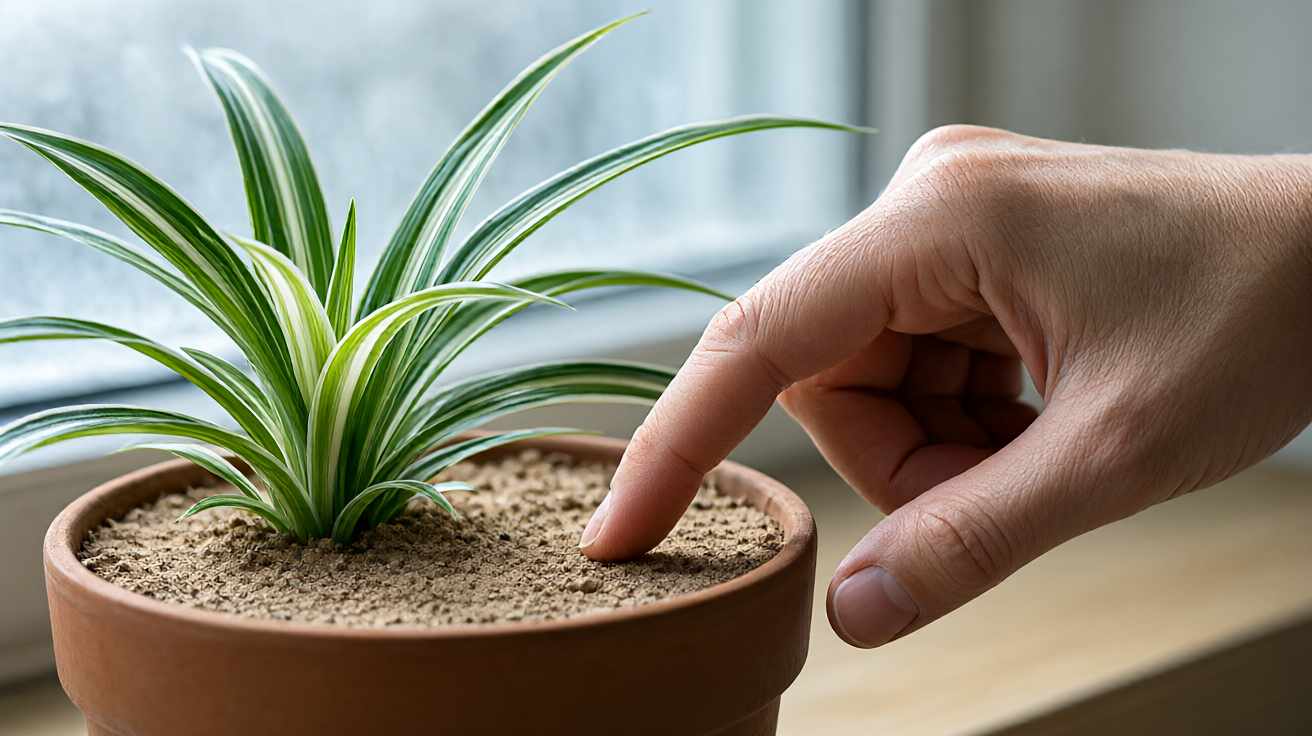
Water less often. Check the top two to three centimetres of soil; water only when it is dry. A plant that needed water every five days in summer may need it every ten to fourteen in winter. When in doubt, wait another day. Spider plants tolerate dryness better than saturation.
Do not keep the same summer schedule. That single habit causes more winter losses than any other. Our spider plant overwatering guide covers the signs, and how often to water a spider plant covers seasonal intervals.
Fertilizing
Stop fertilizing from late autumn until spring. The plant is not growing and cannot use the nutrients; they accumulate as salts and burn roots. Resume when new growth appears, at half strength.
Humidity
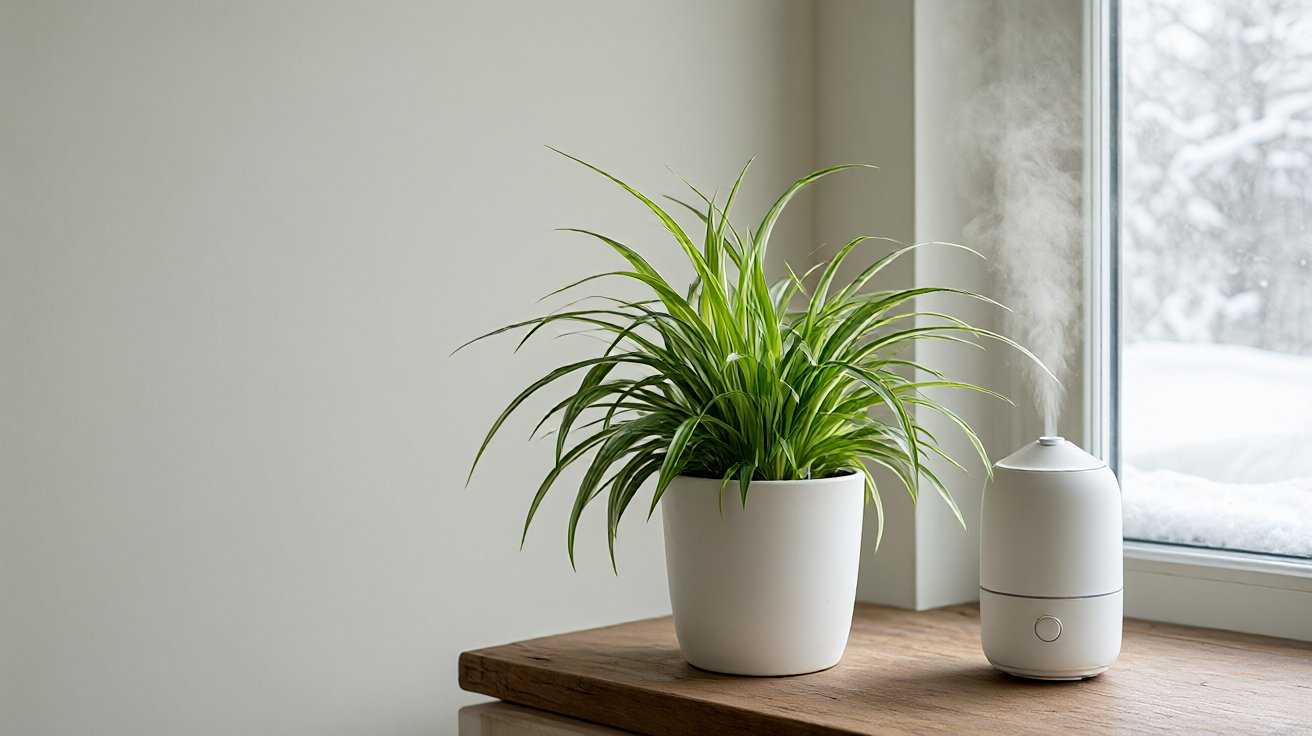
Raise humidity if you can. A humidifier near the plant is the most effective method. Grouping plants and pebble trays help modestly. Aim for 40 percent. Our spider plant humidity requirements guide covers targets and methods.
Light
Move the plant closer to the brightest window available, but keep it out of direct cold drafts from the glass. If natural light is very low, a grow light on a timer for eight to ten hours helps maintain colour and prevents etiolation. Rotate the plant weekly so growth stays even.
What to Leave Alone
Do not repot in winter unless the plant is in immediate distress. Repotting during dormancy shocks roots that are not actively growing. Wait until spring.
Do not propagate in winter. Spiderettes root more slowly in low light, and detached plantlets are more likely to rot. Wait for spring, or root them while attached to the mother plant. Our spider plant propagation without cutting guide covers the lower-risk method.
Do not prune heavily. Remove only dead or fully brown leaves. Major pruning waits for spring growth.
Temperature and Placement
Keep the plant away from cold windows, exterior doors, and heating vents. Cold drafts from a window can drop the leaf temperature below the plant’s tolerance even when room air is warm. Heating vents create hot, dry air that scorches foliage.
The comfortable range is 13 to 27 degrees Celsius, but stability matters more than the exact number. A plant at 18 degrees in a stable spot grows better than one fluctuating between 15 and 24. Our spider plant temperature tolerance guide covers thresholds.
Signs of Winter Stress
Some leaf change in winter is normal: slower growth, slightly paler colour, fewer spiderettes. Problem signs are different.
Soft, mushy leaves or a wet soil that never dries indicate overwatering. Brown tips that worsen in winter usually point to dry air combined with fluoride in tap water, because the plant is transpiring more slowly and salts concentrate. Curling leaves point to low humidity or cold drafts. Our spider plant leaves curling and spider plant brown tips guides cover diagnosis.
Preparing for Spring
As days lengthen in late winter, the plant will resume growth. Increase watering gradually as new leaves appear. Resume fertilizing at half strength. This is the time to repot, divide, or propagate. Inspect roots when you repot, and refresh the top few centimetres of soil if you are not repotting.
If the plant has declined over winter, our save a dying spider plant guide covers triage, and our spider plant problems index helps sort multiple symptoms.
For the full care baseline that carries the plant through every season, see our spider plant care guide.
From Bank Statement to QuickBooks-Ready File
That manual cleanup you just read about? This tool skips it. Turn your PDF into QBO for QuickBooks without storing your data anywhere.
Start Converting