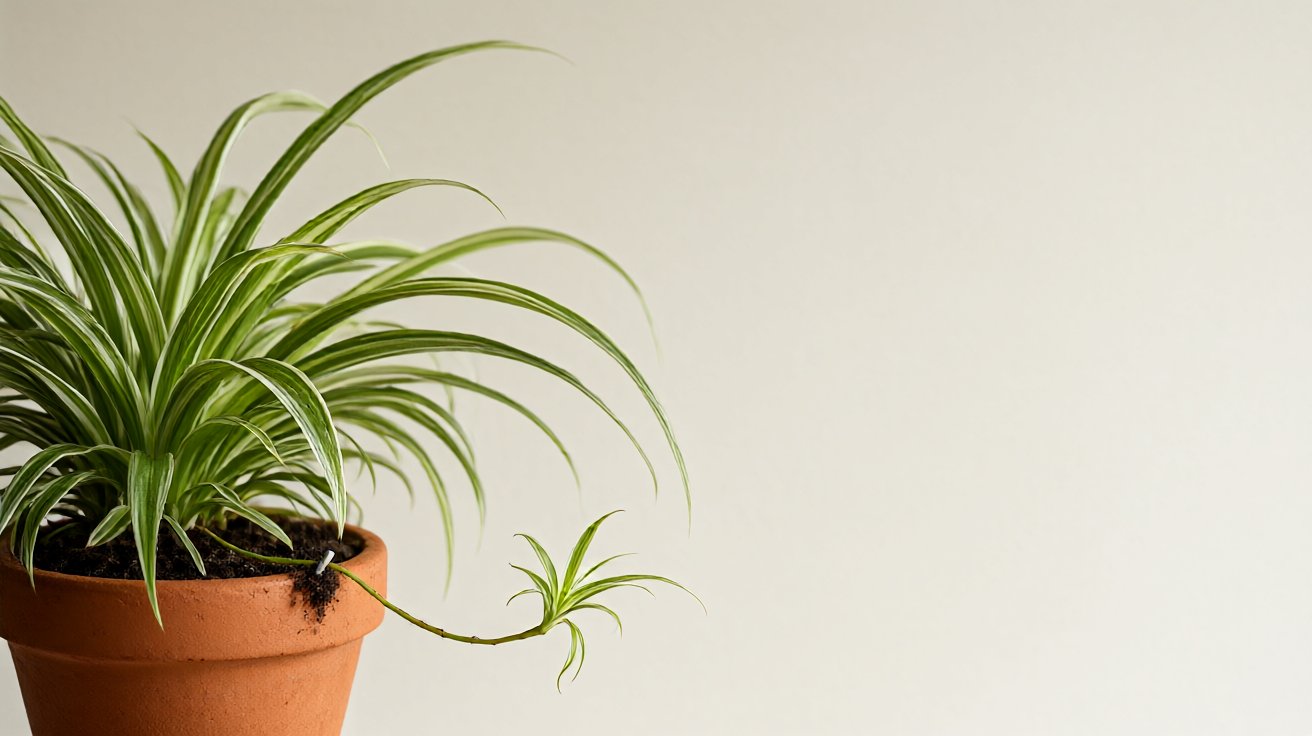

Propagating a spider plant without cutting is the lowest-risk way to make new plants. Instead of severing spiderettes from the mother, you root them while they are still attached, or you divide the mature plant at the crown. The mother plant keeps feeding the baby until roots are established, which removes the main failure point of water or soil propagation: a plantlet that dries out before it can drink.
This guide covers two methods that need no cutting: air-layering spiderettes while attached, and division of a mature plant. It is written for Chlorophytum comosum grown indoors.
Method 1: Root Spiderettes While Attached
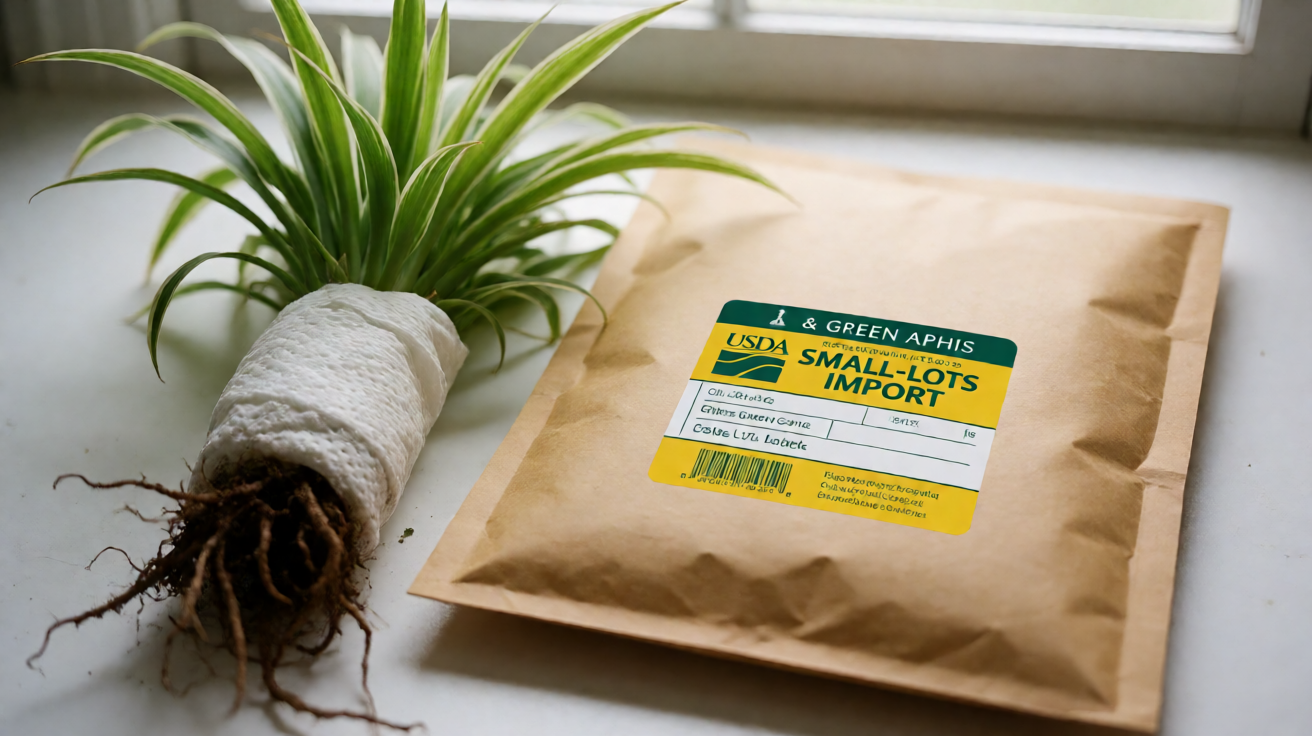
A spiderette with small root nubs can be rooted in a pot of moist mix while it stays connected to the mother plant. The mother supplies water and nutrients through the runner until the baby’s own roots take over. Once roots are 2 to 3 centimetres long, you cut the runner and the baby is independent.
Steps:
1. Prepare a small pot with moist, well-draining mix. Place it next to the mother plant.
2. Choose a spiderette that has visible root nubs at its base. Older, larger plantlets root faster.
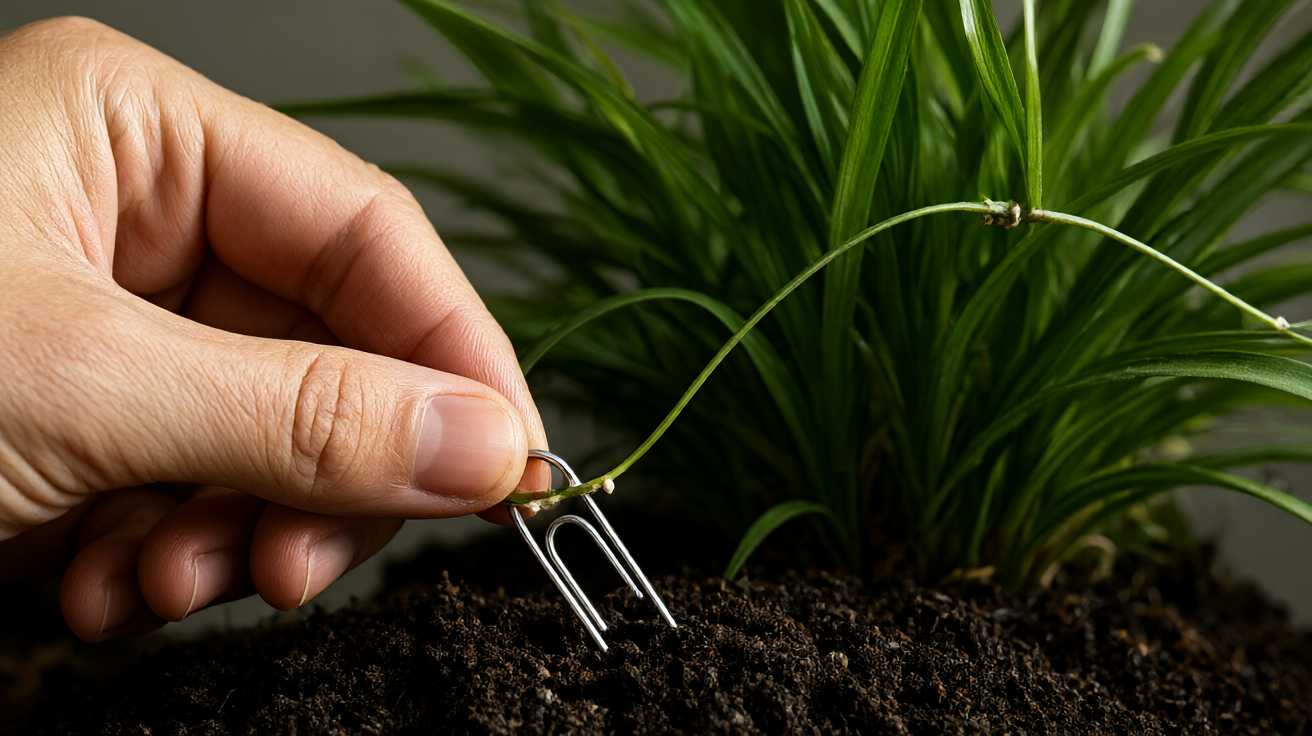
3. Pin the spiderette to the soil surface with a bent paper clip or a U-shaped pin, keeping the base in contact with the mix. Do not bury the leaves.
4. Keep the soil moist but not wet. The mother plant waters the baby through the runner, so the baby’s pot needs less water than a standalone cutting.
5. Wait two to four weeks. Tug gently; resistance means roots have formed.
6. Cut the runner close to the baby with clean scissors. Leave the baby in its pot for another week before moving it.
Method 2: Divide a Mature Plant
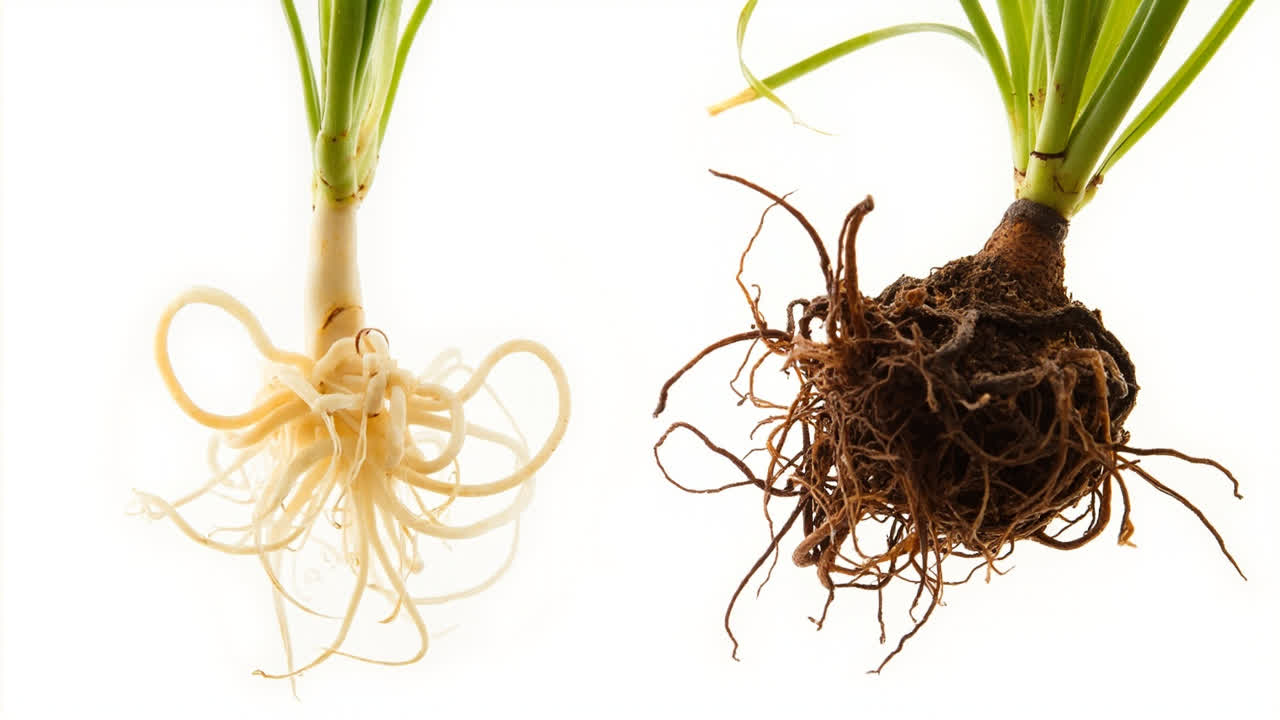
Division is not propagation of babies but propagation of the plant itself. A mature spider plant often has multiple crowns growing from the same root ball. Separating them produces independent plants without any cuttings.
Steps:
1. Unpot the plant and shake off loose soil.
2. Look for natural divisions: separate crowns with their own root systems. Gently pull them apart. If they resist, use a clean knife to cut through the root ball between crowns.
3. Pot each division in fresh mix at the same depth. Water in.
4. Keep divisions in bright, indirect light for two weeks. Some wilting is normal; new growth confirms success.
Division is best done in spring, when the plant is actively growing. It also rejuvenates an overgrown plant and is the answer when a plant has outgrown its pot but you do not want a larger specimen.
Why This Method Fails Less Often
The main cause of propagation failure is desiccation: a severed plantlet has no water supply and dries out before roots form. Attached propagation removes that risk because the mother plant is the water source. The cost is patience and a bit of space, since the baby stays tethered for weeks.
Division avoids the rooting problem entirely, because each division already has roots. Its risk is shock: a large plant split into small pieces has less leaf area and recovers more slowly.
When to Use Which Method
Use attached rooting when you want many small plants and the mother plant has healthy spiderettes. Use division when the plant is overgrown, crowded, or has multiple crowns and you want fewer, larger plants.
For the standard cutting-based methods, including water and soil propagation of detached spiderettes, see our how to propagate spider plant guide and spider plant propagation guide. If your plant is not producing spiderettes at all, see spider plant not producing spiderettes.
Aftercare
Keep newly separated or rooted plants in bright, indirect light. Do not fertilize for four weeks. Water when the top two centimetres of soil are dry. Once new growth appears, treat them as mature plants.
For the full care baseline, see our spider plant care guide, and if propagation is one of several problems, our spider plant problems index helps sort the picture.
Turn PDF Bank Statements Into Workable Spreadsheets
Your bank statement is a mess of numbers, but your books shouldn't be. Use our converter to get Excel, CSV, or QBO files — ready for QuickBooks.
Try It Free Now