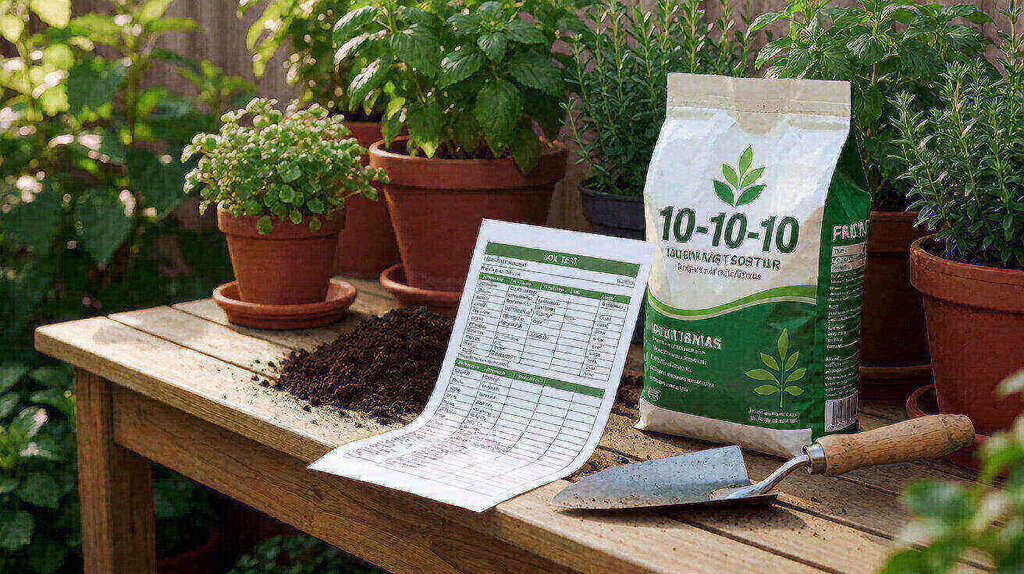

“Balanced” is the most misunderstood word on a fertilizer bag. Home gardeners reach for 10-10-10 because it sounds safe, fair, and complete. The truth is more specific: a balanced fertilizer is simply one where nitrogen, phosphorus, and potassium appear in equal or near-equal proportions on the label. That is a statement about the product, not about your soil. Whether equal proportions help your plants depends on what the soil already holds and what the crop is trying to do.
The word “balanced” also implies a goal that does not exist in nature. Plants do not consume nutrients in equal amounts. A tomato plant in fruiting mode pulls far more potassium than nitrogen. A head of lettuce in cool weather pulls nitrogen steadily and little else. An equal ratio is a human convenience imposed on a biological process that does not care about symmetry. Recognizing that mismatch is the first step toward fertilizing well.
If you are new to the numbers, start with what the NPK ratio means. This article assumes you know that 10-10-10 means 10% nitrogen, 10% phosphate (as P2O5), and 10% potash (as K2O). The question here is when that equality is actually useful.
What “balanced” actually means on the label
A balanced fertilizer carries an N-P2O5-K2O ratio where all three numbers are equal or close. Common examples are 10-10-10, 14-14-14, and 20-20-20. The label is describing the product inside the bag, not diagnosing your garden.
Two cautions matter here. First, the three numbers are not equal amounts of the elements nitrogen, phosphorus, and potassium. They are percentages of nitrogen, phosphate (P2O5), and potash (K2O). To get elemental phosphorus, multiply the middle number by 0.44. To get elemental potassium, multiply the last number by 0.83. So 10-10-10 is roughly 10% nitrogen, 4.4% phosphorus, and 8.3% potassium by element. Equal on the bag does not mean equal in the plant.
Second, “balanced” says nothing about micronutrients, organic matter, soil pH, or soil structure. A bag of 10-10-10 can be perfectly balanced and still be the wrong choice for your bed. That is the core idea: balance is a property of the fertilizer, not a prescription for the garden. Many gardeners confuse a balanced product with a complete one, but completeness depends on the soil, not the bag.
It is also worth noting that “balanced” is not a regulated claim in the same way a nutrient guarantee is. The three numbers are guaranteed by law, but the word “balanced” is marketing language. Two bags both labeled balanced can have different secondary nutrients, different release speeds, and very different suitability for your crop.
Why 10-10-10 became the default
Equal-ratio fertilizers became popular because they are simple. One bag, one number, one application rate. For decades, extension recommendations for home gardens leaned on general-purpose formulas because soil testing was rare and gardeners wanted a single answer.
There is also a real historical logic. In soils that have been farmed or gardened hard without replenishment, nitrogen, phosphorus, and potassium can all run low. In that depleted state, an equal ratio is a reasonable first approximation. The problem is that most established home garden beds are not depleted in all three. Phosphorus in particular tends to accumulate in garden soils because it binds tightly and is added repeatedly through compost, manure, and fertilizer. Applying an equal ratio to a phosphorus-rich bed adds phosphorus nobody needs.
The “balanced” label stuck because it sounds virtuous. Marketing reinforces the idea that equal is fair. But plants do not need fairness. They need the nutrient that is actually missing. Gardeners who want to do the right thing often default to balanced precisely because it feels responsible, which makes the trap harder to see.
Extension educators have spent decades trying to shift home gardeners toward soil testing for this reason. The default is convenient, but convenience is not the same as correctness. A bag that is easy to buy is not automatically a bag that fits the bed.
When balanced works
A balanced fertilizer earns its place in a few specific situations.
- New beds with unknown history. If you have just broken ground on a bed with no soil test and no compost history, an equal ratio is a defensible starting point while you wait for a test.
- Container mixes that drain fast. Potting mixes lose nutrients quickly through leaching. A balanced, water-soluble formula such as 20-20-20 is a practical maintenance feed for mixed containers.
- Established lawns and ornamentals in maintenance mode. Where growth is steady and soil tests show adequate levels of all three, a balanced product keeps things even without pushing any one nutrient.
- General vegetable gardens mid-season. After a crop has set fruit, a light, balanced feed can support continued growth without skewing toward leaf or root.
- Mixed plantings with unknown needs. A bed of mixed annuals where no single crop dominates can tolerate a general-purpose feed.
In all of these cases, balanced is a convenience, not an optimization. It works because the soil or the crop is forgiving. For a deeper look at matching nutrients to crops, see the NPK ratio chart for vegetable crops.
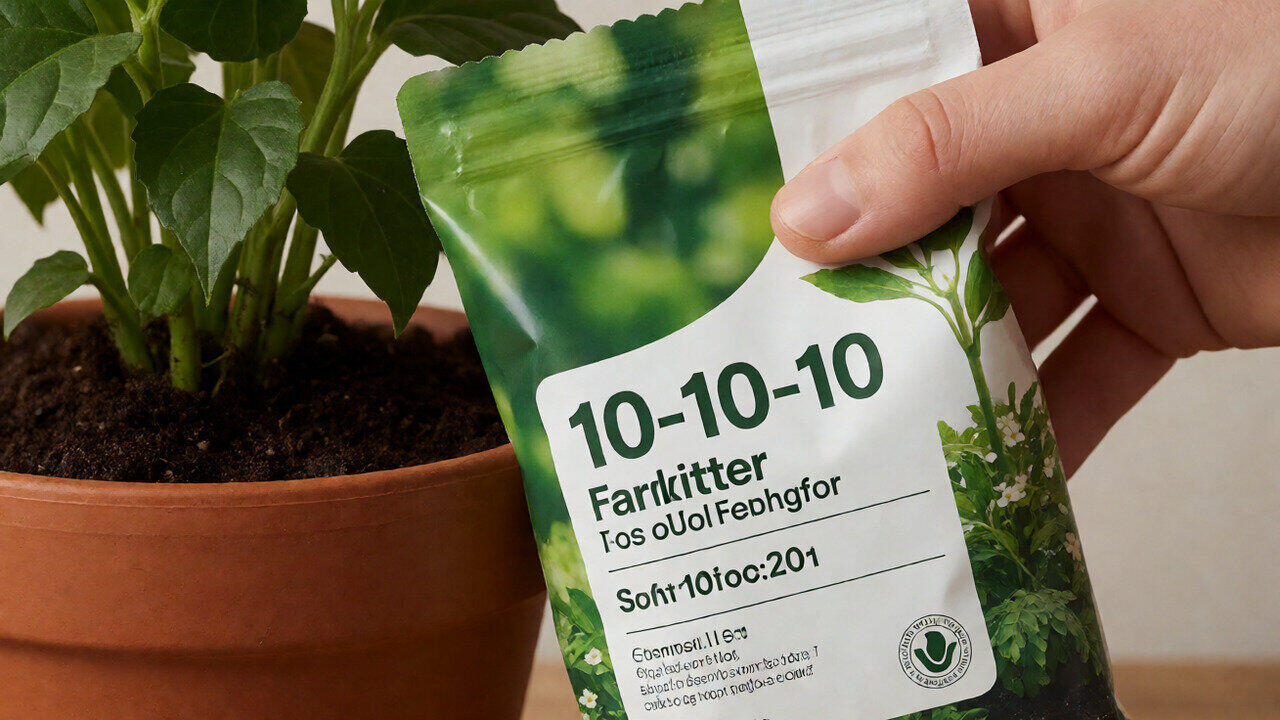
If you are feeding a mixed border with shrubs, perennials, and annuals together, a balanced granular applied once in spring is usually adequate. The mix of plants averages out individual needs, and the soil buffers small mismatches. This is one of the few cases where the convenience of a single bag genuinely matches the biology of the bed.
When balanced fails (and what to use instead)
This is where the “balanced is best” idea breaks down. Three common cases show why.
Phosphorus-rich soils
Many garden beds, especially those amended with compost or manure for years, test high in phosphorus. Adding 10-10-10 to that soil adds phosphorus the plants cannot use. The excess phosphorus can run off into waterways, where it fuels algae blooms. It can also interfere with uptake of iron and zinc. In this case, the right move is a nitrogen- and potassium-forward product with little or no phosphorus, chosen based on the test.
The cost of getting this wrong is not just money. Repeated phosphorus applications build up in soil over years, and that phosphorus is very slow to leave. A gardener who applies 10-10-10 annually to a high-phosphorus bed is adding a problem that will outlast the season.
Fruiting and flowering crops
Tomatoes, peppers, squash, and fruit trees need proportionally more potassium during fruiting and flowering. A balanced 10-10-10 keeps nitrogen high relative to potassium, which can push leafy growth at the expense of fruit set. A higher-potassium ratio matches the demand better. See what potassium does for plants for the mechanism.
Leafy, nitrogen-heavy growth on a fruiting plant is a common sign of overfeeding nitrogen. The plant looks lush but sets less fruit. Balanced feeding during fruiting is one way that happens, because the nitrogen in the mix is not reduced when the crop’s need for it drops.
Leafy and nitrogen-hungry crops
Lettuce, spinach, kale, and corn in early growth need nitrogen more than phosphorus or potassium. Feeding them 10-10-10 underfeeds nitrogen and overfeeds the other two. A nitrogen-forward product is more efficient. See what nitrogen does for plants.
With these crops, the waste is double. You pay for phosphorus and potassium the plant will not use, and you still have to add nitrogen separately or accept slower growth. A targeted nitrogen source avoids both problems.
The pattern is consistent: equal ratios are a compromise, and compromises waste money when the soil or crop has a clear preference.
If you are unsure whether your bed leans high in phosphorus, err on the side of caution and test before buying. The cost of a test is small compared with the cost of years of unnecessary phosphorus applications, and the result changes what you buy for every season after.
The soil-test override
The single most useful habit in fertilizing is to test first. A soil test reports phosphorus and potassium levels along with pH. Once you have those numbers, the “balanced” default is replaced by a targeted ratio.
Testing is cheap relative to the cost of guessing. A basic soil test costs less than a single bag of fertilizer, and it prevents years of mismatched applications. Gardeners who test once and adjust their program rarely go back to a default balanced product, because the targeted approach is visibly more effective and costs less over a season.
The logic is simple. If phosphorus is high, do not buy phosphorus. If potassium is low, favor potassium. If nitrogen is the only gap, use a nitrogen source. The balanced bag is what you buy when you do not know; the test tells you whether you actually need it.
Testing also protects water quality. Phosphorus runoff from over-fertilized gardens is a documented contributor to local water impairment. Applying only what the soil lacks is both cheaper and cleaner. If you are unsure how to read a report, see how to read a soil test report.
For the math on how much to apply once you choose a ratio, the application rate matters as much as the ratio. A correct ratio applied at the wrong rate is still wrong. Match both the proportion and the amount to the crop and the soil volume.
Common balanced ratios and what they imply
| Ratio | Typical use | Notes |
|---|---|---|
| 10-10-10 | General-purpose granular | Low concentration; good for maintenance beds; easy to overapply phosphorus |
| 14-14-14 | Slow-release lawn and garden | Higher concentration per pound; fewer applications needed |
| 20-20-20 | Water-soluble, containers | Fast-acting; leaches quickly; best for pots and fertigation |
Higher numbers mean more nutrients per pound of product, not a better fertilizer. A 20-20-20 bag is more concentrated than a 10-10-10 bag, but both are equal ratios. The concentration affects how much you apply; the ratio affects which nutrients you add. Keep those two ideas separate when you shop.
Also remember that “balanced” on a label does not guarantee completeness. Many balanced products contain no calcium, magnesium, or sulfur, and no micronutrients. If a soil test shows a secondary nutrient gap, an equal NPK ratio will not fix it. Match the product to the gap, not to the marketing word.
Finally, consider release speed. A balanced granular with slow-release nitrogen behaves differently from a balanced water-soluble powder, even at the same ratio. The ratio tells you proportions; the formulation tells you timing. Both matter for choosing well.
Last updated: October 28, 2026.
Sources
- Penn State Extension, “Fertilizer Analysis”
- University of Minnesota Extension, “Understanding Fertilizer Labels”
- Purdue Extension, “Fertilizer Basics”
- Colorado State Extension, “Fertilizers”
- Iowa State Extension, “Fertilizer Analysis”
The actual number is the decision.
Turn That PDF Into a Spreadsheet in Minutes
You've seen how to do it manually — now let the tool handle the heavy lifting. Upload your bank statement and get Excel, CSV, or QBO in a few clicks.
Try It Free