The single rule that matters more than any calendar or schedule: water succulents thoroughly, then let the soil dry out completely before watering again. This is the soak-and-dry method, and it is the opposite of the light, frequent watering that kills most indoor succulents. When you water, saturate the soil until water flows freely from the drainage holes. Then wait. Do not water again until the soil is dry all the way through the root zone.
Succulents are built for drought. Their CAM photosynthesis pathway lets them process carbon dioxide at night, and their thick leaves and stems store water for weeks or months. Tropical houseplants like pothos and monstera evolved in environments where the soil stays consistently moist. Succulents evolved where it does not. Frequent light watering keeps the surface damp but never reaches the root zone properly, and the perpetual surface moisture creates the anaerobic conditions that trigger root rot. The plant looks fine above the soil while the roots are dying below it.
This guide covers how the soak-and-dry method works in practice, how to read your plant and soil to know when to water, what changes in winter and summer, and how to correct both overwatering and underwatering before they become fatal.
The Soak-and-Dry Method: What It Actually Looks Like
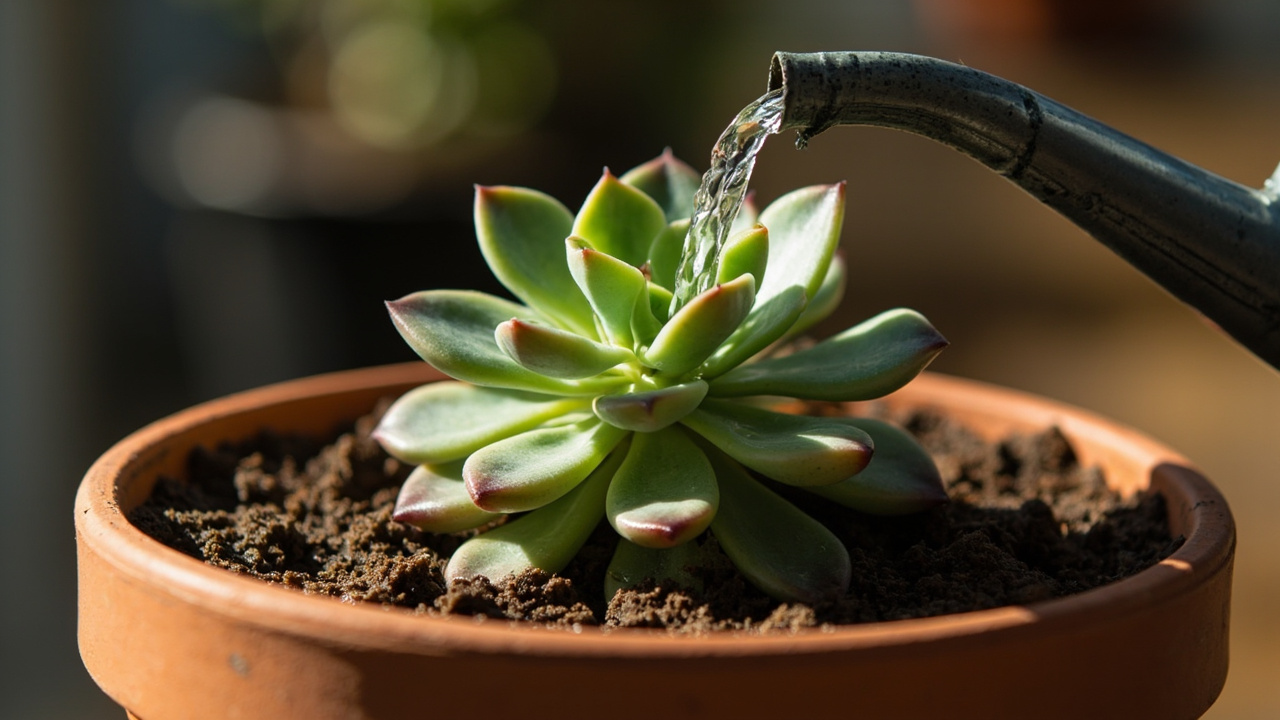
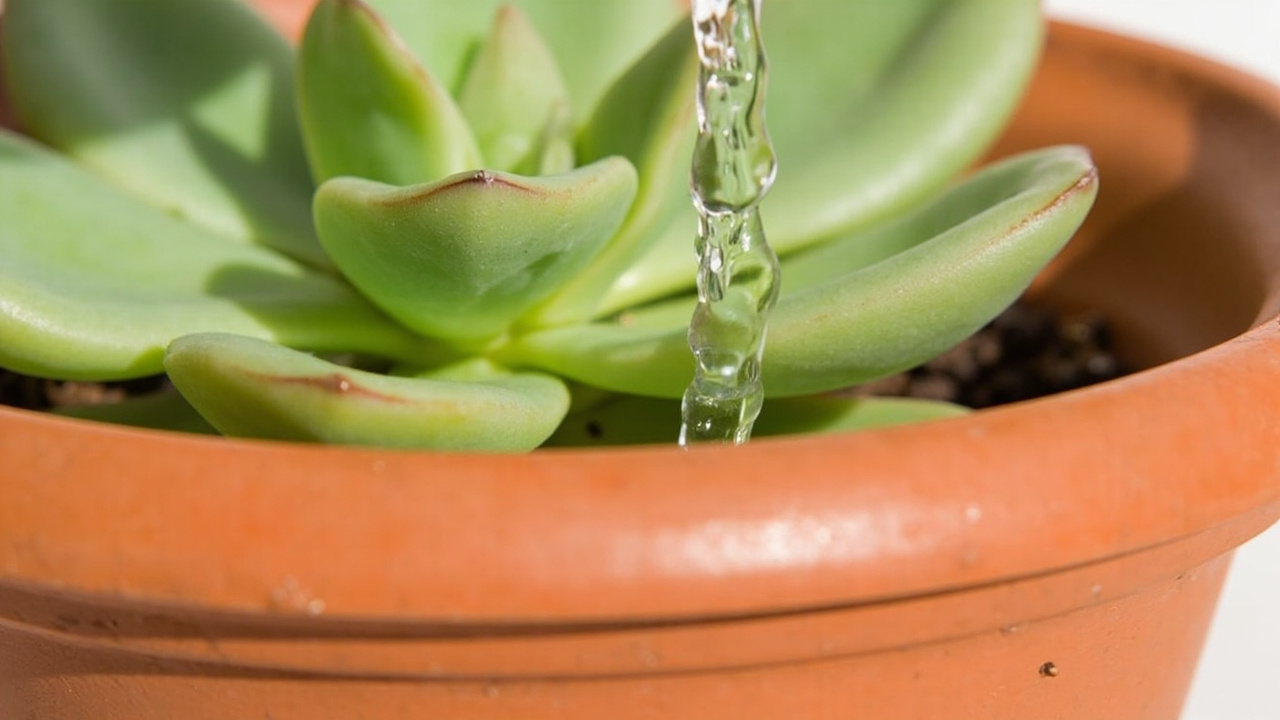
Place your succulent pot in a sink or basin. Water the soil surface slowly and evenly, moving around the pot, until water runs freely from the drainage holes. Let the pot drain for 30–60 seconds. Then stop. The goal is to saturate the entire root zone so every root has access to moisture. A light sprinkle that dampens only the top inch of soil concentrates roots near the surface and leaves the lower soil compacted and dry.
Top watering is the standard approach and works well for most setups. Bottom watering — placing the pot in a shallow tray of water and letting the soil wick moisture upward — is useful for very gritty mixes that shed surface water, or for succulents with dense rosettes that trap water at the crown (water sitting in a rosette crown can cause rot in echeveria and sempervivum). For bottom watering, leave the pot in 1–2 cm of water for 10–15 minutes, then remove it and let it drain. The mechanism is the same: saturate, then dry. Top watering also flushes mineral salts from the soil, which bottom watering does not, so alternate between the two if you use bottom watering regularly.
How long the dry-down takes depends on pot material, soil composition, pot size, humidity, and temperature. In a terracotta pot with gritty mix in a warm room, expect 5–10 days in summer. In a glazed ceramic pot with standard mix in a cool room, it may take 3–4 weeks. This is why a fixed schedule does not work. The soil tells you when to water, not the calendar.
How to Know When to Water: Reading the Soil and the Plant
Four reliable methods, in order of reliability: the wooden skewer test, pot weight, the finger test, and leaf firmness. Use at least two before watering.
Insert a wooden chopstick or skewer to the bottom of the pot and leave it for 30 seconds. Pull it out. If it comes out with damp soil clinging to it or feels cool to the touch, the soil is still moist — wait. If it comes out clean and dry, it is time to water. This is the most reliable method because it tests moisture at the root zone, not the surface.
Pot weight is the second check. Lift the pot right after watering to feel how heavy saturated soil feels. Lift it again every few days. When the pot feels noticeably lighter — roughly half the saturated weight — the soil has dried. This method becomes intuitive within a few weeks and is faster than any instrument.
The finger test works for larger pots. Insert your finger 3–4 cm into the soil. If you feel any moisture, wait. For small pots, this disturbs surface roots and is less reliable. Leaf firmness is the last resort: gently squeeze a lower leaf. Firm and plump means the plant has adequate water. Slightly soft and flexible means it is time. Wrinkled and papery means the plant is already dehydrated. The soil composition affects how quickly the plant uses available water, so understanding your soil requirements helps you interpret what the plant is telling you.
Seasonal Watering: What Changes in Winter and Summer
During active growth (spring and autumn for most common succulents), the plant uses water faster. Expect to water every 7–14 days depending on conditions. This is when the soil dries fastest and the plant is most resilient if you slightly underwater.
Winter changes two things: light levels drop and most succulents enter some form of dormancy. The soil stays wet longer because evaporation is slower and the plant is taking up less water. Reduce frequency to once every 3–6 weeks, and always check the soil before watering. If the soil is still moist after 3 weeks, wait longer. The honest trade-off is that winter is when most succulent deaths happen — not because of cold, but because owners keep watering on a summer schedule.
Indoor heating complicates this further. Warm, dry air from radiators and forced-air systems increases leaf transpiration while the soil stays cool and wet near the windowsill. The plant loses water through its leaves faster than the roots can replace it from cold soil, which can cause leaf wrinkling even in moist soil. If this happens, move the plant away from the heat source rather than watering more. For summer-dormant species (some haworthia, senecio, and albuca), the pattern reverses — they grow in winter and rest in summer, so increase water in the cooler months and reduce it when temperatures peak. Understanding the light requirements for your species helps you predict which dormancy pattern applies.
Overwatering: The Silent Killer
Overwatering does not mean too much water at once. It means the soil does not dry fast enough between waterings, or the pot lacks drainage. Saturated soil pushes out air pockets, and within 48–72 hours, the root zone becomes anaerobic. Root cells begin to die without oxygen, and the dead tissue becomes entry points for pythium and fusarium fungi. The rot spreads from the roots upward through the stem.
Early Signs
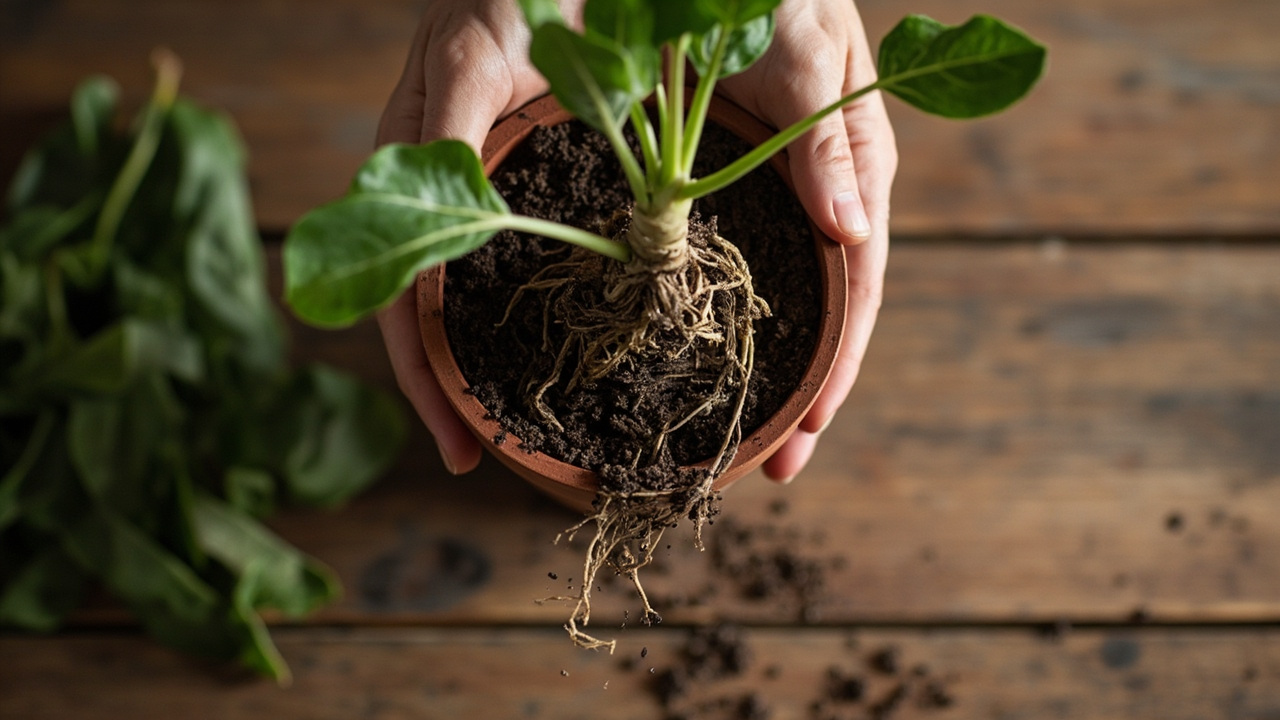
The first visible symptom is usually a translucent or mushy lower leaf that detaches with light touch. The leaf may look water-soaked, almost jelly-like. At this stage, stop watering immediately and check the soil. If the soil is still wet, remove the plant, gently shake off the wet soil, and let the root zone air-dry for 24–48 hours before repotting in dry mix.
Advanced Rot
If the stem base turns brown or black and feels soft, the rot has progressed. Cut the plant above the damaged section with a clean, sharp blade. Let the cutting dry in open air for 2–5 days until the wound calluses over, then place it on top of dry gritty soil. Roots will emerge from the callused tissue within 2–4 weeks. Do not bury the cutting or water it until roots have formed.
Rescue Protocol
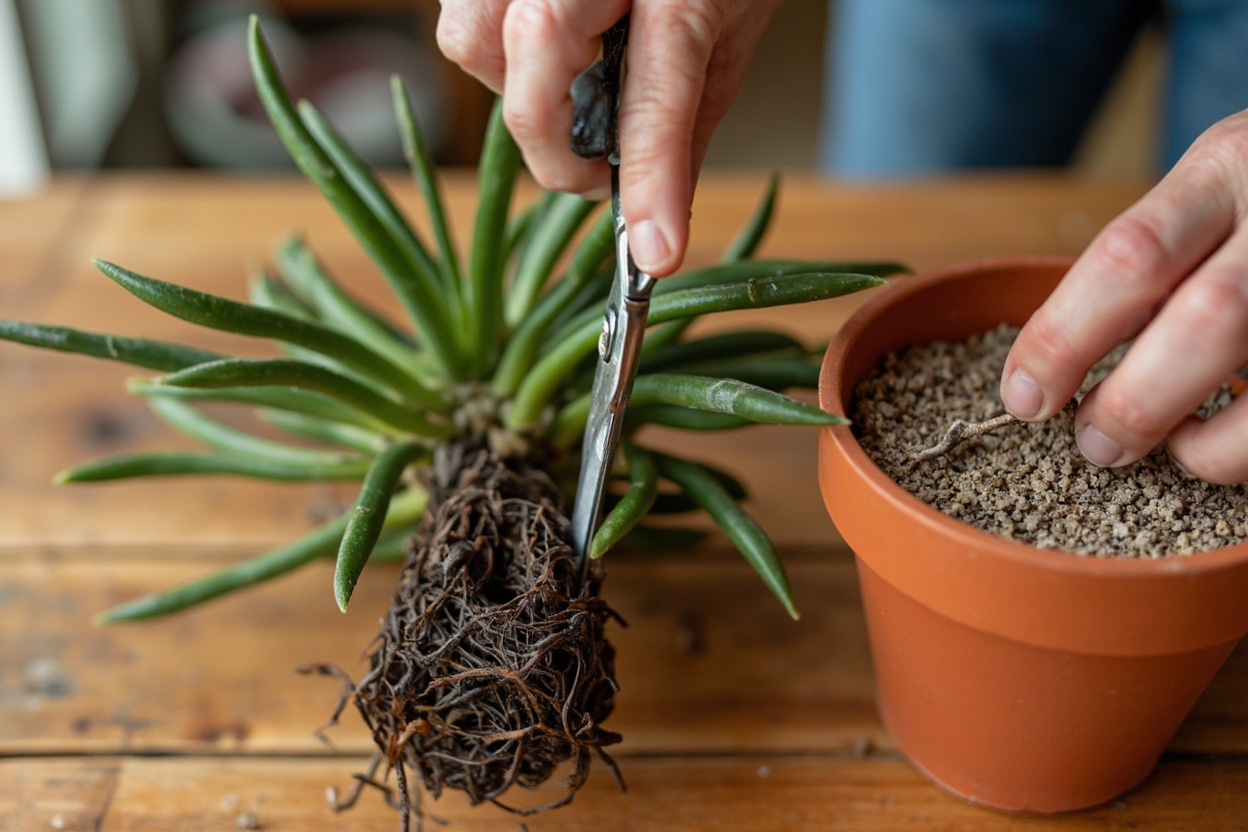
Remove the plant from the pot. Wash the roots. Cut away every root and leaf that is brown, black, or mushy — healthy roots are white or tan and firm. Let the plant dry for 2–3 days. Repot in fresh, completely dry gritty mix. Do not water for at least one week. The honest reality: rescues succeed roughly half the time. Prevention is vastly more effective than treatment.
Underwatering: Easier to Fix but Still a Problem
Chronic underwatering shows up as wrinkled, slightly soft lower leaves that lose their plumpness. The oldest leaves go first because the plant reclaims water from them to support new growth. A severely dehydrated succulent may have dropped most of its lower leaves and look like a bare stem with a small rosette on top.
The fix is straightforward: give the plant a thorough soak using the bottom-watering method. Place the pot in 2–3 cm of water for 20–30 minutes, then let it drain. Repeat once a week for 2–3 weeks. Do not flood a bone-dry plant with top watering — water runs down the gap between the shrunken soil and the pot wall without actually wetting the root ball. For a plant with adequate light (see jade plant watering as a reference for Crassula species), recovery is usually visible within a week as leaves regain firmness.
The long-term consequence of repeated underwatering is stunted growth. The plant survives but never reaches its full size or produces offsets. If you are forgetting to water, the solution is not a schedule — it is placing your succulents where you see them daily and checking the soil with a skewer every few days until the habit forms.
From PDF to Excel in one click
Forget retyping line by line. Upload any bank statement, get a spreadsheet you can actually use. Your files are never stored, and you can test the converter with 3 free conversions.
Try it free