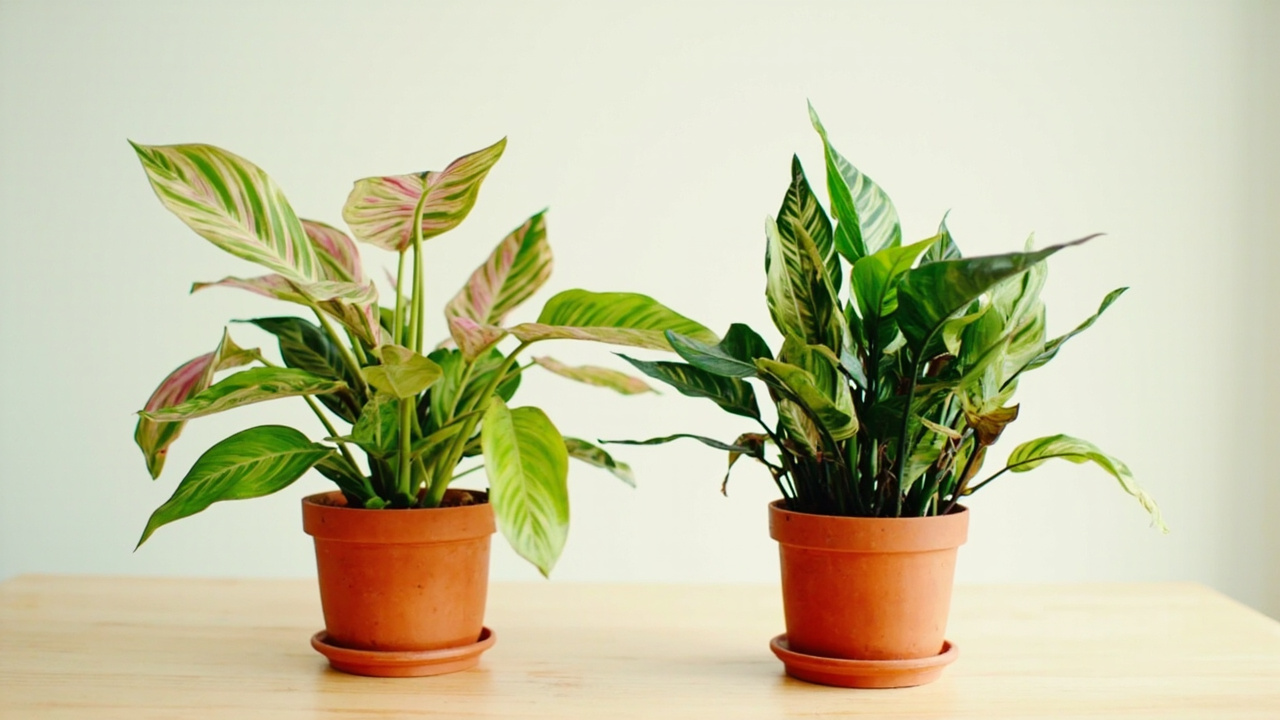

Prayer plants and calatheas look like cousins because they are. Both belong to the Marantaceae family, both fold their leaves at night, and both thrive in the humid understory of tropical forests. But they are different genera with different care needs, and confusing them leads to the kind of slow decline that makes owners believe they cannot keep either plant alive. The real difference comes down to leaf structure, light preference, water sensitivity, and how each responds when conditions drift outside its comfort zone.
This comparison does not declare one plant superior to the other. It helps you identify which species you already own or which one matches your home environment, then gives you the specific care instructions each plant actually requires. If you are choosing between them at a nursery, the visual differences are reliable. If you already have one and are wondering why it is struggling, the care divergence is where most mistakes happen.
Visual Differences: How to Tell Them Apart in Seconds
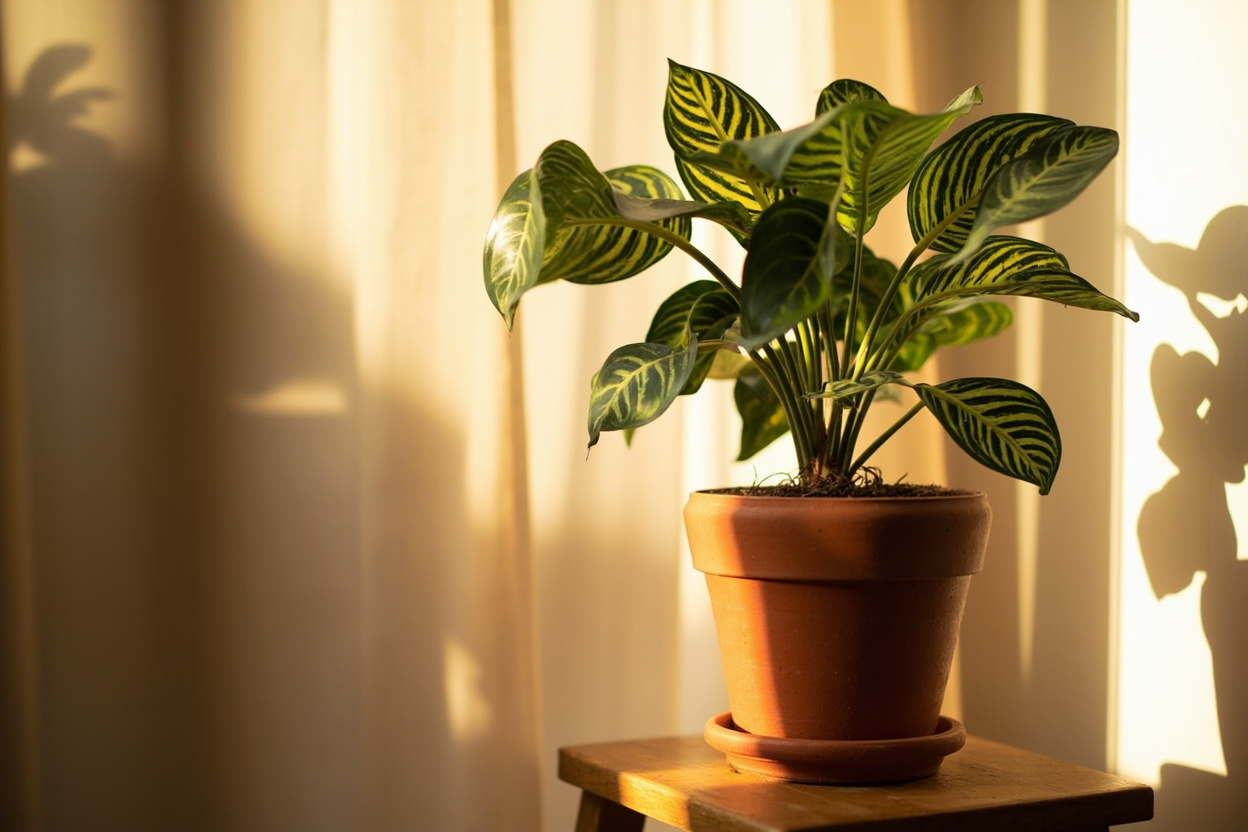
The fastest way to distinguish a prayer plant from a calathea is the leaf pattern and the folding mechanism. Prayer plants, scientifically known as Maranta leuconeura, display a consistent pattern of dark green spots running parallel to the veins on a lighter green background, with vivid purple undersides that appear when the leaf lifts. Calatheas, which includes species like Calathea orbifolia, Calathea medallion, and Calathea rattlesnake, show a much wider variety of leaf patterns, stripes, marbling, arrow shapes, and circular medallions, with colors ranging from silver-green to deep purple to cream variegation.
The folding motion is another reliable differentiator. Prayer plants fold their leaves upward in a tight, prayer-like gesture at dusk, with the leaflets coming together almost vertically. Calatheas fold more gradually, with the leaves turning sideways or folding along the midrib rather than coming together into a compact shape. This nyctinastic movement is present in both genera but follows different mechanical patterns because the pulvinus joints at the leaf base are structured differently.
Leaf size and texture provide a third check. Most common prayer plants have medium-sized leaves, typically 4 to 8 inches long, with a relatively thin texture that feels slightly papery. Calatheas range from tiny creeping species to large orbifolia varieties with broad, round leaves up to 12 inches across. Calathea leaves tend to be thicker and more substantial, with a waxy surface that reflects light differently than the matte finish of prayer plant foliage.

Care Divergence: Where the Similarities End
Both prayer plants and calatheas share a basic requirement for bright indirect light and high humidity, but the specifics matter more than the generalizations. Prayer plants tolerate a broader range of light conditions than most calatheas, which means they can survive in a north-facing room that would cause a calathea to fade within weeks. A prayer plant placed in moderate indirect light will continue producing new leaves, while a calathea in the same location may enter slow decline, losing its pattern vibrancy and stopping new growth entirely.
Light intensity also affects leaf color differently between the two genera. Prayer plants develop deeper purple undersides and more vivid green patterns when exposed to bright indirect light, but they can scorch if placed in direct sun. Calatheas respond to higher light by producing larger leaves with more pronounced patterning, but many species suffer leaf burn at light levels that a prayer plant would handle without damage. The common denominator is bright indirect light, both plants thrive in a spot where you could read comfortably without a lamp, but neither should sit in unfiltered afternoon sun.
Water quality is where the two plants diverge most sharply. Prayer plants are extremely sensitive to fluoridated tap water, which accumulates in leaf tips and produces brown edge burn that mimics low humidity damage. Calatheas are also sensitive to tap water chemicals, but they tend to show damage more slowly and often through different symptoms, yellowing leaves and marginal necrosis rather than the crisp tip burn typical of prayer plant fluoride toxicity. Using distilled or rainwater benefits both plants, but it is non-negotiable for prayer plants and highly recommended for calatheas.
Humidity requirements differ in both threshold and response. Prayer plants perform best at 50 to 60 percent relative humidity and show stress through leaf curling and edge browning when humidity drops below 40 percent. Calatheas generally require 60 to 70 percent humidity and respond to dry air with humidity crack, jagged tears along the leaf margin that appear within days of exposure to low humidity. A humidity crack is a calathea-specific signal that the prayer plant will not produce under identical conditions.
Growth Habit and Mature Size: What to Expect Long-Term
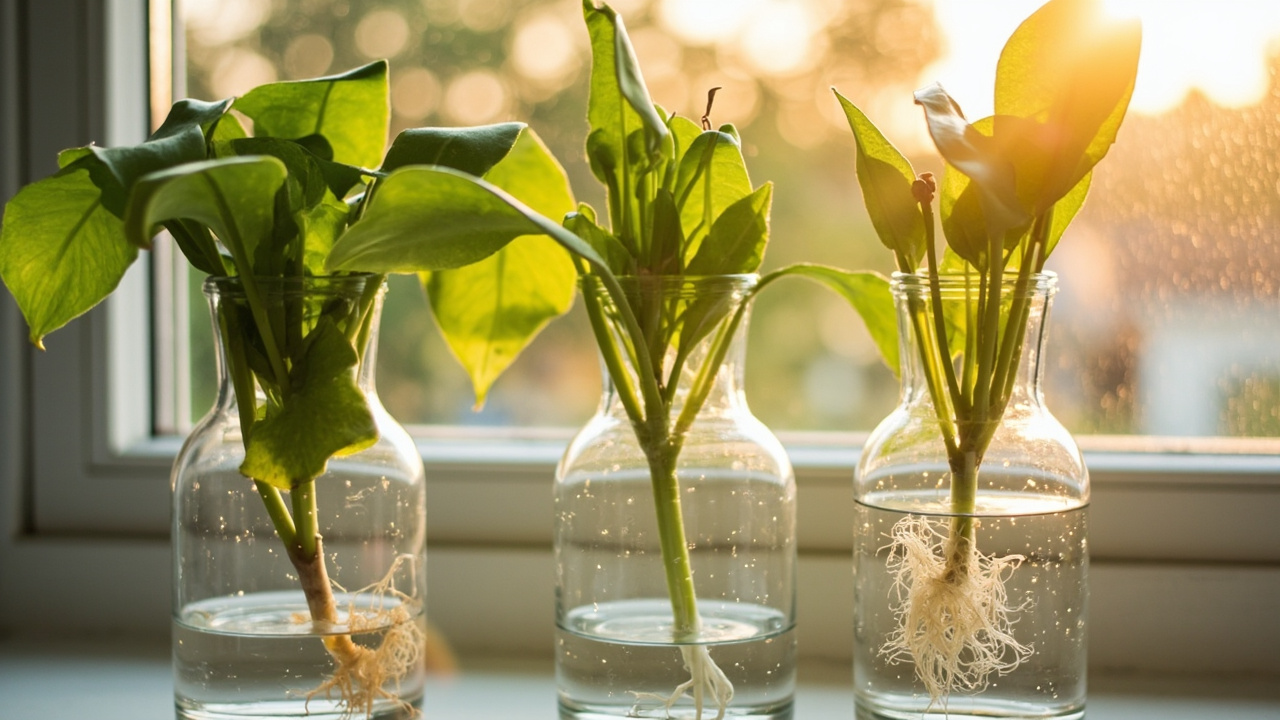
Prayer plants grow as low, spreading clumps that typically reach 12 to 18 inches tall and 12 to 15 inches wide at maturity. They produce runners called stolons that can generate new plantlets, making propagation straightforward and the plant naturally bushy when kept trimmed. A single prayer plant in a 6-inch pot will fill the container and send out daughter plants within a growing season if conditions are favorable.
Calatheas grow more upright and architectural, with individual leaves rising from a central crown rather than spreading horizontally. Most common varieties reach 12 to 24 inches tall but stay narrower, typically 8 to 12 inches wide. Some species like Calathea orbifolia spread wider than they grow tall, forming a broad rosette that can reach 2 feet across. Unlike prayer plants, most calatheas do not produce stolons, and propagation is usually limited to division at repotting time rather than natural runner production.
This growth habit difference matters for placement. Prayer plants work well as table-top specimens, shelf plants, or hanging basket cascaders because of their low, spreading form. Calatheas are better suited to floor positions, console tables, or any location where their upright structure can be appreciated without competing with surrounding foliage. A prayer plant on a windowsill looks natural; the same placement for a tall calathea can feel unbalanced unless the pot is substantial enough to anchor the plant visually.
Which One Should You Choose for Your Home
Choose a prayer plant if you want a forgiving houseplant that tolerates moderate light, adapts reasonably well to average apartment humidity, and produces visible daily movement that makes it engaging to watch. Prayer plants are pet-safe according to the ASPCA, which makes them a practical choice for households with cats and dogs. They recover relatively quickly from minor care mistakes and respond well to routine watering and indirect light without requiring specialized equipment.
Choose a calathea if you are willing to invest more attention in humidity management and water quality, and if you want a plant with more dramatic visual variety. Calatheas offer leaf patterns that range from bold silver stripes to delicate marbling, and their architectural form adds structure to a plant collection that might otherwise feel uniform. If you have a bathroom with a window, a greenhouse corner, or a humidifier dedicated to your plant collection, a calathea will reward that investment with specimens that look nothing like any other houseplant.
The honest limit is that neither plant thrives in a dry, low-light interior without intervention. A prayer plant in a windowless bathroom will survive but lose its pattern and stop folding. A calathea in the same location will fade rapidly and develop humidity cracks within days. Both plants communicate their needs through leaf position and color, and reading those signals early gives you the chance to adjust conditions before the damage becomes irreversible.
If you already own one of these plants and want to deepen your knowledge of its specific care, the prayer plant care guide covers light, watering, humidity, and propagation in detail. The prayer plant watering guide explains the fluoride sensitivity and distilled water requirement that separate successful prayer plant care from repeated failure. For a dedicated calathea reference, the calathea care guide covers the nyctinasty, humidity crack prevention, and tap water management that calatheas require.
Seasonal Care Differences: What Changes Between Spring and Winter
Both prayer plants and calatheas slow their growth during winter, but they respond differently to the seasonal shift. Prayer plants enter a shallow dormancy where leaf production slows but does not stop entirely, and the nyctinastic rhythm remains consistent even as new growth decreases. Calatheas may reduce leaf production more dramatically, sometimes stopping entirely for several weeks, and their leaf-folding motion can become less pronounced during the shortest days of the year.
This seasonal difference affects your care approach. In winter, reduce watering for both plants because cooler temperatures and lower light slow evaporation and uptake, but be especially careful with calatheas, which are more susceptible to root rot when sitting in moist soil during dormancy. Prayer plants tolerate slightly damp conditions better, but neither plant benefits from a soaking that exceeds what the roots can absorb. Let the top inch of soil dry between waterings for both species, but err on the side of slightly drier for calatheas.
Fertilizer should be reduced or stopped entirely during winter for both plants. A prayer plant growing slowly in low winter light cannot process nutrients efficiently, and excess fertilizer salts accumulate in the soil, damaging the root system over time. A calathea in the same condition shows the damage faster through yellowing leaves and marginal necrosis, so skipping winter fertilization protects both plants while they rest. Resume a light feeding schedule in spring when new growth resumes and light levels increase naturally.
Pest Vulnerability: What Each Plant Attracts and How to Spot It Early
Prayer plants are relatively resistant to common houseplant pests when kept in appropriate conditions, but they can attract spider mites when humidity drops too low. Spider mite damage appears as fine webbing between leaves and stippling on the upper leaf surface, which reduces photosynthetic efficiency and causes the leaf pattern to fade. Early detection is straightforward because the webbing is visible to the naked eye, and treatment with neem oil or insecticidal soap is effective before the infestation spreads.
Calatheas face a broader range of pest pressure, particularly from fungus gnats and thrips. Fungus gnats thrive in consistently moist soil and lay eggs that produce larvae feeding on roots, weakening the plant over time. Thrips are harder to detect because they hide inside unfurled leaves and feed on cell contents, producing silvery streaks and black fecal spots on the leaf surface. Both pests indicate a care imbalance, usually excessive moisture or insufficient air circulation, and addressing the underlying condition prevents recurrence better than treating the symptoms alone.
The shared vulnerability to overwatering-related pests means that both plants benefit from the same preventive measures: well-draining soil, pots with drainage holes, and a watering schedule that responds to soil moisture rather than a fixed calendar. A prayer plant and a calathea placed side by side in identical conditions will show different pest responses because their root structures and soil preferences differ, but the underlying cause is often the same, and the correction is the same, adjusted for each species tolerance.
Turn any PDF statement into a clean sheet
Skip the typos and the hours of copying. Our converter handles any bank statement format and outputs Excel, CSV, or QBO for QuickBooks. No file retention, free to try.
Convert your statement