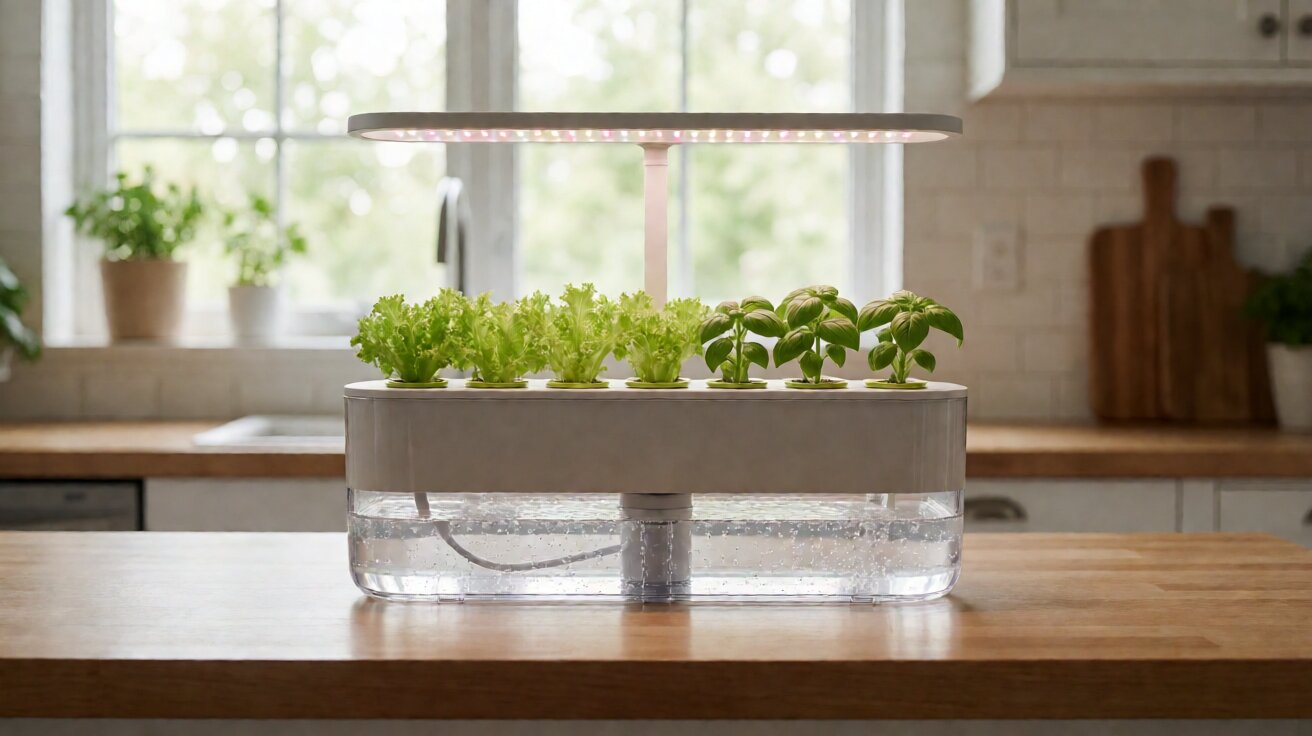

You are not buying a planter. You are buying a closed chemistry loop whose reservoir, light, and the spacing between the spots set the ceiling on what can ever grow. It has to keep its own ions, oxygen, and light in balance for weeks, and the kit is just the case that holds that loop. Most of the choices on a box are noise: the pod count, the “smart” badge, the price. Three lines on the spec sheet do the actual work, and if you read them first you will pick a kit that can grow the thing you want instead of one that quietly caps you.
Those three lines are reservoir volume, light output, and the space between the grow spots. Reservoir volume sets how far the nutrient solution can drift before you stop to top it up. Light output sets the ceiling on what can photosynthesize under it. The space between the spots sets the biggest, tallest plant that will ever fit. Everything else is convenience around those three.
So the short answer to “which plug and play hydroponic kit should I buy” is not a brand. It is a rule: buy the smallest kit that still clears the crop you actually want, and check that its light and reservoir can reach that crop. A countertop unit with four spots is the right buy for basil and lettuce; it is the wrong buy for the cherry tomatoes you are daydreaming about, and the spec sheet will tell you why.
If you want to see how the chemistry works before you spend a cent, start with how a hydroponic system actually works, or if you are choosing between system types rather than between finished boxes, read through the system types and which type fits your space. This page assumes you have already decided on a ready-to-run box and want to know which one.
The four archetypes, and who each one actually fits
Strip the marketing and every finished kit is one of four shapes. Each shape trades control for effort, and the right one is a function of how much of the loop you want to run yourself. None of them is better; they are different amounts of the chemistry loop exposed to you.
| Archetype | Effort | Control | Fits |
|---|---|---|---|
| Kratky passive | Lowest. Fill, wait, harvest. | Low. Fixed water level, no pump. | Herbs on a shelf, no electricity at the unit. |
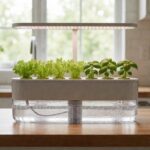
| Countertop plug and play | Low. Fill reservoir, set timer. | Medium. Fixed light, auto cycle. | Basil, lettuce, microgreens on a counter. |
| Smart app connected | Low. Top up when the app warns you. | Medium to high. Alerts, schedules, logs. | Growers who leave a room and check a phone. |
| Custom deep water culture | High. You mix, dose, aerate. | Highest. You set every variable. | Fruiting crops, multiple cycles, yield chasing. |
The pattern under the table is the whole decision. As control goes up, the number of things that can go wrong goes up with it, and so does the number of hours you spend each week. A countertop unit hides the chemistry so you do not have to read a meter; a custom tank hands you the meter and expects you to read it daily. Most first growers land on the countertop or smart app shapes because they want the produce without the job.
Reservoir volume sets your headroom
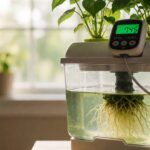
A reservoir is not a water tank. It is the volume of dissolved minerals your roots will drink over the whole cycle, and that mix drifts as the plants take up some ions faster than others. The bigger the tank, the slower it drifts, and the less often you stop to check and top up. A two liter unit can be half out of balance in a week; a fifteen liter tank gives you the same drift over a month. Same kit, different patience required.
There is a second, less obvious cost to a small reservoir. When you add nutrient concentrate, a tiny tank overshoots fast. A spoonful that is harmless in fifteen liters is a burn in two. So small headroom does not just mean more frequent checks. It means every dose has to be smaller and every top up has to be more careful, and it punishes the grower who grabs the bottle without measuring. If you will be away for weekends, the reservoir is the number to watch, not the light.
Light output sets your crop ceiling
Every integrated grow light has a wattage and a spectrum, and together they decide what can actually make food. Leafy crops like Lactuca sativa and Ocimum basilicum are forgiving and will do fine under a modest lamp. Fruiting crops like Solanum lycopersicum are not. A tomato that starts a flower and then drops it is usually a plant that is short on light energy, not on water. The flowers need the surplus energy that leafy greens never have to spend, and a countertop light tuned for herbs will not hand it over.
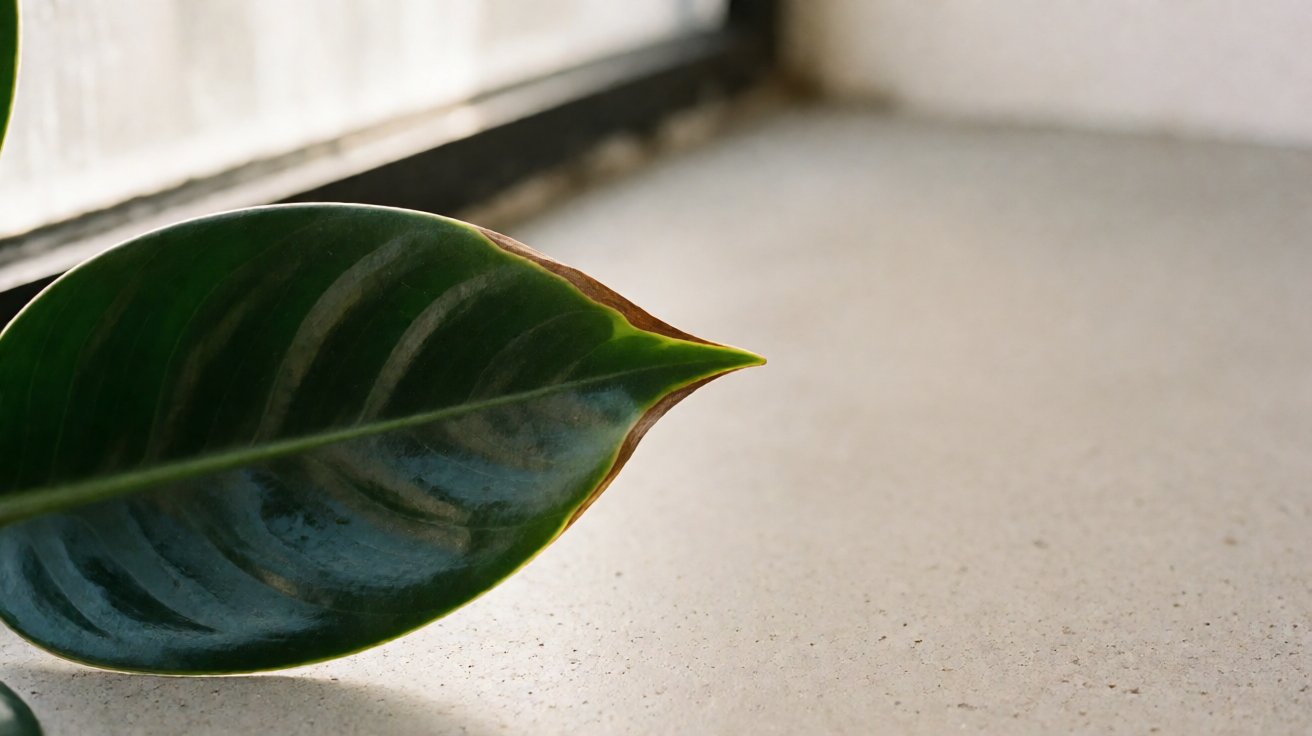
A plant sitting under a weak light isn’t dying from anything you can see. It is just never reaching the photosynthetic threshold, so it stays leggy, pale, and small and nothing looks wrong. That is why the light is the ceiling, not the reservoir. Read the integrated light in the spec, and if the crop you want is a fruiting one, ask yourself whether that light was ever meant for it. You can add an external grow light later; you cannot retrofit more light into a unit that was capped at two hundred lumens.
Pod spacing decides what can grow tall
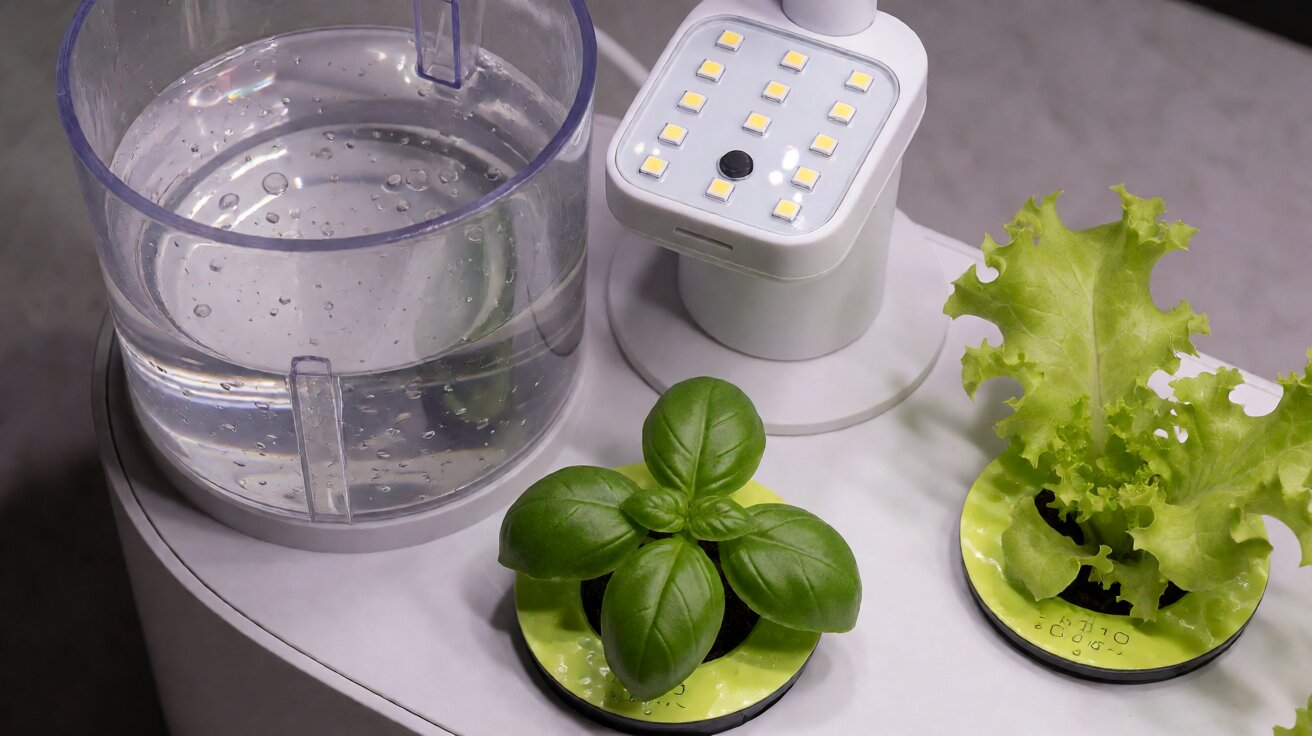
The number of spots is the least useful line on the box, because it is not the number of plants you will grow. It is the distance between them, and that distance caps the size of the plant that ever clears the light. A unit with six close spots and a short light arm will let a lettuce head mature and will clip a basil bush that has run to twelve inches. When the foliage hits the light, the outer leaves shadow the center and the whole plant stunts, even under a generous light.
So the grow-spot count is a height and spread limit, not a capacity you can ignore. If your crop is a tall, spreading one, you want wide spacing and a light arm that can move up as it grows. Most countertop units lock both in place, which is why they are tuned for herbs and lettuce, the crops that stay under the cap. This is also why two kits with the same light can grow different things: one has room and one does not.
Smart home: what it can and cannot do
“Smart” on a kit is doing less work than the label implies. The honest list of what a connected unit actually gives you is short: a light timer you can change from a phone, a reservoir level alert, and a log of when you last topped up. That is real convenience, and for a grower who leaves the house for days it is the whole reason to pay the premium.
What it is not is real automation. Most of these apps do not talk to a house system, and even the ones that add a Wi-Fi timer are still just scheduling a light and flagging a tank. They do not dose nutrients for you, and they do not watch the chemistry. A connected kit can tell you the water is low; it will not fix the mineral drift that comes after. If you are buying a box because you want it to run itself, the smart layer buys you the reminders, not the running. Pair it with a nutrient schedule and a light spectrum guide and you have most of what the app claims to do, just with your own hands.
The decision matrix, by your space, crop, and time
Turn the three variables into the choices you actually face. Read down your column; the row that clears all three is the one to buy.
| Situation | Reach for | Watch for |
|---|---|---|
| Counter or shelf, herbs only, minimal time | Countertop plug and play, small reservoir | Light capped for leafy crops; fine for basil and lettuce. |
| Want to be out of the house days | Smart app connected, bigger reservoir | The app alerts and logs; it does not dose or balance. |
| Fruiting crops, tomatoes or peppers | Custom deep water culture, strong light | You set EC and pH yourself; budget the weekly hours. |
| Room on a shelf, no extra electricity | Kratky passive | Fixed water level; topping up mid cycle loses the passivity. |
| Not sure yet, low budget, learning | Smallest countertop unit you can find | It caps you; you will outgrow the light before the concept. |
Two of those rows will save you real money. The “fruits, custom tank” row keeps you from buying a smart countertop unit on a promise it cannot keep. The “unsure, smallest unit” row keeps you from buying a large custom system that will sit half empty because you did not actually commit to the hours. Pick the row that is true, not the one that is aspirational.
Cost, upkeep, and the honest limits
The upfront price is the smallest number in the total. The running cost is the recurring dose of nutrient concentrate, the electricity of the light, and the seed pods or the seeds themselves. A custom system adds a meter you have to calibrate and a pump you have to clean. None of these are dramatic, but they do not stop, and a grower who only weighs the box price feels the difference by the third cycle, when the concentrate is the thing you keep buying.
State the limits plainly so you are not surprised. This page covers kit archetypes, not a fixed list of current models, because the specific units, their pod counts, their wattage, and their prices change every season and the numbers here will be a month behind by the time you read them. The mechanism does not change. Whatever box you open, the three lines that decide it are the reservoir, the light, and the spacing, and you can read them on any listing without trusting a single spec at face value. For what to actually grow in the system you pick, read what grows best in hydroponics, and if you are not sure where to start at all, how to start from an empty room covers the first steps.
A shortlist you can act on tonight
Walk into any store’s listing page with the rule, not with a brand loyalty. For a kitchen counter that only needs herbs, the countertop archetype is the buy, and you want the biggest reservoir in that class that still fits the counter. For a grower who travels and wants the produce to survive the trip, the smart app archetype is the buy, and you want the level alert to be the loudest feature, not the light timer. For a tomato or a pepper, skip both and go to the custom deep water culture archetype with a light strong enough to carry the fruit, because the other two stop short at the flower. That is the whole decision, and none of it requires you to memorize a model name.
Read the reservoir, the light, and the spacing on whichever unit you are holding. If all three clear the crop you actually want, it is the right kit, whatever the brand. If one of them quietly caps you, the box is telling you the truth, and the next one up is the one to buy.
Read also: how hydroponic farming works · types of hydroponic systems · the best system for your home · starting from an empty room · what grows best.
Buy the smallest kit that still clears the crop you want, not the biggest one that fits the kitchen. The light is the limit. Everything else is headroom.
From Bank Statement to QuickBooks-Ready File
That manual cleanup you just read about? This tool skips it. Turn your PDF into QBO for QuickBooks without storing your data anywhere.
Start Converting