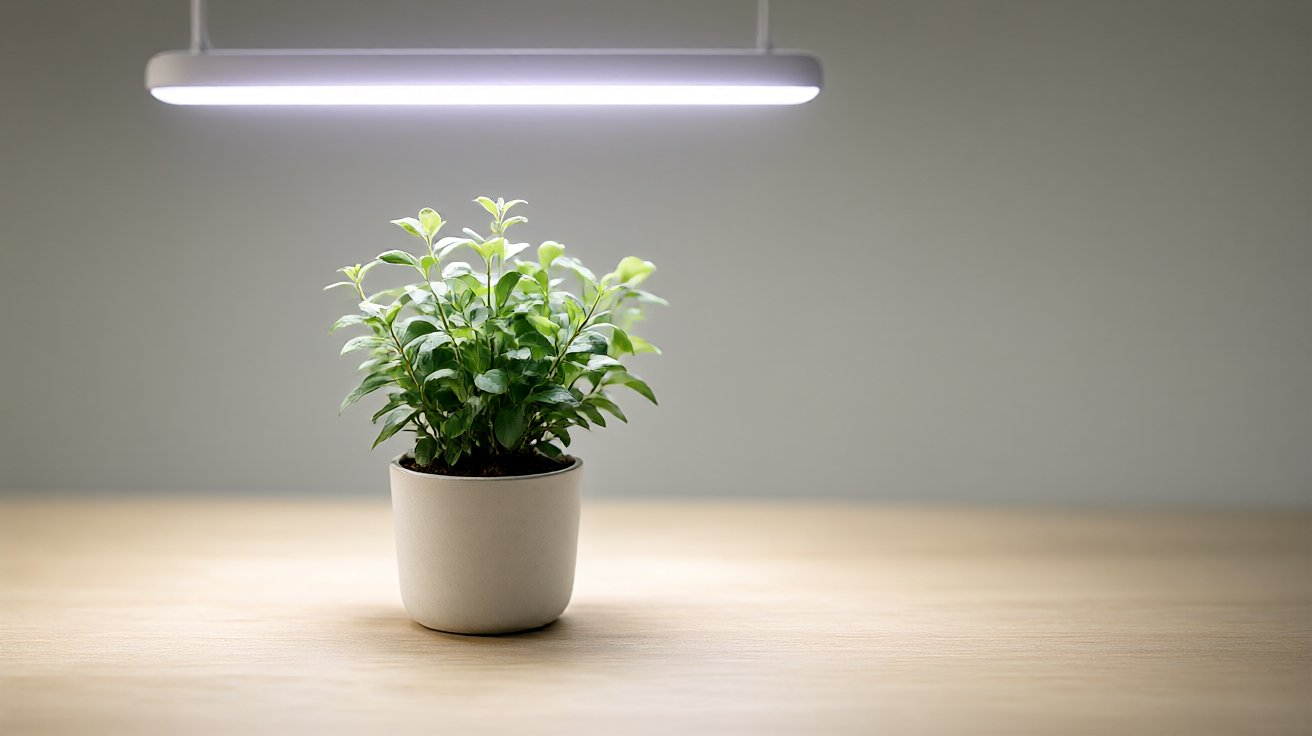

A grow light turns an impossible spot into a viable one. For apartment dwellers with north-facing windows, basement offices, or windowless bathrooms, supplemental lighting is the difference between a thriving plant and a slowly dying one. But not all grow lights are equal, and the wrong one wastes money and electricity.
The most common mistake is buying a “grow light” based on wattage or marketing claims without understanding what plants actually need. Plants use light in the photosynthetically active radiation (PAR) range, roughly 400 to 700 nanometers. A light that looks bright to human eyes may deliver little usable energy to a plant.
What Plants Need from Light
Plants photosynthesize using light energy. The key metric is photosynthetic photon flux density (PPFD), measured in micromoles per square meter per second. PPFD tells you how many usable photons reach the plant’s leaves per second. Higher PPFD means more energy for growth.
Low-light plants need roughly 50 to 150 PPFD for survival and 150 to 300 for healthy growth. Medium-light plants need 300 to 600. High-light plants need 600 and above. Most household grow lights deliver 50 to 300 PPFD at 12 inches, which is adequate for low-light and medium-light plants.
Light spectrum also matters. Blue light (400-500 nm) drives vegetative growth and compact form. Red light (600-700 nm) drives flowering and fruiting. Full-spectrum white LEDs provide both and are the best choice for general houseplant care.
Types of Grow Lights
LED grow lights are the best option for most home growers. They are energy-efficient, run cool, last for years, and come in full-spectrum options. LED bars, panels, and bulbs are all available. LED bars are best for shelves. Panels cover larger areas. Bulbs fit standard lamps.
Fluorescent lights (T5 and T8 tubes) are cheaper upfront but less efficient and shorter-lived. They work well for seed starting and low-light supplementation but are being phased out in favor of LEDs.
Incandescent bulbs are not suitable. They produce too much heat and too little usable light. Avoid them for plant lighting.
For related guidance, see what is low light for plants and low light plants for bedroom.
How to Choose a Grow Light
First, determine your PPFD needs based on your plants. Low-light plants need 50 to 150 PPFD. If your natural light provides 50 fc (roughly 50 PPFD), a grow light adding 100 PPFD brings you to adequate levels.
Second, consider coverage area. A small LED bar covers a 12-inch shelf. A larger panel covers a 2-foot area. Match the light to your plant collection size.
Third, check the spectrum. Look for “full spectrum” or “white” LEDs with a color temperature of 5000K to 6500K. Avoid purple or pink “blurple” lights unless you are growing in a dedicated space, as they distort plant appearance and can cause eye strain.
Fourth, consider mounting and adjustability. Plants grow toward light. A light on an adjustable arm lets you maintain the optimal distance as plants grow. Fixed mounts require repositioning.
Placement and Distance
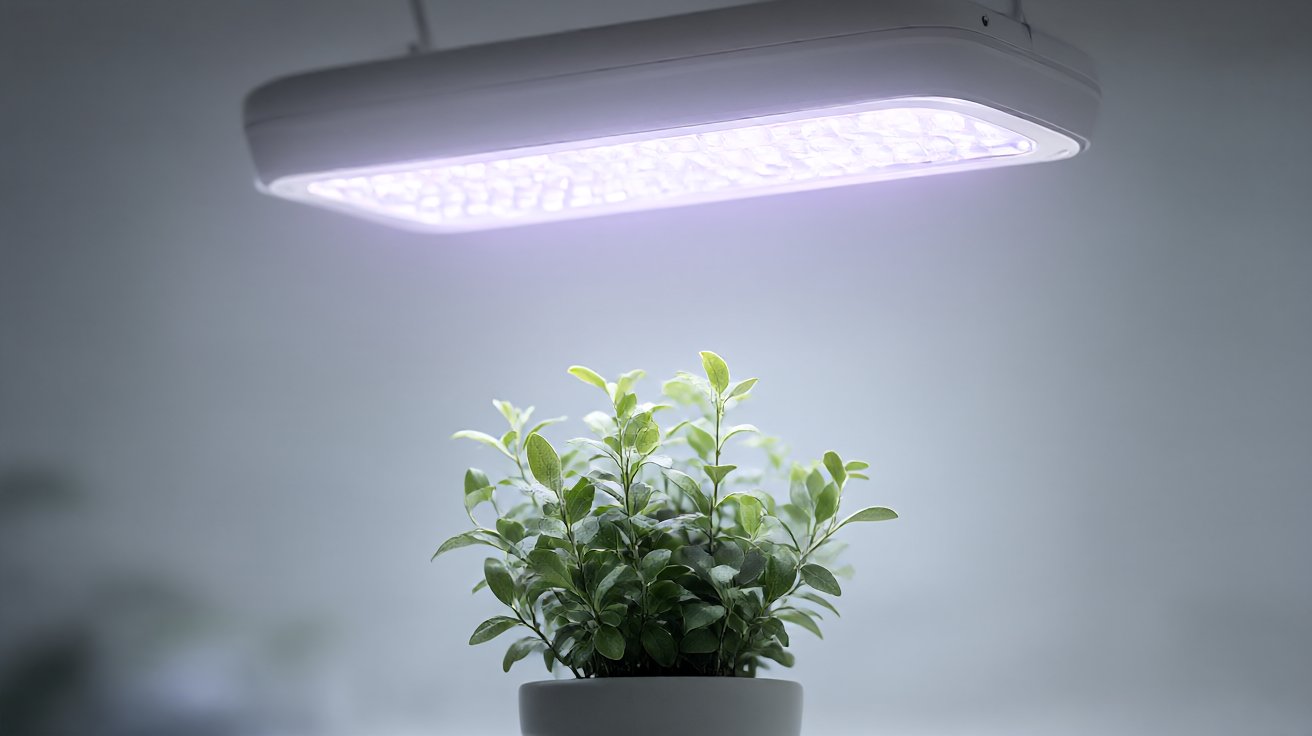
Distance dramatically affects PPFD. Doubling the distance quarters the light intensity (inverse square law). A light delivering 200 PPFD at 12 inches delivers only 50 PPFD at 24 inches.
For LED bars and panels, start at 12 to 18 inches above the plant canopy. Adjust based on plant response. If leaves bleach or curl, move the light higher. If plants stretch or lean, move it closer.
Duration matters as much as intensity. Most houseplants need 12 to 16 hours of supplemental light per day. Use a timer to maintain consistency. Plants need a dark period for respiration, so do not leave lights on 24 hours.
Common Mistakes
Overlighting causes bleaching, leaf curl, and stress. More light is not always better. Match PPFD to plant needs.
Underlighting wastes electricity without helping. A weak light too far away delivers negligible PPFD. Position lights close enough to matter.
Inconsistent lighting stresses plants. Use timers to maintain regular schedules. Sudden changes in light duration cause leaf drop and stalling.
Ignoring heat. Even LEDs produce some heat. Check leaf temperature under the light. If leaves feel warm, increase distance.
For related symptoms, see leggy plant etiolation, plant not growing, and plant diagnosis.
How to Set Up a Grow Light
First, identify the plants that need supplemental light. Measure natural light with a meter. Any spot below 100 fc benefits from supplementation.
Second, choose a light type and size based on your plant collection and space. LED bars for shelves, panels for larger areas, bulbs for single plants.
Third, mount the light at the recommended distance. Use adjustable arms or hanging kits. Ensure the light covers the full plant canopy.
Fourth, set a timer for 12 to 16 hours daily. Consistency is key. Plants respond to regular light cycles.
Fifth, monitor plant response. New growth, compact form, and maintained color indicate adequate light. Stretching, yellowing, or bleaching indicate adjustment needed.
Last reviewed on November 10, 2026