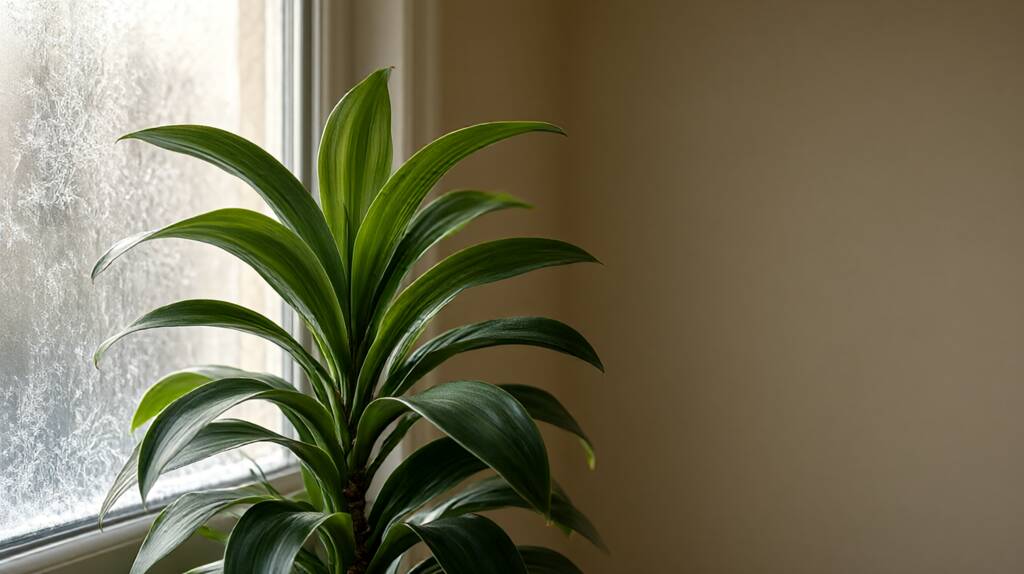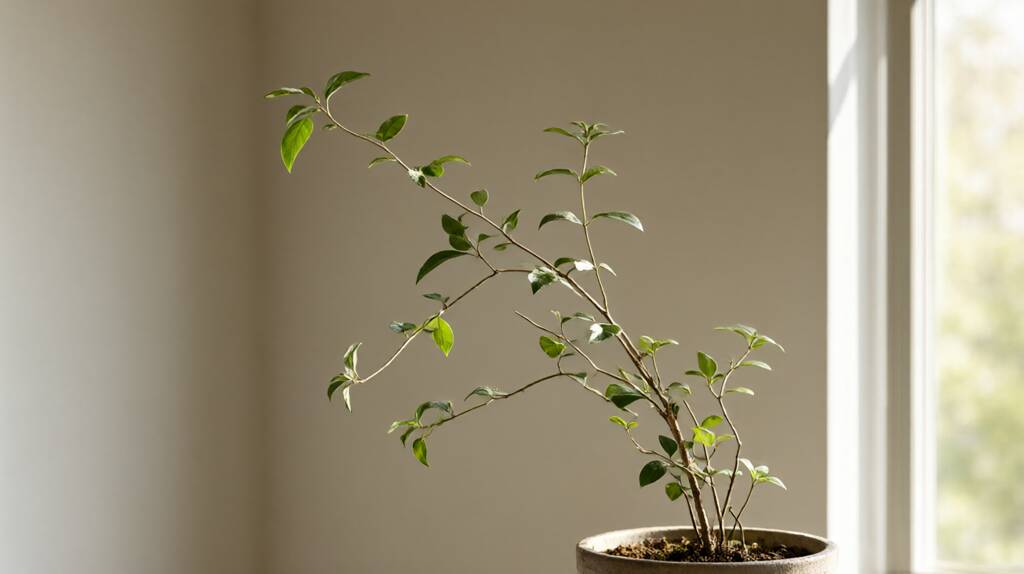

A leggy plant is not a sick plant. It is a plant that is starving for light. The long, thin stems and sparse leaves are the plant’s attempt to reach a brighter source. Etiolation, the technical term for this response, is a survival mechanism, not a disease. The fix is light, not fertilizer or pruning.
The most common mistake is pruning the leggy growth without fixing the light problem. Pruning without more light produces more leggy growth. The plant stretches again because the underlying cause, insufficient light, has not changed.
What Etiolation Is
Etiolation is the plant’s response to insufficient light. When light levels drop below what the plant needs for normal growth, the plant produces elongated, thin stems with small, pale leaves. The stem grows faster than normal, searching for light. The leaves remain small because the plant cannot produce enough energy to support full-sized foliage.
The result is a plant that looks stretched, sparse, and weak. The stems may be pale or yellowish. The leaves may be smaller and lighter in color than normal. The plant leans toward the nearest light source.
This is different from normal growth. A plant in adequate light produces compact, sturdy stems with full-sized, dark green leaves. A plant in low light produces the opposite.
Diagnosing the Cause
Insufficient light is the cause in more than 90 percent of leggy houseplants. The plant is not getting enough photons to support compact growth. The fix is to increase light, either by moving the plant closer to a window or adding a grow light.
The secondary cause is inconsistent light direction. A plant that receives light from only one side will lean and stretch toward it. Rotating the plant weekly prevents one-sided growth.
A third, less common cause is over-fertilization with nitrogen. Excess nitrogen promotes rapid stem elongation without corresponding leaf development. If the plant is in adequate light and still leggy, check the fertilizer schedule and reduce nitrogen.
A fourth cause is temperature. Plants in warm conditions grow faster than in cool conditions. A plant in a warm, dark room will stretch more than the same plant in a cool, dark room. The fix is still light, but temperature management helps.

How to Fix a Leggy Plant
The first step is to increase light. Move the plant to a brighter location, closer to a window, or add a grow light. The improvement should be visible within two to three weeks as new growth comes in more compact.
The second step is to prune the leggy growth. Cut back the stretched stems to a node where the plant can produce new, compact growth. Pruning without fixing the light will not work, but pruning after fixing the light accelerates recovery.
The third step is to rotate the plant weekly. This prevents one-sided growth and encourages even development.
The fourth step is to adjust fertilizer. If the plant is receiving high-nitrogen fertilizer, reduce the dose or switch to a balanced formula. Nitrogen promotes stem elongation, and excess nitrogen in low light produces extreme legginess.
Propagation from Leggy Growth
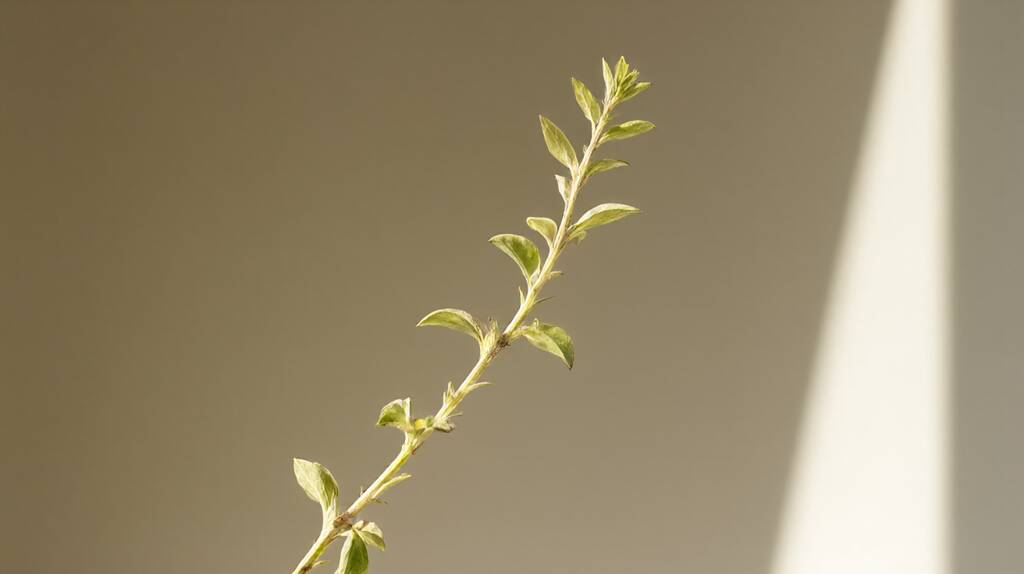
Leggy stems can be used for propagation. Take cuttings from the healthy portions of the leggy stems, root them in water or perlite, and grow new compact plants in better light. This turns a problem into an opportunity.
For propagation guidance, see how to use perlite for propagation and growing medium for seed starting and propagation.
Species That Are Prone to Legginess
Some species are naturally more prone to legginess than others. Pothos, philodendron, and monstera stretch readily in low light. Succulents and cacti etiolate dramatically, producing thin, pale stems. Ficus and dracaena tolerate lower light but still stretch if light is very low.
High-light plants like succulents need direct sun or strong grow lights. Medium-light plants like pothos and philodendron need bright indirect light. Low-light plants like snake plant and ZZ plant tolerate dim conditions but still benefit from more light.
Prevention
The best prevention is adequate light from the start. Place plants within 1 to 2 meters of a bright window. Use grow lights in rooms without sufficient natural light. Rotate plants weekly to ensure even growth.
Do not over-fertilize, especially with nitrogen. Fertilizer promotes growth, but without adequate light, that growth is leggy. Feed only when the plant is actively growing in good light.
For general diagnosis, see plant diagnosis. For yellow leaves, which often accompany legginess, see yellow leaves on plants.
Last reviewed on November 10, 2026
Sources and further reading: The Spruce, leggy plants and etiolation; Gardening Know How, fixing leggy houseplants; Bloomscape, light requirements for houseplants.