
A croton that drops leaves is not being dramatic. It reports a specific stress event with a specific cause and fix. Leaf drop is a language, not a behavior problem.
Five distinct triggers account for nearly all indoor croton leaf drop: overwatering, underwatering, cold shock, light change, and transplant shock. Each pattern produces a different leaf signature and points to a different fix. Once you understand the five patterns, the right cure is obvious and the recovery timeline is predictable.
The wrong cure actively accelerates the problem. Watering a cold-shocked croton pushes it into root rot inside 48 hours. Moving a light-starved plant compensates for the wrong variable.
This guide walks each cause, the diagnostic steps, the fix, and the recovery timeline. Goal: stop the drop within 2 weeks and see new growth within 4-6 weeks.
The Five Causes: Why Leaves Drop
Overwatering: yellow, mushy lower leaves detach with gentle touch. The soil smells sour and roots are dark brown-black. This is root rot in progress — the most common croton killer. Root rot explained: unpot, trim, repot, wait 7 days.
Underwatering: leaves go soft-droopy, then crisp-yellow and drop. The soil pulls away from pot walls. Dropped leaves are papery-dry, not mushy.
Cold shock: exposure below 10°C (50°F) for 4+ hours. Leaves drop within 24 hours, often all at once. Dropped leaves are still green and firm. Common near drafty windows in winter.
Light change: when a croton moves from bright to dim, it drops 30-50% of leaves within 2 weeks. Dropped leaves are still colorful — the plant sacrifices what it cannot support at lower light.
Transplant shock: triggered by repotting or moving. 20-40% leaf loss within 7-14 days. The plant reallocates energy to root disturbance recovery. Remaining leaves are healthy and firm.
Diagnostic: Which Pattern Fits Your Plant
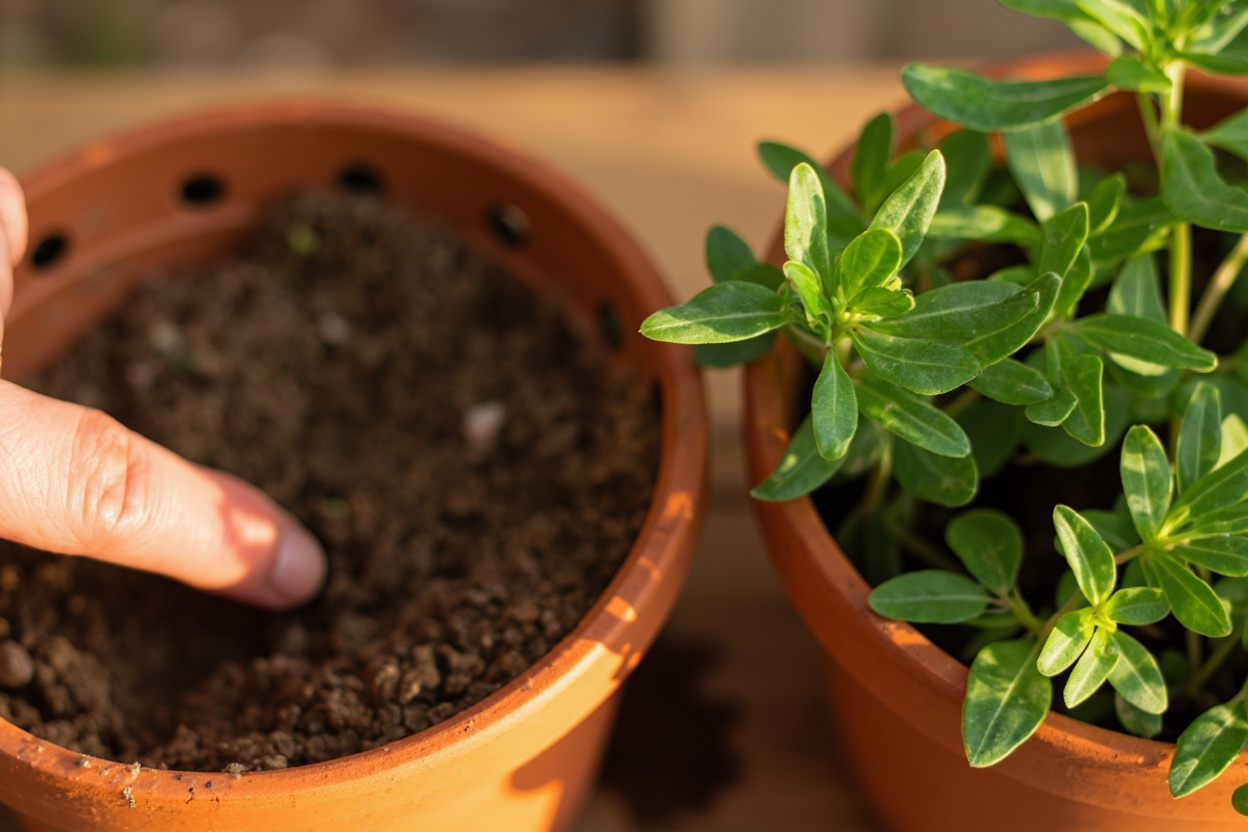
Step 1: check soil moisture. Wet/sour → overwatering.
Dry/caked → underwatering. Fine → Step 2.
Step 2: check temperature history. Any exposure below 10°C in last 48 hours?
Yes → cold shock. No → Step 3.
Step 3: compare current light to previous location. Significant reduction → light-change drop. Recent repot or move → transplant shock.
Leaf sequence tells the story. Bottom-up yellowing = overwatering. Top-down loss = light starvation.
All-at-once = cold shock. Scattered random = transplant or light change.
Leaf texture: mushy = overwatering; papery-dry = underwatering; firm-green = cold, light, or transplant.

Fixes: How to Stop the Drop
Overwatering: stop watering immediately. Unpot, trim rotted roots back to healthy white tissue, repot in fresh mix. Do not water for 7 days.
Underwatering: water deeply until it runs from the drainage hole. Repeat in 2 hours. Do not fertilize a dehydrated croton.
Cold shock: move to a warm room (21-27°C). Do not fertilize or increase watering. Recover fully in 4-6 weeks with stable warmth alone.
Light change: place in bright indirect light (2000+ lux) and leave it alone. Do not rotate or move while adjusting.
Transplant shock: place in bright indirect light and water once. Do not fertilize, repot, or move. Resolves within 2-4 weeks.
Prevention: Keeping the Rest of the Canopy
The watering rule: water only when the top 1-2 inches read dry. Not the calendar — the soil. The croton watering guide walks the full seasonal cadence.
The temperature rule: keep the croton above 15°C (59°F) at all times. Below 15°C growth slows.
Below 10°C leaf drop begins. Near windows in winter, ensure leaves do not touch the glass.
The light rule: east- or south-facing windows in the northern hemisphere. In winter above 40° latitude, add a grow light if lux drops below 1500.
The acclimation rule: bringing a home from a nursery (4000-8000 lux) to a dimmer room causes 20-40% leaf loss. Place near a bright window, not in direct sun, for 2 weeks. The croton plant care guide walks the full system. The light requirements guide walks lux-per-cultivar targets.
Source: University of Florida IFAS Extension’s Codiaeum variegatum notes, which names cold shock below 10°C (50°F) and abrupt light change as the two leading leaf-drop triggers indoors.
From Bank Statement to QuickBooks-Ready File
That manual cleanup you just read about? This tool skips it. Turn your PDF into QBO for QuickBooks without storing your data anywhere.