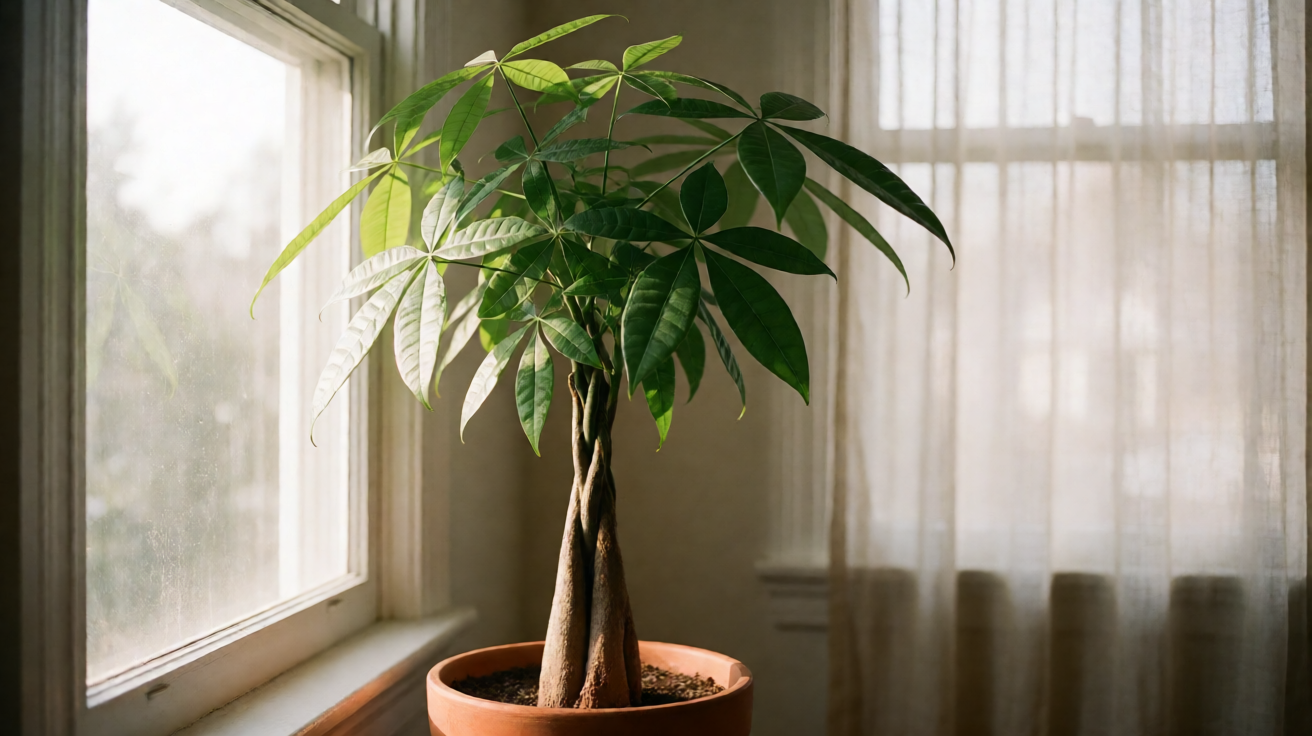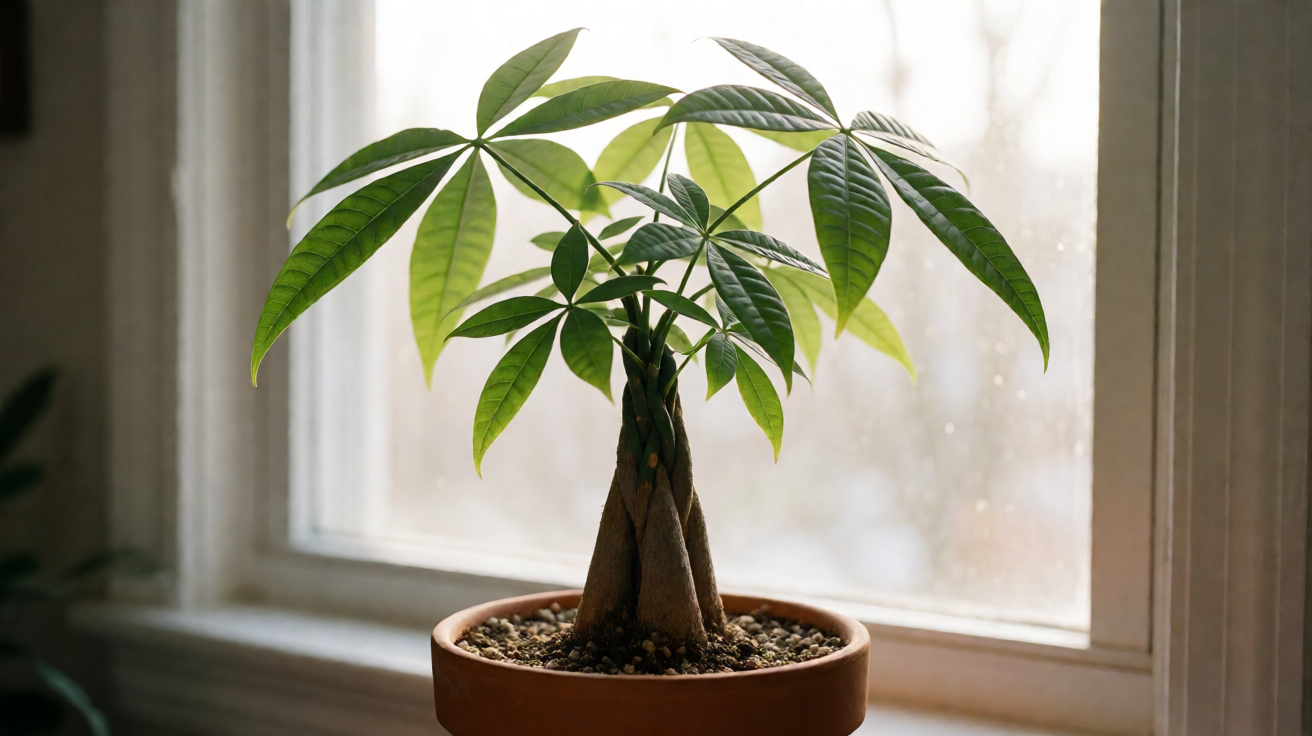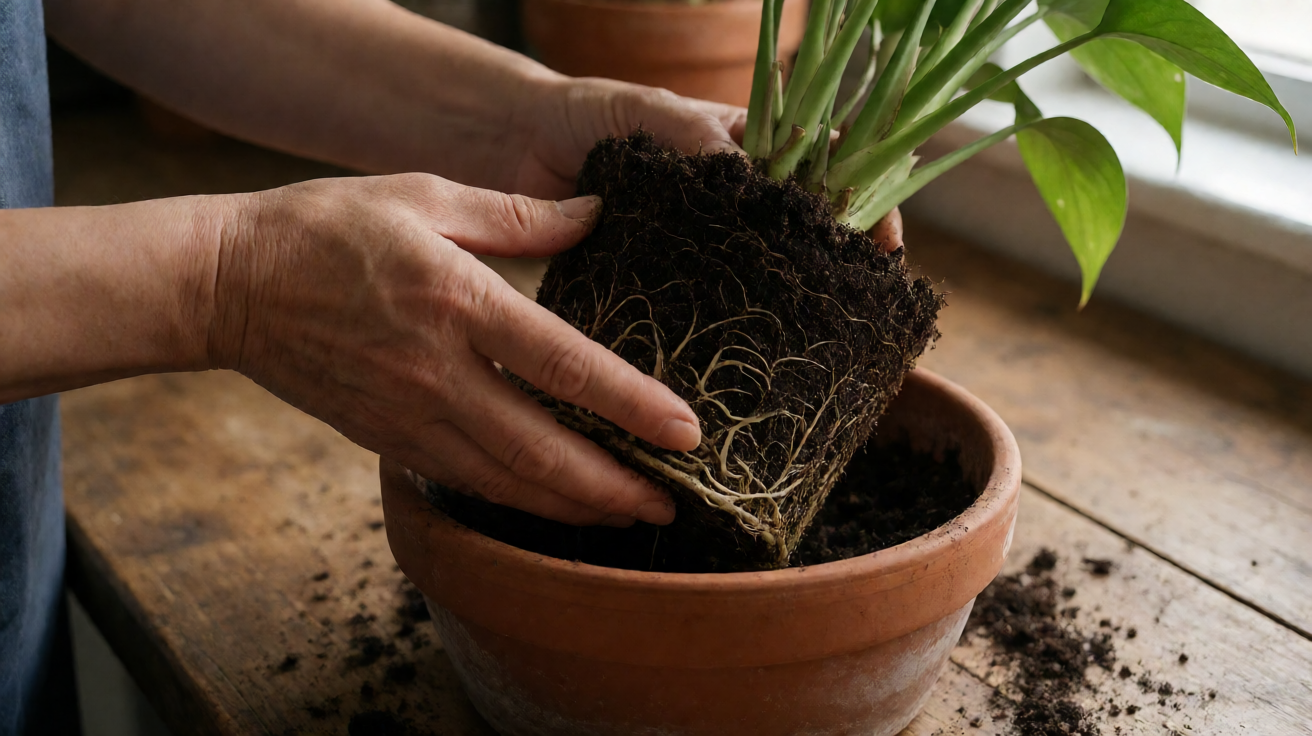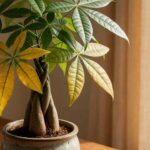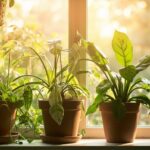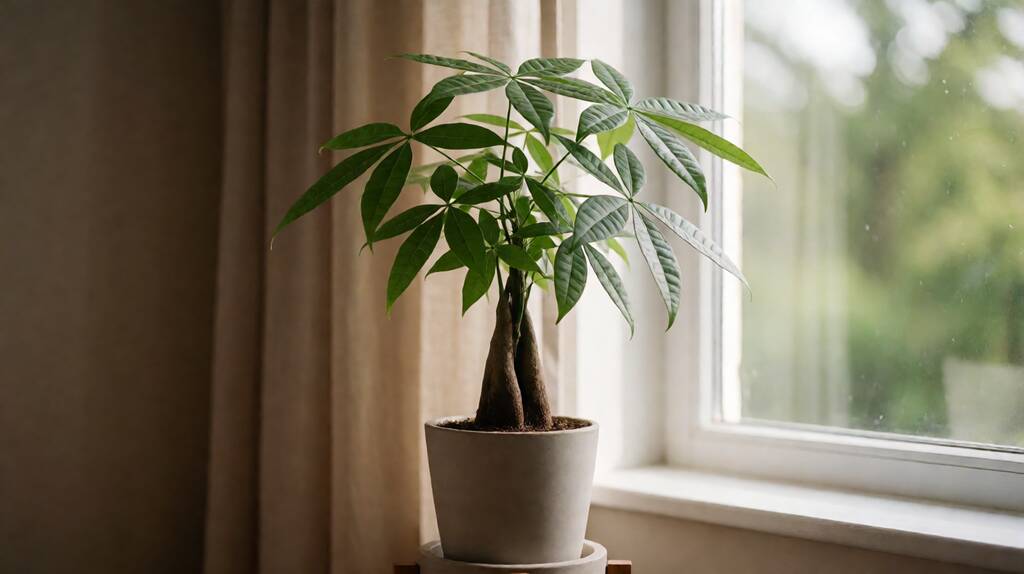

A money tree (Pachira aquatica) drops its leaves at 55 degrees F (13 degrees C), and the trunk itself dies at sustained temperatures below 50 degrees F (10 degrees C). The plant evolved in tropical wetlands where the air stays warm and humid year-round and the soil never freezes. Indoors, that temperature window collapses the moment a winter draft from a window frame, an air-conditioner vent, or an exterior door hits the canopy. Most growers diagnose “leaf drop” as a watering problem and flood the soil, which finishes the rot the cold already started.
Two honest limits up front. A money tree that has dropped all its leaves from cold damage is not automatically dead. The scratch-and-crown test from the revive post distinguishes dormant from dead. And a money tree in a pot sitting directly on a cold tile floor can drop leaves even when the room thermostat reads 70 degrees F; the root zone stays cold and the caudex does not wake up.
How Temperature Damages a Money Tree, Step by Step
How Temperature Kills a Money Tree, Step by Step
The mechanism behind “cold kills Pachira aquatica” is cell rupture, not freezing.
Pachira aquatica has no cold-hardiness. It is a tropical evergreen that evolved for soil and air temperatures above 60 degrees F (16 degrees C) year-round. Below that range, three things happen:
– Leaf abscission at the petiole base. The cells at the joint where the leaf stem meets the branch die first. The plant cuts the leaf off to save water because the cold leaf cannot transpire safely. Leaves drop while still green, usually within 24 to 48 hours of a cold event. – Cambium damage in young branches. Green new growth softens, turns brown, and dies within days. – Trunk cell rupture below 50 degrees F. Water inside the caudex cortex expands as it cools. Below 10 degrees C the cell walls rupture, the cortex turns brown and mushy, and that section of trunk is gone.
The plant does not need a hard frost. A single night at 40 degrees F (4 degrees C) against a window pane with condensation can kill a section of trunk. A draft from an air-conditioner running at 60 degrees F (16 degrees C) in summer kills new leaves while leaving older leaves intact.
The Optimal Indoor Temperature Window
The Optimal Window Indoors
The temperature band that Pachira aquatica grows in year-round is 65 to 80 degrees F (18 to 27 degrees C). Growth slows below 65 and stops around 60. Above 85 the plant slows again because the soil dries too fast for the caudex to keep up.
– Day target: 70 to 78 degrees F (21 to 26 degrees C). – Night target: 60 to 70 degrees F (16 to 21 degrees C). A 5 to 10 degree F drop from day to night is fine and matches the plant’s native rhythm. – Soil root zone target: 65 to 75 degrees F (18 to 24 degrees C). The root zone matters more than air temperature. A cold pot on a tile floor never wakes up even when the air reads 70 degrees F. – Avoid anything below 55 degrees F (13 degrees C) for more than a few hours.
Humidity and Temperature Move Together
Humidity and Temperature Are Linked
The metric that matters indoors is vapor pressure deficit, not humidity alone. VPD is the difference between how much water the air can hold at a given temperature and how much it is currently holding. A money tree grows fastest when VPD sits between 0.4 and 1.0 kPa. That translates to roughly:
– 60 percent relative humidity at 75 degrees F (24 degrees C). – 50 percent relative humidity at 70 degrees F (21 degrees C). – 40 percent relative humidity at 80 degrees F (27 degrees C).
Most homes run at 30 to 40 percent RH in winter. That is the dry side of the range. The plant survives but the leaf edges go brown and new leaves open smaller than older ones. A humidifier set to 50 to 60 percent, a pebble tray under the pot (with the pot sitting on the pebbles, not in the water), or grouping the money tree with two or three other tropicals brings the local VPD into the healthy band.
Drafts: The Hidden Killer Most Growers Miss
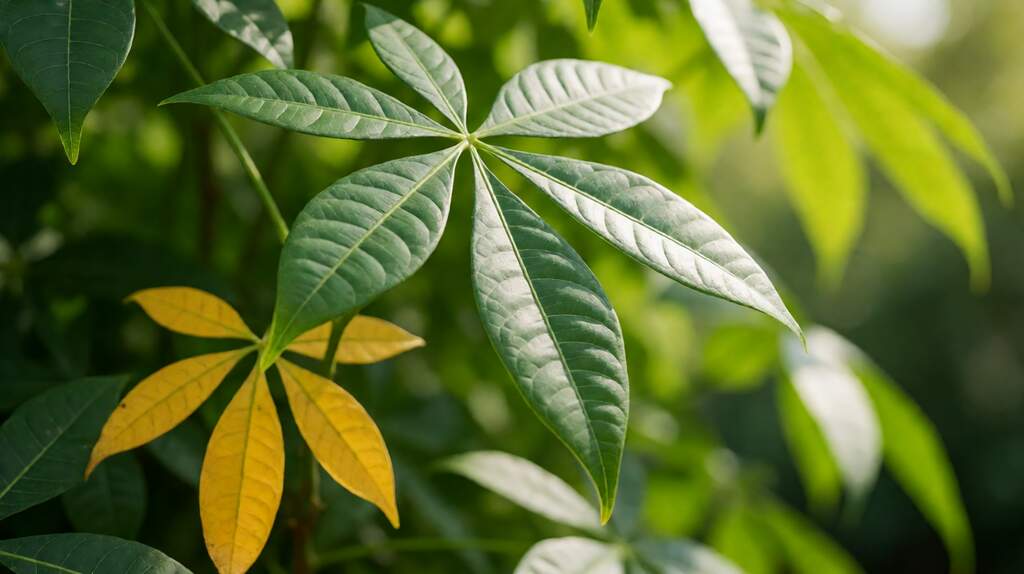
Drafts: The Hidden Killer
A money tree sitting 1 to 2 meters from a window in winter is often hit by a cold draft you cannot feel standing at the thermostat. The window glass reads 10 degrees colder than the wall behind it on a 30 degrees F night, and the cold air falls off the glass in a thin sheet along the floor and across the canopy. Three placements help:
– 1 to 2 meters back from any exterior window or door. – Out of the direct line of any heating or cooling vent. Vents blow air across the canopy at 2 to 4 meters per second, which strips humidity and stresses the leaves. – Off the tile or concrete floor if the floor sits over an unheated space. A pot stand or a cork mat under the pot lifts the root zone 1 to 2 cm above the cold surface.
Moving a Money Tree Outdoors for Summer
Outdoor Summer Is Fine, With Two Limits
Pachira aquatica grows outdoors in USDA hardiness zones 10 to 12. In colder zones, the plant can move outside for summer once night lows stay above 55 degrees F (13 degrees C), and come back inside before night lows drop below that. The plant loves outdoor humidity and direct morning sun. Two limits:
– Direct afternoon sun above 90 degrees F (32 degrees C) scorches the leaflets. Bright morning sun is fine; shade from noon to 4 pm is required if temperatures climb. – Wind above 15 km/h dries the canopy faster than the caudex can refill. Move the pot to a sheltered corner if the patio is windy.
Common Mistakes With Temperature and Humidity
Common Mistakes
Treating the room thermostat as the plant’s thermostat. Air temperature at head height can read 70 degrees F while the pot on the floor sits at 55 degrees F. Lift the pot off the floor.
Moving the plant outside for “some fresh air” on a 60 degrees F spring day. The night still drops, and the cold catches the plant in the dark when no one is checking.
Placing the money tree in front of a sunny window in winter. The glass is the coldest object in the room at night and the warmest during the day; the leaf canopy experiences both the cold fall-off at night and the sunburn at noon.
Watering on the same schedule all year. When temperatures drop in winter, water uptake drops first. The same weekly water that was correct in July drowns the roots in January.
Running a heating vent directly at the canopy. The vent air is dry and warm; the canopy dehydrates and the leaf margins crisp brown within two days.
The Temperature Window That Keeps the Caudex Firm
What to Do Right After a Cold Event
A money tree that has been exposed to cold needs triage within the first 24 hours. Three steps.
Move the plant, but do not repot. Repotting adds root stress on top of cold stress and the fine roots will rot in the new medium. Move to a stable 70 degrees F location with bright indirect light and leave the pot alone for two weeks.
Do not water. The cold-stressed roots cannot move water, and water in the soil column at this point is a rot trigger. Wait until the caudex feels firm again and the surface of the soil is dry to a depth of 2 cm, then resume watering at half the normal frequency for two weeks.
Trim only the dead parts. A leaf that has turned dark brown and mushy is dead and will not recover. Cut it off at the petiole base with sterilized pruners. A leaf that has yellowed but still has green at the base may recover; leave it. A branch that has gone soft and brown at the tip is a controlled loss; cut back to firm, green tissue and let the plant redirect energy.
The recovery timeline is slow. New leaf buds appear at the apex or at healthy nodes 6 to 12 weeks after a cold event, and the first new palmate leaf opens roughly 10 to 16 weeks after the event. Caudex recovery is faster: the trunk firmness returns within 2 to 4 weeks as the water-storing cortex stabilizes. Do not expect the canopy to look full again in the same season. Pachira aquatica is a slow grower and a cold recovery is a months-long process.
Related on the site: the Money Tree Care Guide brings the temperature window into the full five-factor care frame, Money Tree Watering Requirements applies the dryness test to money trees, Money Tree Light Requirements covers the bright-indirect light that the temperature window supports, the Money Tree Soil and Pot clarifies why the soil column matters when ambient temperature dips, the Indoor Plant Care Complete Guide sets the wider indoor-care frame across species, and Reviving a Dead Money Tree walks through recovery when a cold event has already done visible damage.
If you take one thing from this page: keep the money tree between 65 and 80 degrees F, at least 1 meter back from any window or vent, on a pot stand if the floor is cold, and water less in winter because cold roots drink slowly. Within three weeks of a stable 70 degrees F and 50 percent humidity, a money tree that dropped leaves from a cold draft will push new palmate leaves from the apex and the caudex will feel firm again. The plant is not dead; it is just waiting for the soil to warm up.
Turn PDF Bank Statements Into Workable Spreadsheets
Your bank statement is a mess of numbers, but your books shouldn't be. Use our converter to get Excel, CSV, or QBO files — ready for QuickBooks.
Try It Free Now