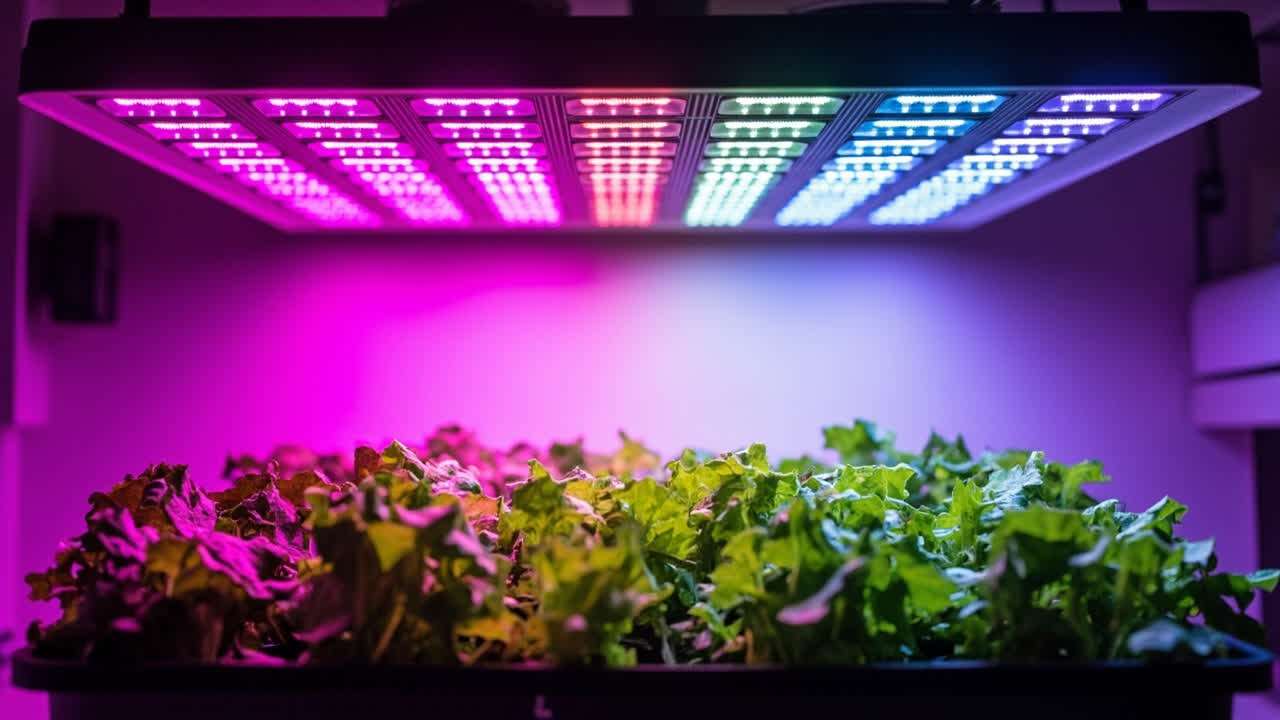

Four home hydroponic systems actually work in an apartment in 2026, and the right one for a given reader is determined by their space, budget, crop mix, and noise tolerance – not by which one has the most YouTube reviews or the best affiliate kickback. The all-purpose roundup approach that ranks the same three systems at the top of every list treats a 200 square-foot studio and a 1,500 square-foot loft as if they were the same problem, which is why readers buy a $600 Gardyn tower and find out six months later that a $40 DIY bucket would have given them the same lettuce for a tenth of the cost.
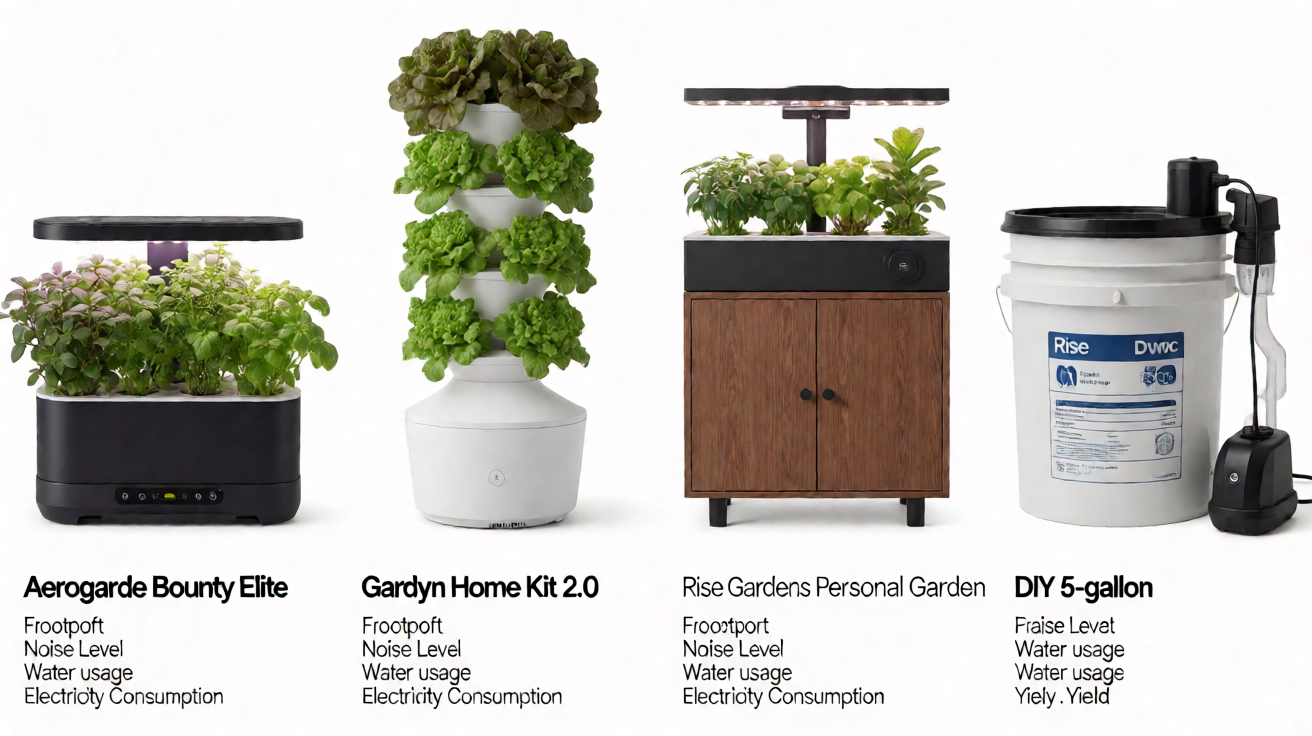
The four systems that actually work in an apartment are the Aerogarden Bounty Elite (countertop, under $300), the Gardyn Home Kit 2.0 (vertical tower, $600+), the Rise Gardens Personal Garden (modular cabinet, $500+), and the DIY 5-gallon deep water culture (DWC) bucket (under $80). Each system has a specific apartment type it fits, a specific crop mix it handles best, and a specific failure mode that the buyer should know about before purchase. None of the four is universally better; the choice depends on four questions that the reader has to answer first.
The four questions are: how much floor or counter space can the reader give up permanently, what is the budget for the initial kit plus 6 months of consumables (nutrients, pH up/down, seed pods if proprietary), what crops the reader wants to grow (leafy greens only vs fruiting crops), and what is the noise tolerance (apartment bedroom vs kitchen vs living room vs a closet behind a closed door). The comparison matrix at the end of this page answers all four for each of the four systems. The detailed sections in between walk through each system’s noise, water, electricity, yield, and failure modes in the same order.
Why There Is No Universal Best Home Hydroponic System
The hydroponic system market has consolidated around three to four commercial kits plus an open-source DIY community, but the roundups treat the market as if every reader has the same needs. A reader with a 50 square-foot kitchen counter and a $300 budget has nothing in common with a reader with a 200 square-foot spare room and a $1,000 budget, except that both are searching for “best home hydroponic system.” Recommending the Gardyn Home Kit 2.0 to both readers is the marketing default, not the engineering default, and the broader hydroponic system comparison covers the full home + outdoor matrix for readers with more space.
The honest buying guide separates readers by their constraints before recommending a system. The four constraints that matter are space (countertop 50 sq ft vs spare corner 100-200 sq ft vs closet 20 sq ft), budget ($80-150 vs $300 vs $500-700), crop mix (leafy greens and herbs only vs leafy greens plus a few dwarf tomatoes), and noise tolerance (apartment bedroom requires under 25 dB; kitchen or living room tolerates 30-40 dB; a closet behind a closed door is fine with 40-50 dB). Every system in this guide is rated on the same four constraints plus a fifth (the failure modes the reader should plan for).
The five rating criteria are noise in dB at 1 meter (the standard published by Cornell University hort.cornell.edu for residential grow equipment), water use in liters per day (apartment lease-friendly if under 2 L/day), electricity in kWh per day (the cost matters less than the apartment circuit capacity), yield per month in number of harvests per plant slot (a comparison unit that lets a 30-slot Gardyn and a 9-slot Aerogarden be compared fairly), and failure modes (the two things that go wrong with each system and how to prevent them).
The five criteria let a reader score each system against their specific constraints in a few minutes. A reader with a 50 sq ft kitchen counter and $300 budget scores Aerogarden high on price, fit, and noise, but lower on yield per dollar (because the same $300 spent on a DIY DWC bucket + 4 months of nutrients produces more lettuce over 6 months). A reader with 200 sq ft spare room and $700 budget scores Gardyn high on yield but lower on noise. The matrix at the end of this page maps system to apartment type; the rest of the page walks through each system in detail, and the hydroponic maintenance schedule covers the weekly and monthly rhythm that applies to whichever system the reader picks.
Aerogarden Bounty Elite (Countertop, Under $300)
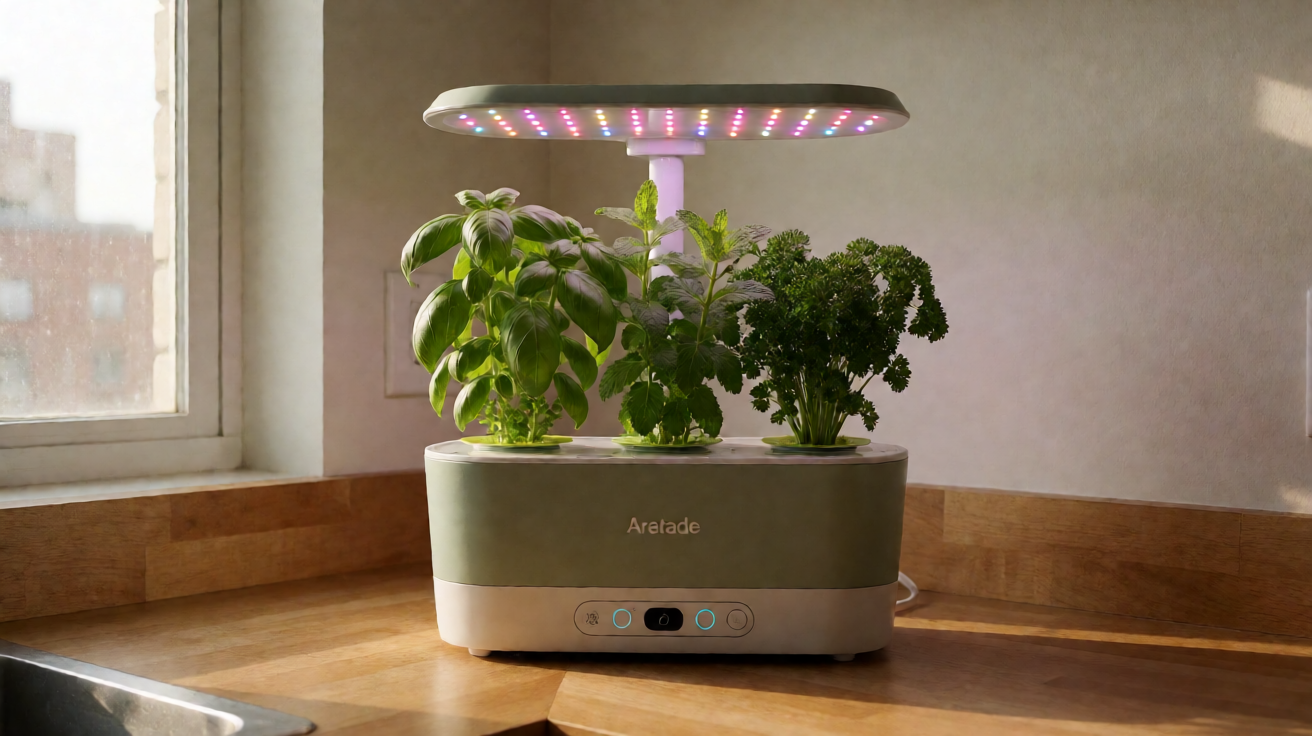
The Aerogarden Bounty Elite is the smallest and quietest of the four systems covered, which makes it the default recommendation for a small apartment kitchen counter. It runs at 25-35 dB at 1 meter (the sound of a quiet office, not a refrigerator), uses 0.5-1 L of water per day for top-off (the reservoir holds about 4 L), draws 0.4-0.6 kWh per day for the LED grow light and pump (about $0.05-0.10/day at US average rates), and produces 1-2 full lettuce heads or 3-5 herb harvests per month from its 9 plant slots.
The footprint is 17 inches wide by 11 inches deep and 15 inches tall when the LED arm is fully extended, which fits on most kitchen counters with about 2 inches of clearance on the back and 1 inch on each side. The LED light runs on a 16-hour on / 8-hour off cycle that the system manages automatically, and the LCD control panel reminds the reader to add nutrients and water on a schedule that matches the reservoir depletion rate. The setup is roughly 15 minutes out of the box: fill the reservoir, drop in the pre-seeded pods, set the clock, and the system runs itself for the first 3 weeks without intervention.
The yield per dollar over a 6-month window is the main weakness. The Bounty Elite sells for $250-300 plus $15-20 per month for proprietary seed pods, which limits the crop choice to what Aerogarden sells (mostly lettuce, basil, parsley, mint, dill, and a small selection of fruiting crops like cherry tomatoes and dwarf peppers). A reader who wants arugula, watercress, kale, or specialty herbs is locked into the Aerogarden catalog or has to grow their own seed pods in third-party baskets, which is doable but adds 5 minutes per planting. The detailed Aerogarden Bounty review covers the seed pod catalog and the third-party grow-your-own alternatives in more depth.
The two main failure modes are pump clogging after 6-12 months of use (the impeller collects debris from the nutrient solution and slows down, which starves the roots of oxygen and causes root rot) and the proprietary seed pod lock-in (if Aerogarden stops selling a crop the reader wants, the only options are grow-your-own-pods or switch to a different system). Both failure modes are preventable: clean the pump impeller every 6 months by disassembling the pump housing and rinsing with water, and grow-your-own-pods in third-party net cups if the proprietary catalog stops working for the reader.
The right apartment for the Aerogarden Bounty Elite is a studio or 1-bedroom apartment with 50 sq ft of kitchen counter and a reader who wants 3-5 herb harvests per month without learning the details of pH and EC management. The wrong apartment is a 2+ bedroom where the reader wants to feed a family of leafy greens weekly, which is the Gardyn use case. The Bounty Elite is also a good “test the waters” system that the reader can later upgrade from if hydroponics becomes a serious hobby.
Gardyn Home Kit 2.0 (Vertical Tower, $600+)
The Gardyn Home Kit 2.0 is the highest-yield apartment-friendly system on the market, which makes it the right choice for readers with a 100-200 sq ft spare corner and a $600-700 budget. It runs at 30-40 dB at 1 meter (the sound of a quiet refrigerator), uses 1-2 L of water per day, draws 0.8-1.2 kWh per day for the LED lights and pumps, and produces 5-8 full lettuce heads or 8-15 herb harvests per month from its 30 plant slots stacked vertically.
The footprint is roughly 24 inches wide by 12 inches deep and 64 inches tall (about 5’4″), which fits in a spare corner or against a wall without dominating the room. The vertical design lets the system produce 30 plants in a 24×12 inch floor footprint, which is the highest density of any system on this list. The LED grow lights are integrated into the columns and run on a 16-hour cycle, with separate red and blue diodes for vegetative and flowering crops. The system includes sensors for water level, pH, and ambient humidity, which the app reads and reports.
The yield per dollar over a 6-month window is the highest of any commercial kit, but only if the reader actually uses all 30 slots and grows high-value crops like basil and butterhead lettuce. The Gardyn is the right system for a household that eats 2-3 salads per week plus fresh herbs daily; it is overkill for a reader who wants 1-2 herb harvests per week. The seed pod subscription model is the main financial gotcha: the proprietary yCubes cost $15-20 per month for a 30-pack, which is roughly the same as the Aerogarden pods but covers more slots.
The two main failure modes are WiFi dependency for the smart features (the system needs a WiFi connection to send reminders and refill alerts; if the WiFi drops, the system still waters and lights on schedule but the reader loses the alerts) and the higher maintenance commitment (1-2 L/day of top-off water plus weekly pH checks plus monthly full water change). Both are manageable for a reader who has committed to the system but disruptive for a reader who travels frequently or wants a hands-off experience. The dedicated Gardyn Home Kit review has the full WiFi dependency checklist and the subscription cost breakdown for readers who want to plan the 6-month ongoing cost.
The right apartment for the Gardyn Home Kit 2.0 is a 1-2 bedroom apartment with a spare corner that can host a 5’4″ tall tower, and a household that will use the yield (5-8 lettuce per month, 8-15 herbs per month). The wrong apartment is a studio where the tower dominates the room, or a household that does not eat leafy greens weekly and would waste the yield.
Rise Gardens Personal Garden (Modular, $500+)
The Rise Gardens Personal Garden is the modular option, which means the reader can start with a 1-tier cabinet and add tiers as they grow. It runs at 30-45 dB at 1 meter (slightly louder than the Gardyn because the pumps are larger to feed the larger reservoir), uses 1-3 L of water per day, draws 1.0-1.5 kWh per day, and produces 6-10 full lettuce heads or 8-12 herb harvests per month from its 12-36 plant slots depending on how many tiers the reader has installed.
The footprint is roughly 36 inches wide by 12 inches deep and 24 inches tall for the 1-tier version, scaling up in 24-inch height increments for additional tiers. The cabinet design hides the reservoir and pumps inside a wood-grain cabinet that looks like furniture, which is the main aesthetic advantage over the Gardyn tower (which looks like a piece of grow equipment). The LED grow lights are integrated into each tier and run on the same 16-hour cycle, with separate red and blue diodes for vegetative and flowering crops.
The yield per dollar is competitive with the Gardyn for the 1-tier version (about 12 plant slots for $500), but lower for the 2-tier and 3-tier versions ($700-900 for 24-36 slots) because the reader pays for the cabinet aesthetic that the Gardyn tower does not have. The modular design is the main advantage for readers who want to start small and scale up; the main disadvantage is the larger floor footprint (36 inches wide is too wide for some apartment corners).
The two main failure modes are the App pairing issues (the Rise app sometimes loses connection to the cabinet sensors, which leaves the reader without the refill and pH alerts until they re-pair the device) and the larger water reservoir that needs monthly full water changes (the 1-tier reservoir holds about 6 L, the 3-tier holds about 18 L, and the monthly change is more work than the Gardyn tower). Both are manageable for a reader who is committed but frustrating for a reader who wants plug-and-play simplicity. The full Rise Gardens review covers the App pairing protocol and the per-tier reservoir change schedule for readers planning a 2-tier or 3-tier expansion.
The right apartment for the Rise Gardens Personal Garden is a 1-3 bedroom apartment with a spare wall that can host a 3-foot wide cabinet, and a reader who values the furniture aesthetic over the higher yield per dollar of the Gardyn tower. The wrong apartment is a small studio where the 36-inch footprint dominates the wall space, or a reader who wants the highest yield per dollar without paying for the cabinet.
DIY 5-Gallon DWC Bucket (Under $80)
The DIY 5-gallon deep water culture bucket is the lowest-cost and lowest-noise option, and is the right choice for a reader who wants to learn hydroponics hands-on without buying a kit. The parts list is a 5-gallon food-grade bucket (about $5), a 6-inch net cup (about $2), a small air pump (about $20), an air stone (about $3), 2 L of LECA clay pebbles (about $10), a 5-gallon bucket lid (about $3), and one hydroponic nutrient kit (about $25). Total: about $70-80 for a single-bucket system.
The footprint is 12 inches wide by 12 inches deep and 16 inches tall for a single bucket, which fits on a floor, in a closet, or on a balcony. The system runs at under 20 dB without an air pump (the plant roots sit in a still nutrient solution, which is the Kratky method, and no pump is needed) or 25-30 dB with a small air pump that oxygenates the water. The electricity is 0.05-0.1 kWh per day for the air pump (about $0.01-0.02/day at US rates), which is the lowest of any system on this list.
The yield per dollar over a 6-month window is the highest of any system, but only if the reader is willing to learn the basics of pH and EC management. A single 5-gallon bucket with a 6-inch net cup supports one large plant (lettuce, basil, kale, or a small tomato), and produces 2-4 lettuce heads or 4-6 herb harvests per month. Multiple buckets scale the yield linearly at about $70-80 per bucket, so a 4-bucket setup for $280-320 produces 8-16 lettuce or 16-24 herbs per month, which is comparable to the Gardyn at half the price – see the DIY DWC bucket build guide for the full 4-bucket expansion plan.
The two main failure modes are pH drift (the nutrient solution pH rises over time as the plant takes up cations like potassium and calcium, and the reader has to check pH every 3-5 days and adjust with pH down) and root rot from pump failure (if the air pump stops working, the roots lose oxygen and rot within 24-48 hours; a $10 battery backup air pump prevents this for short power outages). Both are manageable with a $25 pH meter and a 10-minute weekly pH check.
The right apartment for the DIY 5-gallon DWC bucket is a reader with 2-4 square feet of floor or closet space and a willingness to learn the basics. The wrong apartment is a reader who wants plug-and-play and does not want to learn pH and EC management, which is the commercial kit use case. The DIY bucket is also the right starting point for a reader who is not sure if hydroponics is a long-term hobby and wants to invest $80 instead of $300-700.
The Comparison Matrix: Four Systems, One Decision
The four systems map to four apartment types. The Aerogarden Bounty Elite fits a studio or 1-bedroom with 50 sq ft of kitchen counter and a $300 budget, with a reader who wants 3-5 herb harvests per month. The Gardyn Home Kit 2.0 fits a 1-2 bedroom with 100-200 sq ft of spare corner and a $600-700 budget, with a household that eats 2-3 salads per week plus fresh herbs daily. The Rise Gardens Personal Garden fits a 1-3 bedroom with a spare wall that can host a 3-foot wide cabinet, with a reader who values the furniture aesthetic over the highest yield per dollar. The DIY 5-gallon DWC bucket fits a reader with 2-4 square feet of floor or closet space and a willingness to learn the basics.
The four systems also map to four crop mixes. The Aerogarden is the right pick for herbs only (basil, parsley, mint, dill) with maybe one small lettuce slot. The Gardyn is the right pick for 5-8 lettuce heads plus 8-15 herbs per month, which feeds a household of 2-4 people weekly salads. The Rise is the right pick for 6-10 lettuce heads plus a few herbs, with the modular upgrade path to fruiting crops like cherry tomatoes. The DIY bucket is the right pick for whatever the reader wants to learn on, with the ability to scale up by adding more buckets.
The four systems also map to four maintenance commitments. The Aerogarden needs 5 minutes per week for top-off water and monthly nutrient refill. The Gardyn needs 5-10 minutes per week for top-off plus weekly pH check plus monthly full water change. The Rise needs the same as the Gardyn plus the larger reservoir change. The DIY bucket needs 10-15 minutes per week for pH check and EC top-off plus quarterly full water change.
The four systems also map to four noise profiles. The Aerogarden at 25-35 dB is fine in a bedroom or kitchen. The Gardyn at 30-40 dB is fine in a kitchen, living room, or spare corner with a door closed. The Rise at 30-45 dB is fine in a spare corner or closet behind a closed door, borderline in a quiet apartment at night. The DIY bucket at under 20 dB without an air pump or 25-30 dB with a small pump is fine in any room at any hour.
The honest ranking by yield per dollar over 6 months is: DIY bucket (highest, especially in the 4-bucket configuration), Gardyn (highest among commercial kits), Rise (medium, paying for the cabinet aesthetic), Aerogarden (lowest, paying for the proprietary seed pod convenience). The honest ranking by noise is: DIY bucket (quietest), Aerogarden (next), Gardyn (next), Rise (loudest). The honest ranking by footprint efficiency (yield per square foot) is: Gardyn (highest, vertical design), Aerogarden (next), DIY bucket (depends on bucket count), Rise (lowest, 36-inch wide cabinet).
The First 30 Days With Whatever System You Pick
Turn any PDF statement into a clean sheet
Skip the typos and the hours of copying. Our converter handles any bank statement format and outputs Excel, CSV, or QBO for QuickBooks. No file retention, free to try.
Convert your statement