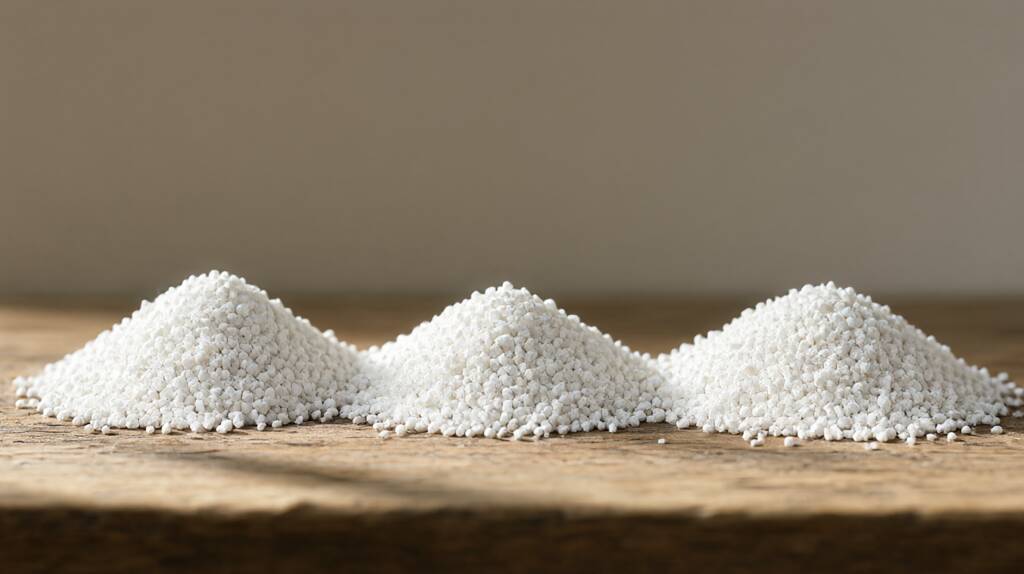

Perlite grades are not standardized across manufacturers. One brand’s “coarse” may match another’s “medium,” and the particle size distribution inside a single bag varies. Selecting the right grade means matching particle size to the job, not trusting the label on the bag.
The governing relationship is direct. Coarser perlite creates more air space and holds less water. Finer perlite holds more water and less air. The grade you choose changes the physical behavior of the mix more than the ratio you choose, because ratio only scales the effect while grade changes its nature.
Fine, Medium, and Coarse Grades
Fine perlite has particles below 1 millimeter. It holds a thicker water film and packs more tightly. It suits seed starting, fine-textured mixes, and applications where moisture retention matters more than aeration. The risk is compaction: fine perlite can reduce drainage if used heavily in a dense base mix.
Medium perlite falls in the 1 to 3 millimeter range. It balances aeration and moisture retention, which is why it is the default for most houseplant potting mixes. It provides enough structure to prevent compaction without drying the mix excessively.
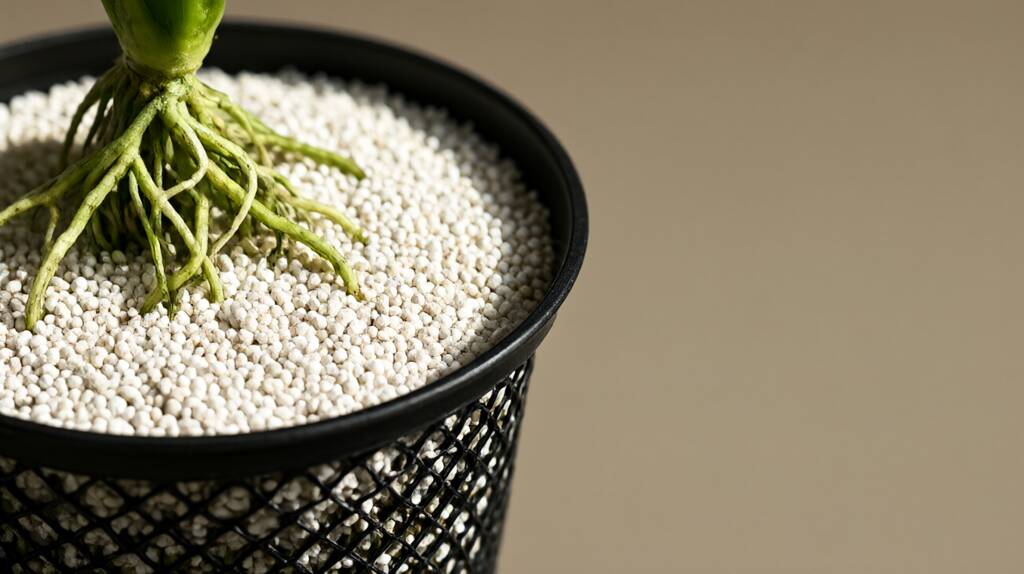
Coarse perlite has particles above 3 millimeters. It creates large air spaces and drains fast. It suits hydroponics, succulent mixes, and any application where root oxygen is the priority. The risk is that the mix dries out too fast in warm or dry conditions.
Particle Size Classifications
Commercial classifications vary. Some manufacturers use number grades, such as #1, #2, #3, #4, where higher numbers mean coarser particles. Others use descriptive terms. Some sell horticultural grade specifically, which is sized for growing media. Industrial grades exist for construction and filtration and are not suitable for plants.
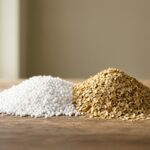
Because labels are inconsistent, the practical approach is to inspect the material. Pour a small amount onto a white surface and estimate the particle size visually. If most particles are smaller than a grain of rice, it is fine. If they are rice-sized or larger, it is medium to coarse.

Air Space and Moisture Retention
The air space in a perlite mix comes from the gaps between particles, not from the pores inside them. Coarse particles create larger gaps, which means more air-filled pore space after watering and faster drainage. Fine particles create smaller gaps, which means less air space and more water held in the mix.
This is why grade selection matters more than ratio for some applications. A 30 percent mix of coarse perlite drains faster than a 30 percent mix of fine perlite, even though the volume is identical. The coarse mix has larger pores that empty under gravity. The fine mix has smaller pores that hold water by capillary action.
Different Requirements by Application
Potting mixes generally use medium grade at 20 to 30 percent by volume. The goal is to prevent compaction and improve aeration without drying the mix too fast. Medium grade achieves this balance in most indoor conditions.
Propagation uses fine to medium grade. Rooting cuttings need consistent moisture and gentle aeration. Coarse perlite drains too fast for cuttings that have no roots yet. Fine perlite holds moisture while still providing enough air space to prevent rot.
Hydroponics uses coarse grade. The system provides water and nutrients continuously or on a schedule, so the medium does not need to hold water between irrigations. The priority is maximum aeration and rapid drainage, which coarse perlite delivers.
Seed starting uses fine to medium grade. Seeds need moisture contact and gentle aeration. Coarse perlite can leave gaps that dry out small seeds. Fine perlite maintains moisture while preventing the surface from crusting.
How Grade Selection Affects Growing Conditions
The grade changes the watering rhythm. A coarse-perlite mix needs more frequent watering in a warm room. A fine-perlite mix needs less frequent watering but risks staying wet too long. The grower must match the watering schedule to the grade, not the other way around.
The grade also changes nutrient management. Coarser mixes with less water retention may need more frequent feeding in hydroponics, because the nutrient solution does not linger in the medium. Finer mixes hold nutrients longer but may accumulate salts if drainage is poor.
Common Selection Errors
The most common error is using fine perlite for succulents. Fine perlite holds too much water and compacts, which defeats the purpose of a fast-draining mix. The second error is using coarse perlite for seed starting, which dries out too fast and leaves gaps around small seeds. The third error is assuming that a higher grade number always means better quality. Grade is a size classification, not a quality ranking.
Particle Size vs Chemical Composition
Grade describes physical size, not chemical composition. All horticultural perlite has the same basic chemistry: amorphous volcanic glass, pH near 7.0 to 7.5, very low cation exchange capacity. A bag of fine perlite and a bag of coarse perlite from the same source are chemically identical. They differ only in particle size distribution.
This distinction matters because it separates two different selection criteria. Choose grade based on the physical requirement of the mix. Choose source based on availability and price, since the chemistry does not vary meaningfully between suppliers.
Last reviewed on November 9, 2026
Sources and further reading: Perlite Institute, particle grades and horticultural applications; Oklahoma State University Extension, soilless growing media properties.