
A hydroponic system is just a way to deliver nutrient solution to plant roots without soil, and the differences between deep water culture, nutrient film technique, Kratky, aeroponic, ebb and flow, and drip come down to one question: how often, and how forcefully, those roots meet the water.
That single lens matters because home growers do not choose hydroponics in the abstract. They choose it for a counter, a closet, a balcony, or a greenhouse corner, and the system that wins in one space loses in another. This page is the cluster’s map of those six systems, and it stays focused on the comparison and decision a home gardener actually has to make.
What a Hydroponic System Actually Does
Every hydroponic system replaces soil with a nutrient solution, but the replacement is not the interesting part. The interesting part is how that nutrient solution actually reaches the roots, because the delivery method decides everything downstream: the parts you buy, the time you spend each week, the crops that thrive, and the failure modes that wake you up at night.
Think of the six common home systems as six answers to one mechanical question. Does the root sit in still water, flow under a thin film, hang in moist air, flood on a timer, drip from a line, or wick from a reservoir? Same nutrient solution, very different plumbing. The lens of “how do the roots meet the water” is the one this page uses to keep the comparison honest.
If you only have one minute, take this away: the hydroponic system you pick is really a pick about how much maintenance you want, how much space you have, and how much failure you can tolerate on day thirty. Everything else follows from those three answers.
The Six Home Systems at a Glance
Here are the six hydroponic systems a home gardener will actually encounter, in plain language. The cluster’s hydroponic systems explained guide goes deeper on each one; this page is the map, not the deep dive.
Deep water culture (DWC). Roots sit in a reservoir of nutrient solution that is constantly oxygenated by an air pump and air stone. It is the most common home system, forgiving for beginners, and excellent for lettuce, basil, and other leafy crops.
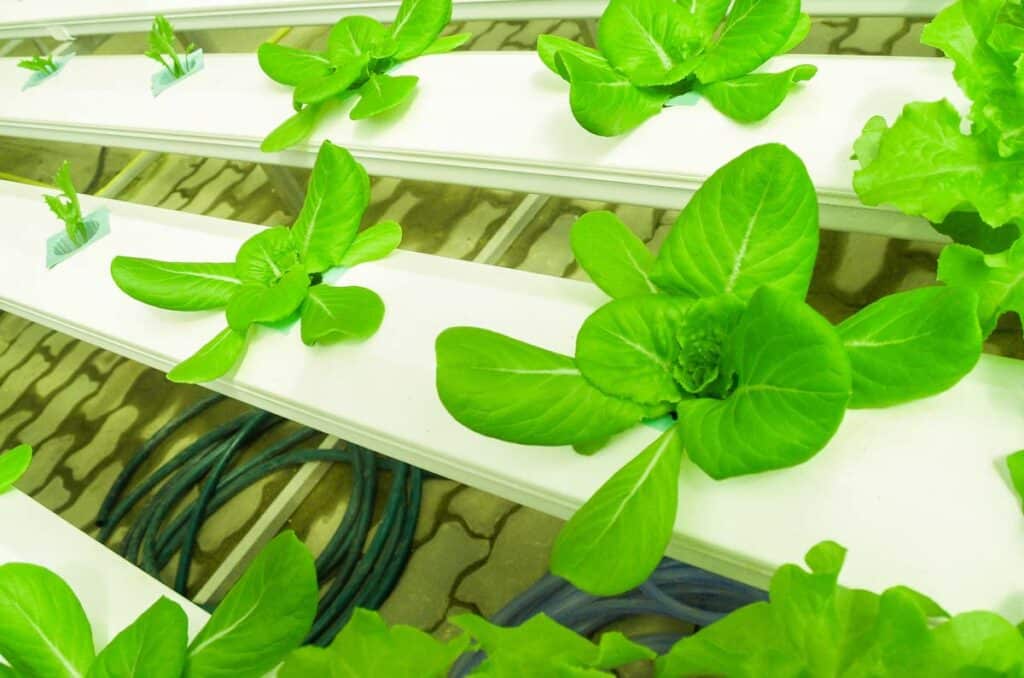
Nutrient film technique (NFT). A shallow stream of nutrient solution flows through a sloped channel, bathing the bottom of the root mat. NFT is the workhorse of commercial leafy greens and works at home if you can keep the channel level and the pump reliable.
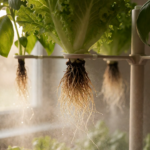
Kratky (passive, non-circulating). The plant sits in a net pot above a still reservoir; as the plant drinks, an air gap forms and the roots learn to breathe it. No pump, no electricity, the original set-and-forget hydroponic system, and the cheapest entry point on this list.
Aeroponic. Roots hang in air inside a sealed chamber and are misted on a timer, usually every few minutes. Aeroponic systems grow fast, but they punish pump failure within hours, and they are the highest-stakes choice on this page.
Ebb and flow (flood and drain). A tray of growing medium floods with nutrient solution on a timer, then drains back into the reservoir. It is a flexible system for medium-sized crops, though the timer, pump, and overflow protection all become real engineering rather than a weekend project.
Drip system. A line of drip emitters feeds each plant from a pump and reservoir, usually through a soilless medium in a Dutch bucket or a row of net pots. Drip is the standard for larger fruiting crops like tomato and pepper because each plant gets its own metered feed.
Six Hydroponic Systems Compared
The names are useful, but the comparison is what decides a home purchase. The table below puts all six hydroponic systems across the same five dimensions: typical home space, time per week, beginner fit, crop match, and the failure mode that bites hardest. Skim it once now, then come back to it after reading the next two sections.
For the broader buying lens, the how to choose a hydroponic system guide goes system-by-system through budget and parts. For pure product picks, the best hydroponic system for home page is the commercial fork. If you are still at the start, the hydroponic systems for beginners page narrows the list to two or three systems you can set up on a Saturday.
| System | Home space | Weekly time | Crop match | Biggest risk |
|---|---|---|---|---|
| Deep water culture | Counter to closet | 2 to 4 hours | Lettuce, basil, herbs | Pump or air stone failure, root rot |
| NFT | Closet to greenhouse | 3 to 5 hours | Lettuce, leafy greens | Channel clog or pump outage |
| Kratky | Counter, jar, balcony | Under 30 minutes | Lettuce, herbs, small greens | Solution runs out before harvest |
| Aeroponic | Tower or chamber | 2 to 4 hours | Greens, herbs, some fruiting crops | Mister failure, wilt within hours |
| Ebb and flow | Closet to greenhouse | 3 to 5 hours | Greens, herbs, smaller peppers | Timer overflow, drain clog |
| Drip system | Balcony to greenhouse | 3 to 5 hours | Tomato, pepper, cucumber, strawberry | Emitter clog, drip line dry-out |
Three patterns jump out of that table. First, time and risk scale together: Kratky is the cheapest and quietest entry, aeroponic is the fastest and most punishing. Second, fruiting crops strongly prefer drip and Dutch bucket because each plant needs a different feed rate. Third, every system that runs on a timer or pump shares the same single point of failure: power. A short UPS or a hand-watering plan on day two is what separates a hobby from a 2 a.m. rescue.
How a Home System Actually Delivers Water and Nutrients
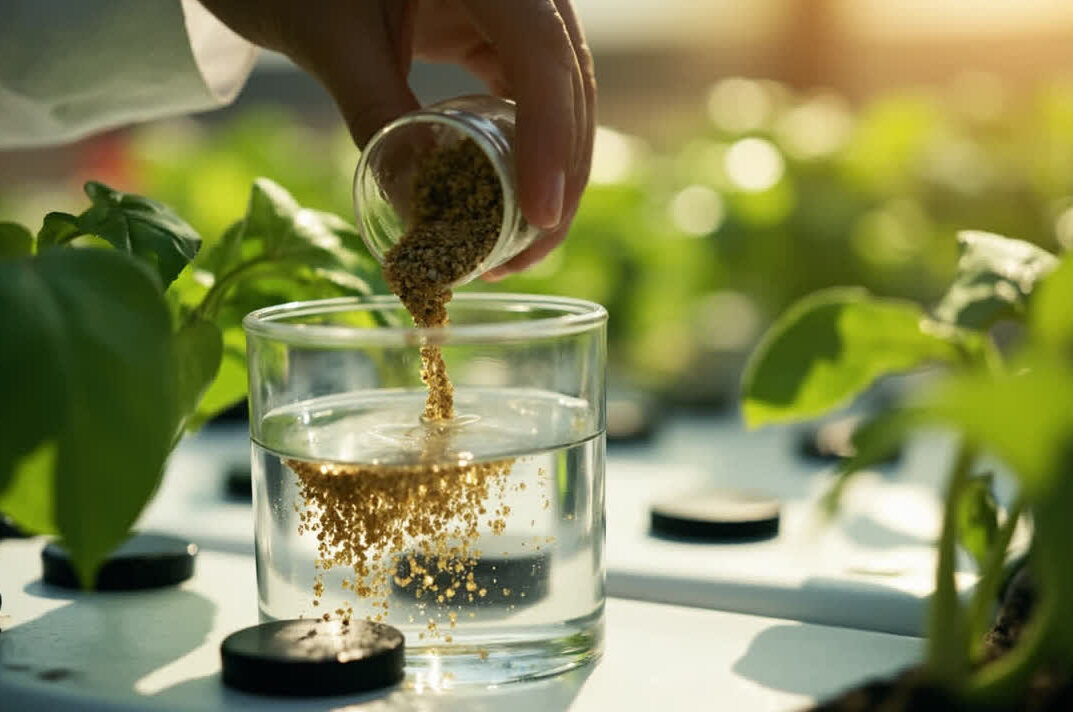
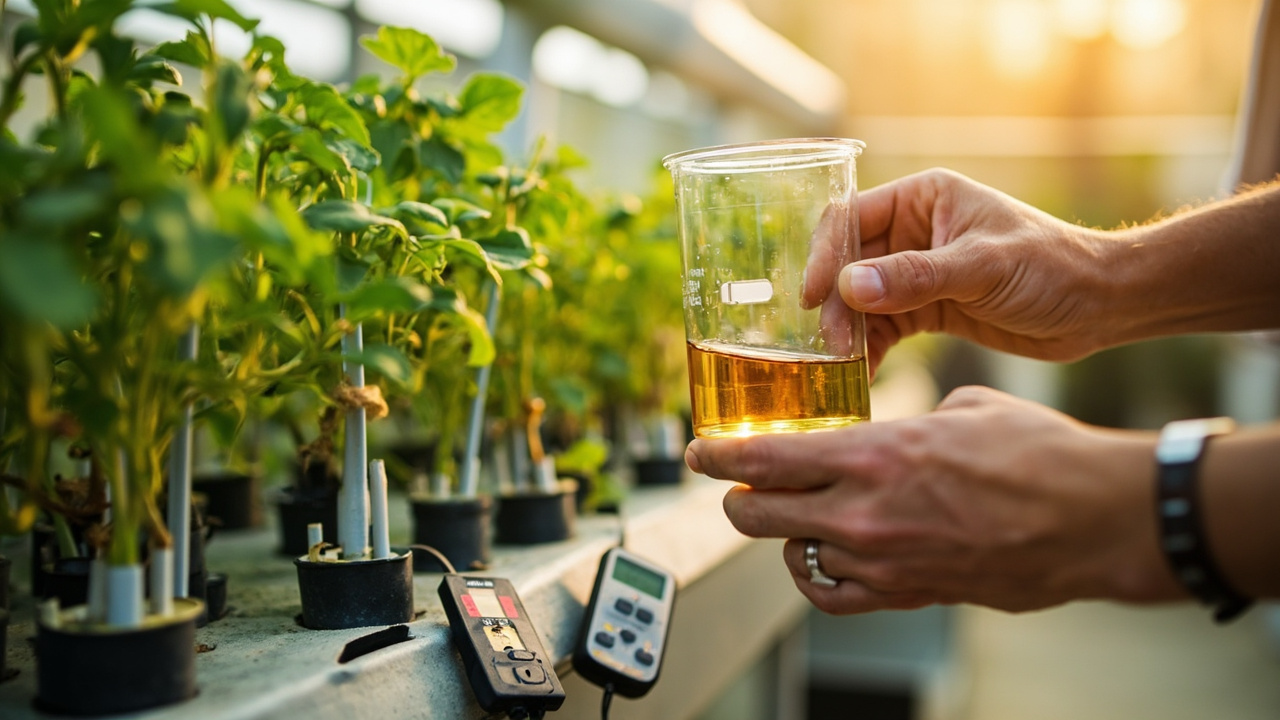
Once a system is picked, the next question is what is actually flowing through it. The nutrient solution is plain water with dissolved salts: nitrogen, phosphorus, potassium, calcium, magnesium, sulfur, and a panel of micronutrients from iron and manganese down to boron and molybdenum. The exact balance is what the hydroponic fertilizer pages own at recipe depth, but the systems-level fact is this: the solution has to land at the right concentration, the right acidity, and the right oxygen level, or the roots cannot use it no matter how clean the water looks.
Concentration is measured three ways and they all mean roughly the same thing. EC (electrical conductivity) is the meter reading most home growers rely on. PPM (parts per million) and TDS (total dissolved solids) are the same number scaled differently by the meter brand. For lettuce in DWC, expect a target band of about 1.0 to 1.6 EC, which lands around 700 to 1100 PPM on a 500-scale meter and 1000 to 1400 PPM on a 700-scale meter.
Acidity is measured as pH, and almost every crop on this cluster lives in the band of 5.5 to 6.5. Below 5.5, nutrients lock out and the plant looks hungry in clean water. Above 6.5, iron and manganese start to precipitate and the same lockout shows up as yellow new growth. Expect pH to drift roughly 0.1 to 0.3 units per day in an active DWC, which is why most beginners end up checking pH two or three times a week rather than once.
Oxygen is the part beginners forget. In DWC, an air pump and air stone push dissolved oxygen into the reservoir so the roots can actually breathe while they drink. In NFT, the thin film of solution re-absorbs oxygen as it flows. In Kratky, the air gap that opens up as the plant drinks is the oxygen supply. In aeroponic systems, the mist cycle is the oxygen supply, which is why a stalled mister is an emergency rather than an inconvenience.
The mechanism is the same in all six systems: deliver nutrient solution, oxygen, and the right pH, and the roots do the rest. What changes is the hardware, the timer, and the failure mode if any of those three drops out.
The Three-Question Fit Rubric
The comparison above is useful, but most home readers want a five-minute decision, not a six-row table. Here is the rubric this cluster keeps coming back to, in three questions. Answer them in order and the right hydroponic system usually picks itself.
Question one: where is it going to live? A counter or jar fits Kratky or a small DWC. A closet with one shelf fits NFT or a medium DWC. A balcony or greenhouse corner opens the door to ebb and flow, drip, and full-size towers. The space ceiling usually rules out two or three of the six systems before you read any specs.
Question two: how much weekly time is realistic? Under thirty minutes, Kratky wins and most of the others lose. Two to four hours, DWC and small aeroponic towers fit comfortably. Three to five hours, NFT, ebb and flow, and drip become realistic, especially for fruiting crops. If the honest answer is “some weekends I disappear,” Kratky or a simple DWC with a backup plan will out-perform a fancier system that gets ignored.
Question three: what is the crop? Lettuce, basil, and other leafy greens are happy in DWC, NFT, Kratky, or aeroponic. Tomatoes, peppers, and cucumbers belong in drip or Dutch bucket because they need a heavier feed and a longer cycle. Strawberries split: everbearers do well in NFT or vertical towers, June-bearing varieties do better in drip. If you want a single starting crop, lettuce is the forgiving choice and basil is the most rewarding; the cluster’s best plants for hydroponics page narrows it further, and the tomato-specific playbook lives at hydroponic tomatoes for novice and expert growers for anyone ready to step up to a fruiting crop.
Pick the system where all three answers point to the same row of the comparison table. That is the one a home grower can actually run, and that is the one to read about next.
What Goes Wrong and How to Spot It Early
Every system in this cluster has a known weak point, and a beginner who learns it before week one recovers in days rather than weeks. The pattern is similar across the board, but the specifics differ.
In DWC, the most common failure is root rot, which shows up as brown, slimy roots and a sour smell from the reservoir. It is almost always a dissolved oxygen problem first and a nutrient balance problem second, so the early fix is an air pump check, a reservoir clean, and a fresh batch of nutrient solution at the right pH. If the brown keeps coming back, the full troubleshooting path lives on the hydroponic problems and solutions page, and a standing reservoir maintenance routine prevents most of it.
In NFT, the parallel failure is a clogged channel or a stalled pump, which starves the downstream plants long before the upstream ones look stressed. The early sign is a row of wilted leaves at the far end of the channel while the start of the channel looks fine.
In Kratky, the failure mode is simple and friendly: the solution runs out before the plant finishes. Lettuce in a one-gallon jar will drink the reservoir dry in about three to four weeks, which is also when it is ready to harvest, so the timing usually works out. With basil or larger greens, top up the jar with fresh nutrient solution at the same pH before the air gap closes.
In aeroponic systems, the failure mode is brutal: a stalled mister means roots start to dry within an hour and full wilt within four. A small UPS on the pump is the difference between a five-minute outage and a wiped-out tower.
In ebb and flow and drip, the shared failure is the timer, the overflow, or the emitter. Ebb and flow needs an overflow standpipe that actually works, or a flood turns into a leak. Drip systems need emitters checked once a week because a single clogged drip line will quietly starve one plant in a row of healthy ones.
The honest limit across all six: there is no fully “set and forget” hydroponic system at home. Kratky is the closest, and even it asks for a top-up and a pH check before harvest. Anyone selling a hydroponic setup that needs no monitoring is selling a future root rot, not a system.
Picking the Right Growing Medium
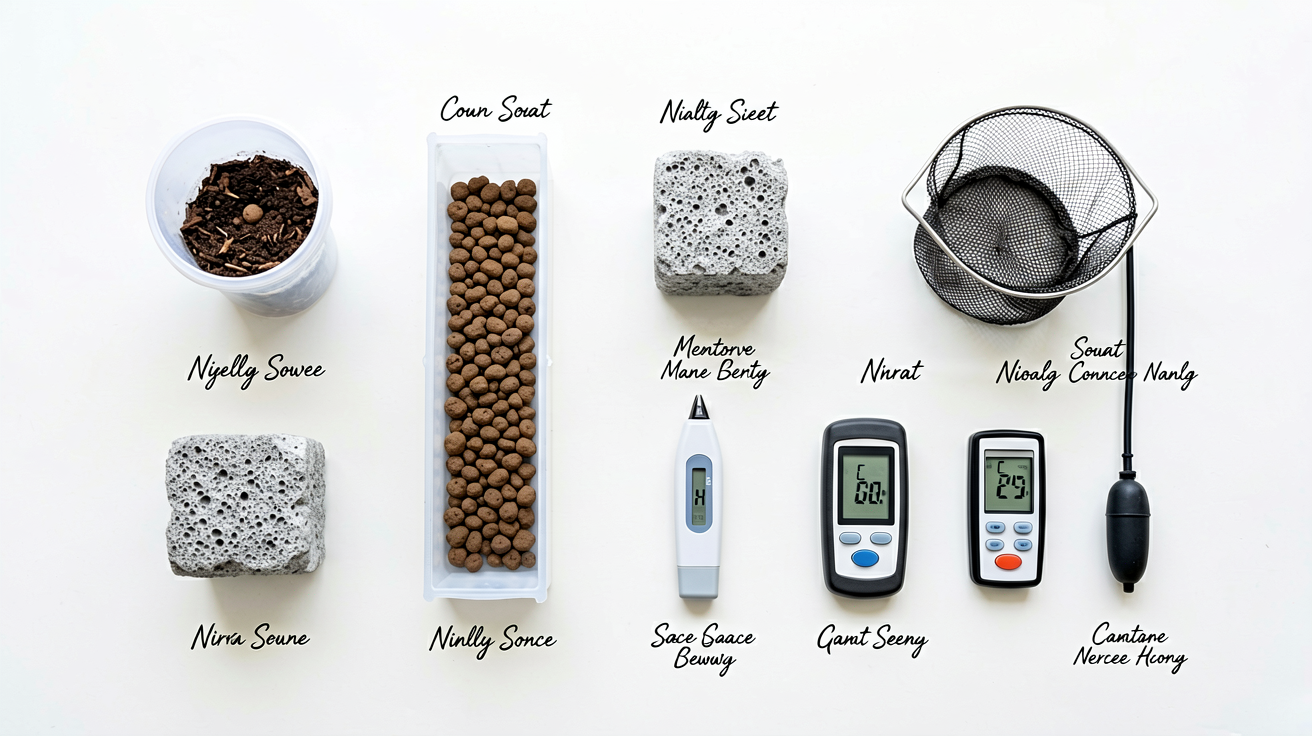
Once the system is picked, the medium is the next concrete question, and it is usually answered by the system itself rather than by the crop. DWC and NFT use net pots with no medium or a small starter cube. Ebb and flow, drip, and Dutch bucket use a soilless medium that holds moisture and root structure, most often rockwool, clay pebbles (also called hydroton or LECA), or coco coir.
Rockwool is the cluster’s default starter cube and is the most common medium in rockwool hydroponic setups. It holds water and air in the right balance for young roots, but it ships dry and alkaline, which means a pre-soak in pH-adjusted water before any seed goes in. Clay pebbles are reusable, drain fast, and fit ebb and flow and drip systems where overwatering is the bigger risk than drying out. Coco coir sits between the two, holds more moisture than clay and breathes more than rockwool, and is the friendliest medium for a first drip system.
The medium matters less than the system match. Pick the medium that fits the system first, and the rest of the variables fall into place.
Where to Go Next With the Cluster
This page is the cluster’s sub-pillar, not the final stop. Once the comparison and the rubric point to a system, the next sibling page is where the build or the buying decision actually happens. The cluster hub at hydroponics guide links out to every system-specific page, and the cross-cluster peer at aeroponics vs hydroponics compared is the right next read for anyone whose rubric answer pointed to aeroponic or who keeps hearing about mist-based systems.
Long term, expect a full reservoir change every 7 to 14 days once any of these systems is running, and expect your first harvest of lettuce or basil in 30 to 45 days from seed in DWC or Kratky. The hydroponic reservoir maintenance routine is what keeps week two through week twelve on track, and it is the single habit that separates growers who keep going from growers who quietly abandon the closet.
The right next step is the sibling page that matches the system the rubric picked. Everything on this cluster is wired to make that handoff fast.
Turn any PDF statement into a clean sheet
Skip the typos and the hours of copying. Our converter handles any bank statement format and outputs Excel, CSV, or QBO for QuickBooks. No file retention, free to try.
Convert your statement