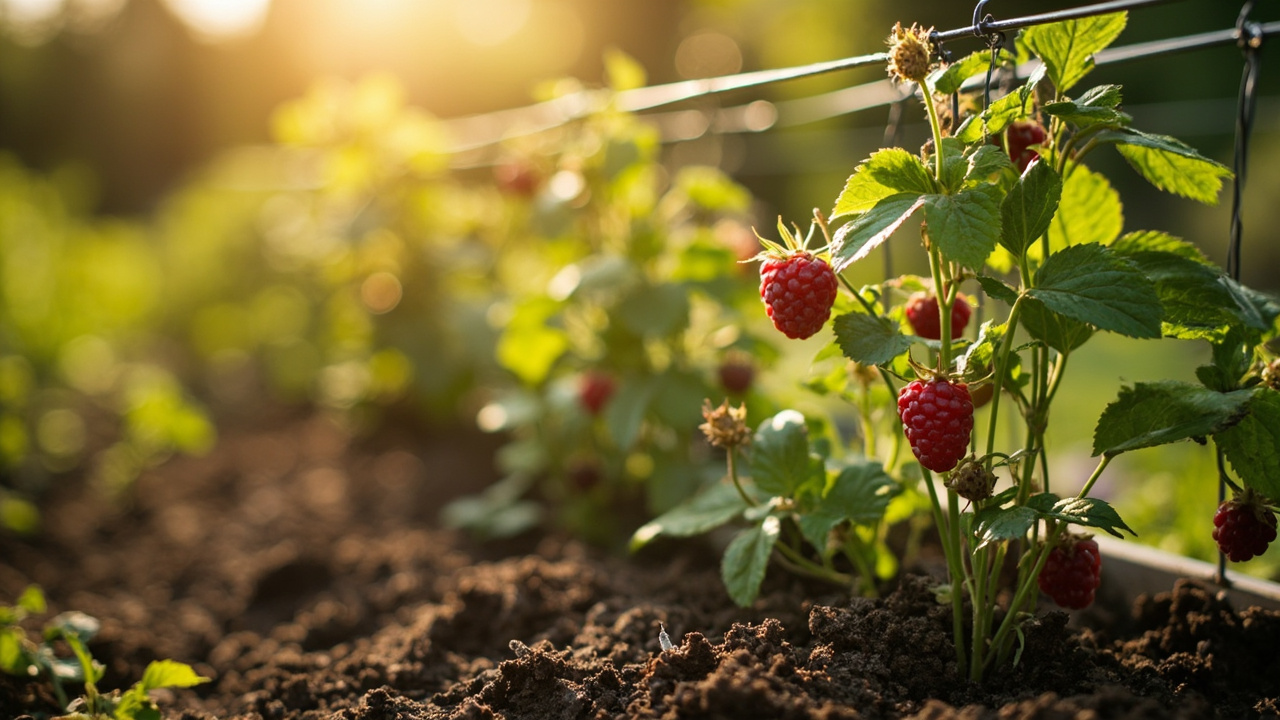
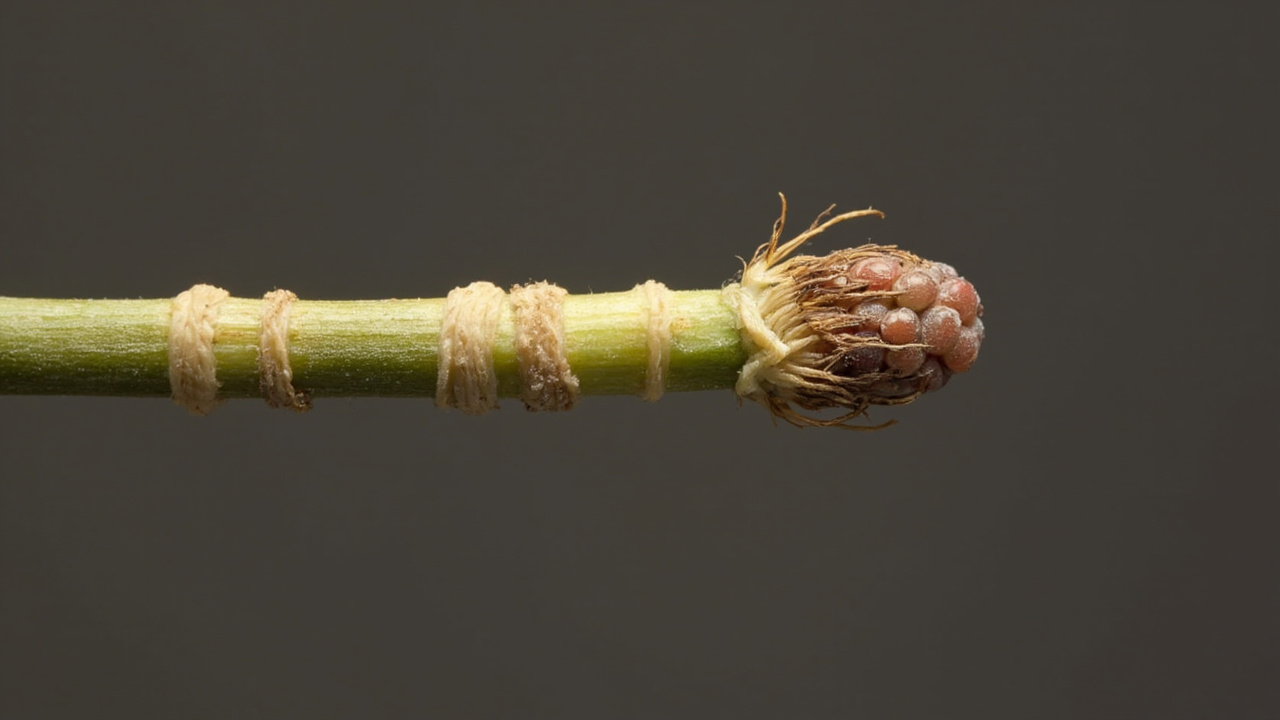
If your raspberry patch produced well last year but looks like a thicket of tangled canes this spring, the difference between a modest harvest and an abundant one comes down to knowing which canes to cut and which to leave. Pruning raspberries is not the same as trimming a hedge — the technique depends on understanding cane age, variety type, and the two-year life cycle that drives every harvest.
Raspberry canes live for two years, and each year has a distinct role. Primocanes are first-year growth: they emerge from the crown or root suckers in spring, grow rapidly through summer, and carry vigorous green stems with large leaves.
Floricanes are the same canes in their second year — the bark turns brown and corky, lateral branches develop along the stem, and flower buds form on those laterals. The floricane fruits once, then dies back completely.
A healthy patch always contains both types: primocanes growing for next year’s harvest and floricanes fruiting this year. The pruning technique depends entirely on which of these two cane types your variety fruits on.
Summer-bearing raspberries fruit only on floricanes, so the goal is to select the strongest primocanes and remove everything else. Everbearing types fruit on both, giving the gardener a choice between one large fall crop or two smaller harvests. For a full overview of the growing cycle, see our raspberry plant care guide.
Understanding the Two Cane Types: Primocane and Floricane
Before making any cuts, the reader needs to learn identifying cane types by sight. Primocanes are smooth, green to light brown, and carry large compound leaves along their full length. They grow upright or slightly arching and reach 1.5-2 meters (5-6 feet) by midsummer. The crown at the base is compact and shows no old lateral growth.
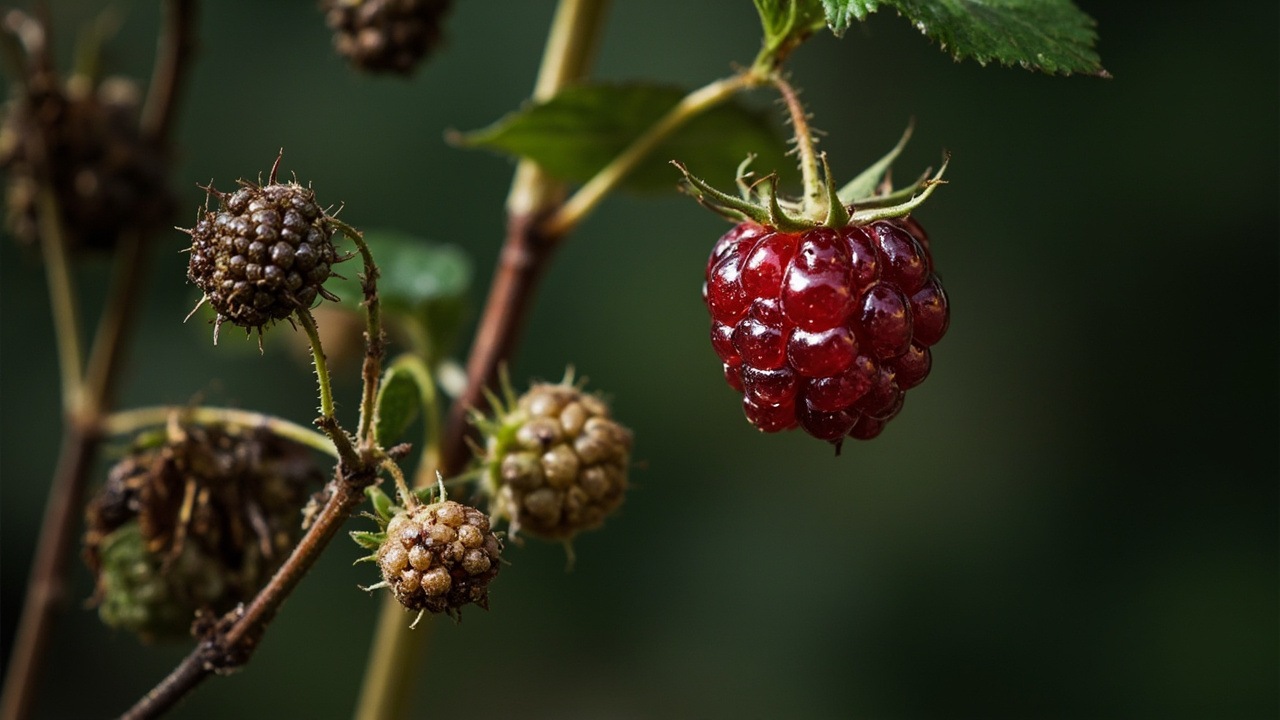
Floricanes are darker — reddish-brown to gray — with peeling bark and visible lateral branches spaced every 15-20 cm (6-8 inches) along the stem. These laterals are where the fruit buds form. After fruiting, the floricane turns brittle and dry, making it easy to distinguish from the flexible green primocanes. In a mixed patch, the contrast is obvious once the reader knows what to look for.
The root sucker is a special type of primocane that emerges from the root system rather than the crown. Suckers can appear 30-60 cm (1-2 feet) from the parent plant and are how the patch naturally expands. Some suckers are welcome for filling gaps; others compete with established canes and should be removed during pruning.
Understanding this two-year cycle is the foundation of every pruning decision. A cane that has already fruited will never fruit again — it must be removed to make room for new growth.
A healthy primocane left to overwinter becomes next year’s floricane. The reader who grasps this cycle will never wonder which canes to cut.
How to Identify Whether Your Raspberries Are Summer-Bearing or Everbearing
The simplest way to tell is by observing where berries appear. If fruit develops only on second-year canes — the brown, woody stems that grew the previous summer — the plant is a summer-bearing floricane type. If berries appear on the tips of first-year green canes in late summer, it is an everbearing primocane type.
Summer-bearing varieties produce one concentrated harvest in early to midsummer. Popular cultivars include Heritage, Tulameen, and Joan J. These varieties invest all their fruiting energy into floricanes and require precise pruning. The harvest window is typically 4-6 weeks. Each drupelet must be pollinated to form a complete berry, so sunlight and pollinator access during flowering directly affect fruit quality.
Everbearing varieties produce a fall crop on primocanes and, if left unpruned, a second smaller crop on the same canes the following summer. Common everbearing types include Anne, Caroline, and Fall Gold. The trade-off is flexibility: the gardener can choose between a single large fall harvest or two smaller crops by adjusting the pruning approach.
If the variety is unknown, observe the patch for one full season. Note when and where berries appear relative to cane age. Most named varieties need 200-800 chill hours to fruit properly. For variety names, fruiting type, and container-growing suitability, check our raspberry varieties guide.
Pruning Summer-Bearing (Floricane) Raspberries
Prune summer-bearing raspberries twice per year: once after harvest in late summer and once in late winter or early spring. The post-harvest cut removes the spent floricanes that have already fruited. The late-winter cut thins the primocanes that will carry next year’s crop. Both cuts are essential — skipping either one reduces the harvest.
After harvest, cut all floricanes to ground level. These canes are easy to identify: they are brown, woody, and have visible lateral branches where the fruit was picked.
Removing them immediately reduces disease pressure and opens light and air to the developing primocanes. Dispose of pruned canes in the trash, not the compost pile, to prevent spur blight and cane blight spores from overwintering. Bird netting should also be removed and stored at this point so it does not trap winter moisture against the canes.
In late winter, while the plant is still dormant, thin the remaining primocanes. Select the four to six strongest canes per 30 cm (1 foot) of row and remove the rest at ground level. Look for canes at least pencil-thick (1 cm diameter), free of damage or discoloration, and well-spaced along the trellis wire. Weak, thin, or crowded primocanes produce smaller fruit and should be cut.
Top the selected primocanes at about 150-180 cm (5-6 feet) above the ground. This encourages lateral branching along the upper portion of the cane, where the best fruit develops. Use sharp bypass pruners or loppers and cut just above an outward-facing bud at a slight angle so water runs off the cut surface. Clean cuts heal faster and resist fungal infection better than ragged tears.
Tie the thinned primocanes to the trellis wire with soft plant tape, spacing them 10-15 cm (4-6 inches) apart. Proper spacing ensures sunlight reaches all the laterals and air circulates freely, which reduces fungal disease. Good drainage is equally important — waterlogged soil promotes root rot even in a well-pruned patch. For planting and trellis setup, see our raspberry planting guide.
Pruning Everbearing (Primocane) Raspberries
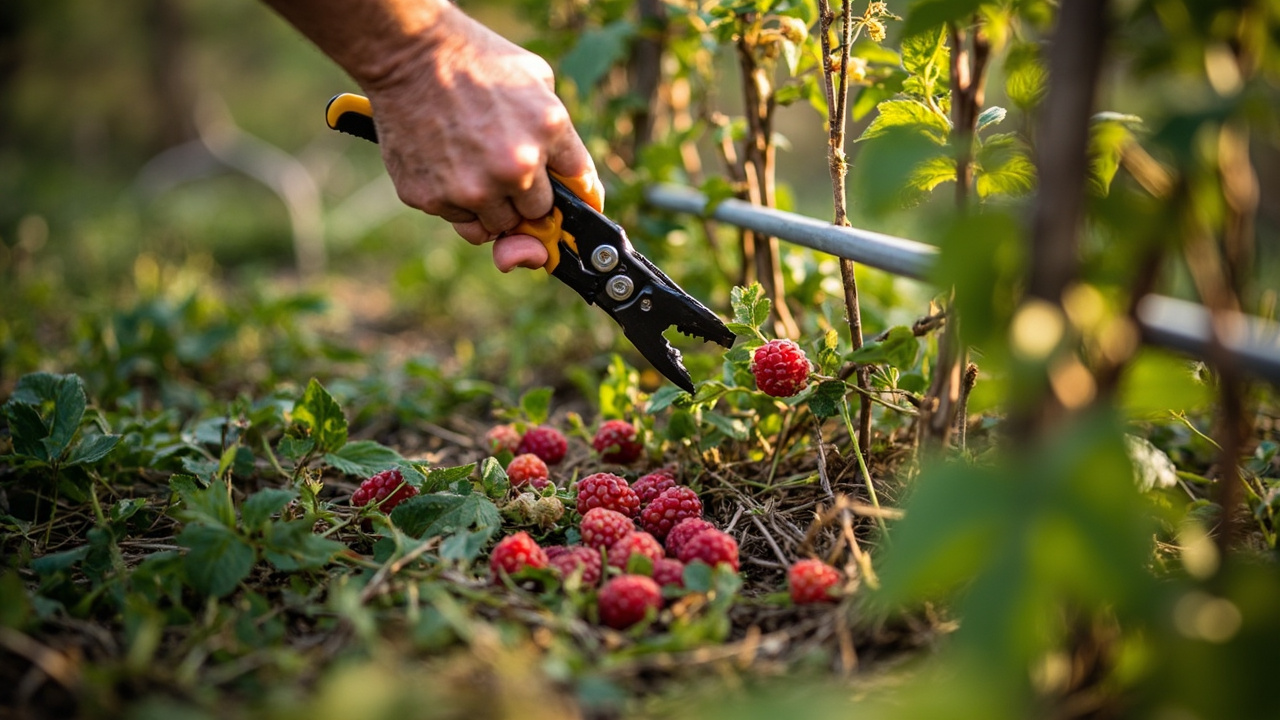
Everbearing raspberries offer two distinct pruning strategies, and the choice depends on whether the gardener wants one large harvest or two smaller ones. Both approaches are valid; the trade-off is total yield versus harvest spread across the season.
For a single large fall crop, cut all canes to the ground in late winter while the plant is dormant. The plant then puts all its energy into new primocane growth, which fruits heavily from August through October.
This method requires no cane identification and produces the largest single harvest. Oregon State University Extension recommends it for home gardeners who want minimal maintenance, especially those growing thornless varieties in containers or raised beds.
For two crops per year, follow the summer-bearing method: remove only the portions of cane that fruited in the fall (the top third) and leave the lower two-thirds to fruit again in spring.
The spring crop will be smaller than the fall crop, but the combined yield is typically 20-30% higher than the single-crop approach.
The downside is more complex pruning and careful management of both cane ages simultaneously.
In either case, remove any canes showing signs of disease — dark lesions, cankers, or swollen galls that indicate cane blight or spur blight. Cut well below the affected area into healthy green tissue and sanitize the pruners between cuts.
A 10% bleach solution or rubbing alcohol works for sanitation. Never compost diseased canes; bag them and dispose of them with household waste.
Spider mites and aphids overwinter in dead cane debris, so thorough removal reduces pest pressure next spring. This is especially important for bare-root plantings establishing their root systems.
Tool Sanitation, Disease Management, and Common Mistakes
Sharp bypass pruners handle most raspberry canes cleanly. For canes thicker than 1.5 cm (half an inch), use long-handled loppers for better leverage. Avoid anvil pruners, which crush the cane tissue and create an entry point for fungal infection.
Sterilize blades before starting and between plants, especially if cane blight or spur blight has been present. Dirty tools spread disease as quickly as cane borers tunnel through a cane.
The most common pruning mistake is leaving too many canes. An overcrowded patch produces abundant small, flavorless berries instead of fewer large ones. No more than 4-6 primocanes per 30 cm (1 foot) of row for summer-bearing varieties. Excess canes compete for water and nutrients, shade the fruit, and create humid conditions that favor disease.
The second mistake is pruning at the wrong time. Summer-bearing raspberries pruned in fall or early winter risk cold damage and sunscald to the remaining primocanes. Wait until the plant is fully dormant and the coldest weather has passed — typically late February or March in temperate climates. Everbearing varieties cut too late in spring waste the energy the plant has already invested in new growth.
The third mistake is failing to remove spent floricanes. Dead canes left standing harbor overwintering spores of spur blight and cane blight, which infect new primocanes through wounds and rain splash. Removing spent canes immediately after harvest is one of the most effective disease management steps a gardener can take. This is especially important in areas with high humidity where fungal pressure is constant.
After pruning, apply a 5 cm (2 inch) layer of compost or mulch around the base of the plants. This feeds the soil as primocanes begin spring growth and suppresses weeds. Keep mulch away from direct contact with cane crowns to prevent root rot.
Water the patch deeply after mulching to settle the soil and provide moisture for the first growth flush. This is also the right time to take hardwood cuttings for propagation if the gardener wants to expand the patch. Consistent watering through spring and summer is essential for full drupelet set.
Most raspberries are self-fertile, but planting two different cultivars nearby can improve pollination and increase harvest size. With clean cuts, proper spacing, and good sanitation, a well-pruned raspberry patch grown in well-drained, acidic soil can remain productive for eight to ten years.
Turn any PDF statement into a clean sheet
Skip the typos and the hours of copying. Our converter handles any bank statement format and outputs Excel, CSV, or QBO for QuickBooks. No file retention, free to try.
Convert your statement