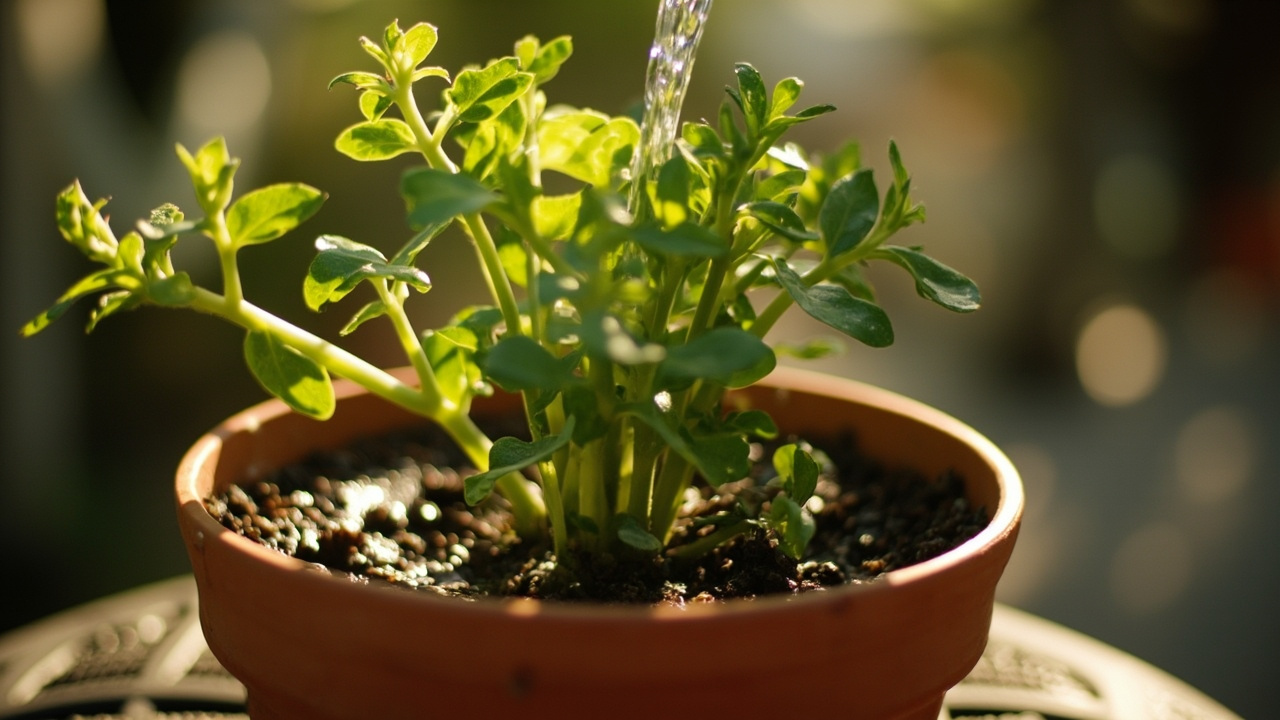

The fastest way to kill a croton is to keep it evenly moist. Water when the top 1-2 inches feel dry, then water deeply until it runs from the drainage hole.
The cadence is conditional on light, temperature, and pot material. In a bright room, that means every 5-7 days in spring and fall, every 3-5 days in summer, and every 10-14 days once winter temps drop below 18°C.
The trigger is the soil, not the calendar. A moisture meter is optional; the finger test is the gold standard.
Overwatering is the number-one croton killer. Croton roots are thin and poorly branched. They begin to suffocate in saturated soil within 12-24 hours at 20°C (68°F).
The croton plant care guide covers the full light-water-humidity stack. Once roots go anaerobic, the plant drops its lowest leaves within 48 hours — a signal most owners misread as “needs more water.”
The indoor plant watering schedule walks the full room-by-room cadence.
The Soil-Dryness Trigger: Why 1-2 Inches Is the Rule
Water when the top 1-2 inches (2.5-5 cm) of soil feel dry to the touch. Not damp, not cool — dry enough to offer no resistance when you push a clean finger in to the first knuckle.
If the soil still feels cool or looks dark at that depth, wait another day and test again.
The 1-2 inch rule exists because the root zone needs both moisture and gas exchange. The top layer dries first; the lower layer stays lightly damp. Watering only when the top reads dry prevents the lower root zone from staying saturated long enough to go anaerobic.
In a bright room (2000+ lux), a 6-inch (15 cm) terracotta pot with well-draining mix dries to the 1-2 inch mark in 5-7 days in spring and fall. A 6-inch plastic pot with the same mix takes 8-10 days. Always test the soil, never assume the calendar.
Seasonal Cadence: Summer vs Winter Watering Volume
Summer croton watering runs every 3-5 days in a warm, bright room. The plant is actively growing, light is high, and evapotranspiration pulls moisture fast.
Water deeply each time — run water through the pot until it flows freely from the drainage hole, then empty the saucer after 15 minutes. Never let the pot sit in standing water.
Winter watering drops by 40-50%. Once indoor temps fall below 18°C (65°F) and day length drops below 10 hours, the croton enters a semi-dormant state. Water every 10-14 days, and only when the top 2 inches read dry. Overwatering in winter is the most common killer because the plant is not pulling moisture at summer rates but owners keep the same cadence.

The trigger for shifting from summer to winter mode is not the calendar — it is day length. Once the room needs artificial light by 4 PM (typically October through February in mid-latitudes), switch to winter cadence. When natural light returns in March, resume summer frequency over 2 weeks rather than switching overnight.
Turn any PDF statement into a clean sheet
Skip the typos and the hours of copying. Our converter handles any bank statement format and outputs Excel, CSV, or QBO for QuickBooks. No file retention, free to try.
The Two Failure Signals: Droop vs Mushy Yellow
An underwatered croton holds its leaves slightly soft and droop. The leaves are still firm to the touch, just not rigid. Give a deep drink and the leaves recover full turgidity within 2 hours. This is the plant’s built-in early-warning signal.
An overwatered croton produces yellowing lower leaves that go mushy before dropping. The soil smells sour or musty. The base of the stem may feel soft when pressed gently.
These are root-rot signals. The fix is the opposite of instinct: stop watering entirely, move to a bright warm spot, and wait 7-10 days until the soil smells earthy again.
Resume only when the top 2 inches read dry. The diagnostic difference is leaf texture and sequence. Underwatering: soft-droopy leaves that recover in 2 hours, starting with newer growth. Overwatering: mushy-yellow leaves that do not recover, starting with the oldest lowest leaves and climbing.
Root Rot: The 48-Hour Rescue Protocol
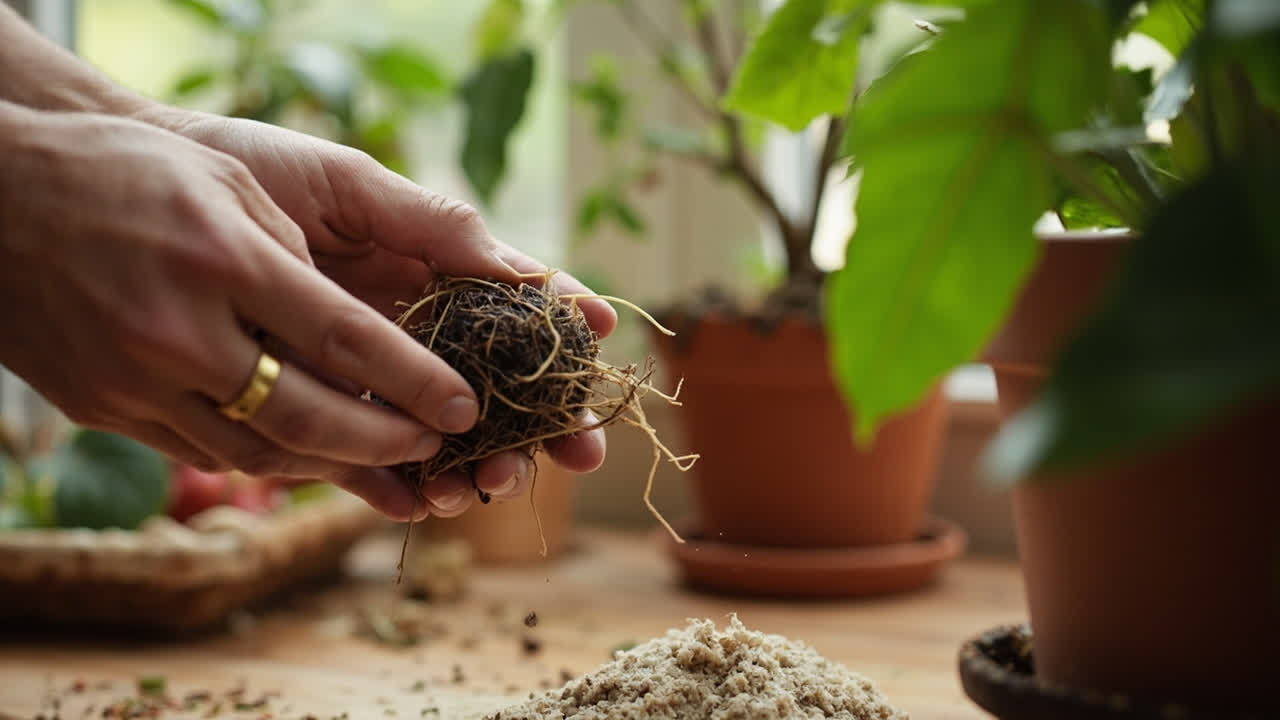
If the soil has been saturated for more than 48 hours at 20°C (68°F) and multiple lower leaves are yellow and mushy, assume root rot has started. Unpot the plant.
Root rot explained: healthy roots are white or pale tan and firm. Rotted roots are dark brown-black, mushy, and slip off when tugged gently.
Trim all rotted roots with clean, sharp scissors back to healthy white tissue. Repot in fresh well-draining mix (60% peat or coco coir, 30% perlite, 10% compost) in a terracotta pot with a drainage hole. Do not water for 7 days after repotting — let the cuts callus. Then water lightly and resume the dry-top-inch trigger from there.
Two signs mean the croton is not recoverable: soft, brown stem bases that compress like wet cardboard under gentle finger pressure, and zero white roots remaining after trimming. In both cases, compost the plant. If any firm stem sections remain, propagate 4-6 inch cuttings above the soft tissue and root in moist perlite.
Terracotta, Drainage, and Tap-Water Sensitivity
Terracotta is the most forgiving pot material for croton because it wicks excess moisture through the pot wall in 24 hours. A 6-inch (15 cm) terracotta pot with a drainage hole cuts overwatering deaths by half compared to ceramic or plastic. If using plastic or ceramic, go up one size smaller in pot volume to compensate for slower drying.
Crotons are moderately sensitive to fluoride and chlorine in municipal tap water. The signal is tan-to-brown leaf margins on new growth, distinct from the brown tips of low humidity. The fix: let tap water sit uncovered for 24 hours before watering so off-gassing occurs, or use rainwater/distilled water for the monthly soil flush.
Flush the soil every 4-6 weeks by running plain, lukewarm water through the pot at 4x the pot volume. This prevents salt buildup from fertilizer, which otherwise accumulates on the soil surface as a fine white crust and pulls moisture away from the root zone. After flushing, empty the saucer — never let the pot reabsorb the runoff.
Source: the Royal Horticultural Society’s Codiaeum variegatum growing guide, which sets the standard 18-29°C (65-85°F) indoor range and the “keep evenly moist but never waterlogged” watering baseline that this article builds on.