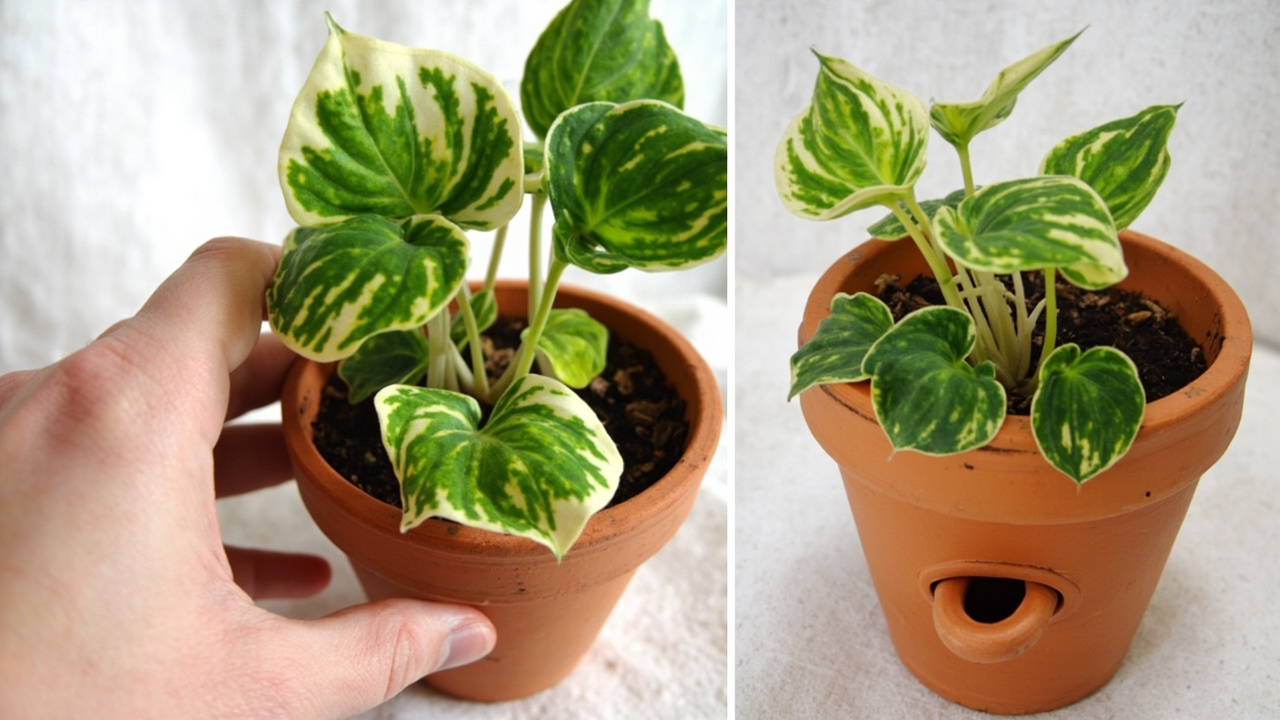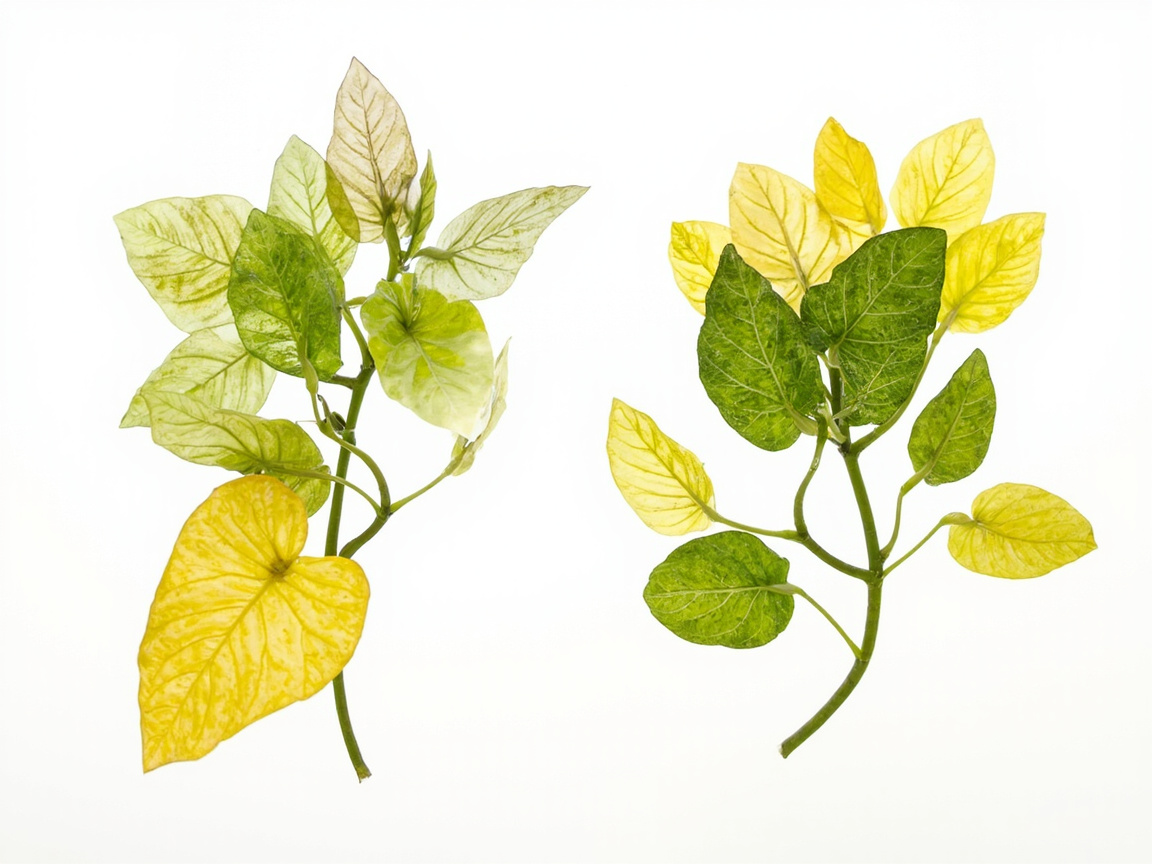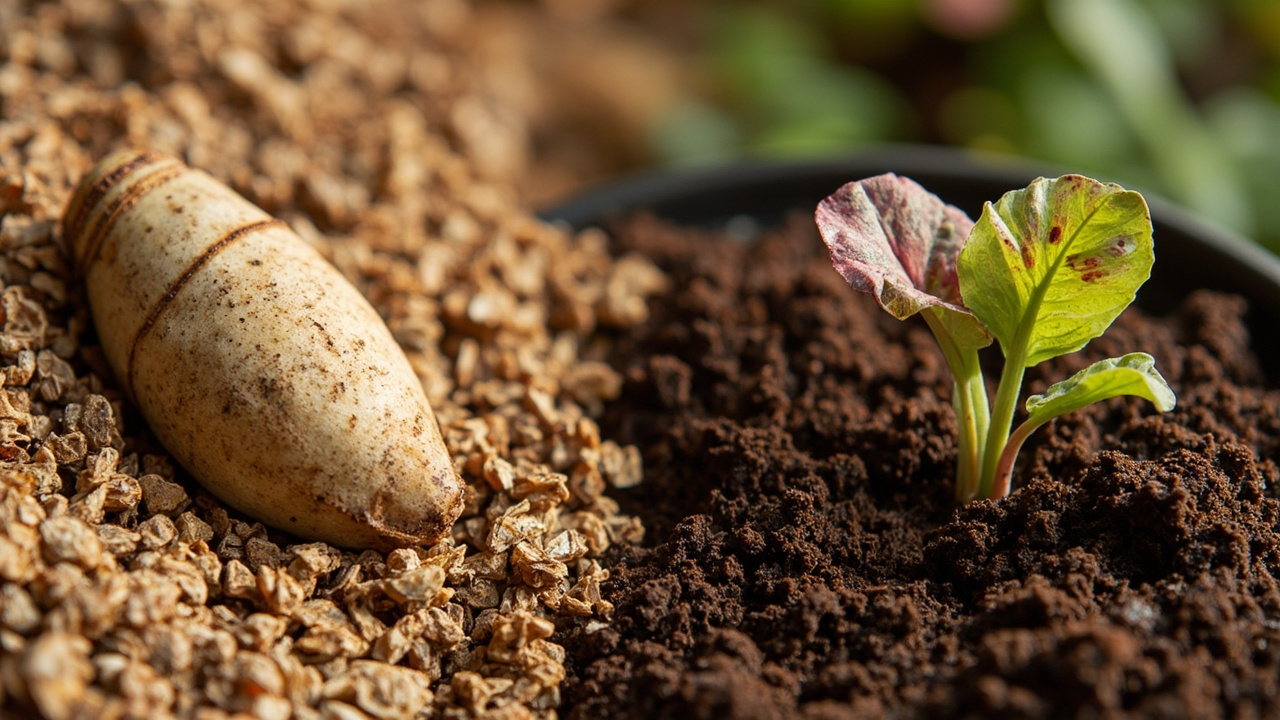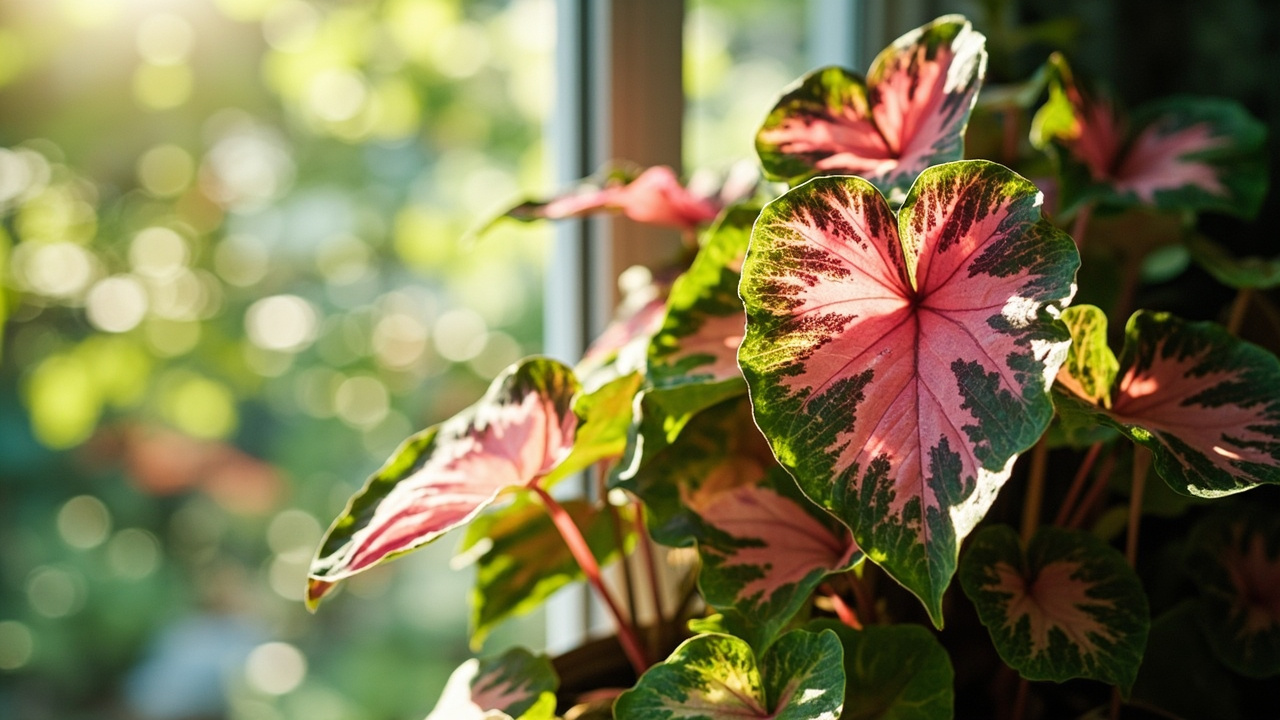

The single most important thing to get right with a Caladium is light. Too much direct sun and the leaves burn within hours, leaving pale brown scorch patches that cannot be reversed. Too little light and the plant loses its vivid colour, grows leggy, and eventually exhausts its tuber. Understanding exactly what Caladium light requirements mean in your specific room is the practical skill that separates confident growers from frustrated ones.
Light drives everything in a Caladium. Photosynthesis fuels the production of the carbohydrates the tuber needs to store energy for dormancy and the next growing season. Insufficient light means insufficient energy, which shows up as washed-out colour, stunted leaves, and a plant that struggles to emerge from dormancy the following spring. The rhizome-like corm stores this energy underground, but without adequate light input, the reserves are depleted faster than they can be replenished.
The challenge is that “bright indirect light” means something different in every home. A north-facing flat in Glasgow and a south-facing room in Phoenix experience the same window orientation very differently in terms of actual light intensity. This article translates the general principle into specific, actionable guidance you can apply today.
Caladium Light: What “Bright Indirect” Really Means
Bright indirect light for a Caladium means roughly 1,000 to 2,500 lux during the active growing season. To put that in practical terms: a north-facing window in summer delivers around 800 to 1,000 lux at midday slightly below the Caladium comfort zone. An east-facing window at the same time delivers 1,500 to 2,500 lux, which is ideal. A south-facing window without a sheer curtain can hit 10,000 to 30,000 lux enough to cause rapid photoinhibition and leaf burn.
You can estimate your room’s light levels using a lux meter app on your phone (free apps are accurate enough for this purpose), or by the shadow test: if you can read a book comfortably in the brightest part of the room, the light is adequate. A sharp, dark shadow means the light is direct, not indirect. A soft, pale shadow means the conditions are closer to what a Caladium needs. The well-draining mix you use also affects how much light the roots receive — waterlogged soil reflects light away from the crown.
Best Window Orientations for Caladium
Different windows produce very different light conditions. Here is a practical breakdown:
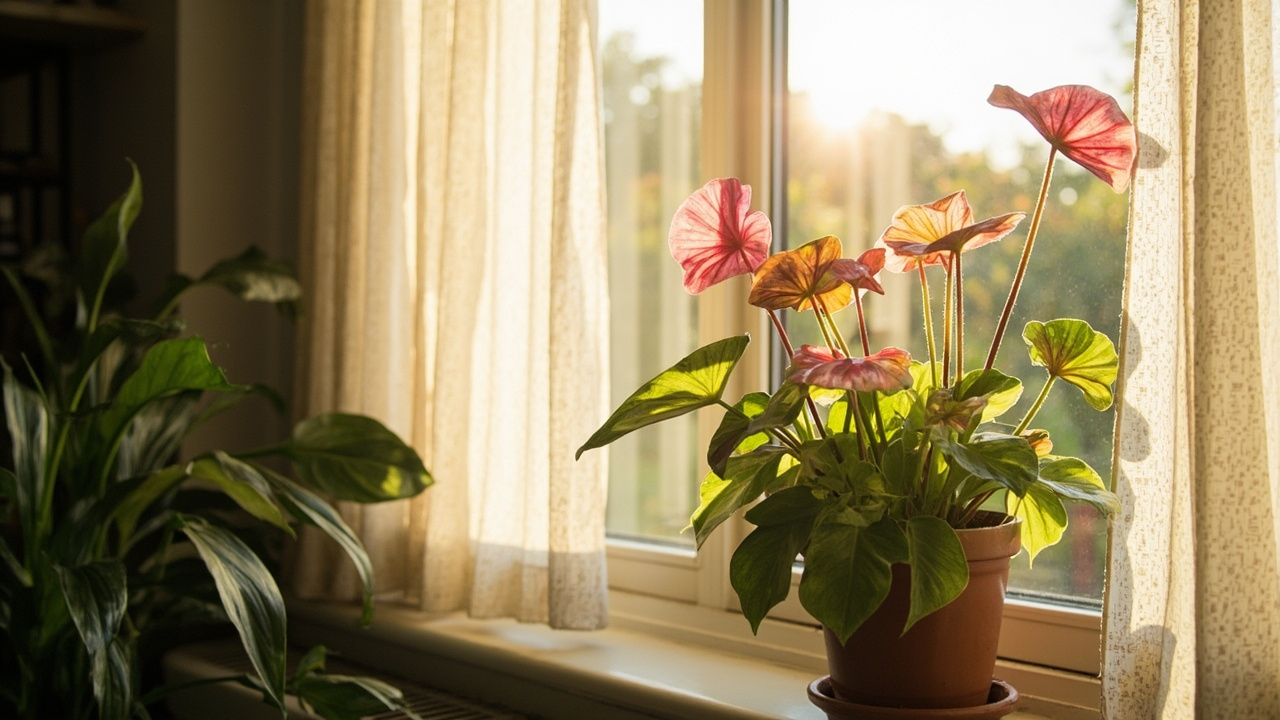
- East-facing windows are the closest thing to ideal for most Caladiums. A few hours of gentle morning sun (up to around 10am) followed by bright ambient shade for the rest of the day provides sufficient intensity without the prolonged direct exposure that burns the leaves. This is the window orientation to seek out when positioning a Caladium.
- South-facing windows provide the most light overall and can work well if the Caladium is placed back 1 to 2 metres from the glass, or if a sheer curtain filters the direct rays. The risk is afternoon sun, which in summer can be strong enough to cause damage even at a distance. Watch the plant for the first week after repositioning and check the most exposed leaves for any pale discolouration.
- West-facing windows can work, but the afternoon sun they deliver is often more intense and sustained than morning sun. Treat a west-facing window similarly to a south-facing one: pull the plant back from the glass or use a filter.
- North-facing windows deliver the least direct light and are generally suitable only for the lightest-coloured Caladium varieties such as Moonlight or White Queen. In most homes, a north-facing window will be below the Caladium’s light threshold for part of the year, particularly in autumn and winter when daylight is already reduced.
For a full overview of what Caladium needs beyond light including watering, temperature, and the dormancy cycle see our caladium care guide.
Signs Your Caladium Is Getting Too Much Light
The symptoms of too much direct sunlight on a Caladium appear quickly and are distinctive enough to diagnose with confidence. The most common sign is pale brown or bleached patches on the leaves particularly on the uppermost and most sun-exposed surfaces. These patches start light tan and can darken to a papery brown over a few days. Unlike the uniform browning of low humidity or fertiliser burn, sun damage is patchy and follows the pattern of direct light exposure.
In severe cases, the entire leaf surface exposed to direct sun turns pale and translucent before collapsing. This can happen within a single hot, sunny afternoon if the plant is in unfiltered south or west window light. Even brief exposure to unfiltered afternoon sun in summer is enough to cause damage to thin-leaved varieties.
The fix is straightforward: move the plant back from the window, add a sheer curtain, or relocate to a less intense position. Damaged leaves will not recover, but new leaves produced in better conditions will be healthy. Internode elongation signals chronic light deficiency. Whitefly populations thrive in warm, low-light greenhouses. Damping-off fungi attack weak seedlings in shaded, overwatered conditions. Leaf spot pathogens exploit light-stressed tissue.
Signs Your Caladium Needs More Light
Too little light announces itself more slowly, and symptoms can be easy to misinterpret as other problems. The first signs are usually a fading of the vivid colour that makes Caladiums so striking reds become washed out, pinks become pale cream, and the contrast between veins and leaf surface diminishes. The plant is still alive, but it is not photosynthesising efficiently enough to maintain its full pigmentation.
Continued low-light conditions produce leggy growth: petioles (leaf stems) lengthen noticeably as the plant reaches toward whatever light is available, and new leaves emerge progressively smaller. In severe cases, new leaves may emerge entirely pale or almost white the plant is unable to produce sufficient chlorophyll in the available light.
The solution is to move the plant to a brighter position. An east-facing window is usually sufficient. If no suitable window is available, a full-spectrum grow light positioned 30 to 60 cm above the plant and run for 10 to 12 hours per day can replicate adequate conditions. For more on watering while adjusting light conditions, see our caladium watering guide.
Seasonal Light Changes and Adjustments for Caladium
Light availability in most homes changes significantly across the year. In summer, the sun is higher and days are longer the same window position that works perfectly in June can become too intense by late July, or perfectly adequate in winter. Understanding this seasonal shift is part of managing Caladium light requirements year-round.
As daylight drops below roughly 10 to 11 hours per day in autumn, most indoor Caladiums begin to slow down and prepare for dormancy. This is a natural response to seasonal light reduction, not a sign of poor care. The plant is simply responding to the same photoperiod cues it would experience in its native habitat. Reducing light exposure in autumn is one of the signals that triggers the dormancy cycle.
Moving a dormant or semi-dormant Caladium to a warm, bright position in late winter before light levels have recovered enough can cause problems: the tuber may break dormancy prematurely, producing weak, pale, etiolated growth that stretches toward insufficient light. The better approach is to wait until you see new growth emerging naturally the plant’s signal that light and temperature conditions are sufficient to support active growth again.
Grow Lights for Caladium: When and How
Supplemental grow lights are worth considering if your home has no window that provides adequate light, or if you want to extend the active growing season through winter. Full-spectrum LED grow lights are the best option: they provide the wavelengths Caladiums need for healthy photosynthesis without the heat output of older HID bulbs.
Position the light 30 to 60 cm above the plant canopy. Run it for 10 to 12 hours per day more than this can prevent or delay dormancy, which may or may not be what you want depending on your setup. A timer makes this straightforward.
The honest trade-off is this: grow lights work well and can keep a Caladium looking healthy through winter, but they add cost, equipment, and complexity. Given that Caladiums naturally go dormant in autumn regardless, many growers find that managing the dormancy cycle well is more rewarding than trying to suppress it with artificial light. A healthy, well-rested tuber that emerges vigorously in spring often outperforms a leggy, light-supplemented plant that never properly dorms.
Recognising Leaf Scorch and Light Stress in Caladium
Leaf scorch is the specific damage pattern that separates Sunburn from the broader category of light stress, and it is worth distinguishing because the treatment differs. True sunburn caused by direct, intense light hitting the thin leaf surface produces pale, papery patches that start white or cream and darken to brown over several days. These patches have sharp boundaries and will never recover. Leaf scorch, by contrast, is a slower, more diffuse damage pattern that occurs when a Caladium is moved too quickly from a low-light position to a bright one, or when dry indoor air combines with high light intensity to dehydrate leaf margins faster than the petiole can supply water.
The visual cue is different: sunburn shows as discrete bleached patches on the most exposed leaf surfaces, while scorch appears as browning along the entire leaf margin that progresses inward from the tip and edges. Both signals point to the same corrective action move the plant to a position with gentler, more diffused light but understanding which you are dealing with helps you avoid repeating the mistake. Sunburn usually means the plant was placed too close to an unfiltered window. Scorch usually means the transition was too rapid, even if the final position is technically correct.
A practical rule: if you are moving a Caladium from a low-light shelf to a brighter windowsill, do it in stages. Spend the first week at the new location but behind a sheer curtain, then remove the curtain the following week. This gives the plant time to adjust its photosynthetic apparatus to the higher light intensity, and it prevents both leaf scorch and the petiole collapse that follows when the plant cannot maintain turgor under sudden increased transpiration demand.
Light-Related Problems and Pest Management
Low light triggers a cascade of problems beyond pale colour. Tuber dormancy may not initiate properly when daylength stays above 12 hours under grow lights, causing the plant to exhaust its corm reserves without resting. Senescence of lower leaves accelerates as the plant cannibalises stored energy. The crown becomes weak, and the node tissue at the petiole base rots easily in cool, damp conditions.
Axillary bud growth becomes spindly as apical dominance weakens. Epinasty downward petiole bending signals insufficient light intensity. The hypocotyl stretches abnormally as the plant reaches for photons. In severe cases, a stolon-like runner forms in desperation to find better light, though this rarely succeeds indoors. Fanleaf distortion and yellow mottle patterns can indicate viral infection transmitted by thrips, which thrive in warm low-light conditions.
Pest pressure compounds light stress. Spider mite populations explode in dry, low-light environments. Aphid colonies cluster on new growth where photosynthesis cannot support defence compounds. Scale insects and mealybug hide in leaf axils where air circulation is poor. Arthropod damage reduces the leaf surface available for light capture, creating a negative feedback loop.
Soil drainage matters critically under low light because evaporation slows dramatically. Waterlogged soil invites damping-off fungi like Pythium and Phytophthora, nematode infestation, and bacterial soft rot. Snail and slug activity increases in humid, low-light greenhouses. Botrytis and Fusarium weak tissue. Anthracnose, blight, leaf mould, powdery mildew, and downy mildew all exploit stressed plants.
Propagation by offset division works poorly on light-starved plants because the daughter plant lacks stored energy. Each offset should have its own crown and root system before separation. Soil pH affects nutrient availability acidic conditions lock out phosphorus, reducing the plant’s ability to convert limited light into growth.
Low light triggers a cascade of problems beyond pale colour. Tuber dormancy may not initiate properly when daylength stays above 12 hours under grow lights, causing the plant to exhaust its corm reserves without resting. Senescence of lower leaves accelerates as the plant cannibalises stored energy. The crown becomes weak, and the node tissue at the petiole base rots easily in cool, damp conditions.
Axillary bud growth becomes spindly as apical dominance weakens. Epinasty downward petiole bending signals insufficient light intensity. The hypocotyl stretches abnormally as the plant reaches for photons. In severe cases, a stolon-like runner forms in desperation to find better light, though this rarely succeeds indoors. Fanleaf distortion and yellow mottle patterns can indicate viral infection transmitted by thrips, which thrive in warm low-light conditions.
Pest pressure compounds light stress. Spider mite populations explode in dry, low-light environments. Aphid colonies cluster on new growth where photosynthesis cannot support defence compounds. Scale insects and mealybug hide in leaf axils where air circulation is poor. Arthropod damage reduces the leaf surface available for light capture, creating a negative feedback loop.
Soil drainage matters critically under low light because evaporation slows dramatically. Waterlogged soil invites damping-off fungi like Pythium and Phytophthora, nematode infestation, and bacterial soft rot. Snail and slug activity increases in humid, low-light greenhouses. Botrytis and Fusarium attack weak tissue. Anthracnose, blight, leaf mould, powdery mildew, and downy mildew all exploit stressed plants.
Propagation by offset division works poorly on light-starved plants because the daughter plant lacks stored energy. Each offset should have its own crown and root system before separation. Soil pH affects nutrient availability acidic conditions lock out phosphorus, reducing the plant’s ability to convert limited light into growth.
Low light triggers a cascade of problems beyond pale colour. Tuber dormancy may not initiate properly when daylength stays above 12 hours under grow lights, causing the plant to exhaust its corm reserves without resting. Senescence of lower leaves accelerates as the plant cannibalises stored energy. The crown becomes weak, and the node tissue at the petiole base rots easily in cool, damp conditions.
Axillary bud growth becomes spindly as apical dominance weakens. Epinasty downward petiole bending signals insufficient light intensity. The hypocotyl stretches abnormally as the plant reaches for photons. In severe cases, a stolon-like runner forms in desperation to find better light, though this rarely succeeds indoors. Fanleaf distortion and yellow mottle patterns can indicate viral infection transmitted by thrips, which thrive in warm low-light conditions.
Pest pressure compounds light stress. Spider mite populations explode in dry, low-light environments. Aphid colonies cluster on new growth where photosynthesis cannot support defence compounds. Scale insects and mealybug hide in leaf axils where air circulation is poor. Arthropod damage reduces the leaf surface available for light capture, creating a negative feedback loop.
Soil drainage matters critically under low light because evaporation slows dramatically. Waterlogged soil invites damping-off fungi like Pythium and Phytophthora, nematode infestation, and bacterial soft rot. Snail and slug activity increases in humid, low-light greenhouses. Botrytis and Fusarium attack weak tissue. Anthracnose, blight, leaf mould, powdery mildew, and downy mildew all exploit stressed plants.
Propagation by offset division works poorly on light-starved plants because the daughter plant lacks stored energy. Each offset should have its own crown and root system before separation. Soil pH affects nutrient availability acidic conditions lock out phosphorus, reducing the plant’s ability to convert limited light into growth.
From Bank Statement to QuickBooks-Ready File
That manual cleanup you just read about? This tool skips it. Turn your PDF into QBO for QuickBooks without storing your data anywhere.
Start Converting