Money plants (Pachira aquatica) are forgiving, fast-growing houseplants that respond well to regular feeding — but only during their active growing season. Fertilizing a money plant at the wrong time or in the wrong amount does more harm than good. This guide covers exactly when, how, and how much to feed your money plant for steady, healthy growth.
The core principle: money plants need fertilizer from March through September and little to none from October through February. During active growth, feed every 3-4 weeks. During winter dormancy, stop entirely. This matches the plant’s natural growth cycle. Our money plant care guide covers all aspects of year-round care. and prevents salt buildup in the soil that damages roots.
Understanding Money Plant Growth Cycles
Money plants grow actively when days are long and temperatures are warm — typically March through September in the Northern Hemisphere. During this period, you will see new leaf growth, stem elongation, and possibly aerial roots. The plant is using energy and needs regular nutrients to support that growth.
From October through February, growth slows dramatically. Shorter days and cooler temperatures signal the plant to rest. New leaves appear less frequently, and the plant may drop a few older leaves. This is normal. During this period, the plant cannot efficiently use fertilizer, and feeding it leads to root burn and leaf tip browning.
The transition periods — late February and early October — are good times to adjust. Start feeding at half strength in late February as days lengthen, and taper off in early October as growth slows.
What Type of Fertilizer to Use
A balanced liquid fertilizer works best for money plants. Look for an NPK ratio of 10-10-10 or 20-20-20, diluted to half the label recommendation. Liquid fertilizers are easy to control and distribute evenly through the soil.
Organic options work well too. Diluted fish emulsion or seaweed extract provides gentle, slow-release nutrients. These are especially good for money plants in lower-light conditions where growth is slower and the plant needs less.
Avoid slow-release granular fertilizers for money plants in pots. They release nutrients at a rate that is hard to control and can cause over-fertilization in the confined root space of a container. If you prefer granular, use a quarter of the recommended dose and apply it only in early spring.
Do not use fertilizer intended for outdoor garden plants — these are often too strong for houseplants and can burn money plant roots within days.
The Monthly Feeding Schedule
March: First feeding of the season. Use half-strength balanced liquid fertilizer. Water the plant lightly before fertilizing — never apply fertilizer to dry soil, as it can shock the roots.
April through August: Feed every 3-4 weeks at half strength. Alternate between a balanced fertilizer and an organic option if you have both. Check the soil moisture before each feeding — if the soil is already wet from recent watering, skip that week and wait until the top inch is dry.
September: Last feeding of the season. Use half strength. This gives the plant enough nutrients to sustain it through the slower growth of fall without encouraging tender new growth that will suffer in winter.
October through February: Do not fertilize. The plant is resting. If you see new growth (rare but possible in warm, well-lit homes), you can feed once at quarter strength, but it is not necessary.
How to Apply Fertilizer Safely
Always water your money plant lightly before applying fertilizer. Dry roots are more susceptible to chemical burn. Mix the fertilizer with water at half the label recommendation — for a 10-10-10 fertilizer, this means roughly 1/2 teaspoon per gallon (4 ml per liter) of water.
Apply the diluted fertilizer to the soil, not the leaves. Pour it slowly around the base of the plant until it begins to drain from the bottom. Do not let the pot sit in the drainage water — empty the saucer after 15 minutes.
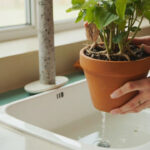
If you accidentally over-fertilize (too much concentration or too frequent), flush the soil immediately. Run lukewarm water through the pot slowly for 5-10 minutes, letting it drain freely. This washes out excess salts. Let the soil dry normally before the next watering.
Signs of Over-Fertilization and Under-Fertilization
Over-fertilization signs: Brown or crispy leaf tips, white crust on the soil surface, yellowing lower leaves despite wet soil, stunted new growth. If you see these signs, flush the soil and stop fertilizing for 6-8 weeks.
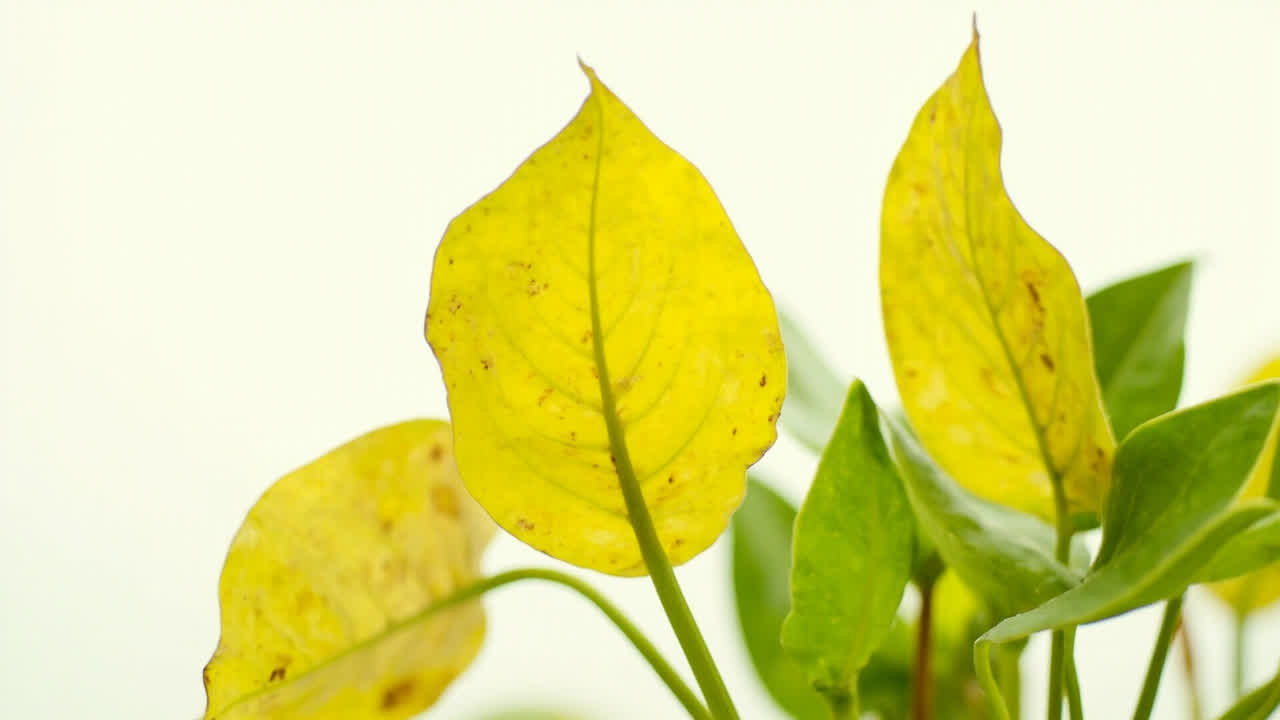
Under-fertilization signs: Slow or no new growth during spring and summer, pale green or yellow-green leaves (not the bright green of healthy growth), smaller new leaves compared to older ones. If you see these signs during the growing season, resume feeding. The save dying money plant guide covers stress recovery. at half strength every 3 weeks.
The honest trade-off: it is always safer to under-fertilize than over-fertilize a money plant. A plant that gets too little fertilizer grows slowly but survives. A plant that gets too much can suffer root damage that takes months to recover from. When in doubt, dilute more than you think necessary.
Special Situations
Newly purchased money plants: Do not fertilize for the first 4-6 weeks. For ongoing care, see the light requirements and humidity requirements pages.. Nurseries typically use nutrient-rich soil that contains enough fertilizer for the first month or two. Adding more can burn the roots.
Recently repotted money plants: Wait 4-6 weeks after repotting before resuming fertilizer. Fresh potting mix contains nutrients, and the roots need time to settle.
Money plants in low light: If your money plant is in a north-facing window or more than 6 feet from a window, reduce fertilizer to once every 6 weeks during the growing season. Low light means slower growth and lower nutrient demand.
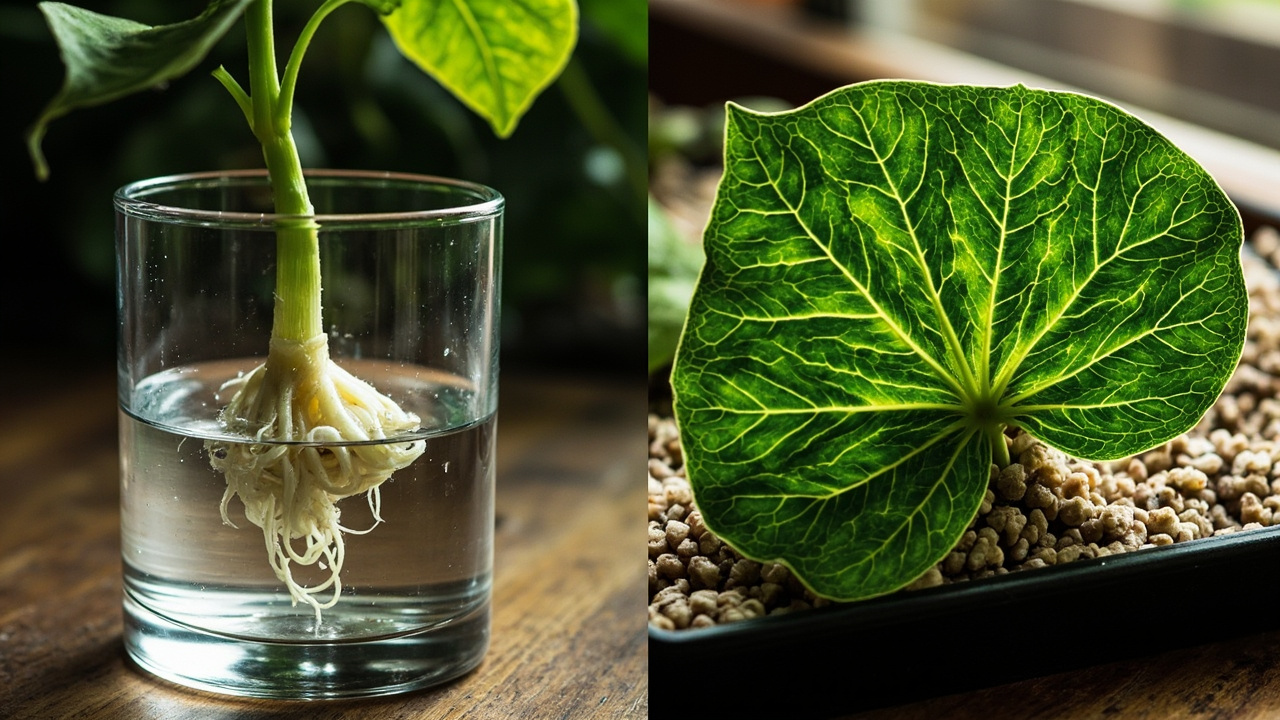
Water-grown money plants: If your money plant is growing in water (hydroponic-style), use a liquid hydroponic fertilizer at quarter strength once every 4 weeks. Change the water completely every 2 weeks to prevent salt buildup.