Succulents are not low-care plants. They are different-care plants, and treating them like a pothos or a monstera is the fastest way to lose them. The succulents that thrive indoors are the ones that get bright light, infrequent deep watering, fast-draining soil, and a seasonal adjustment when winter arrives. Get those four things right and most of the common problems disappear.
What makes succulents physiologically unusual is how they handle water and carbon dioxide. Most houseplants open their stomata during the day to absorb CO₂ for photosynthesis, which means they lose water through transpiration in daylight hours. Succulents use a different pathway called CAM photosynthesis: they open their stomata at night, store CO₂ as malic acid, and process it during the day with the stomata closed. This adaptation evolved in arid environments where daytime water loss would be fatal. The trade-off is slower growth, but the benefit is extraordinary drought tolerance. Their thick leaves, stems, or caudex tissue are water reservoirs, and every care decision flows from this reality. The rules that work for tropical foliage plants actively harm succulents.
This guide covers the five pillars that determine whether your succulents stay compact and alive or slowly stretch, rot, and decline: what makes succulents different, how to water correctly, how much light they actually need, what soil mix prevents root rot, how to adjust care in winter, and how to read the early warning signs of the most common problems. By the end you will be able to diagnose what your plant is telling you and act on it.
What Makes a Succulent Different (And Why It Matters)
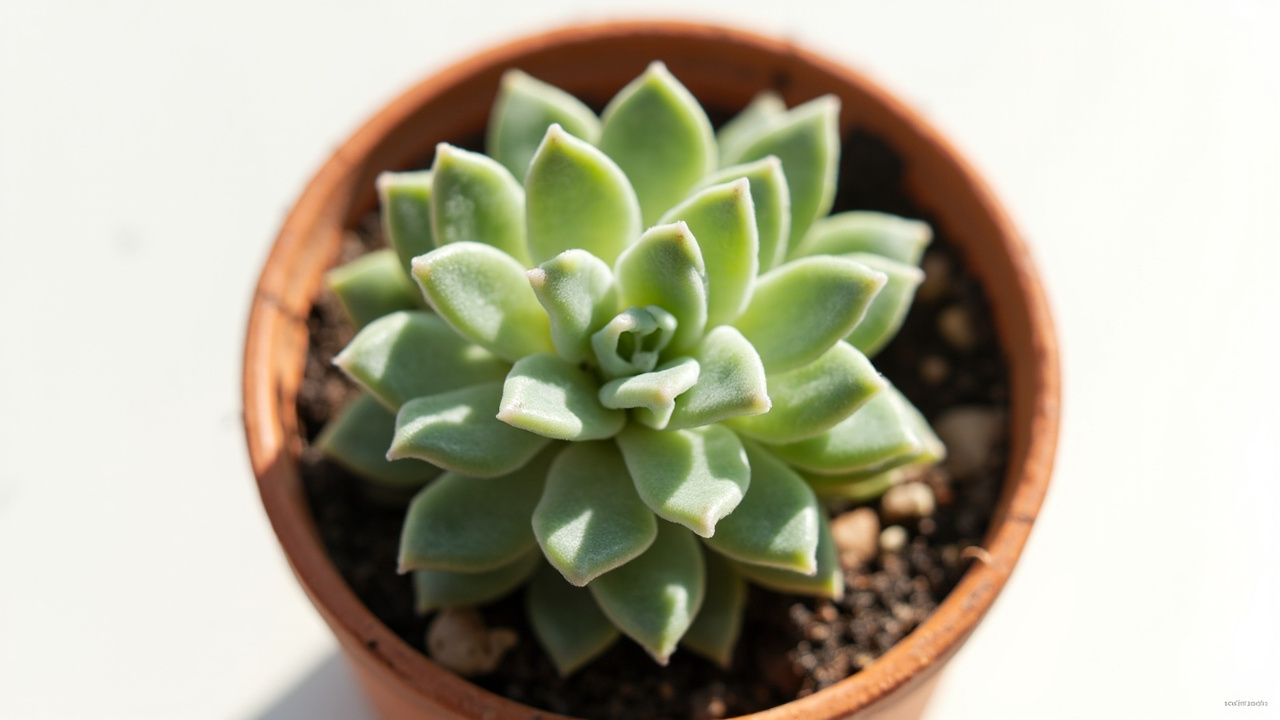
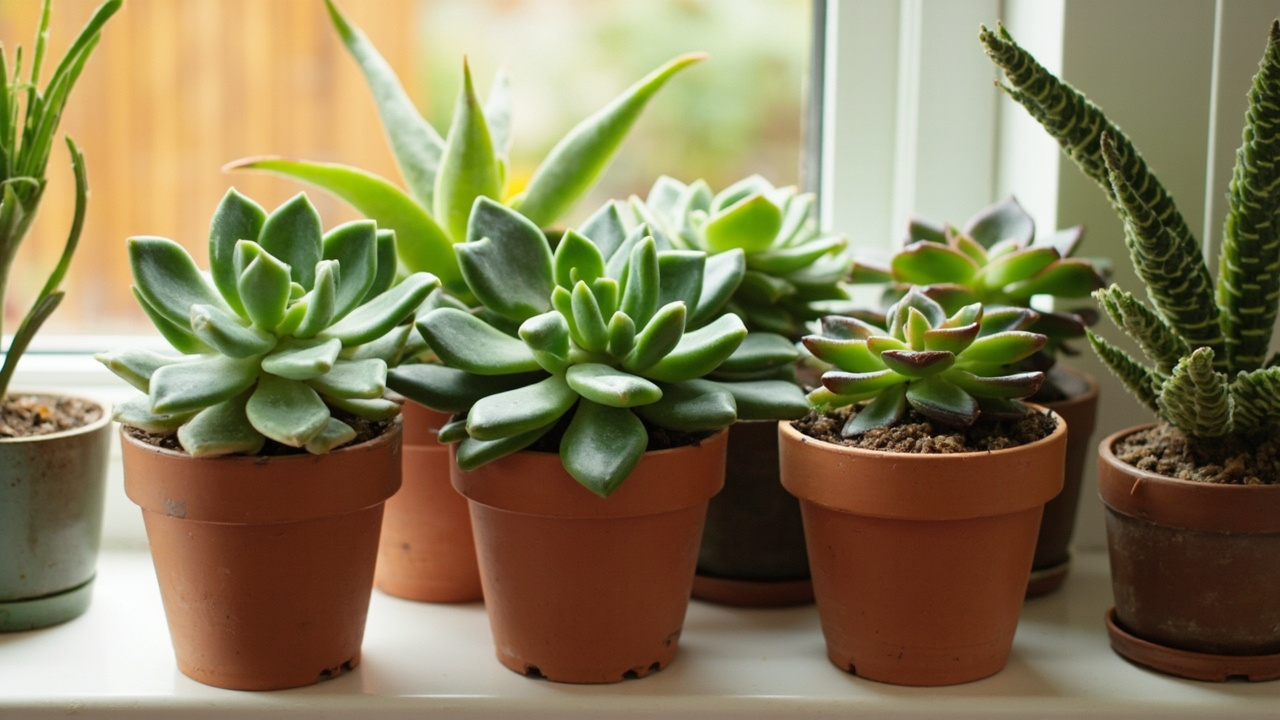
“Succulent” is not a plant family. It is a growth strategy. Over 60 plant families include species that store water in leaves, stems, or roots, from Crassulaceae (jade, echeveria, sedum) to Aloeaceae, Cactaceae, and Asphodelaceae (haworthia). What unites them is the ability to survive extended dry periods by drawing on internal water reserves. The rosette shape common in echeveria and sempervivum is not decorative; it channels rainwater toward the root zone and minimizes the surface area exposed to direct sun.
CAM photosynthesis is the mechanism behind the care rules. Because succulents take in CO₂ at night, they are most metabolically active during cooler hours. This means they are poorly adapted to the warm, wet, low-light conditions that tropical houseplants love. A potting mix that stays moist for days, a north-facing window, or a daily misting schedule will not just fail to help a succulent — it will actively stress it. The condition that matters most is the dry interval between waterings. Without it, the plant never enters the slight drought stress that triggers healthy root development and compact growth.
Watering Succulents: The Soak-and-Dry Method
The single most common cause of succulent death is light, frequent watering — the kind you would give a fern or a peace lily. Succulents need the opposite approach: a thorough soak followed by a complete dry-down. Water until it runs freely from the drainage holes, then do not water again until the soil is dry all the way through. For most indoor succulents in a 4–6 inch pot, this means watering every 7–14 days in the growing season and every 3–6 weeks in winter. The exact interval depends on pot material, soil composition, humidity, and light levels, so do not rely on a calendar. Check the soil with a wooden skewer or your finger; if there is any moisture in the bottom half of the pot, wait.
The mechanism is straightforward: roots need oxygen between waterings. Soil that stays saturated pushes out air pockets, and anaerobic conditions set in within 48–72 hours in a sealed or poorly draining pot. Once oxygen is gone, root cells begin to die, and the rot spreads upward into the stem and leaves. The failure mode is visible but often misread: mushy, translucent lower leaves are the classic sign of overwatering, but by the time you see them, root damage is already advanced. The honest trade-off is that underwatered succulents recover far more easily than overwatered ones. Wrinkled, slightly soft leaves bounce back within days of a proper soak. Rot does not reverse.
If you are transitioning from tropical houseplants, the watering requirements for jade — one of the most forgiving succulents — are a useful baseline. Jade leaves should feel firm and plump; slight softness at the base of the lower leaves is your signal to water, not a fixed schedule.
Light Requirements: The Brightness Threshold Succulents Actually Need
Most succulents need a minimum of 4–6 hours of bright indirect light or 2–4 hours of direct sun per day to maintain compact growth. Below that threshold, the plant begins to etiolate — stretching toward the light source, with elongated stems, wider spacing between leaves, and a paler color. Etiolation is not a disease; it is a survival response. The plant is increasing its surface area to capture more photons. But the stretched tissue is structurally weaker and never reverts to its original compact form, even after you move the plant to a brighter spot.
The practical consequence is that a north-facing window (in the Northern Hemisphere) is almost never enough for most succulents. East-facing windows work for haworthia and gasteria, which tolerate lower light. South- and west-facing windows suit echeveria, jade, and most other thick-leaved types. If your only option is a low-light position, supplement with a full-spectrum LED grow light positioned 6–12 inches above the plant for 10–12 hours a day. The failure mode to watch for is gradual etiolation that happens so slowly you do not notice until the plant looks nothing like the compact specimen you bought. Compare your plant to photos of the same species grown in adequate light at least once a month.
Soil and Drainage: Why Regular Potting Mix Kills Succulents
Standard potting soil is formulated to retain moisture for tropical plants. It typically contains peat or coir, perlite, and sometimes water-retaining granules. For a pothos or a philodendron, this is ideal. For a succulent, it is a death sentence. Moisture-retentive soil keeps the root zone wet far too long, and the anaerobic conditions that follow destroy fine root hairs within days. The plant cannot take up water or nutrients without those root hairs, so it declines even though the soil is wet.
The fix is a gritty, fast-draining mix. A reliable starting formula is one part standard potting soil to one part perlite or pumice and one part coarse sand (not fine play sand, which compacts). For very moisture-sensitive species like lithops or mesembs, increase the mineral ratio to 80–90% inorganic material. The mix should feel loose and gritty, not spongy. When you water, it should drain through within seconds and the pot should feel noticeably lighter within 2–3 days in a warm room.
Pot drainage is non-negotiable. Every pot must have at least one drainage hole. Decorative cachepots without holes are fine as outer covers, but the inner pot must drain freely. Terracotta is preferable to plastic or glazed ceramic because it wicks moisture through the pot wall, accelerating dry-down. The honest trade-off: gritty mix dries out faster, which means more frequent watering in summer. That is not a problem — it is the mechanism that keeps roots healthy. For a deeper look at ratios and pot choices, see the soil mix guide for jade plants, which uses the same principles.
Seasonal Care: What Changes in Winter
Most succulents slow down or enter dormancy in winter, but the timing depends on the species. Winter-dormant types (most echeveria, sempervivum, many sedum) rest during the cold months and grow actively in spring and autumn. Summer-dormant types (some haworthia, senecio, and many South African species) grow in winter and rest in summer. The practical consequence is the same for both: during dormancy, reduce watering to once every 4–6 weeks or even less, and stop fertilizing entirely. The plant is not actively growing, so it cannot use the nutrients, and excess fertilizer in dry soil can burn roots.
The downstream effect of winter indoor heating is dry air combined with cool windowsills. Succulents near cold glass can suffer chill damage below 40 °F (4 °C), while the dry air from heating systems can desiccate leaf edges. Move plants a few inches back from cold windows and avoid placing them directly above radiators. If your home stays above 60 °F (16 °C) and the plant is near a bright window, most succulents will continue slow growth and need water every 2–3 weeks rather than the full summer schedule. The uncertainty is real: every home’s microclimate is different. Watch the plant, not the calendar. For a detailed breakdown of dormancy signals and temperature thresholds, the winter care guide for jade covers the same seasonal patterns.
Common Succulent Problems and How to Read Them Early
Succulents communicate distress through their leaves. Learning to read the five most common problems early is the difference between a quick fix and a plant you cannot save.
Overwatering
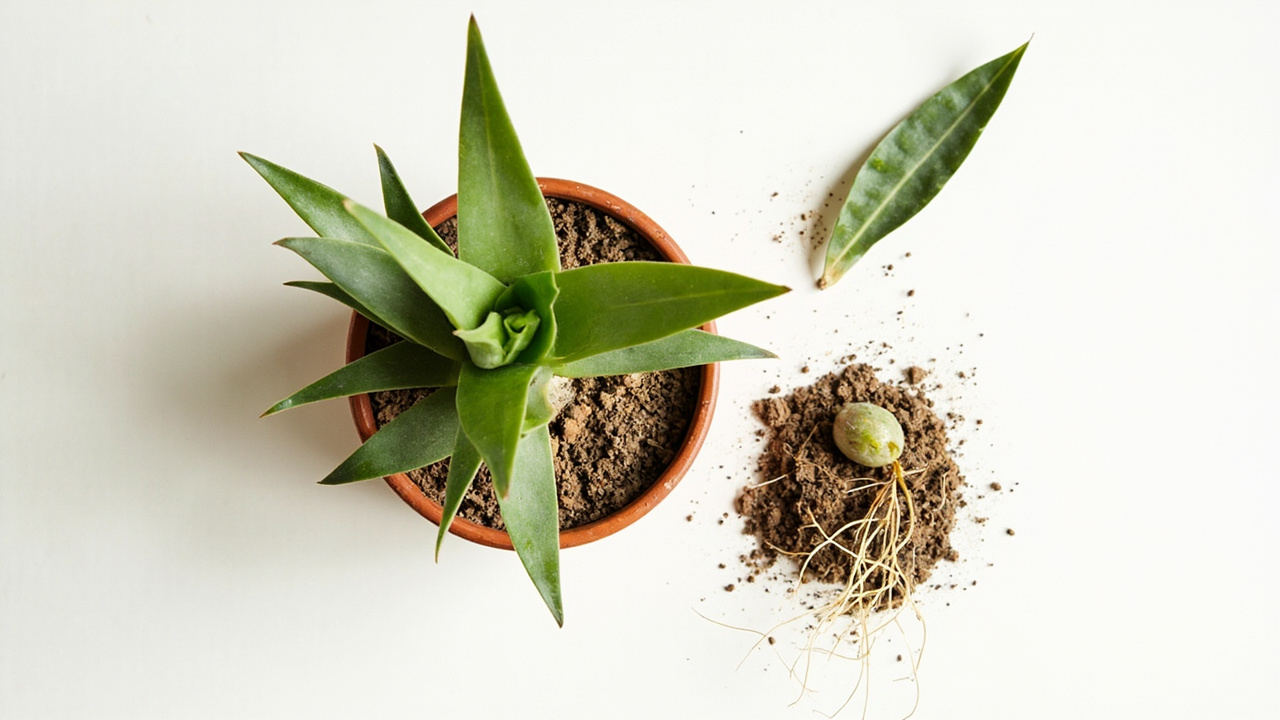
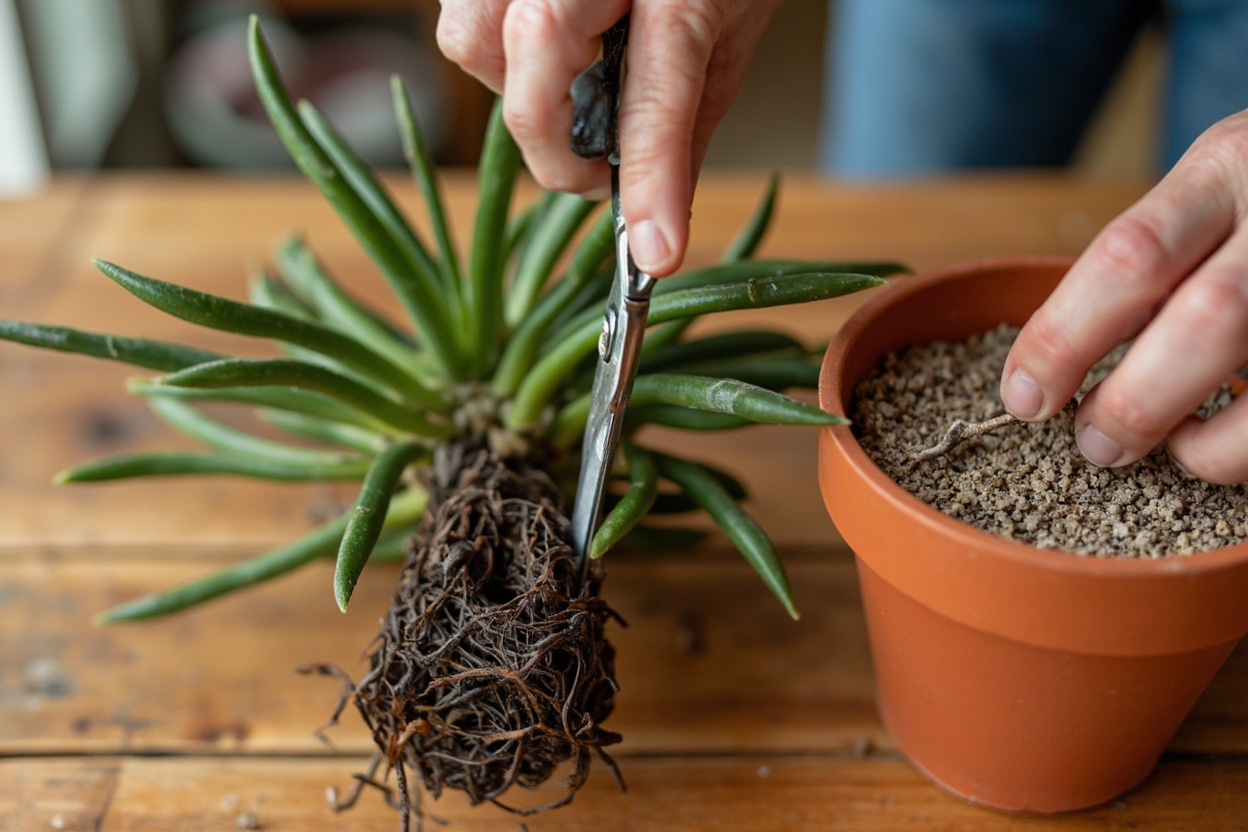
The earliest sign is a translucent or mushy lower leaf that detaches with light touch. By the time the stem softens, root rot is advanced. Stop watering immediately, remove the plant from the soil, cut away all soft or blackened tissue with a clean blade, let the wound dry for 2–3 days, and repot in dry gritty mix. Do not water for at least a week after repotting.
Underwatering
Wrinkled, slightly soft leaves that lose their plumpness are the signal. The oldest leaves show it first because the plant reclaims water from them to support new growth. A thorough soak restores turgidity within 24–48 hours. Chronic underwatering leads to stunted growth and leaf drop but is far easier to correct than rot.
Etiolation
Stretched stems with wide gaps between leaves and a lean toward the light source. This is irreversible on existing growth; prune the top rosette and replant it once the cut calluses, and move the plant to a brighter position. Prevention is the only real cure.
Sunburn
White, brown, or tan patches on leaves that were suddenly exposed to direct sun after being in low light. Succulents need to acclimate to brighter conditions over 7–14 days. Move a shaded plant into full sun gradually. Burned patches do not heal, but the plant recovers if the underlying tissue is intact.
Root Rot
The final stage of chronic overwatering. The base of the plant turns black or brown, the stem feels soft, and the plant may topple. If the rot has not reached the top rosette, cut above the damaged section, let it callus, and reroot in dry soil. If the crown is affected, take healthy leaf cuttings and propagate.
Pests
Mealybugs are the most common indoor succulent pest — white cottony clusters at leaf joints and stem bases. Treat with 70 % isopropyl alcohol applied with a cotton swab, or spray with neem oil solution every 7 days for 3 weeks. Isolate affected plants immediately. For a systematic approach to diagnosing and treating common problems in thick-leaved plants, the jade plant problems guide covers the same diagnostic framework.
From PDF to Excel in one click
Forget retyping line by line. Upload any bank statement, get a spreadsheet you can actually use. Your files are never stored, and you can test the converter with 3 free conversions.
Try it free