Monstera deliciosa is a tropical aroid that does best at relative humidity between 50% and 70%, and it tolerates a normal household range of 40% to 60% as long as the air does not swing sharply between very dry and very humid. A steady reading in that window, measured with a basic hygrometer near the canopy, is what produces large fenestrated leaves and a clean, brown-free leaf edge.
The honest answer for most indoor growers is that a monstera will not collapse in dry air, but it will look better in humid air. Brown leaf edges, slow new growth, and crispy patches on mature leaves are the most common signals that humidity has dropped below what the plant actually wants, and the fix is usually a small humidifier or a sensible grouping of plants rather than misting the leaves.
Why humidity matters for monstera
Monstera leaves are large and thin, and they lose water through their stomata at a rate that scales with the gap between the moisture inside the leaf and the moisture in the surrounding air. When indoor humidity drops below 40%, that gap widens and the leaf edges dry out first because they are the furthest point from the water moving up through the stem. Sustained low humidity is what causes the brown, papery edges that look like under-watering even when the soil is damp.
Three things change visibly when humidity sits in the right range. New leaves unfurl without sticking to the one underneath them, the new growth is thicker and more deeply green, and fenestrations develop cleanly rather than as torn or split shapes that did not finish forming. A plant that produces small, thin new leaves in summer, with brown margins on the older leaves, is usually responding to dry air rather than to anything wrong with the soil or roots.
Humidity also interacts with the watering routine. In dry air, the soil dries faster and the plant pulls moisture from the oldest leaves to keep new growth moving. In humid air, the soil stays damp longer and the plant can keep its full canopy, which is why the watering guide adjusts the dry-down rhythm to the room’s humidity rather than to a fixed day-of-the-week schedule.
The range that actually works
A 50% to 70% relative humidity range covers what monstera uses for steady indoor growth. Below 40%, brown leaf edges and crisping become routine. Above 80% for long periods, the leaf surface stays wet long enough to invite fungal spotting, especially in rooms with poor air movement.
A practical middle target is 55% to 65% during the day, with a natural drop overnight as the temperature falls. That range is achievable in most homes with one or two small interventions, and it is high enough to keep the leaf edges clean without the mold risk of a true greenhouse environment.
Plants in naturally humid rooms, such as a bright bathroom with a working vent, often do better with no equipment at all. Plants in dry winter rooms, where forced-air heat drops humidity into the 20% range, need active help from a humidifier or a grouping with other large-leafed tropical plants.
How to measure humidity where the plant actually sits
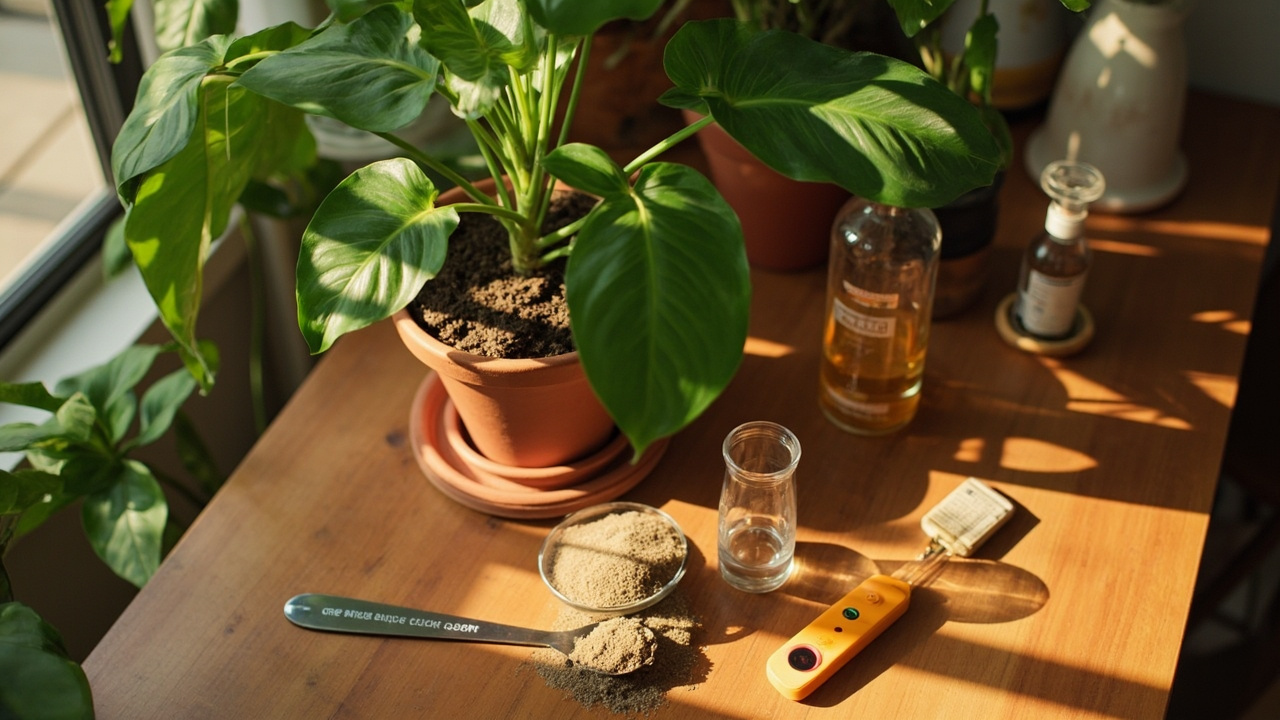
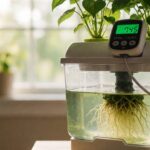
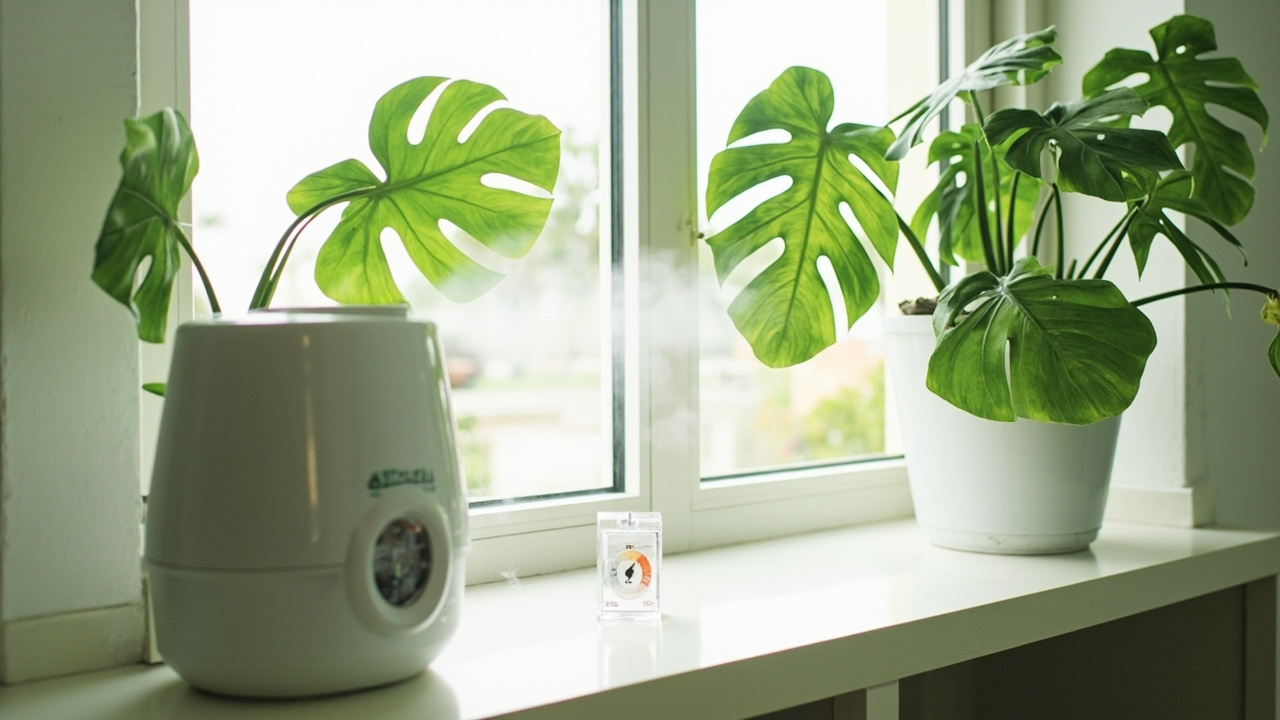
A small analog or digital hygrometer placed at canopy height, on the same shelf as the monstera, gives a far more useful reading than the whole-house number from a smart thermostat. Microclimates around a bright window, near a heating vent, or above a radiator can be 20% to 30% drier than the room average, and that is where most of the brown-edge problems start.
Take readings at three times of day for a few days: morning, mid-afternoon, and after the heat has been running for an hour in the evening. The highest and lowest numbers define the working range, and the gap between them is the signal of how stable the environment is. A room that swings from 30% to 65% through the day stresses the plant more than a room that holds steady at 45%.
Replace the battery in a digital hygrometer once a year, and recalibrate analog units by sealing them in a plastic bag with a damp paper towel for a few hours. A reading that lands at 95% to 100% inside the bag confirms the unit is still accurate.
Practical ways to raise humidity around a monstera
A small cool-mist humidifier set to 60% on a hygrostat, placed a few feet from the plant, is the most reliable way to hold a steady range. The humidifier does not need to point at the leaves. It needs to raise the air moisture in the room the plant sits in, which the natural air movement will distribute.
Grouping monstera with other large-leafed tropicals creates a small humid zone as each plant transpires. The combined leaf area pushes the local humidity up by 5% to 10% compared to an isolated plant in the same room, which is often enough to keep the leaf edges clean without any equipment.
A pebble tray under the pot is the gentlest option and is most useful in a small, enclosed space like a plant cabinet. Fill a shallow tray with pebbles, add water to just below the top of the pebbles, and set the pot on top. The evaporating water raises the local humidity by a small but steady amount, and the pot stays out of standing water.
What does not work, and what can backfire
Misting the leaves is the most repeated recommendation in houseplant care, and it is the least useful one for monstera. The fine water sits on the leaf surface for ten or fifteen minutes at most, which is too short to change the leaf’s water balance, but long enough to leave mineral spots and to invite fungal growth on the lower leaves where air movement is poorest. Misting is fine as a once-a-week leaf rinse, but it is not a humidity strategy.
Closing the plant in a glass terrarium or a sealed container raises humidity to 90% or higher, which is past the point where monstera leaves start to spot. It also traps stagnant air, which is the perfect environment for the fungal pathogens that cause leaf-spot disease. A bright, open room with steady humidity is better than a sealed display box for any long-lived monstera.
Placing the monstera next to a humidifier that is pointed directly at the leaves saturates the leaf surface and produces the same spotting as misting. Direct vapor also cools the leaf surface, which can stress the plant in a drafty room.
Humidity through the seasons
Winter is when humidity problems are loudest. Forced-air heating drops indoor humidity into the 20% to 30% range, and the monstera responds with brown leaf edges within a few weeks. Running a humidifier on a hygrostat from late fall through early spring is the most reliable fix, and it also helps the people in the room, not just the plant.
Summer humidity is usually easier, especially in older homes without central air conditioning. The natural range lands in the 50% to 65% zone, and the monstera pushes new growth steadily. The risk in summer is the opposite: a closed, air-conditioned room can drop the humidity below what winter heating produces, and the leaf edges will brown just the same.
Spring and fall are transitional, and the plant often signals the change with one or two older leaves yellowing at the edges as the air dries out. A new leaf that emerges clean and intact is the best sign that the current humidity routine is working.
How humidity connects to the rest of the care plan
Humidity is one of three atmospheric variables a monstera responds to, and it only works in combination with the right temperature and light. The temperature tolerance page covers the 65°F to 85°F (18°C to 29°C) range that pairs with a 50% to 70% humidity target, and the light requirements page explains the bright, indirect light the plant needs to use the moisture in the air rather than to lose it through stress.
The whole routine ties together in the monstera care guide, which is the right starting point for any new grower. A monstera in steady humidity, in the right light, and in a pot with the right soil mix will produce a full new leaf every four to six weeks through the warm months, and it will keep its older leaves clean rather than browning them at the edges.
A small humidifier, a basic hygrometer, and a sensible room placement are the only equipment most monsteras actually need to thrive. Once the local humidity is in the 55% to 65% range, the rest of the care plan is just consistency: water when the top inch dries, feed lightly through the growing season, and let the plant rest in winter.
Turn PDF Bank Statements Into Workable Spreadsheets
Your bank statement is a mess of numbers, but your books shouldn't be. Use our converter to get Excel, CSV, or QBO files — ready for QuickBooks.
Try It Free Now