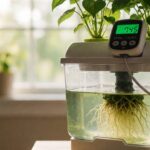
Yellow leaves on a Calathea are among the most common problems home growers report, and one of the most misdiagnosed. The instinct is to assume overwatering or under-watering, but yellowing can come from at least five distinct causes, and the difference between the right and wrong fix is usually the difference between a recovered plant and a slow decline. The diagnostic question is not “is the plant yellow?” but where is the yellow starting, and how fast is it spreading?
The Five Patterns of Yellowing (and What Each One Means)
Calathea yellowing falls into five diagnostic patterns. Each points to a different cause and a different fix. The pattern is the diagnostic, not the colour — yellow is yellow, but the location and speed of spread tells you what is going on.
1. Edge Yellowing That Spreads Inward
Yellowing that starts at the leaf edges and creeps toward the central vein over 5 to 14 days is almost always a moisture or humidity issue. The plant is closing off the leaf edges (the most transpiration-vulnerable parts) to conserve water. The two most common drivers are low humidity (below 50%) and inconsistent watering (alternating bone-dry and waterlogged soil).
The fix: check humidity with a hygrometer at the leaf surface, not the room reading. If leaf-level humidity is below 50%, run a humidifier or use a pebble tray. Check soil moisture weekly with a wooden chopstick or moisture meter — the top 1 inch (2.5 cm) should dry out between waterings, but no deeper. The Calathea humidity requirements guide walks through the practical setup in more detail.
2. Tip Yellowing (the Last 1 cm)
If only the very tip of the leaf is yellow and the rest of the leaf is healthy green, the most likely cause is fluoride or chlorine in tap water. Calathea is unusually sensitive to these, and the leaf tip — being the end of the vascular system — accumulates the most. The damage is also slow: tip yellowing that progresses over months, not days, is the tell.
The fix: switch to rainwater, distilled water, or filtered water. If that is impractical, let tap water sit in an open container for 24 hours before use — this dissipates chlorine but not fluoride, so for high-fluoride municipal water, filtration is the only real fix. The plant will not recover already-yellowed tips, but new leaves will come in clean.
3. Whole-Leaf Yellowing, Older Leaves First
One or two of the oldest, lowest leaves yellowing and dropping is normal aging. Calathea, like most foliage plants, redirects resources from older leaves to new growth. The sign that this is normal is the pace: one leaf every few weeks, with the rest of the plant looking healthy and pushing new growth.
The sign that it is not normal: more than two leaves yellowing per month, or yellowing combined with the new growth coming in smaller than expected. The most common cause is nitrogen deficiency, which shows up first in older leaves because nitrogen is mobile in the plant and gets redirected to new growth. The fix is a balanced fertiliser at half strength, applied every 4 to 6 weeks during active growth.
4. Yellowing With Brown Spots (the Patchy Pattern)
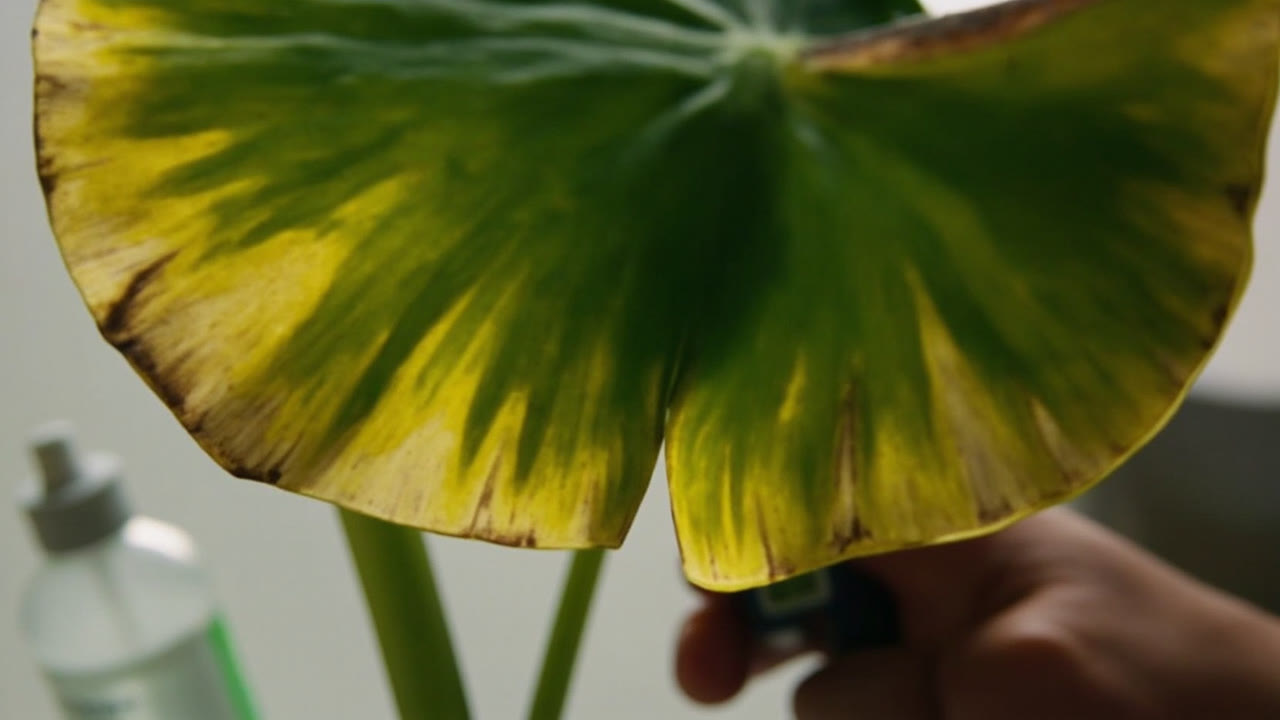
Yellow patches combined with brown centres indicate leaf spot disease, usually fungal. The most common pathogens are Alternaria and Cercospora, both of which thrive in high humidity with poor air circulation — exactly the conditions Calathea prefers. The plant’s preferred environment is also the pathogen’s preferred environment, which is the trade-off most guides do not mention.
The fix: improve air circulation with a small fan nearby (not pointed directly at the plant), remove affected leaves at the base with clean scissors, and avoid wetting the foliage when watering. If the problem spreads despite these changes, a copper-based fungicide is the next step, applied at half the label rate to avoid foliage burn. The Calathea brown leaves guide covers the related diagnosis in more detail, including the bacterial-vs-fungal distinction.
5. Rapid Yellowing of Multiple Leaves (Within Days)
If the plant goes from healthy to mostly yellow within a few days, the cause is almost always root zone — either overwatering that has triggered root rot, or a cold snap that has damaged the root system. The plant’s response is to abandon leaves because it can no longer support them.
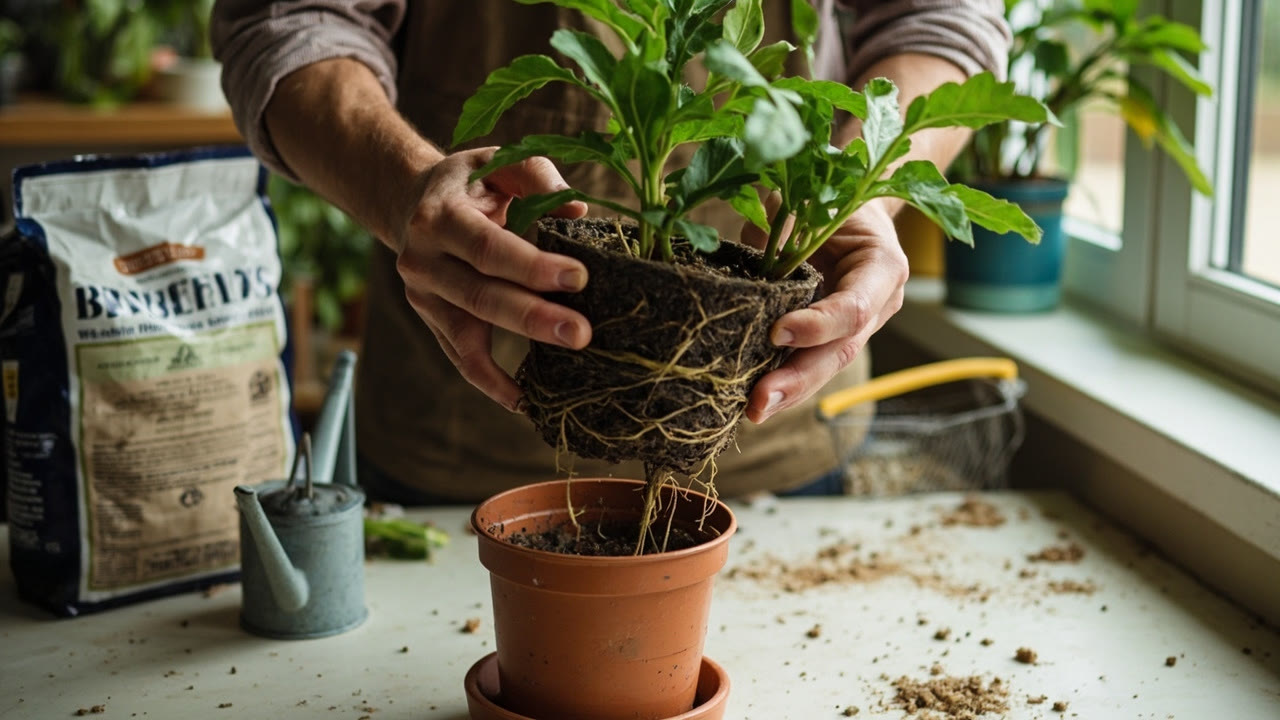
The fix: unpot the plant and inspect the roots. Healthy Calathea roots are white to light tan and firm. Rotted roots are brown or black, mushy, and may smell sour. Trim affected roots with sterilised scissors, repot in fresh dry mix, and withhold water until new growth appears. This is also the point at which the Calathea temperature tolerance guide becomes relevant — root zone below 60°F (15°C) for any extended period can trigger this same response.
The Diagnostic Decision Tree
When you first notice yellowing, ask these three questions in order:
- Where is the yellow starting? Edges (humidity/water), tips (water quality), whole leaf (age/nitrogen), patches (disease), or everywhere fast (roots)?
- How fast is it spreading? Days (urgent, root issue), weeks (moisture/light), months (water quality or age)?
- Is the new growth affected? If new leaves are also yellow, the cause is systemic. If only old leaves, the cause is local or normal aging.
The combination of these three answers narrows the cause to one of the five patterns above. Most yellowing is in the first category (edge yellowing) and resolves within 3 to 4 weeks of fixing the moisture rhythm. The other categories take longer to correct but are recoverable with patience.
What to Avoid
Do not assume that yellow means “more water” — overwatering is the most common cause of Calathea decline, and adding water to an already-stressed plant is the worst move. Do not fertilise a yellowing plant in an attempt to “green it up” — fertiliser on damaged roots causes fertiliser burn, which looks like yellowing and makes the diagnosis harder. Do not prune yellow leaves prematurely — the plant is still drawing some resources from them, and removing them creates new wounds.
Do not repot a yellowing Calathea unless you have confirmed a root issue. Repotting is itself a stress event, and doing it on a plant that is already stressed by another cause compounds the problem. Repot only when you have evidence of root rot, compacted soil, or pot-bound conditions — and even then, only during active growth.
Yellow leaves on a Calathea are not a death sentence. They are a signal. The plant is telling you which of its needs is not being met, and the location, speed, and pattern of yellowing tells you which one. Read the signal, match it to the pattern, and the recovery path is usually clear within a few weeks.
Turn That PDF Into a Spreadsheet in Minutes
You've seen how to do it manually — now let the tool handle the heavy lifting. Upload your bank statement and get Excel, CSV, or QBO in a few clicks.
Try It Free