As a home gardener, learning the difference between honey bees versus yellow jackets isn’t just a matter of curiosity—it’s about feeling safe and confident in our outdoor spaces.
There’s nothing quite like a warm afternoon in the garden, is there? The sun is on your back, your hands are in the soil, and there’s a gentle buzzing in the air. But then, a flash of yellow and black zips by your head.
My heart still does a little leap every time! Is it a friendly little pollinator just doing its job, or is it the uninvited guest who ruined last year’s barbecue?
I know this moment of hesitation all too well…
Learning the difference of a honey bee and a yellow jacket is about knowing when to relax and when to retreat!
So, let’s get our hands dirty, so to speak, and make a clear comparison to understand these fascinating and often misunderstood members of the order Hymenoptera.
At-a-Glance: Key Differences Honey Bees Versus Yellow Jackets
For a quick summary, here’s a chart that breaks down the essential distinctions of Honey Bees Versus Yellow Jackets:
| Feature | Honey Bee (Apis mellifera) | Yellow Jacket (Vespula spp.) |
| Appearance | Fuzzy, robust body; dull amber & black stripes | Smooth, slender body with cinched waist; bright yellow & black stripes |
| Behavior | Gentle, defensive; focused on pollination | Aggressive, territorial; predator & scavenger |
| Stinger | Barbed, stings only once and then dies | Smooth, capable of multiple stings |
| Nest | Perennial hive made of wax comb | Annual nest made of paper-like pulp |
| Primary Diet | Nectar and pollen from flowers | Insects, protein, sugary substances (scavenger) |
Appearance & Identification: Telling Them Apart by Sight
The first step in identification is to look at their outfits.
The Honey Bee
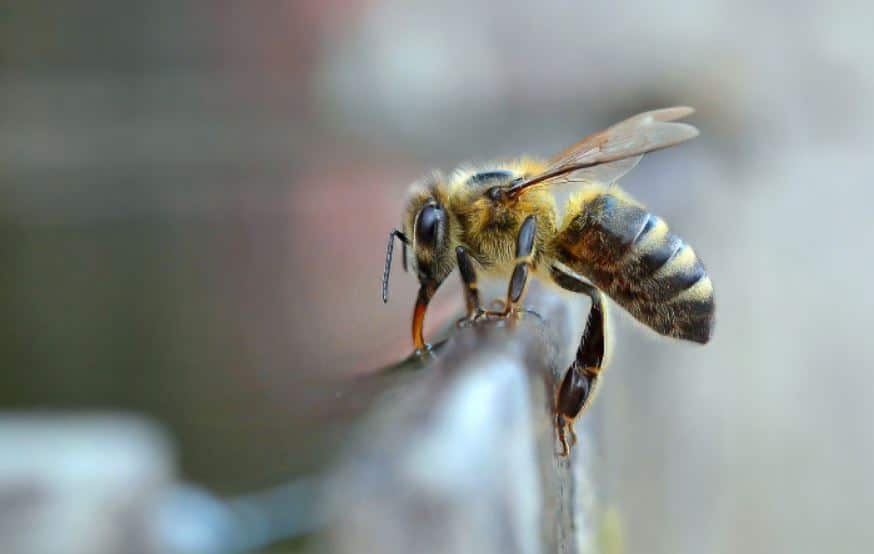
A honey bee (Apis mellifera) is like the cozy, cuddly teddy bear of the insect world. It has a robust, barrel-chested body shape covered in fuzzy, golden-brown hairs.
This isn’t just for looks; that hairy body is a pollen-collecting machine!
You’ll notice their stripes are more of a muted amber-and-black, and their hind legs are flat and wide, specially equipped with pollen baskets, called corbiculae, to carry pollen back to the hive.
The Yellow Jaket
A yellow jacket, on the other hand, is a type of wasp from the Vespidae family. It’s dressed for action in a sleek, shiny leather jacket. Its body is slender with a very distinct, cinched waist separating the thorax and abdomen.
There’s no fuzz here—just a smooth body with loud-and-proud, vibrant yellow and black stripes.
Their legs are slender and dangle down when they fly, and they often move in a quick, jerky, side-to-side pattern when scouting for food.
Think less teddy bear, more sleek hornet-like warrior.
Behavior & Temperament: Comparing Aggression Levels
This is where their personalities really diverge, and it’s what matters most to us when we’re weeding the petunias.
The Honey Bee
Honey bees are the gentle souls of the garden. Their entire life is focused on the colony and the vital work of pollination.
They fly from flowers to blossoms, collecting sweet nectar and protein-rich pollen.
Honestly, they could not care less about you unless you directly threaten their hive. Their behavior is defensive, not aggressive.
They are the definition of “live and let live.”
The Yellow Jaket
Yellow jackets have a bit more of an attitude. They are highly territorial and can exhibit extreme aggression.
As a predator and a scavenger, their diet is much broader. While they also consume sugar from sources like nectar, they aggressively hunt for protein—other insects, caterpillars, and unfortunately, the hamburger at your picnic.
This scavenging behavior is why they are often considered a nuisance.
Their aggression peaks in late summer and early fall…. Why?
The queen has stopped laying eggs, and the colony’s natural food sources are dwindling. This makes the thousands of workers frantic to find food to survive, leading them straight to our outdoor gatherings.
If you get too close to their nest, they will see you as a threat and won’t hesitate to attack.
Stinger Anatomy: Single Sting vs. Multiple Stings
I think we can all agree that the biggest fear is the stinger. This is another critical difference.
A honey bee has a barbed stinger. When it stings, the stinger gets lodged in the skin. As the bee flies away, the stinger tears from its body, causing the bee to die. It’s a single sting, an ultimate act of defense for its home.
A yellow jacket, however, has a smooth stinger, more like a lance. This means it can sting you, fly away angry, and come back to sting you again. These multiple stings are what make them so formidable.

The venom from both contains proteins and enzymes designed to cause pain and alert others.
It can cause a painful local reaction, but for some people, it can trigger a severe allergic reaction or even life-threatening anaphylaxis.
For any sting, the CDC recommends washing the area with soap and water, removing the stinger by scraping it with a fingernail or credit card, and applying a cold pack.
However, if you experience symptoms like difficulty breathing, swelling of the face or throat, or dizziness, seek emergency medical help immediately.
This is a critical moment where proper insect sting treatment is vital.
Nesting Habits: Locating Wax Hives and Paper Nests
You’re unlikely to stumble upon a honey bee hive in your garden unless you’re into beekeeping.
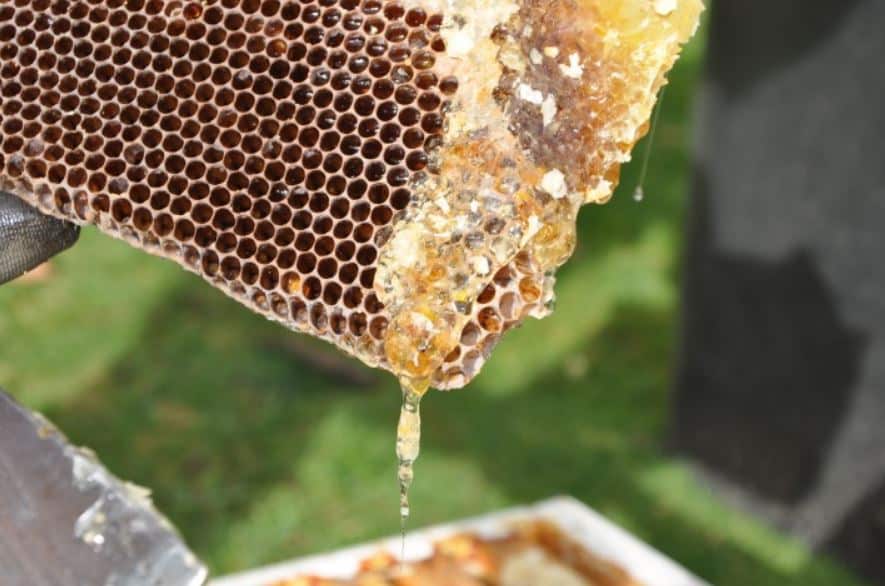
Honey bees build their homes from a beautiful wax comb that they produce themselves. Inside this intricate city, the worker bee sisters communicate using a sophisticated waggle dance to tell each other the exact location of the best food sources.
These honey bee hives are often in sheltered spots like tree hollows and are meant to last for years, housing the queen, male drones, and thousands of workers.
A yellow jacket nest is something gardeners often discover by accident—and it’s never a pleasant surprise.
Yellow jacket bees build a paper nest by chewing wood fiber into a pulp. The biggest danger is the ground nest, often hidden with a small, nickel-sized entrance you might not see until you’ve disturbed it with a lawnmower.
I once found one this way, and believe me, it’s an experience you don’t forget!
They also build an aerial nest in eaves, attics, or dense bushes.
The yellow jacket colonies are annual; only the fertilized queen survives the winter to start a new colony in the spring. A single colony of yellow jacket can grow to contain 4,000 to 5,000 workers by August.
Coexistence and Safety: Practical Tips for Gardeners
Living alongside these insects is much easier when we know how to act. Here are a few practical tips from my own experience and expert advice:
- Dress for Success: Avoid bright colors and floral patterns which can mimic flowers. Wear light-colored, plain clothing.
- Skip the Scent: Strong perfumes, colognes, or even scented sunscreens can attract these insects. Opt for unscented products when gardening or dining outdoors.
- Stay Calm: If a single bee or wasp is checking you out, don’t swat at it. This will only agitate it. Stay calm and move slowly away from the area. If one lands on you, gently and slowly brush it off, or give it a light puff of air to encourage it to leave.
- Create a Diversion: Set up a yellow jacket trap (you can buy them or make one from a soda bottle) early in the season, at least 20 feet away from your main outdoor living areas. This can lure the scouting queens away from your patio.
- Garden with Caution: The vibrations from lawnmowers and string trimmers can provoke a defensive attack from a hidden ground nest. Before you start, take a slow walk around your yard and watch for any consistent insect traffic going in and out of a single spot on the ground.
- Found a Nest? Keep Your Distance: If you discover a yellow jacket nest, mark the area to keep others away and call a professional pest control service. Attempting to remove it yourself can be incredibly dangerous.
Ecological Roles: The Pollinator vs. The Predator
It’s easy to label one “good” and the other “bad,” but both play a role.
Honey bees are our superstar pollinators. Their work is essential for agriculture, contributing to over $15 billion in U.S. crop value annually by pollinating everything from almonds to zucchini.
Honey bees are also vital for the reproduction of countless wildflowers that support entire ecosystems.
Yellow jackets, despite being a pest at times, are part of nature’s pest control team. They are voracious predators of aphids, caterpillars (like the destructive cabbage worm), and flies that might otherwise be munching on your prize-winning tomatoes.
Yellow jackets are a crucial part of the ecosystem, even if we don’t always appreciate their methods!
Identifying Other Common Garden Insects
To make your identification skills even sharper, remember to watch for other types of bees and common visitors.
The big, fuzzy bumblebee is an even better pollinator for certain plants (like tomatoes) than the honey bee.
The large, shiny black carpenter bee might be drilling perfect holes in your deck but is also a great pollinator.
And the hornet, a relative of the yellow jacket, is typically larger and builds an exposed, hanging paper nest.
All of these are social insect types with their own unique quirks.
A Gardener’s Guide to Honey Bees vs. Yellow Jackets
Ultimately, knowledge is our best tool in the garden. Understanding the difference between honey bees vs. yellow jackets allows us to foster a welcoming environment for vital pollinators like the honey bee while safely managing the more aggressive yellow jacket.
It turns fear into respect and helps us create a garden that is a true haven for nature and for us.
Happy safe gardening!
Turn That PDF Into a Spreadsheet in Minutes
You've seen how to do it manually — now let the tool handle the heavy lifting. Upload your bank statement and get Excel, CSV, or QBO in a few clicks.