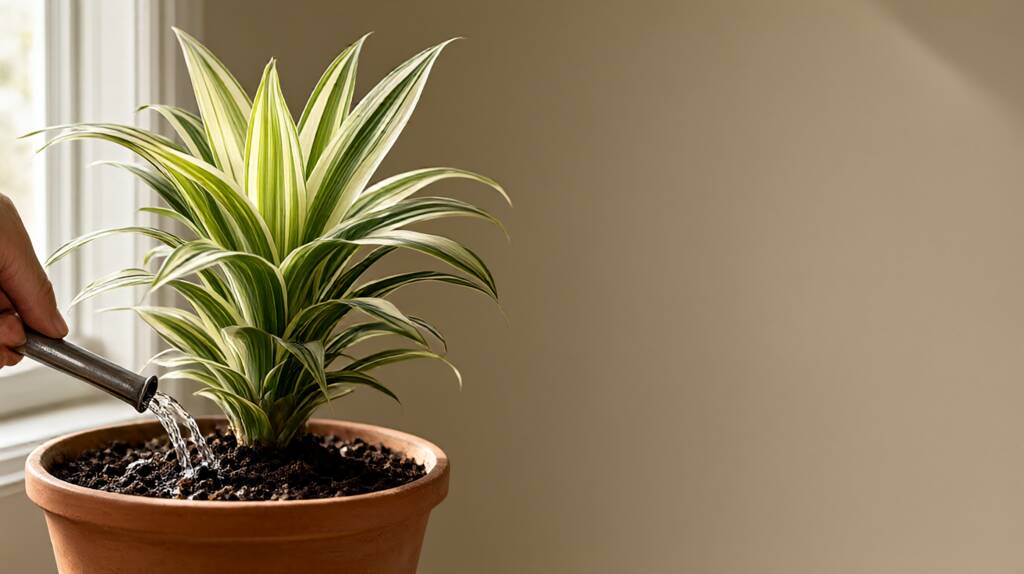

Dracaena fragrans ‘Massangeana’, commonly called mass cane or corn plant, is one of the most overwatered houseplants in existence. Its thick, woody canes store water efficiently, which means the plant looks fine for weeks after the soil becomes saturated. By the time the leaves show symptoms, the root system has already been damaged. Understanding the watering physics of mass cane is the difference between a plant that lives for decades and one that dies in its first year.
Most care guides say “water when the top inch is dry.” This rule is dangerously incomplete for mass cane. The top inch can be bone dry while the bottom 10 cm of soil is still saturated, and the thick canes mask the problem by drawing on stored water. By the time the plant shows stress, root rot has already taken hold. This guide covers the actual watering method, the soil physics, and the diagnostic signs that appear before visible damage.
How Mass Cane Roots Handle Water
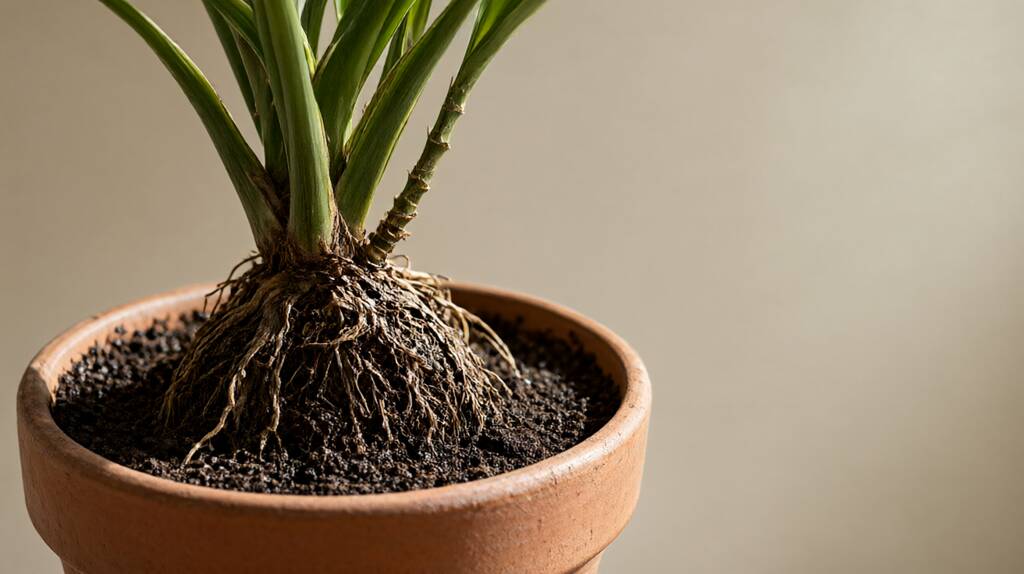
Dracaena fragrans roots are thick, fleshy, and shallow. They spread horizontally near the soil surface rather than diving deep. This means they access water quickly when the top layer is moistened, but they are also the first to suffocate when the bottom layer stays saturated.
The canes store water in their fibrous core, which is why the plant survives drought. But this storage creates a deceptive delay. When soil moisture drops, the canes release stored water to the leaves, and the plant looks healthy for 2-3 weeks after the soil has gone dry. By the time the leaves show stress, the plant has been in drought for weeks.
The combination of shallow roots and water-storing canes makes mass cane particularly vulnerable to the extremes. Overwatering rots the shallow roots before the canes show any sign. Underwatering stresses the canes before the leaves show any sign. The watering sweet spot is narrower than the plant’s reputation suggests.
The Right Way to Water Mass Cane
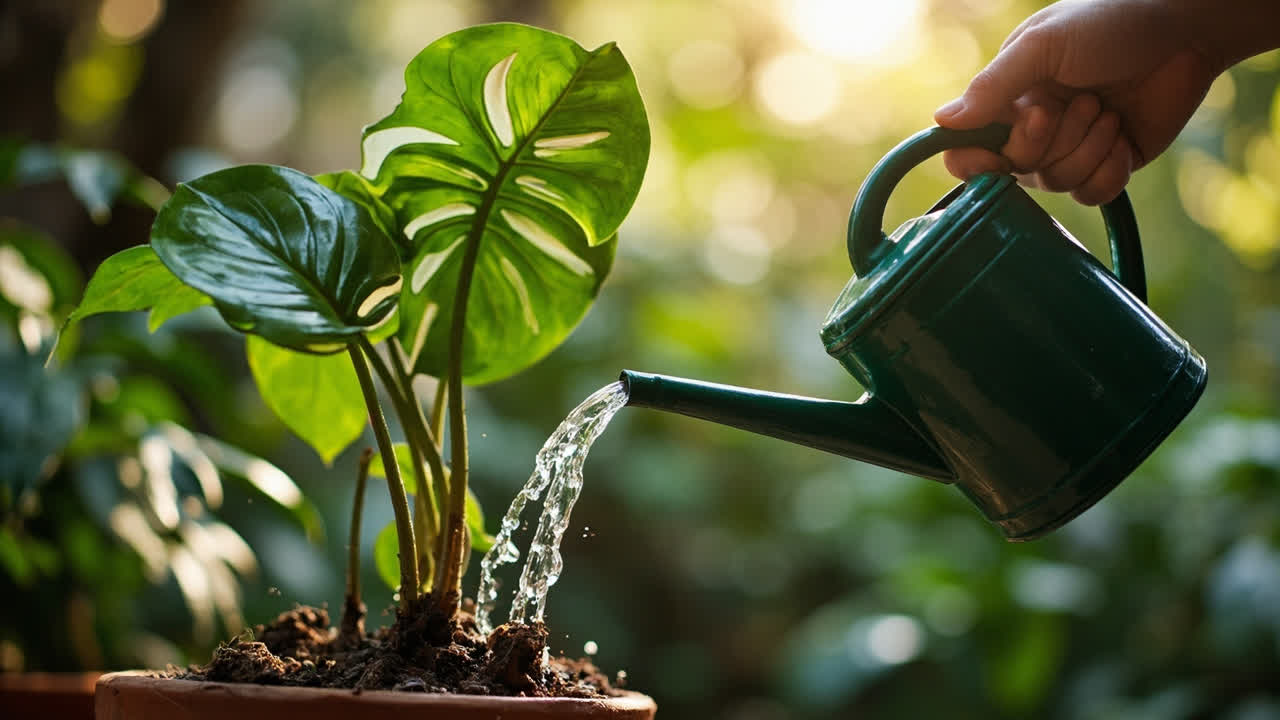
Water thoroughly until water runs freely from the drainage hole. This is essential because partial watering only moistens the top layer, leaving the deeper roots dry. The shallow root system means the plant depends on even moisture distribution throughout the pot.
After watering, let the pot drain completely. Mass cane is extremely sensitive to standing water. For a broader look at mass cane care, see our mass cane care guide. The shallow roots sit in the bottom 5 cm of soil, and if that layer stays saturated, root rot begins within 7-10 days.
Check soil moisture at 5 cm depth, not at the surface. The top 2-3 cm can be dry while the bottom is saturated. Use a wooden skewer or moisture meter inserted to 5 cm. If it comes out damp, wait. If it comes out dry, water.
Water temperature should be room temperature, 18-22°C. Cold water shocks the root system and slows absorption. If your tap water runs cold, let it sit in an open container for an hour before use.
Soil and Drainage
Mass cane needs fast-draining soil. A standard potting mix retains too much moisture. The ideal mix is 50% standard potting soil, 30% perlite, and 20% orchid bark. This provides enough water retention for the shallow roots while allowing excess water to drain freely.
Pot material matters. Terracotta pots breathe and dry faster, reducing overwatering risk. Plastic and glazed ceramic pots trap moisture. If you use plastic pots, reduce watering volume by 20-30% and increase the interval between waterings.
Drainage holes are mandatory. Mass cane will not survive in a pot without drainage. If you use a decorative cachepot, keep the plant in a plastic nursery pot with drainage holes inside the cachepot, and remove it for watering.
Water Quality
Mass cane is sensitive to fluoride and salt buildup, though less so than spider plants. Fluoride accumulation causes brown leaf tips, similar to spider plants. Salt buildup from fertilizer or hard water causes leaf edge browning and stunted growth.
If your tap water is high in fluoride or hardness, use filtered water or rainwater. Alternatively, flush the soil monthly with 3-4 pot volumes of water to leach accumulated salts. This is especially important in winter when the plant uses less water and salts concentrate in the soil.
Seasonal Watering Adjustment
Mass cane grows actively in spring and summer, when light and temperature are highest. During active growth, the plant uses water faster and the soil dries more quickly. Water when the top 5 cm of soil is dry, typically every 7-10 days in a warm, bright room.
In autumn and winter, growth slows. The plant’s water use drops by 50-60%. The same pot that needed water every 7 days in July may need water every 14-21 days in December. Overwatering in winter is the leading cause of mass cane death in indoor cultivation.
The seasonal shift tracks the plant’s metabolic rate, not the calendar. When new growth slows or stops, reduce watering. When new leaves emerge in spring, increase it.
Signs of Overwatering
Mass cane shows overwatering symptoms late. If you are dealing with yellow leaves, check watering first. By the time leaves yellow or canes soften, root rot is already advanced. The early signs are subtle and easy to miss.
Slower growth: The plant produces fewer new leaves and the existing leaves grow more slowly. This is the earliest sign, appearing 2-3 weeks before visible leaf damage.
Slightly yellow older leaves: The lowest leaves turn pale yellow, not bright yellow. This is different from natural senescence, which produces fully yellow leaves that drop cleanly.
Soil that stays wet: If the soil surface is still damp 5 days after watering, the mix is too dense or the pot is too large. The roots are sitting in saturated soil.
Soft cane bases: Press the base of each cane gently. A healthy cane is firm and woody. A soft or mushy cane indicates internal rot, which means the root system is already compromised.
Signs of Underwatering
Underwatering symptoms appear faster than overwatering symptoms. For leaf curling issues, see our mass cane leaves curling guide. because the canes deplete their water reserves visibly. The earliest sign is drooping leaves, which occurs when the canes can no longer supply enough water to maintain leaf turgor.
Drooping leaves: The leaves hang downward and feel soft rather than firm. This is the first sign and appears when the soil has been dry for 1-2 weeks.
Brown leaf tips: The leaf tips dry and turn brown. This is the second sign, appearing after 2-3 weeks of drought. Unlike fluoride damage, underwatering brown tips appear on older leaves first.
Dry, cracked soil: The soil pulls away from the pot edges and becomes hard. This indicates the soil has been dry long enough for the clay particles to contract.
Lightweight pot: The pot feels noticeably lighter when lifted. This is the most reliable indicator of dry soil, especially for large plants where surface checking is misleading.
Common Watering Mistakes
Watering on a fixed schedule. Mass cane water needs vary dramatically with season, light, and pot size. A weekly schedule that works in summer will overwater in winter. Check the soil before every watering.
Using a pot that is too large. An oversized pot holds more soil than the roots can access. The excess soil stays wet and creates anaerobic conditions. Choose a pot only 2-3 cm larger than the root ball.
Leaving water in the saucer. Standing water in the saucer re-enters the pot through capillary action, re-saturating the bottom layer. Empty the saucer within 30 minutes of watering.
Misting instead of watering. Misting raises humidity temporarily but does not hydrate the roots. Mass cane needs soil moisture, not leaf moisture. Misting can also promote fungal growth on the leaf surfaces.
Ignoring the canes. The canes are the plant’s water reservoir and its health indicator. Soft, wrinkled, or discolored canes signal watering problems before the leaves do. Check the canes weekly.
Repotting and Watering
Mass cane grows slowly and does not need frequent repotting. Every 2-3 years is sufficient. When repotting, choose a pot only 2-3 cm larger in diameter. An oversized pot holds excess soil that stays wet and creates anaerobic conditions.
After repotting, water thoroughly to settle the new soil. Then reduce watering for 2-3 weeks while the plant adjusts. The disturbed roots are less efficient at water uptake, and the new soil holds more moisture than the old root ball.
If the plant is root-bound, with roots circling the pot bottom, the watering frequency will increase because the root mass displaces soil volume. Repotting into a slightly larger pot with fresh soil restores normal watering intervals.
Mass cane can be propagated from cane cuttings. Each section of cane, with at least one node, can produce new growth if rooted properly. Watering newly propagated canes requires different care than established plants.
Place cane cuttings in a pot with moist, well-draining soil. Water lightly to settle the soil, then cover the pot with a clear plastic bag to maintain humidity. Place in bright, indirect light. Do not water again until the top 3 cm of soil is dry.
Roots typically form in 4-8 weeks. During this period, the cane draws on stored water and does not need frequent watering. Overwatering is the most common cause of propagation failure in mass cane.
Once new growth appears, remove the humidity cover and begin normal watering. The new plant will need 2-3 months to develop a sufficient root system before it can tolerate the same watering schedule as a mature plant.
Troubleshooting Watering Problems
If your mass cane is showing symptoms and you are unsure whether the cause is overwatering or underwatering, use this diagnostic approach.
Check the soil at 5 cm depth. If it is wet or damp, the problem is overwatering. If it is dry, the problem is underwatering. This single test resolves 90% of watering diagnostic questions.
Check the canes. Soft, mushy canes indicate overwatering and root rot. Firm, wrinkled canes indicate underwatering and dehydration. Healthy canes are firm and evenly colored.
Check the pot weight. Lift the pot. If it feels heavy, the soil is saturated. If it feels light, the soil is dry. This is the most reliable indicator for large plants where surface checking is misleading.
Check the drainage. Pour water into the pot and see if it drains freely. If water pools on the surface, the soil is compacted or the drainage holes are blocked. Repot into fresh, well-draining mix.
When in doubt, underwater rather than overwater. Mass cane recovers from drought in 1-2 weeks. Recovery from root rot takes months and may require repotting and root pruning.

The Bottom Line
Water mass cane thoroughly, let it drain completely, and check the soil at 5 cm depth before every watering. Use fast-draining soil and a pot with drainage holes. Adjust frequency with the seasons. The canes will tell you if you are getting it right: firm, woody, and evenly colored means healthy roots and correct watering.
Sources and further reading
- University of Florida IFAS Extension – dracaena care.
- Missouri Botanical Garden – Dracaena fragrans profiles.
- Clemson Cooperative Extension – houseplant watering guidelines.
Last reviewed on November 30, 2026. Plant and growing guidance is general; adjust to your specific conditions.