
Chlorophytum comosum is famous for its resilience, yet brown tips are the most common complaint among spider plant owners. The plant tolerates low light, irregular watering, and temperature swings, but it does not tolerate the specific conditions that cause tip browning. Understanding why tips brown, and why the usual fixes often fail, requires looking at the plant’s physiology rather than its watering schedule.
Brown tips are not a single problem with a single cause. They are a symptom with at least five distinct triggers, and the correct fix depends on identifying which trigger is active. This guide covers each cause in order of likelihood, with the specific conditions that distinguish them and the fixes that actually work.
Cause 1: Fluoride Toxicity
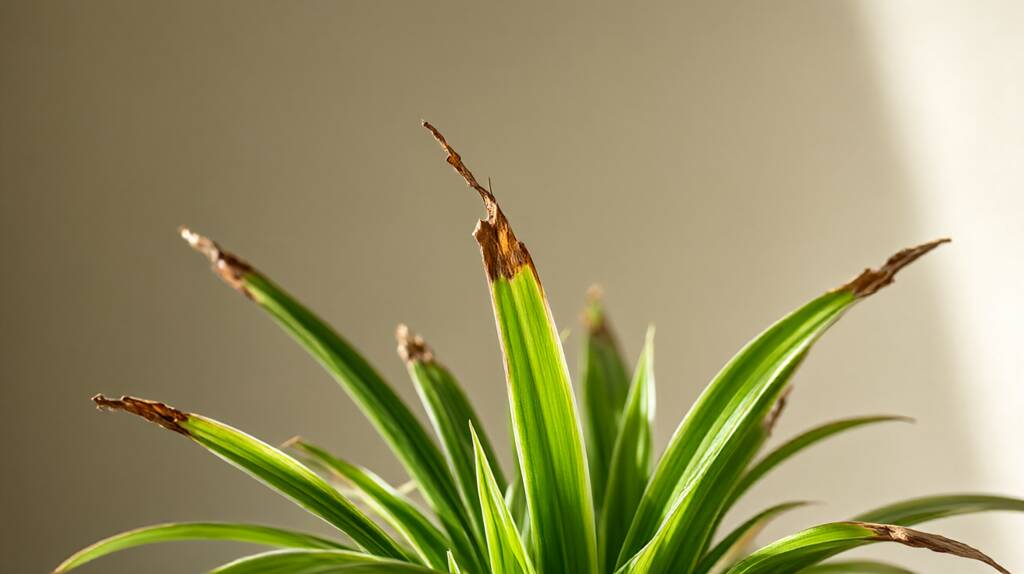
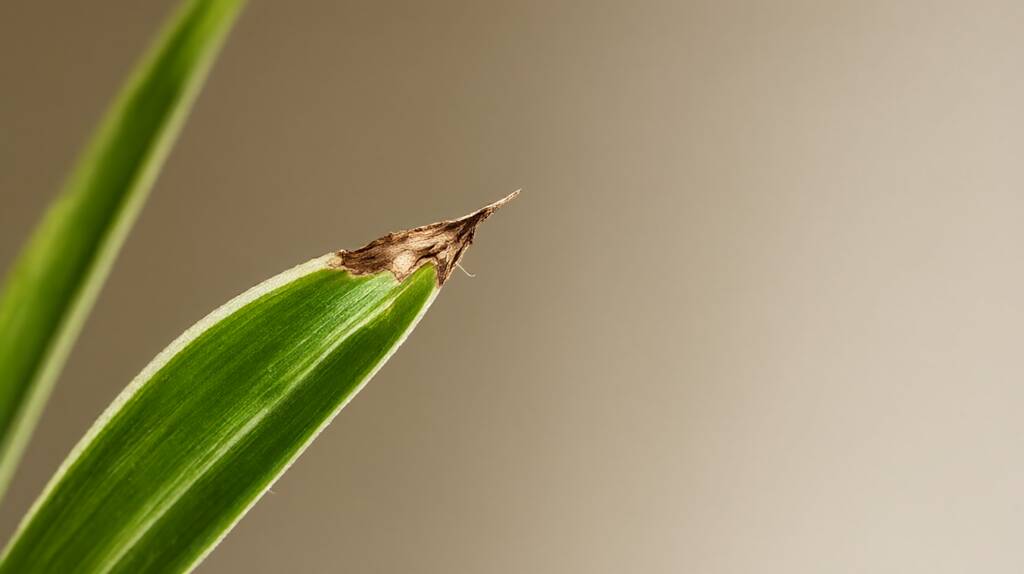
Fluoride is the most common cause of spider plant brown tips, and the most frequently misdiagnosed. For watering technique that minimizes fluoride exposure, see our spider plant watering guide. Municipal water supplies in many regions contain 0.7-1.2 ppm fluoride. Chlorophytum comosum accumulates fluoride in their leaf tips over weeks, and the damage appears as dry, brown, crispy tips that start at the point and work backward.
The key diagnostic is the pattern. Fluoride damage produces brown tips on multiple leaves simultaneously, starting at the youngest leaves. The brown area is dry and papery, not soft or mushy. The damage is cumulative and irreversible in the affected tissue, but new growth will be clean if the fluoride source is removed.
The fix is water quality, not watering frequency. Switch to rainwater, distilled water, or water filtered through an activated carbon system. Tap water left in an open container for 24 hours dissipates chlorine but not fluoride. If your water has high fluoride, no amount of schedule adjustment will prevent brown tips.
Fluoride damage is often mistaken for underwatering because both produce dry, brown tips. The difference is distribution. Underwatering produces brown tips on older, lower leaves first. Fluoride damage affects newer, upper leaves first because fluoride accumulates in the actively growing tissue.
Cause 2: Low Humidity
Spider plants are native to tropical and southern Africa, where ambient humidity is 60-80%. For complete care including humidity management, see our spider plant care guide. Indoor winter humidity in heated homes often drops to 20-30%, and the leaf tips, being the thinnest and most exposed part of the leaf, lose moisture faster than the rest of the blade.
The diagnostic pattern is different from fluoride damage. Humidity-related browning appears during the heating season, affects the oldest leaves first, and is often accompanied by slightly curled leaf edges. The brown area is smaller and more localized than fluoride damage.
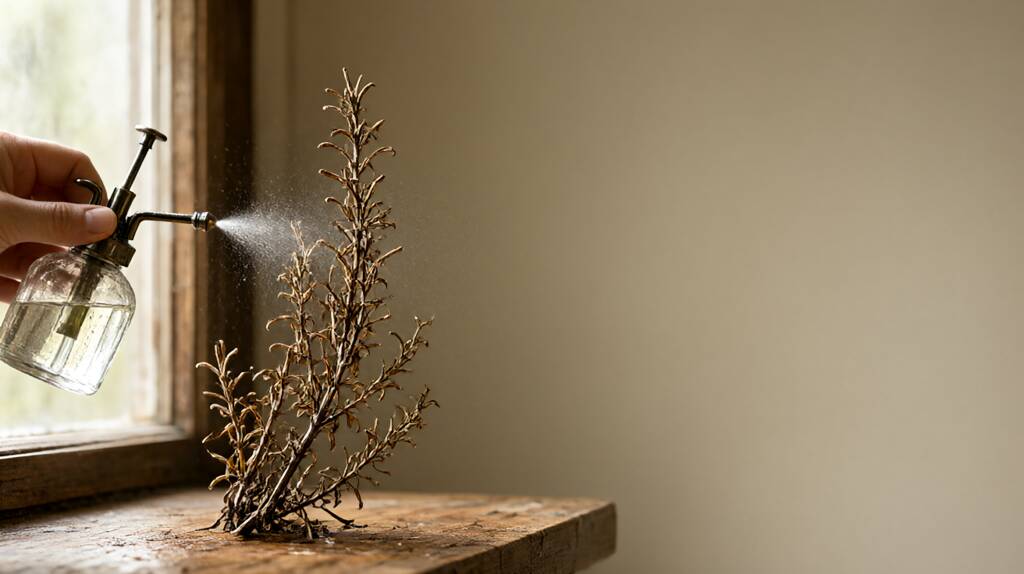
The fix is humidity increase, not watering change. A pebble tray beneath the pot raises local humidity by 5-10%. Grouping plants together creates a shared microclimate. A room humidifier is the most effective solution, targeting 40-50% RH. Misting the leaves provides temporary relief but does not address the underlying humidity deficit.
Cause 3: Over-Fertilization
Spider plants are light feeders. If you are propagating new plants, see our spider plant propagation guide. Excess fertilizer salts accumulate in the soil and in the leaf tips, causing chemical burn that appears as brown, crispy tips. This is most common in plants that are fertilized monthly with full-strength fertilizer.
The diagnostic pattern is sudden onset. Brown tips appear within 1-2 weeks of a heavy fertilization, and the damage is often accompanied by white crusty deposits on the soil surface. The roots may also show brown, mushy tips if the salt concentration is high enough.
The fix is to flush the soil with 3-4 pot volumes of water, allowing it to drain completely between flushes. This leaches excess salts. After flushing, reduce fertilization to quarterly at half the recommended concentration. Spider plants grow well in relatively lean soil and do not need regular feeding during the growing season.
Cause 4: Inconsistent Watering
Spider plants store water in their tuberous roots, which allows them to survive drought. But the storage capacity creates a boom-bust cycle. When the soil dries completely, the plant draws on tuber reserves. When watered, the tubers rehydrate. Repeated cycles of complete drying and heavy rehydration stress the leaf tips, which are the last part of the plant to receive water and the first to lose it.
The diagnostic pattern is irregular. Brown tips appear intermittently, often after a dry period followed by heavy watering. The plant may also show signs of stress between waterings, such as slight leaf curling or dull color.
The fix is consistency, not frequency. Water when the top 2-3 cm of soil is dry, not when the plant shows stress. This prevents the extreme dry-wet cycles that stress the leaf tips. Consistent, moderate watering produces healthier growth than alternating drought and flood.
Cause 5: Physical Damage and Age
Some brown tipping is natural. Older leaves at the base of the plant yellow and brown as part of normal senescence. Leaf tips can also be damaged by physical contact, cold drafts, or proximity to heating vents.
The diagnostic pattern is isolated. One or two leaves show browning, not the whole plant. The damage is often asymmetric, affecting one side of the leaf or one side of the plant. Cold drafts from windows or heating vents produce browning on the side facing the draft.
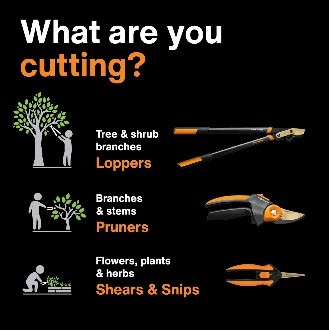
The fix is environmental adjustment. Move the plant away from drafts and heating vents. Trim the brown tips with clean scissors, cutting at an angle that follows the natural leaf shape. Do not remove the entire leaf unless it is more than 50% damaged.
How to Trim Brown Tips
Brown tips do not recover. The damaged tissue is dead and will not turn green again. Trimming improves appearance and prevents the brown area from spreading.
Use clean, sharp scissors. Cut the brown tip at an angle that follows the natural taper of the leaf, leaving a small margin of brown tissue to avoid cutting into healthy green tissue. Cutting into green tissue creates a new wound that can brown again.
Do not cut the entire leaf unless it is more than 50% damaged. A partially brown leaf still photosynthesizes and contributes to the plant’s energy production. Remove only the brown portion.
Trimming is cosmetic, not curative. If the underlying cause is not addressed, new brown tips will continue to appear on new growth.
Prevention: Keeping Tips Green
Preventing brown tips is easier than fixing them. The most effective prevention strategy addresses the most likely cause first.
Water quality: If your tap water has high fluoride, switch to filtered or rainwater. This single change eliminates the most common cause of brown tips. If switching water sources is not practical, flush the soil monthly with 3-4 pot volumes of water to leach accumulated fluoride.
Humidity: Maintain 40-50% RH around the plant. A pebble tray, plant grouping, or room humidifier all work. In winter, when heating systems dry the air, humidity management becomes critical.
Fertilization: Feed quarterly at half strength during the growing season. Skip fertilization entirely in autumn and winter when growth slows. Use a balanced fertilizer with low salt content.
Watering consistency: Water when the top 2-3 cm of soil is dry, not on a fixed schedule. Consistent, moderate watering prevents the dry-wet cycles that stress leaf tips.
Environment: Keep the plant away from heating vents, air conditioners, and cold drafts. These create localized conditions that dry or chill leaf tips.
Diagnosing Brown Tips: A Quick Reference
Use this checklist to identify the cause of brown tips on your spider plant:
- Brown tips on multiple young leaves simultaneously: Fluoride toxicity. Switch water source.
- Brown tips on older leaves, smaller and localized: Low humidity. Increase humidity.
- Sudden browning after fertilization, white crust on soil: Over-fertilization. Flush soil, reduce feeding.
- Intermittent browning after dry periods: Inconsistent watering. Water on soil condition, not schedule.
- Isolated browning on one side or few leaves: Physical damage or draft. Move plant, trim tips.
If multiple causes are present, address them in order of likelihood: water quality first, then humidity, then fertilization, then watering consistency, then environment.
When Brown Tips Are Normal
Not all brown tips indicate a problem. Spider plants naturally shed older leaves as new growth emerges. The oldest leaves at the base of the plant yellow, brown, and die as part of normal senescence. This is not a disease or deficiency. It is the plant reallocating resources to new growth.
Natural senescence affects 1-2 leaves at a time, at the base of the plant, and occurs gradually over weeks. The rest of the plant remains healthy and green. If brown tips appear on multiple leaves simultaneously, especially on younger leaves, the cause is environmental, not age.
Spider plants also produce brown tips at the ends of very long leaves that drag on surfaces or get caught in blinds. This is physical damage, not a physiological problem. Trim the damaged portion and reposition the plant to prevent recurrence.
Recovery Timeline
After addressing the underlying cause, new growth should appear within 2-4 weeks. The new leaves will have clean green tips if the fix was correct. Existing brown tips will not recover and should be trimmed for appearance.
If brown tips continue to appear on new growth after 4 weeks, the cause has not been correctly identified. Re-evaluate using the diagnostic checklist above. The most common misdiagnosis is attributing fluoride damage to underwatering, which leads to more frequent watering and worse fluoride accumulation.
Severely affected plants may need repotting in fresh soil to remove accumulated salts. If the soil has a visible white crust or the plant has been over-fertilized, repotting is the fastest way to reset the growing conditions.
If you suspect fluoride or chlorine is causing brown tips, testing your water is the most reliable way to confirm. Home water test kits measure fluoride, chlorine, and pH for under $20. Municipal water reports, available from your water provider, list fluoride levels but may not reflect seasonal variation.
Spider plants show fluoride sensitivity at concentrations above 0.5 ppm. Many municipal supplies range from 0.7-1.2 ppm, which is above the threshold. If your water exceeds 0.5 ppm fluoride, switch to filtered or rainwater regardless of other factors.
Chlorine is less damaging than fluoride but can cause tip browning at high concentrations. Chlorine dissipates in 24 hours in an open container, so if chlorine is the only issue, leaving water overnight before use is sufficient.
The Bottom Line
Check water quality first. Fluoride is the most common cause and the most frequently missed. If water quality is not the issue, check humidity, then fertilization, then watering consistency. Brown tips are a diagnostic tool, not just a cosmetic problem. The pattern of damage tells you what the plant is experiencing.
Sources and further reading
- University of Florida IFAS Extension – aroid houseplant care.
- Missouri Botanical Garden – spider plant cultivation.
- Clemson Cooperative Extension – houseplant watering guidelines.
Last reviewed on November 30, 2026. Plant and growing guidance is general; adjust to your specific conditions.