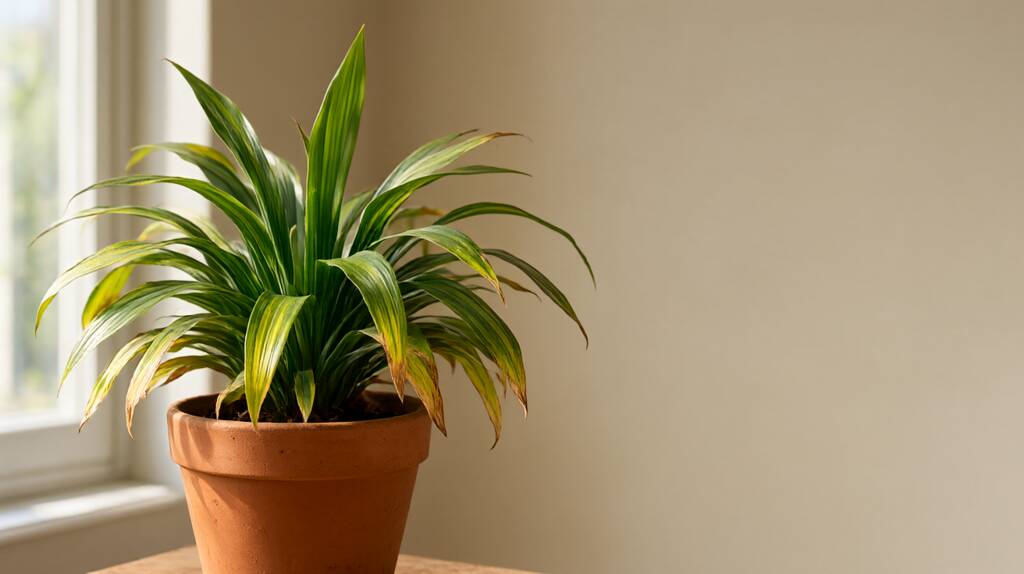

Dracaena fragrans ‘Massangeana’ is supposed to be one of the easiest houseplants to grow. It tolerates low light, irregular watering, and neglect. Yet yellow leaves are the most common complaint from mass cane owners, and the cause is rarely what the standard advice suggests. Yellow leaves on mass cane are almost never a light problem. They are a water problem, a root problem, or a nutrient problem, and the specific pattern of yellowing tells you which one.
Most care guides list “too much or too little water” as the cause of yellow leaves and leave it at that. This is technically true but practically useless. The real question is which direction, how much, and what else is happening in the soil. This guide covers each cause in order of likelihood, with the specific diagnostic patterns that distinguish them and the fixes that actually resolve the problem.
Cause 1: Overwatering and Root Rot
Overwatering is the leading cause of yellow leaves on mass cane, and it is the most frequently misdiagnosed. For watering technique, see our mass cane watering guide. The plant’s thick canes store water, which means the leaves stay green for 2-3 weeks after the roots have begun to rot. By the time yellowing appears, the root system is already damaged.
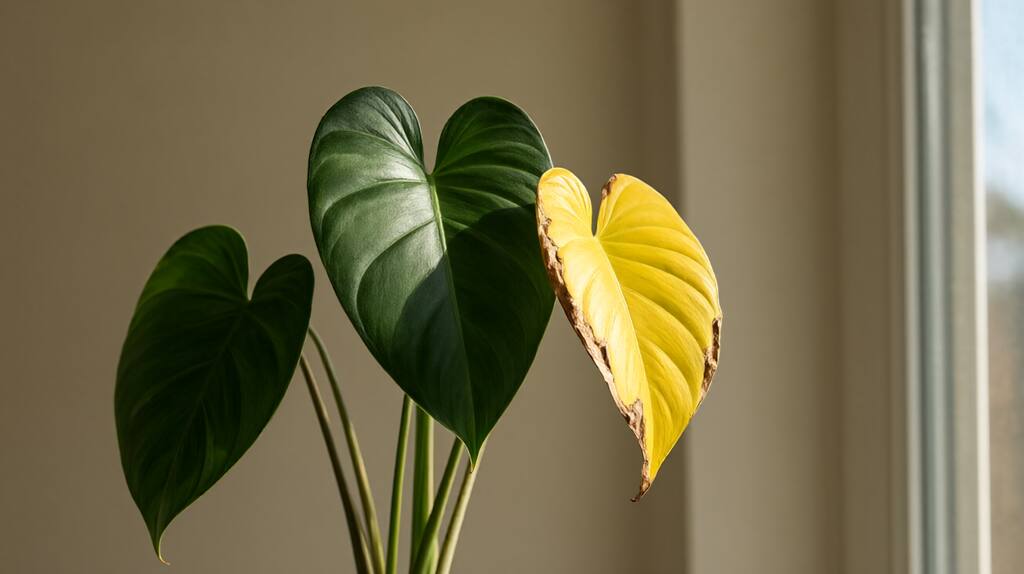
The diagnostic pattern is specific. Yellowing starts on the lowest, oldest leaves and progresses upward. The yellow leaves often have brown, mushy spots at the base. The cane bases may feel soft when pressed. The soil stays wet for more than 5 days after watering. These signs together indicate root rot, not a nutrient deficiency or light problem.
The fix is immediate. Remove the plant from the pot and inspect the roots. Healthy roots are white or light tan and firm. Rotted roots are brown or black, mushy, and may have a foul smell. Trim all rotted roots with clean scissors. Repot in fresh, well-draining soil. Reduce watering and increase light to help recovery.
If the cane bases are soft, the rot has spread into the cane itself. Cut the cane above the soft area with a clean, sharp knife. The remaining cane section can be propagated if it has at least one node. Seal the cut surface with cinnamon or rooting hormone to prevent further rot.
Cause 2: Underwatering
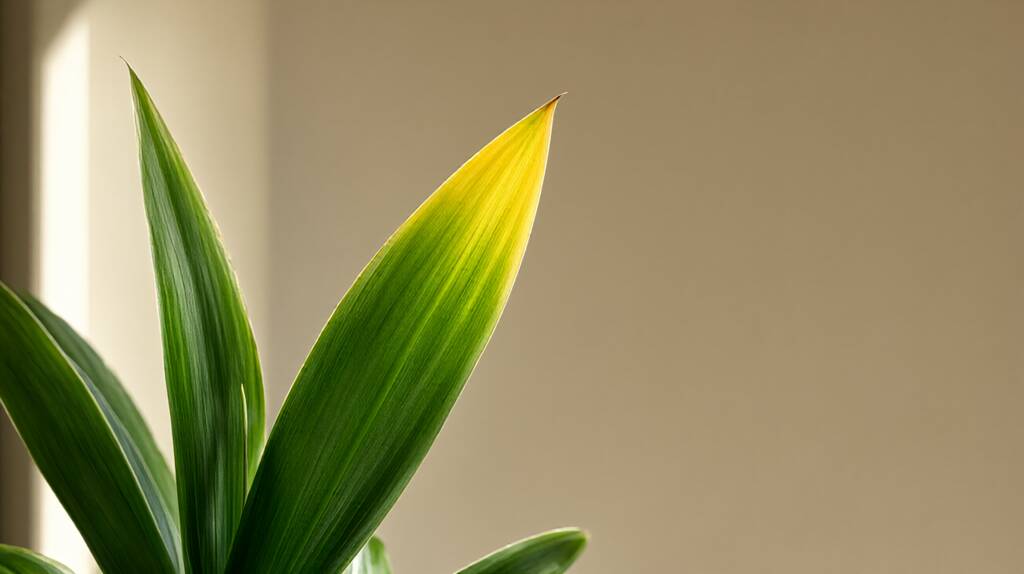
Underwatering produces yellow leaves through a different mechanism. When the soil dries completely, the plant draws on water stored in the canes. The canes dehydrate, and the leaves lose turgor and yellow from the tips inward. This is the plant’s drought response, and it is reversible if caught early.
The diagnostic pattern is distinct from overwatering. Yellowing starts at the leaf tips and works inward, not from the base upward. The leaves feel dry and papery rather than soft. The soil is dry and may have pulled away from the pot edges. The canes may feel slightly wrinkled or lighter than usual.
The fix is simple: water thoroughly. The plant should recover within 1-2 weeks if the drought was not severe. For severe drought, where the soil has been dry for more than 3 weeks, water in stages. Water lightly, wait an hour, then water again. This allows the soil to rehydrate gradually without water running straight through the dry, hydrophobic soil.
Underwatering is less dangerous than overwatering because the plant recovers faster. But repeated drought cycles stress the root system and reduce the plant’s long-term vigor. Consistent, moderate watering prevents both extremes.
Cause 3: Fluoride and Salt Toxicity
Mass cane is sensitive to fluoride and salt buildup, though less so than spider plants. For brown tip issues, see our brown tips on plant leaves guide. Fluoride accumulates in the leaf tips and causes brown, crispy tips that can spread to yellowing along the leaf margins. Salt buildup from fertilizer or hard water causes leaf edge browning and stunted growth.
The diagnostic pattern is browning at the leaf tips and margins, with yellowing spreading inward from the brown areas. This is different from overwatering yellowing, which starts at the base, and underwatering yellowing, which starts at the tips. Fluoride and salt damage is localized to the leaf edges.
The fix is soil flushing and water quality improvement. Flush the soil with 3-4 pot volumes of water to leach accumulated salts. If your tap water is high in fluoride or hardness, switch to filtered water or rainwater. Reduce fertilization to quarterly at half strength.
Cause 4: Nutrient Deficiency
Dracaena fragrans in the same soil for 2-3 years without repotting or fertilization can develop nutrient deficiencies. Nitrogen deficiency causes uniform yellowing of older leaves. Magnesium deficiency causes yellowing between the leaf veins while the veins stay green. Iron deficiency causes yellowing of new growth.
The diagnostic pattern depends on the nutrient. Nitrogen deficiency is the most common and produces pale, uniform yellowing on older leaves. Magnesium deficiency produces interveinal yellowing on older leaves. Iron deficiency produces yellowing on new growth only.
The fix is fertilization. Use a balanced liquid fertilizer at half the recommended concentration, applied monthly during the growing season. For magnesium deficiency, add 1 teaspoon of Epsom salt to a liter of water and water with it once. For iron deficiency, use a chelated iron supplement.
Nutrient deficiency is less common than water-related causes. Check water and roots first before assuming a nutrient problem. Repotting into fresh soil often resolves nutrient deficiencies without additional fertilization.
Cause 5: Natural Senescence
Mass cane naturally sheds older leaves as it grows. The lowest 1-2 leaves yellow and drop as the plant directs energy to new growth at the top. This is normal and healthy, not a sign of disease.
The diagnostic pattern is isolated. One or two leaves at the base yellow and drop over a period of 1-2 weeks. The rest of the plant remains healthy and green. New growth continues at the top. The yellowing is uniform, not patchy or spotted.
The fix is none. Remove the yellowing leaves once they are fully yellow. Do not remove leaves that are partially yellow, as they still contribute to the plant’s energy production. Natural senescence accelerates in autumn as light levels drop.
Cause 6: Light Deficiency
Mass cane tolerates low light, but it does not thrive in it. For a broader care overview, see our mass cane care guide. In very low light, the plant cannot photosynthesize enough to support all its leaves. The older leaves yellow and drop as the plant reduces its leaf area to match available light.
The diagnostic pattern is gradual. Yellowing occurs over weeks or months, not days. The plant grows slowly and produces small, pale new leaves. The leaves may be darker green than normal, as the plant produces more chlorophyll to compensate for low light.
The fix is to move the plant to a brighter location. Mass cane prefers bright, indirect light. An east or north-facing window is ideal. If natural light is insufficient, supplement with a grow light for 8-10 hours per day.
Light deficiency is often misdiagnosed as overwatering because both produce yellowing. The difference is timing and pattern. Light deficiency yellowing is gradual and affects older leaves. Overwatering yellowing is faster and often accompanied by soft canes and wet soil.
Diagnostic Checklist
Use this checklist to identify the cause of yellow leaves on your mass cane:
- Yellowing starts at base, progresses upward, soft canes, wet soil: Overwatering/root rot. Check roots, repot if needed.
- Yellowing starts at tips, inward, dry papery leaves, dry soil: Underwatering. Water thoroughly.
- Browning at tips and margins, yellowing spreads inward: Fluoride/salt toxicity. Flush soil, improve water quality.
- Uniform yellowing on older leaves, pale color: Nitrogen deficiency. Fertilize or repot.
- Interveinal yellowing on older leaves: Magnesium deficiency. Add Epsom salt.
- 1-2 leaves at base yellow and drop, rest healthy: Natural senescence. Remove dead leaves.
- Gradual yellowing, slow growth, small new leaves: Light deficiency. Move to brighter spot.
If multiple causes are present, address them in order of likelihood: water problems first, then nutrients, then light, then natural senescence.
Prevention and Long-Term Care
Preventing yellow leaves is more effective than treating them. The most important prevention strategies address the most common causes.
Watering discipline: Check soil moisture at 5 cm depth before every watering. Water only when the top 5 cm is dry. Empty the saucer within 30 minutes. This single habit prevents overwatering, the leading cause of yellow leaves.
Soil quality: Use fast-draining soil mix. Repot every 2-3 years into fresh soil. This prevents nutrient depletion and salt buildup.
Water quality: Use filtered or rainwater if your tap water is high in fluoride or hardness. Flush the soil monthly with 3-4 pot volumes of water.
Light: Place in bright, indirect light. An east or north-facing window is ideal. Supplement with a grow light in winter if natural light is insufficient.
Fertilization: Feed monthly at half strength during the growing season. Skip in autumn and winter. Use a balanced fertilizer with micronutrients.
When to Worry
One or two yellow leaves at the base of a mass cane is normal. The plant naturally sheds older leaves as it grows. This is not a problem and does not require intervention beyond removing the dead leaves.
Multiple yellow leaves appearing simultaneously, especially on newer growth, indicates a problem. Use the diagnostic checklist above to identify the cause. Address water and root issues first, as they are the most common and the most dangerous.
If yellowing continues despite addressing all likely causes, the plant may have a systemic issue such as root rot that has spread into the cane. In this case, the plant may need to be cut back to healthy tissue and re-rooted.
Yellow Leaves and New Growth
The relationship between yellowing leaves and new growth is important for diagnosis. A healthy mass cane produces new leaves at the top while shedding older leaves at the base. This is normal and does not indicate a problem.
If yellowing occurs on new growth at the top of the plant, the cause is usually light deficiency or nutrient deficiency. New growth is more sensitive to these conditions than mature leaves.
If yellowing occurs on older leaves at the base, the cause is usually natural senescence, overwatering, or underwatering. The plant is reallocating resources from older leaves to support new growth.
If yellowing occurs on middle leaves, the cause is usually fluoride toxicity or inconsistent watering. These conditions affect leaves at all stages of development.

The Bottom Line
Check the soil first. Wet soil means overwatering. Dry soil means underwatering. If the soil moisture is correct, check water quality, then nutrients, then light. Yellow leaves are a diagnostic tool, not just a symptom. The pattern tells you what the plant is experiencing.
Sources and further reading
- University of Florida IFAS Extension – dracaena care.
- Missouri Botanical Garden – Dracaena fragrans profiles.
- Clemson Cooperative Extension – houseplant watering guidelines.
Last reviewed on November 30, 2026. Plant and growing guidance is general; adjust to your specific conditions.