
A bird of paradise does not grow on a schedule. It grows on a budget. The plant spends carbon on roots first, then leaves, and only when both are paid for does it set aside anything for flowers. That ordering is why a pot-bound plant in a sunny window can look healthy for three years and never bloom. A freshly planted division can sit motionless for six months before it moves.
Growing bird of paradise well means managing that budget: light first, water second, feed third, and patience always.
Two failure modes follow. The first is overwatering a plant that is not growing, which rots the roots and converts a slow grower into a dying one. The second is feeding a plant that lacks light, which produces soft, leggy leaves that collapse under their own weight. Both come from treating the plant as if it were hungry when it is actually starving for light or air around the roots.
Most growers also get the pot wrong. They choose a container that looks right for the plant today, when the plant needs one that is right for the plant in two years. Strelitzia reginae wants a tight root system to flower, but a root system that is too tight stalls growth entirely. The working target is a pot one size up from the root ball, no more, with drainage that empties in under ten seconds.
How a Bird of Paradise Actually Grows
Growth in Strelitzia reginae runs on a carbon economy. Leaves are the factory. A mature leaf produces more sugar than the plant spends to keep it alive, and the surplus goes to roots, then to new leaves, and only last to the rhizome that eventually pushes a flower stalk. A plant with fewer than six mature leaves is running a deficit: it is alive, but it is not growing, and it will not flower no matter how much you feed it.
This is the mechanism behind the common complaint that a bird of paradise never blooms. The plant is not broken. It is undercapitalized. It needs enough leaf area to fund the flower, and leaf area comes from light and time, not from fertilizer. Extension guidance from the University of Florida places Strelitzia reginae in the full sun category, meaning six hours or more of direct light, and flowering requires both maturity and near full sun.
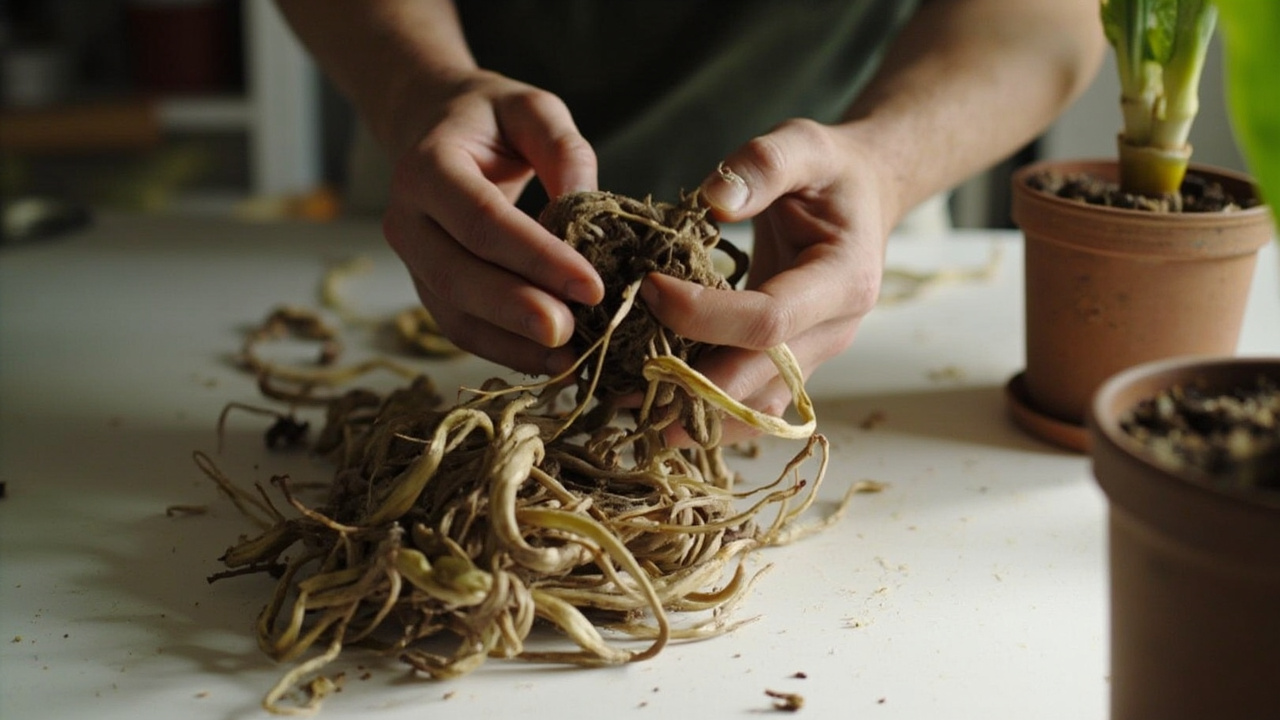
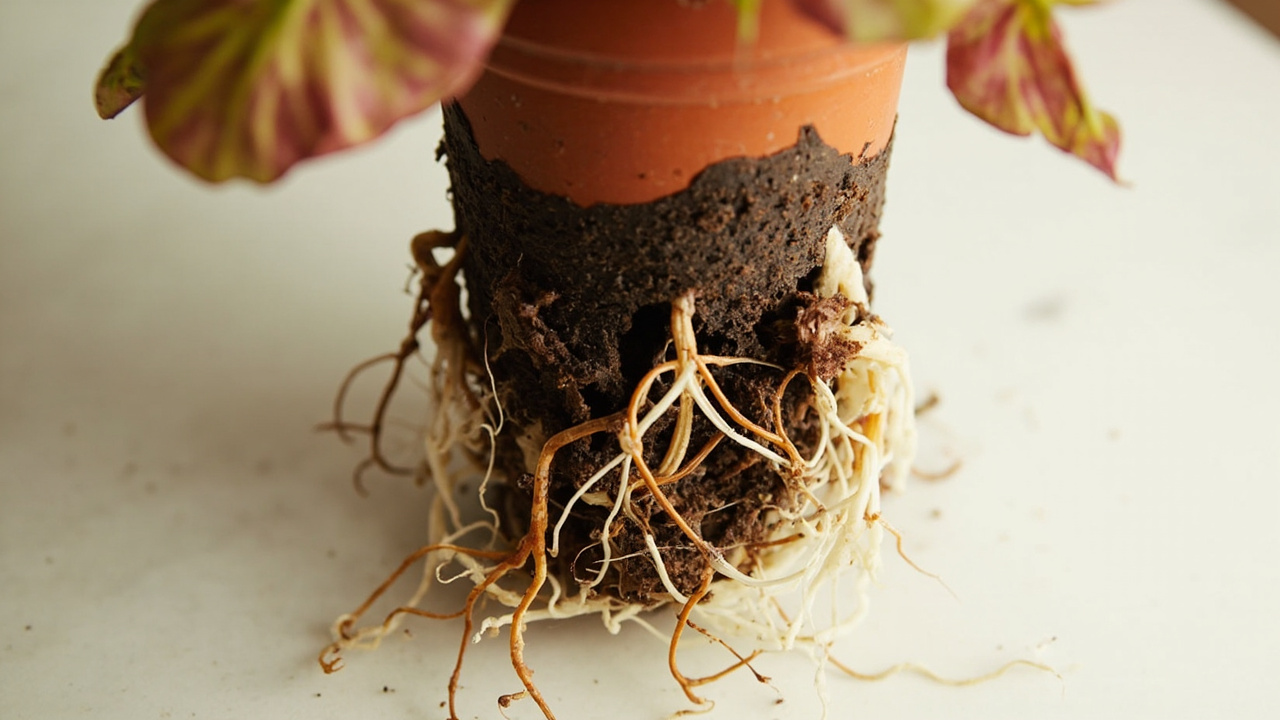
Roots matter as much as leaves. The rhizome stores energy between seasons and anchors the plant against the wind that snaps the long leaf stalks. A healthy root system is thick, white-tipped, and fills the pot without circling. Circling roots are a sign that the plant has been in the same container too long, and they choke the very growth they were meant to support.
The difference between S. reginae and S. nicolai
Strelitzia reginae, the orange flowering bird of paradise, stays compact at 1.5 to 2 meters indoors and flowers once it has six to eight mature leaves in full sun. Strelitzia nicolai, the giant white bird, grows to 3 meters or more indoors and rarely flowers inside a home. The two share a family but not a temperament. Treat S. nicolai like a foliage plant and it will reward you. Treat S. reginae like a foliage plant and it will sulk.
Growth in Strelitzia reginae runs on a carbon economy: leaves fund roots, roots fund flowers.
Choosing the Right Pot and Spot
Pot size is the single most common error. A bird of paradise in a pot that is too large sits in wet soil for days, and the roots suffocate before the plant can use the water. The rule is simple: the new pot should be 2 to 4 centimeters wider in diameter than the root ball, with drainage holes that let water pass through in under ten seconds. Anything larger is a liability, not a comfort.
Spot comes second. Indoors, the best location is a south or south-west window with six or more hours of direct sun, the pot set 30 to 90 centimeters back from the glass to soften the summer beam. A west window works if it carries afternoon light. An east window keeps the plant alive and leafy but will not push a flower. North-facing windows are for S. nicolai, not for S. reginae.
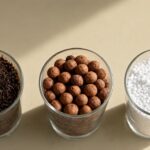
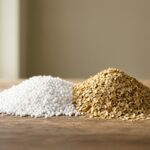
Soil matters more than brand. The mix should drain freely and hold some moisture without staying wet. A blend of two parts high-quality potting mix, one part perlite, and one part orchid bark gives the right balance. The pH should sit between 6.0 and 7.0. Below 5.5, iron and manganese lock up; above 7.5, phosphorus becomes unavailable.
Pot material: plastic, terracotta, or ceramic
Plastic holds moisture longest and is the safest choice for a grower who travels or forgets to water. Terracotta breathes and dries faster, which suits a heavy-handed waterer but punishes a forgetful one. Ceramic looks the best and is the heaviest, which matters for a tall plant that catches the wind on a balcony. Pick by your watering habit, not by the shelf.
A pot one size up from the root ball, with drainage that empties in under ten seconds, is the working target.
Planting Step by Step
Planting is the easy part. The work is in the preparation. Water the plant in its old pot the day before, so the root ball holds together when you lift it. Mix the soil blend in a separate container. Have the new pot ready with a layer of drainage material or just soil, and a stake if the plant is tall.
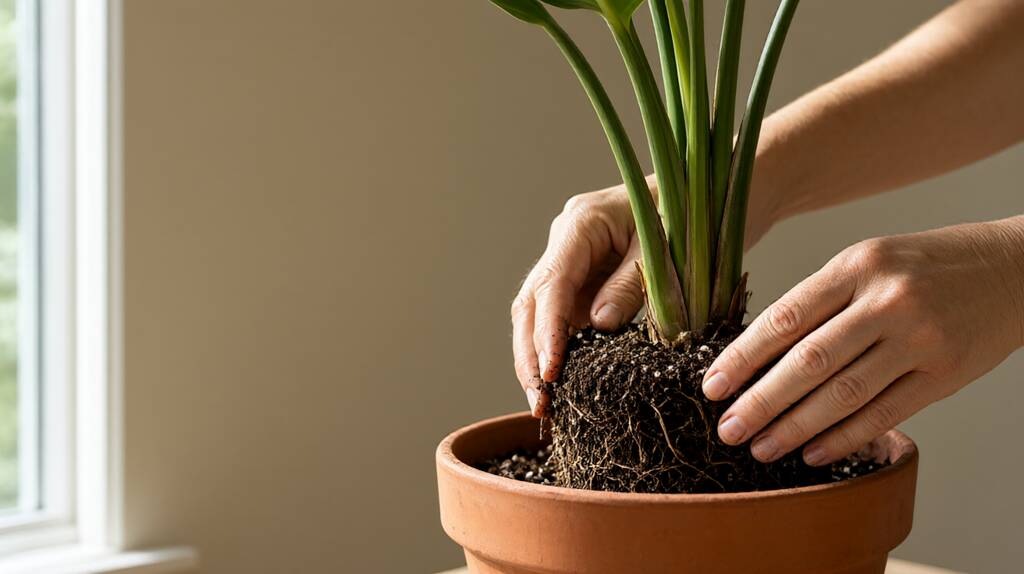
Lift the plant by the root ball, never by the leaf stalks, which snap under load. Set it in the new pot so the top of the root ball sits 2 to 3 centimeters below the rim. Fill around the sides with soil, firming gently with your fingers, not your fist. Water until it runs freely from the drainage holes, then let the pot drain fully before returning it to its saucer.
Do not fertilize at planting. The roots are bruised and the plant needs to re-establish before it can use nutrients. Wait four weeks, then begin a light feeding schedule. For the full soil and repotting method, including when to size up and how to handle a root-bound plant, see our guide to bird of paradise soil and repotting.
Dividing at planting time
A mature clump can be divided when you repot, but only if each division carries at least one growing point and a healthy section of rhizome. Divisions without a growing point rot. Divisions with a growing point but no roots take six to twelve months to establish and need steady moisture and indirect light during that time. If you are unsure, leave the clump intact and repot the whole thing.
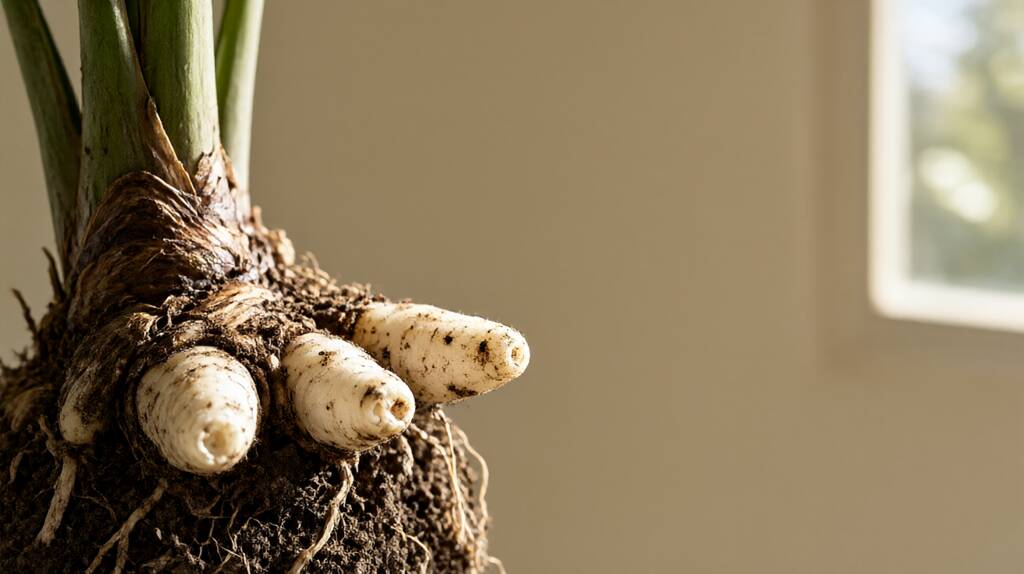
Plant when the soil is warm, firm gently, and do not fertilize at planting.
The First 90 Days
The first three months after planting or repotting are the establishment window. Growth above ground may stop entirely while the plant rebuilds its root system. This is normal and not a sign of failure. The leaves may yellow slightly at the tips as the plant reallocates resources. Do not panic and do not overwater.
Water when the top 5 centimeters of soil are dry, which works out to roughly once a week in a bright indoor spot and twice a week in a hot, dry room. Fertilize lightly every four weeks with a balanced 10-10-10 or 20-20-20 formula at half strength. Full-strength feeding on a stressed plant burns the new root tips.
Hold off on moving the plant. A plant that is establishing roots should not be relocated, rotated, or repotted again. Pick the spot and leave it. For the watering rhythm in detail, including how to read the soil and when to skip a watering, see our guide on how often to water bird of paradise.
Reading the first new leaf
The first new leaf after repotting is the signal that establishment is complete. It usually appears between week six and week twelve. If it appears earlier, the plant was not as stressed as you feared. If it appears later, check the roots: gently tip the plant out of the pot and look. White, firm roots mean patience. Brown, soft roots mean rot, and the plant needs to be unpotted, trimmed, and restarted in fresh, drier soil.
The first new leaf after repotting, between week six and twelve, signals establishment is complete.
When to Expect Growth and Flowers
Indoors, a healthy bird of paradise adds two to four new leaves a year under good light. Growth slows in winter even in a warm room, because day length drops and the plant reads the short days as a signal to rest. Expect a flush of growth in spring as the days lengthen, and another in early autumn if the plant spent the summer outside.
Flowering is a different timeline. A seed-grown plant takes three to five years to reach flowering size. A division from a mature clump can flower in one to two years if it gets full sun and a tight pot. The trigger is not age alone. It is the combination of maturity, root restriction, and at least six hours of direct sun, plus a cool winter rest of four to eight weeks at 10 to 15 degrees Celsius.
If your plant is mature, root-bound, and in full sun, and still does not flower, the missing piece is usually the winter rest. Move it to a cooler room in winter and reduce watering to once every two to three weeks. For the full diagnosis of a non-flowering plant, including the light test and the root test, see our guide to bird of paradise not flowering.
How big will it get
Indoors, Strelitzia reginae reaches 1.5 to 2 meters tall and about 1 meter wide. Strelitzia nicolai reaches 3 meters or more. Growth rate is roughly 30 to 60 centimeters a year under ideal conditions and half that in a dim room. For the full size and growth-rate breakdown, including how to measure your own plant, see our guide to bird of paradise growth rate and size.
Flowering needs maturity, root restriction, and at least six hours of direct sun plus a cool winter rest.
Why Your Plant Isn’t Growing
A plant that has not moved in six months is telling you something specific. The cause is usually one of four things.
First, light: a plant in less than four hours of direct sun is in survival mode and will not grow. Second, roots: a root-bound plant in a pot it has outgrown, or a plant in a pot too large with wet soil, both stall.
Third, temperature: below 10 degrees Celsius, growth stops; above 32, the plant shuts down to conserve water. Fourth, feed: a plant that has not been fertilized in two years may be nutrient-limited, though this is the least common cause.
Work the list in order. Check light first by measuring hours of direct sun. Check roots second by sliding the plant out of the pot. Check temperature third with a simple thermometer near the plant. Check feed last, and only after the first three are ruled out. Feeding a plant that lacks light or air around the roots makes the problem worse, not better.
If the plant is in a pot that is too large and the soil stays wet for a week, the fix is to repot into a smaller container with fresh, well-draining mix. Do not try to dry out a waterlogged pot by withholding water; the roots will have rotted before the soil dries. For the full rescue method, including how to trim damaged roots and restart a plant, see our guide to saving a dying bird of paradise.
The leaning plant problem
A bird of paradise that leans toward the window is not unhealthy. It is reaching for light. Rotate the pot a quarter turn every two weeks to keep the growth even. If the plant is too tall and top-heavy, stake it with a single bamboo cane and soft ties, and consider root restriction in a smaller pot to slow vertical growth. For the full method, including staking and pruning, see our guide to bird of paradise pruning and size control.
Work the diagnosis list in order: light, roots, temperature, then feed.
| Stage | Timeframe | Key action |
|---|---|---|
| Newly planted | Weeks 1-4 | No fertilizer, water when top 5 cm dry |
| Establishing | Weeks 4-12 | Light feed, steady moisture, no relocation |
| Active growth | Months 3-12 | Full sun, biweekly feed, rotate quarterly |
| Mature, pre-flower | Years 2-5 | Root restriction, cool winter rest 10-15 C |
From This Guide to the Rest of the Cluster
Growing bird of paradise is a chain of decisions, and each one has its own page in this cluster. Start with when to plant, which sets the calendar. Add the light requirements, which set the location. Water on the rhythm the plant sets, not the calendar. Feed on a schedule tied to growth, not to the month. Repot when the roots say so, not when the calendar does. And when something goes wrong, the common problems guide and the rescue guide are the next reads.
The plant remembers the rain forest. Your apartment just needs to remind it.
For planting timing by climate and season, see our guide on when to plant bird of paradise.
Growing bird of paradise is a chain of decisions, each with its own page in this cluster.
Key thresholds: 6 hours direct sun, 2 cm clearance, 2-4 cm pot step-up, 5 cm dry test, 10-15 C winter rest, 30-60 cm per year growth, 1.5-2 m mature height, 4-7 day watering, 2-3 week winter water, 4 h minimum for survival, 32 C heat shutdown.
For pot size, material, and drainage, see our guide to bird of paradise container and pot selection.
For the winter protocol and cold protection, see our guide to overwintering bird of paradise.
Sources and further reading
- University of Florida IFAS Extension, Strelitzia reginae: culture and landscape use, full sun classification and flowering requirements.
- Royal Horticultural Society, Strelitzia reginae: cultivation notes, pot size and repotting guidance.
- North Carolina State Extension, Strelitzia reginae: plant profile, soil pH and drainage requirements.
Last reviewed on 2026-11-24.