
The pot is not a container. It is an environment. The size, material, and drainage of the pot determine how much water the soil holds, how fast it dries, how warm the roots get, and whether the plant flowers or just grows leaves. Most growers choose a pot by how it looks on the shelf. The plant chooses whether to thrive by how the pot performs in the corner. Those two criteria rarely agree, and when they conflict, the plant loses.
Two failure modes follow. The first is a pot that is too large, which holds water for days and rots the roots before the plant can use it. The second is a pot that is too small, which dries out in hours and stresses the plant into dropping leaves. Both come from choosing by eye instead of by the plant’s needs.
Most growers also get the material wrong. They buy a beautiful ceramic pot with no drainage hole, or a decorative cachepot that holds water at the bottom, and wonder why the plant declines. A pot without drainage is not a pot. It is a slow death sentence with a glaze.
Why Pot Size Matters More Than Pot Style
Pot size controls the soil volume, and soil volume controls the water balance. A large pot holds more soil, which holds more water, which takes longer to dry. A small pot holds less soil, which holds less water, which dries faster. The plant’s roots need a balance: enough water to drink between waterings, but not so much that they sit in wet soil and rot.
The rule is simple. The new pot should be 2 to 4 centimeters wider in diameter than the root ball, and no more. This gives the roots room to grow for one to two years without creating a reservoir of wet soil that the roots cannot reach. A pot that is 10 centimeters too wide holds water that the roots will not touch for weeks, and that water rots the soil before the roots ever find it.
The depth matters as much as the width. Bird of paradise has a deep root system that reaches down before it spreads out. A shallow pot, even a wide one, forces the roots to circle at the bottom, which chokes the plant. The pot should be at least as deep as it is wide, and deeper is better for a mature plant.
The root-bound paradox
A bird of paradise that is slightly root-bound flowers more readily than one in a large pot. The restricted root system signals the plant to shift energy from leaf production to reproduction.
But a plant that is severely root-bound stops growing entirely, because the roots have no room to take up water or nutrients. The working target is root-bound enough to stress the plant into flowering, but not so bound that it stalls. For the full repotting method, including when to size up, see our guide to bird of paradise soil and repotting.
The pot is an environment, not a container. Size and material control water balance.
Pot Materials: Plastic, Terracotta, and Ceramic
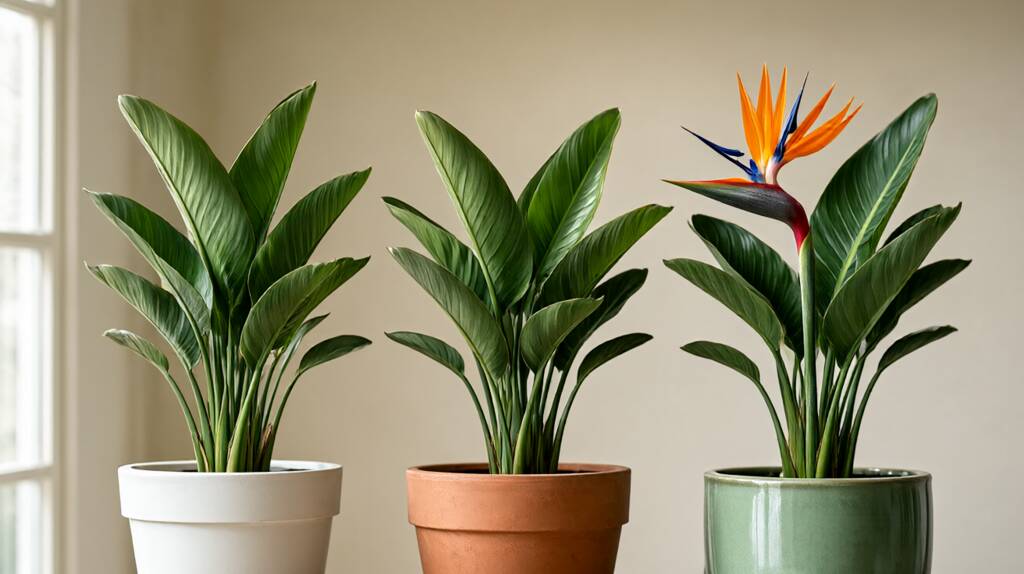
Material controls how fast the soil dries, and the right choice depends on your watering habit, not on the look of the pot.
Plastic holds moisture longest. It is non-porous, so water stays in the soil until the plant uses it or it evaporates from the surface. Plastic is the safest choice for a grower who travels, forgets to water, or lives in a dry climate. The downside is that plastic does not breathe, so an overwatered plant in plastic takes longer to recover.
Terracotta breathes. The porous clay wicks moisture from the soil and evaporates it through the walls, which keeps the soil drier and the roots cooler. Terracotta is the best choice for a heavy-handed waterer or a humid room, because it provides a buffer against overwatering. The downside is that terracotta dries fast, and a plant in terracotta in a hot, dry room may need watering every two to three days.
Ceramic is the heaviest and the most decorative. Glazed ceramic is non-porous, like plastic, and holds moisture. Unglazed ceramic breathes, like terracotta. Ceramic is the best choice for a large plant that needs weight to stay upright, or for a display pot where appearance matters. The downside is cost and weight, and the fact that many decorative ceramic pots have no drainage hole.
The drainage hole rule
A pot without a drainage hole is not a pot. It is a reservoir. Water accumulates at the bottom, the roots sit in it, and they rot. If you must use a pot without a hole, drill one, or use it as a cachepot and keep the plant in a plastic nursery pot inside it. Never plant directly into a pot without drainage. For the full watering method, including how to read the soil, see our guide on how often to water bird of paradise.
Go up one size (2-4 cm) only; larger pots create rot reservoirs.
Drainage: The Foundation of Everything
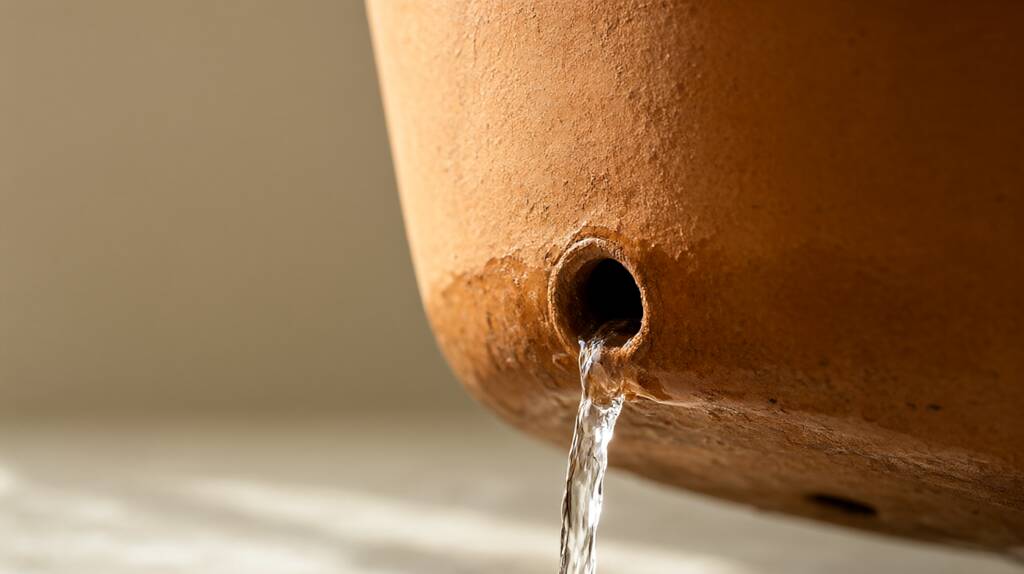
Drainage is the single most important feature of a pot, more important than size, material, or appearance. A pot with good drainage lets water pass through the soil and out the bottom, which flushes salts, aerates the roots, and prevents waterlogging. A pot with poor drainage traps water, and trapped water is the beginning of root rot.
The test is simple. Water the pot until water runs from the drainage holes. If water runs within ten seconds, drainage is good. If it takes longer, the soil is too dense or the holes are too small. If no water runs at all, the holes are blocked or the pot has none.
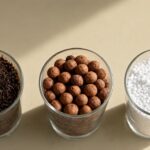
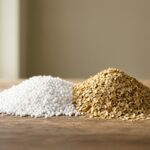
Drainage can be improved by adding perlite or orchid bark to the soil mix, by raising the pot on feet or stones to let water escape freely, and by ensuring the drainage holes are not blocked by roots or soil. A layer of gravel at the bottom of the pot does not improve drainage, despite the common belief. It actually reduces the effective soil volume and can create a perched water table. Skip the gravel and use a well-draining soil mix instead.
The saucer problem
A saucer under the pot catches the drainage water, which is useful, but it becomes a problem if the water is not emptied. A plant sitting in a saucer of water is sitting in a swamp. Empty the saucer thirty minutes after watering, or use a saucer with a drainage channel that lets excess water evaporate. For the full soil and repotting method, including the ideal mix, see our guide to bird of paradise soil and repotting.
Plastic holds moisture; terracotta breathes; ceramic is heavy and decorative.
Sizing Up: When and How Much
Repotting is not an annual event. It is a response to the plant’s condition. A bird of paradise should be repotted when the roots are circling the bottom of the pot, when the plant dries out within a day or two of watering, or when the growth has stalled despite adequate light and water. These are signs that the roots have filled the pot and the plant has nowhere to go.
The size increase should be small. Go up one pot size, 2 to 4 centimeters in diameter, not two or three sizes. A large jump in pot size creates a reservoir of wet soil that the roots cannot reach, which leads to rot. The plant grows faster in a pot that is slightly too small than in one that is too large, because the roots are forced to fill the space before the plant can grow above.
Timing matters. Repot in early spring, just before the growth flush, so the plant has the whole season to re-establish. Repotting in autumn sets the plant up for winter with disturbed roots, which is the most common cause of winter dieback. For the full planting and timing guide, see our guide on when to plant bird of paradise.
When not to repot
Do not repot a plant that is in flower, a plant that is stressed, or a plant that was repotted within the last six months. Repotting is stressful, and a plant that is already struggling will not recover from the additional disturbance. Wait until the plant is healthy and actively growing, then repot in spring. For the full seasonal schedule, see our guide to bird of paradise seasonal care schedule.
A pot without drainage is a slow death sentence with a glaze.
Container Choices for Specific Situations
Different growing situations call for different containers. A plant that lives outdoors on a windy balcony needs a heavy pot, ceramic or concrete, that will not blow over. A plant that moves between indoors and outdoors needs a lightweight pot, plastic or fiberglass, that can be carried. A plant that sits in a decorative spot needs a pot that looks good, but the inner pot should still have drainage.
Self-watering pots are a special case. They have a reservoir at the bottom that wicks water up into the soil, which keeps the soil consistently moist. This is useful for a grower who travels, but it is dangerous for a bird of paradise, which needs the soil to dry between waterings. A self-watering pot that is not monitored can keep the soil wet indefinitely, which leads to rot. Use self-watering pots with caution, and only if you can monitor the soil moisture.
Hanging baskets and wall-mounted planters are generally unsuitable for bird of paradise, because the plant is too heavy and too tall. A mature bird of paradise in a hanging basket will pull the basket down and crack the pot. Use a floor-standing pot with a wide base for stability. For the full growth and size picture, including how big the plant gets, see our guide to bird of paradise growth rate and size.
The cachepot compromise
A cachepot is a decorative outer pot with no drainage hole, used to hide a plain nursery pot. This works well, as long as the inner pot has drainage and the outer pot is emptied of any water that collects. The plant stays in the nursery pot, which is removed for watering and returned when drained. This gives the best of both worlds: a decorative exterior and a functional interior.
Drainage improves with perlite in the mix, not gravel at the bottom.
From Container Selection to the Rest of the Cluster
The pot is the foundation of the plant’s environment, and it connects to every other topic in this cluster. Soil and repotting depend on the pot. Watering depends on the pot. Light and humidity depend on where the pot sits. Growth and size depend on whether the roots have room. When something goes wrong, the pot is often the first thing to check. The plant remembers the rain forest. Your apartment just needs to remind it.
Repot in spring, one size up, only when roots circle the pot.
Key thresholds: 2-4 cm pot step-up, 10 sec drainage test, 5 cm dry test, 2-4 cm size increase, 6 month repot minimum, 10-15 cm mulch, 40% humidity, 10 C threshold.
| Material | Dries | Best for |
|---|---|---|
| Plastic | Slowest | Travelers, dry climates |
| Terracotta | Fastest | Heavy waterers, humid rooms |
| Glazed ceramic | Slow | Display, heavy plants |
| Unglazed ceramic | Medium | Decorative + breathable |
Key thresholds: 2-4 cm pot step-up, 10 sec drainage test, 5 cm dry test, 2-4 cm size increase, 6 month repot minimum, 40% humidity, 10 C threshold, 5 cm clearance, 3 day dry cycle.
Sources and further reading
- Royal Horticultural Society, Strelitzia reginae: container cultivation notes.
- University of Florida IFAS Extension, Strelitzia reginae: culture and container requirements.
- North Carolina State Extension, Strelitzia reginae: plant profile and potting guidance.
Last reviewed on 2026-11-24.
The cachepot compromise gives decorative exterior and functional interior.