
Planting a bird of paradise at the wrong time is the quietest way to lose a season. The plant will not die. It will sit in the ground or in the pot, doing nothing, and you will conclude it is slow, or sick, or that you bought a dud. It is none of those. It is waiting for the soil to warm, or for the roots to find their footing, or for the light to lengthen. Timing is not a detail in growing Strelitzia reginae. It is the decision that decides whether the plant establishes in weeks or in months.
Two failure modes follow. The first is planting too early in spring, when the soil is still cold and the plant sits in wet, chilly ground and rots at the base. The second is planting too late in autumn, when the plant has no time to root before winter and enters the cold season as a transplant rather than an established plant. Both come from reading the calendar instead of the soil.
Most growers also confuse planting with transplanting. Planting is putting a new plant in its permanent spot. Transplanting is moving an established plant. The timing rules are different, and the stress on the plant is different. A new plant can be planted whenever conditions are right. An established plant should be moved only when it is dormant and the soil is workable.
Why Timing Matters for This Species
Strelitzia reginae is a subtropical plant from the eastern coast of South Africa, where winters are mild and summers are warm and wet. It evolved to grow when the soil is warm and to rest when it is cool. In a temperate garden, that rhythm is not optional. It is the plant’s operating system.
Root growth in this species is temperature-dependent. Below 13 degrees Celsius, root activity drops sharply. Above 18, it resumes. This means a plant set into cold soil sits idle, and idle roots in wet soil are an invitation to rot. The plant is not failing to grow. It is waiting for a signal it has not received.
The above-ground plant is more forgiving. Leaves tolerate cool air better than roots tolerate cool soil, which is why a bird of paradise can look fine in a cool room while its roots are struggling. The disconnect is what makes timing hard to read: the top of the plant says everything is fine, and the bottom of the plant says it is not.
Indoor plants follow the light, not the calendar
For a plant that lives indoors year-round, the calendar matters less than the light. Day length and light intensity drive the growth rhythm, and a plant in a bright south window in February is effectively in early spring. The practical rule is to repot and plant indoors when the plant is actively growing, which shows as new leaves emerging, not when the month says so.
Timing is the decision that decides whether the plant establishes in weeks or in months.
Planting Windows by Climate Zone
The planting window is the gap between the last frost and the first sustained heat. For bird of paradise, that window is wider than for most subtropicals, but it is not unlimited. The soil should be at least 15 degrees Celsius at 10 centimeters depth, and the forecast should show no frost for at least two weeks.
In USDA zones 9 and 10, where frost is rare, planting can happen almost any time, with spring and early autumn as the best windows. In zone 8, plant in late spring after the last frost, usually April to May depending on the region. In zone 7 and colder, bird of paradise is not reliably hardy outdoors and should be grown in containers that come inside for winter.
Avoid midsummer planting in hot climates. A new plant set into 35-degree soil with a full sun exposure transpires faster than its unestablished roots can supply, and the result is wilt that looks like underwatering but is actually root shock. Plant in the shoulder seasons, and if you must plant in summer, provide afternoon shade for the first two weeks.
The soil temperature test
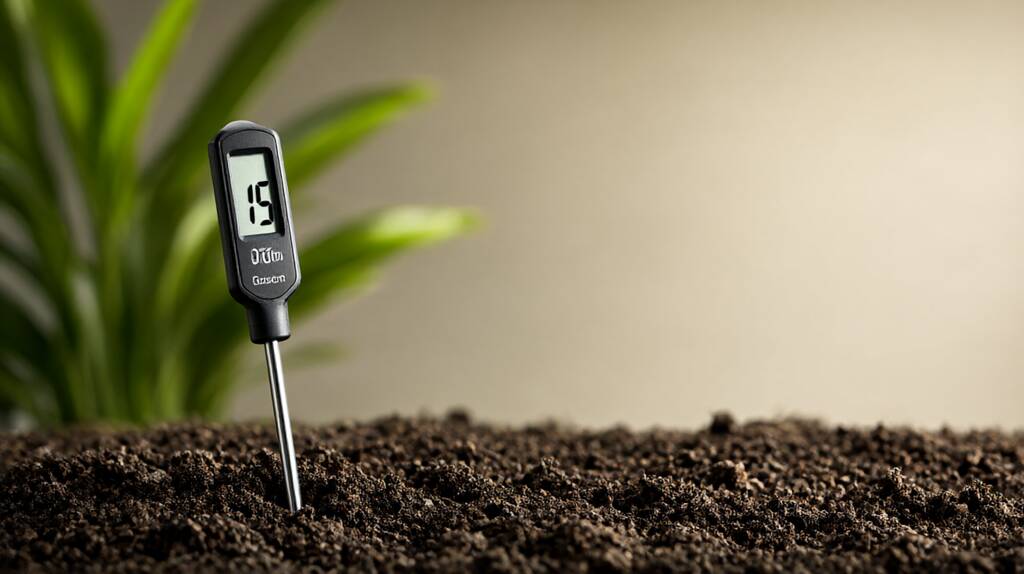
Do not trust the air temperature. Soil warms more slowly than air in spring, and a warm afternoon does not mean warm soil. Push a soil thermometer 10 centimeters into the ground at midday. If it reads 15 degrees or higher for three consecutive days, the window is open. If it reads below 13, wait.
Plant when the soil is at least 15 degrees Celsius at 10 centimeters depth.
Indoor Timing vs Outdoor Timing
Indoors, the rules bend. A plant in a heated room with a bright window can be planted or repotted whenever it is actively growing, which in practice means spring through early autumn. The exception is winter, when even a warm room has short days and the plant is in rest mode. Repotting a resting plant forces it to rebuild roots when it has no energy to spare.
The best indoor window is late winter to early spring, just as the days lengthen and before the spring growth flush. The plant has the whole growing season ahead of it to establish. Repotting in autumn sets the plant up for winter with disturbed roots, which is the most common cause of winter dieback in otherwise healthy plants.
For a plant moving from indoors to outdoors for the summer, wait until night temperatures stay above 12 degrees Celsius. A cold night shocks a plant that was in a warm room, and the damage shows as yellowing lower leaves within a week. Bring it back inside before night temperatures drop below 10 degrees in autumn.
The hardening-off rule
A plant that has lived indoors cannot go straight into full sun. The leaves are not adapted to UV, and they burn within hours. Move the plant to a shaded spot outdoors for three to four days, then to partial sun for three to four days, then to full sun. The whole process takes about a week. Skipping it costs you leaves.
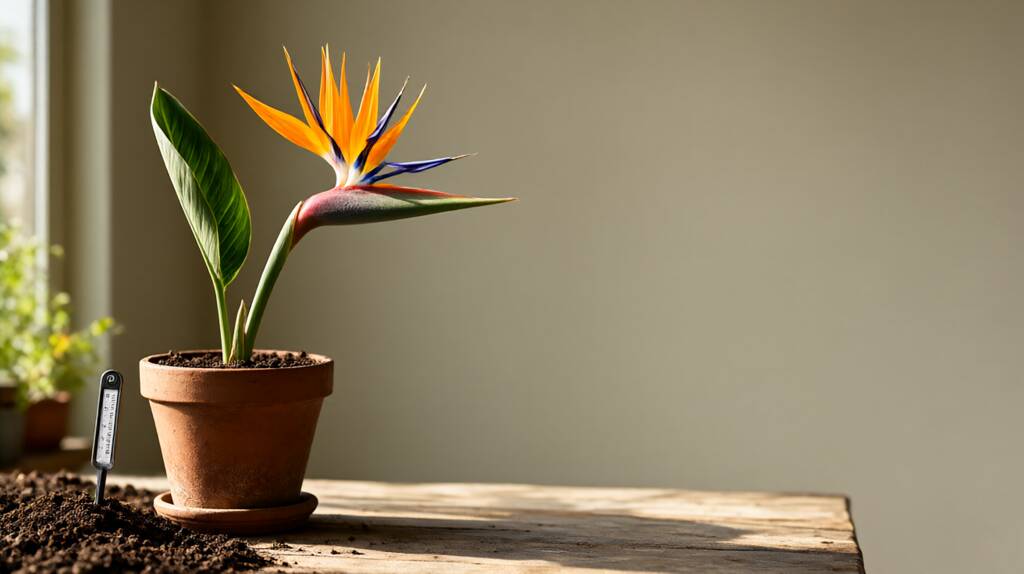
Indoors, repot in late winter to early spring, never in winter rest.
What Happens If You Plant Too Early or Too Late
Plant too early and the damage is below ground. The roots sit in cold, wet soil and rot at the crown, and the plant collapses from the base up. The leaves may look fine for weeks because the top of the plant is still living on stored energy. By the time the leaves yellow, the roots are gone. The fix is to unpot, trim to firm white tissue, and restart in fresh, warm, well-draining soil.
Plant too late and the damage is above ground. The plant has no time to establish roots before winter, and it enters the cold season as a transplant. The first frost kills the foliage, and without an established root system, the plant does not return in spring. In zones 9 and 10, where frost is rare, late planting is less dangerous but still slows establishment by months.
The middle failure is subtler. Planting at the right time but in the wrong spot, or in soil that is too rich, produces a plant that grows fast and flowers late. Excess nitrogen pushes leaves at the expense of flowers. The plant looks magnificent and never blooms. For the full diagnosis of a non-flowering plant, including the light test and the root test, see our guide to bird of paradise not flowering.
The transplant shock window
Any plant that is moved, even at the right time, enters transplant shock. Growth stops for two to six weeks while the roots re-establish. During this window, the plant needs steady moisture, no fertilizer, and no relocation. The common mistake is to see the stall and respond with more water or more feed, which compounds the stress.
Plant too early and the roots rot; plant too late and the plant enters winter as a transplant.
Quick Reference: Planting Calendar
The calendar below is a starting point. Adjust for your local frost dates and soil temperature, which are the real drivers. Zone 8 growers in a coastal climate may plant a month earlier than zone 8 growers inland.
| Climate | Best planting window | Soil temp target | Notes |
|---|---|---|---|
| USDA 10-11 | Year-round, best Mar-May and Sep-Oct | 18 C or higher | Avoid peak summer heat |
| USDA 9 | Mar-May and Sep-Oct | 15 C or higher | Watch for late frost in spring |
| USDA 8 | Apr-May | 15 C or higher | Container culture safer |
| USDA 7 and below | Container only, move in by Oct | Indoor: 18 C | Not reliably hardy outdoors |
| Indoors year-round | Feb-Apr (active growth start) | Room temp 18-24 C | Avoid winter repotting |
The single most useful rule: plant when the soil is warm and the days are lengthening, and never when the soil is cold or the days are short.
From Timing to the Rest of the Cluster
Timing sets the calendar, but the calendar is only one input. Light sets the location. Water sets the rhythm. Soil sets the foundation. Each has its own page in this cluster, and each decision builds on the one before it. Start here, then move to the growing guide for the full cultivation method, and to the seasonal care schedule for the annual rhythm that keeps the plant on track after it is established.
Do the test tonight. The leaves will answer by Thursday.
Key thresholds: 15 C soil at 10 cm depth, 13 C root activity floor, 18 C root activity resumes, 12 C safe night minimum, 10 C damage threshold, 3-4 day hardening off, 2-6 week transplant shock, 35 C midsummer risk, 10 cm planting depth.
Sources and further reading
- Royal Horticultural Society, Strelitzia reginae: cultivation and hardiness notes.
- University of Florida IFAS Extension, Strelitzia reginae: culture, cold tolerance, and planting recommendations.
- United States Department of Agriculture, Plant Hardiness Zone Map, zone 8-11 guidance.
Last reviewed on 2026-11-24.