
Underwatering a spider plant is less dangerous than overwatering, but it is more common. The plant tolerates dryness better than saturation, which means it can look fine for weeks while slowly declining. By the time the damage is visible, the roots have been stressed for a while. Recognising the early signs prevents the slow decline that leads to a plant that never quite recovers.
This guide explains how underwatering affects Chlorophytum comosum, how to distinguish it from overwatering, and how to recover.
What Underwatering Actually Does
A spider plant stores water in tuberous roots, which gives it a buffer against missed waterings. When soil dries completely, the plant draws on those reserves. Leaves stay firm at first, then begin to lose turgor as reserves deplete. Growth slows, and the plant stops producing spiderettes.
Unlike overwatering, which damages roots within days, underwatering is a slow stress. A plant can survive weeks of dry soil and recover fully if caught in time. The risk is repeated cycles: a plant that wilts, is watered, wilts again, becomes progressively weaker.
Signs of Underwatering
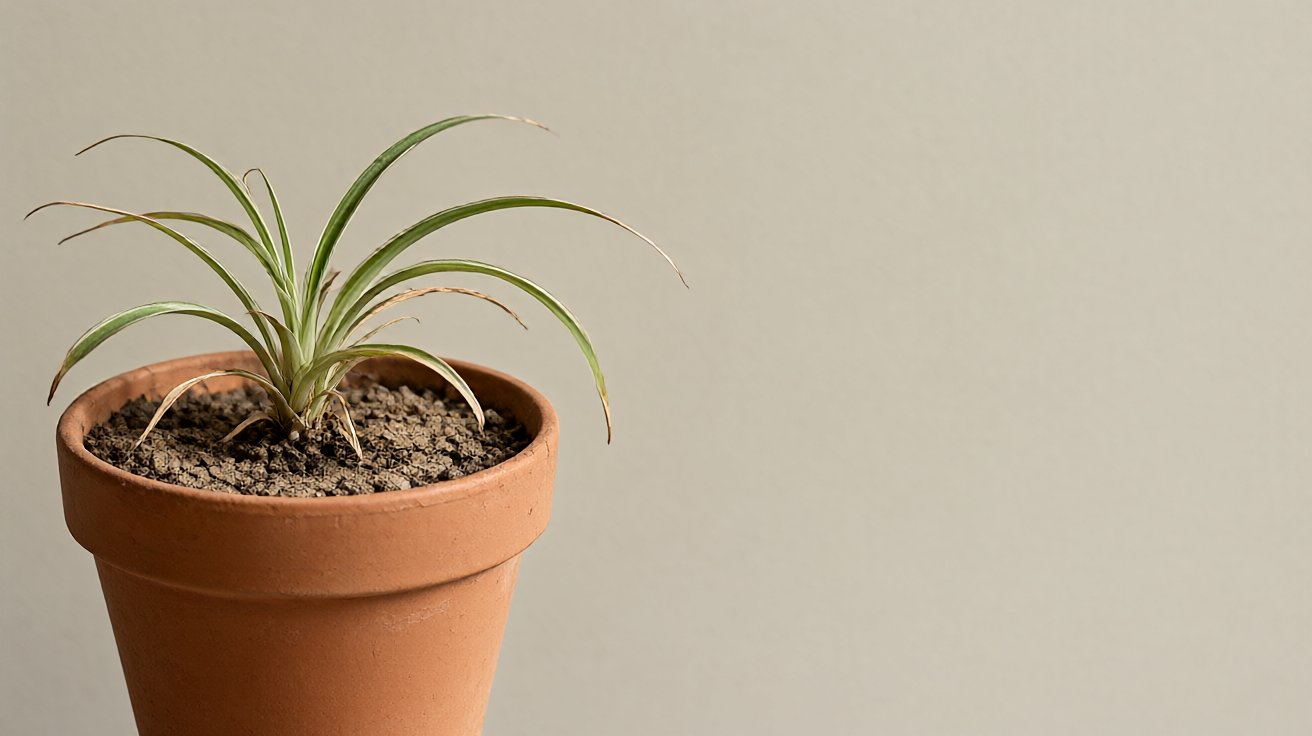
Drooping leaves that feel soft and limp, not firm, are the first sign. The leaves lose turgor as cells dehydrate. If you water and the plant perks up within a few hours, it was thirsty. This recovery speed is the key diagnostic: a thirsty plant recovers fast, an overwatered plant does not.
Brown, crispy leaf tips follow. Unlike the soft browning of rot, underwatering produces dry, papery tips that crack when bent. The damage starts at the tips because they are the last point water reaches.
Curling leaves appear as the plant tries to reduce exposed surface area to limit water loss. The curl is usually inward and uniform. Our spider plant leaves curling guide covers other causes.
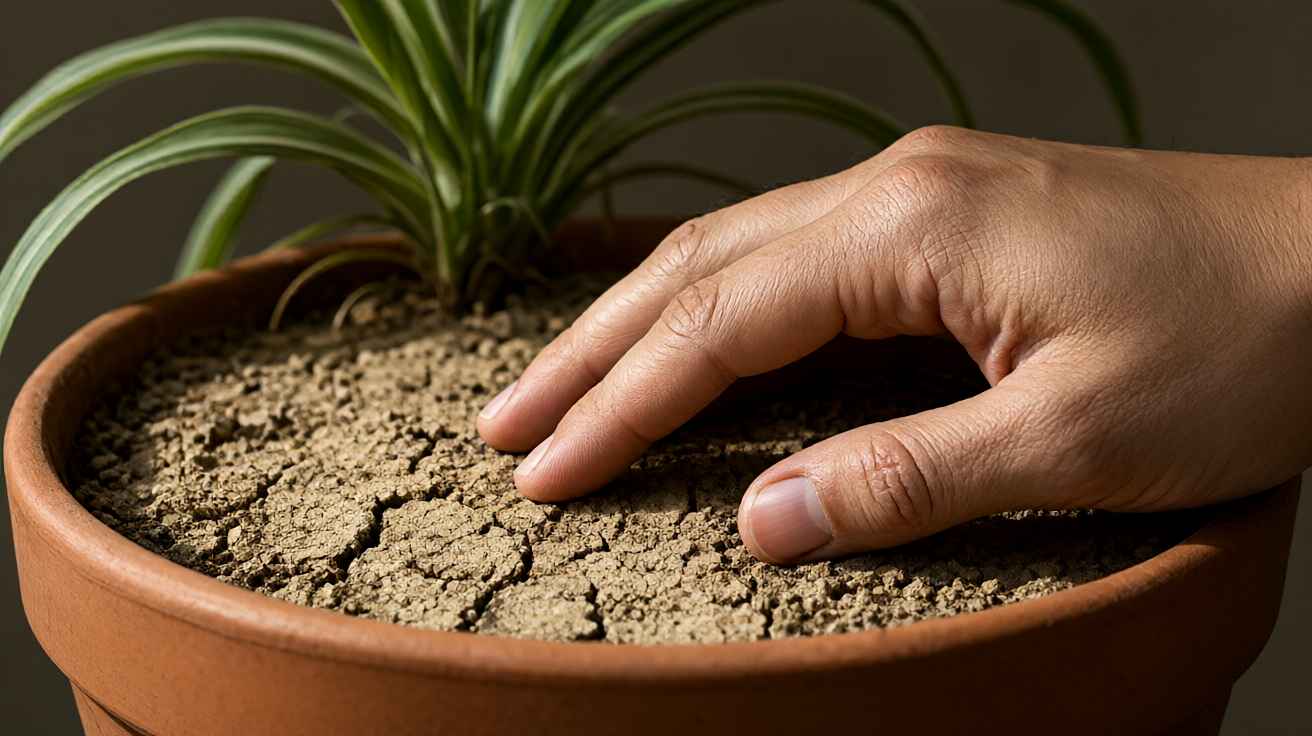
Soil that pulls away from the pot edge and feels dusty and hydrophobic is a late sign. Severely dry soil repels water, so a quick watering runs down the sides without reaching roots.
How to Distinguish It From Overwatering
The two conditions produce similar symptoms, drooping and browning, but opposite soil conditions. The test is simple.
Touch the soil two centimetres down. If it is dry and dusty, the plant is underwatered. If it is wet and dark, the plant is overwatered. If it is slightly moist, the problem is elsewhere.
Recovery speed confirms it. An underwatered plant perks up within hours of watering. An overwatered plant stays limp because the roots cannot deliver water. Our spider plant overwatering guide covers the wet-soil case.
How to Recover
1. Water thoroughly
Water slowly until water runs from the drainage hole. If the soil is hydrophobic and water runs off, bottom-water instead: place the pot in a tray of water for 20 to 30 minutes so the soil absorbs moisture from below.
2. Let it drain
Empty the saucer. Do not leave the plant sitting in water; the goal is moist soil, not saturated.
3. Wait and observe
A mildly underwatered plant recovers within hours. A severely underwatered plant may take a day or two, and some leaves may be permanently damaged. Do not water again until the top two centimetres dry.
4. Trim damaged tissue
Remove leaves that are fully brown and dry. Trim brown tips just into green tissue. Do not remove more than a third of the foliage at once.
Prevention
Check the soil before watering rather than on a calendar. The top two centimetres should be dry; the soil below should still be slightly moist. In summer this may mean watering every three to four days; in winter every ten to fourteen.
Use a pot with drainage holes and a well-draining mix. Soil that holds too much water encourages overwatering; soil that drains too fast encourages underwatering. The right mix balances both.
Group plants and use a pebble tray if you travel or forget. A plant in a humid microclimate dries more slowly and tolerates longer gaps.
For the full watering baseline, see our how often to water a spider plant guide, and for the complete care picture, our spider plant care guide.
Turn That PDF Into a Spreadsheet in Minutes
You've seen how to do it manually — now let the tool handle the heavy lifting. Upload your bank statement and get Excel, CSV, or QBO in a few clicks.
Try It Free