
A root-bound spider plant is not always a problem. Spider plants tolerate, and sometimes prefer, a snug pot. The issue arises when roots fill the container so completely that water cannot penetrate, nutrients run out, and growth stalls. Knowing the difference between comfortably snug and genuinely root bound saves you from repotting too often, which is as harmful as repotting too late.
This guide explains what root bound means for Chlorophytum comosum, how to confirm it, and what to do.
What Root Bound Means
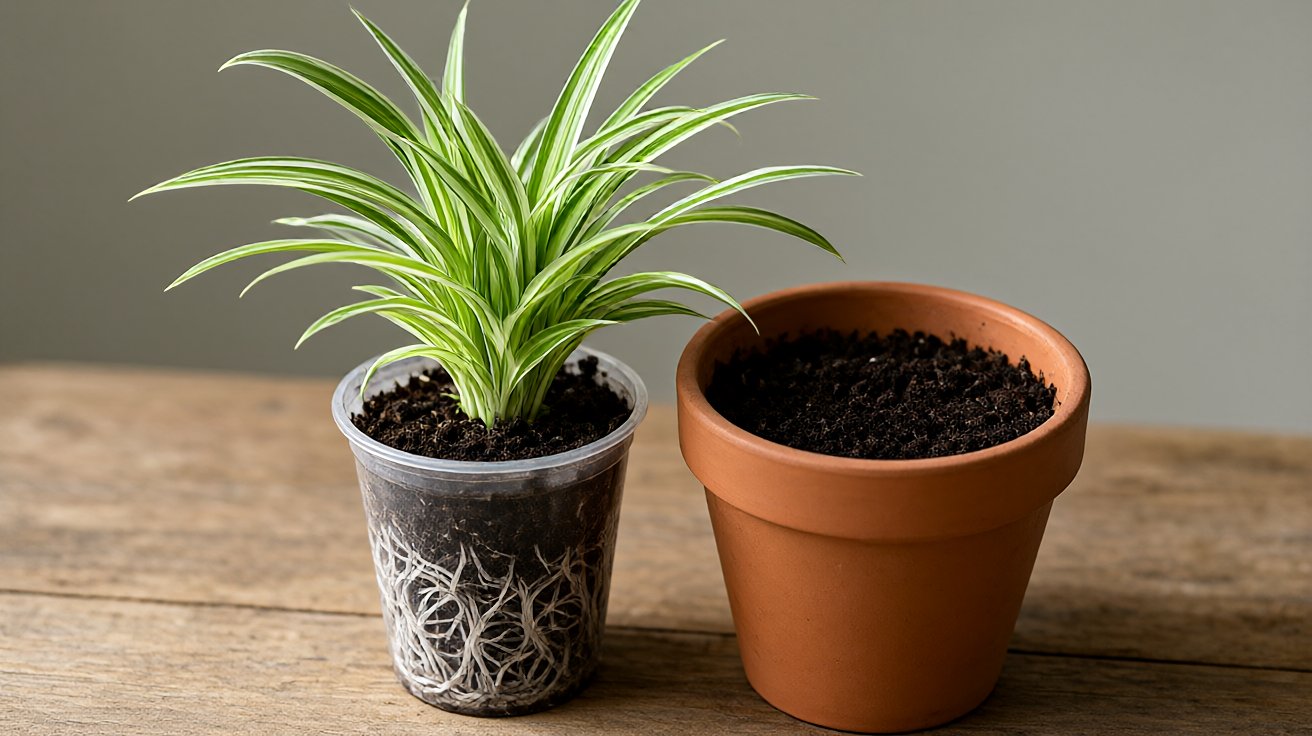
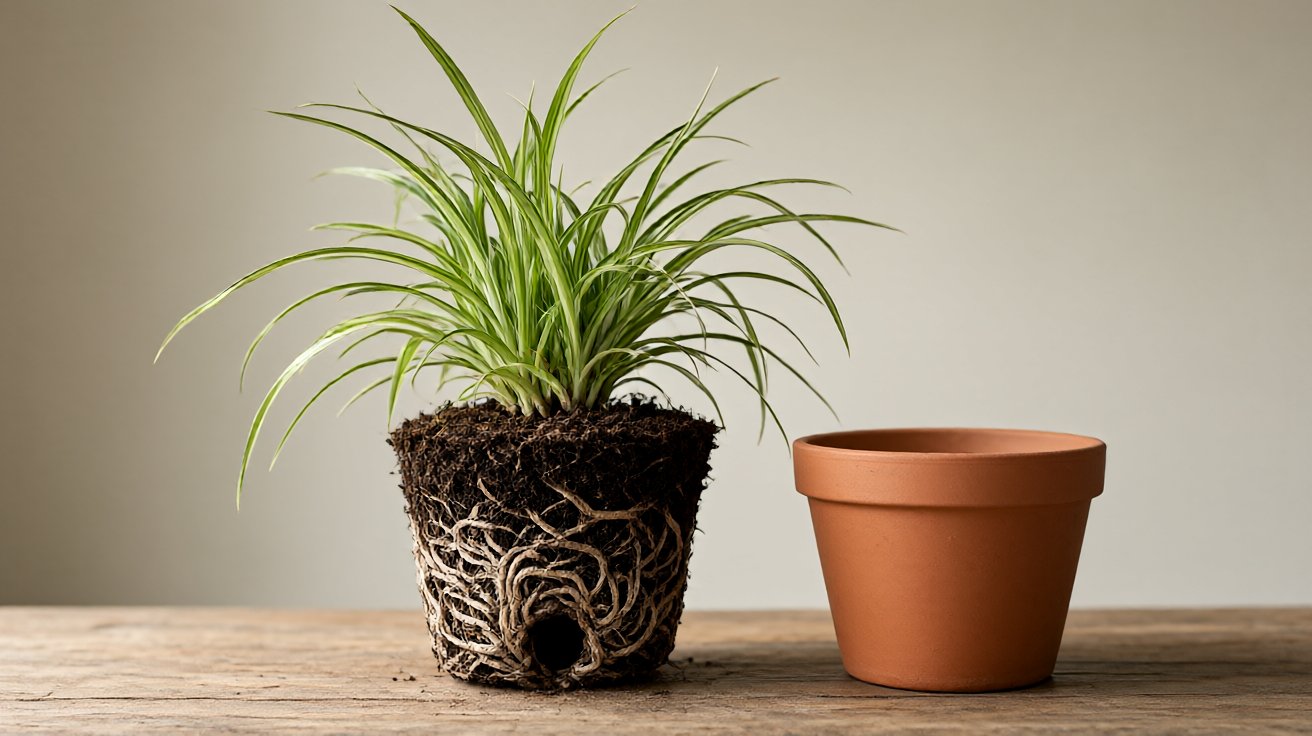
A plant becomes root bound when its roots have filled the available soil volume and begin circling the pot walls, pushing out of drainage holes, or forming a dense mat. At that point there is little soil left to hold water and nutrients, and the root system has nowhere to expand.
Spider plants develop thick, tuberous roots that store water. These roots are more tolerant of crowding than fine, fibrous roots, which is why spider plants can stay healthy in a snug pot for a long time. The transition from snug to root bound is gradual, and the plant gives clear signals before it suffers.
Signs of a Root-Bound Spider Plant
Roots visible at the drainage hole or pushing up through the soil surface are the most obvious sign. A dense ring of roots at the pot rim when you lift the plant is another.
Soil that dries within a day of watering indicates that root mass has displaced most of the soil, leaving little medium to hold moisture. If you water and the plant wilts again within 24 hours, root bound is likely.
Stalled growth despite good light and correct watering suggests the plant has run out of room and nutrients. A healthy spider plant in adequate light should produce new leaves and spiderettes through the growing season. If it has not grown in months, check the roots.
Reduced spiderette production often accompanies root bound conditions. Reproduction is the first function a stressed plant sacrifices.
Pot distortion is a late sign. Plastic pots may bulge or crack. Ceramic pots may not show damage, but the plant may be difficult to remove.
How to Confirm
Do not assume root bound from symptoms alone, because drought, low light and nutrient deficiency can mimic it. Confirm by inspection.
Water the plant the day before, then slide it out of the pot. If the root ball holds its shape and roots circle the outside, the plant is root bound. If roots are sparse and soil falls away, the problem is elsewhere. Healthy roots are white or light tan and firm. Brown, mushy roots indicate rot, not crowding.
If the plant is only slightly root bound, with a few circling roots but plenty of soil, you can loosen the roots and return it to the same pot with fresh mix. If the root ball is dense and soil is minimal, repot into a larger container.
What to Do
If mildly root bound
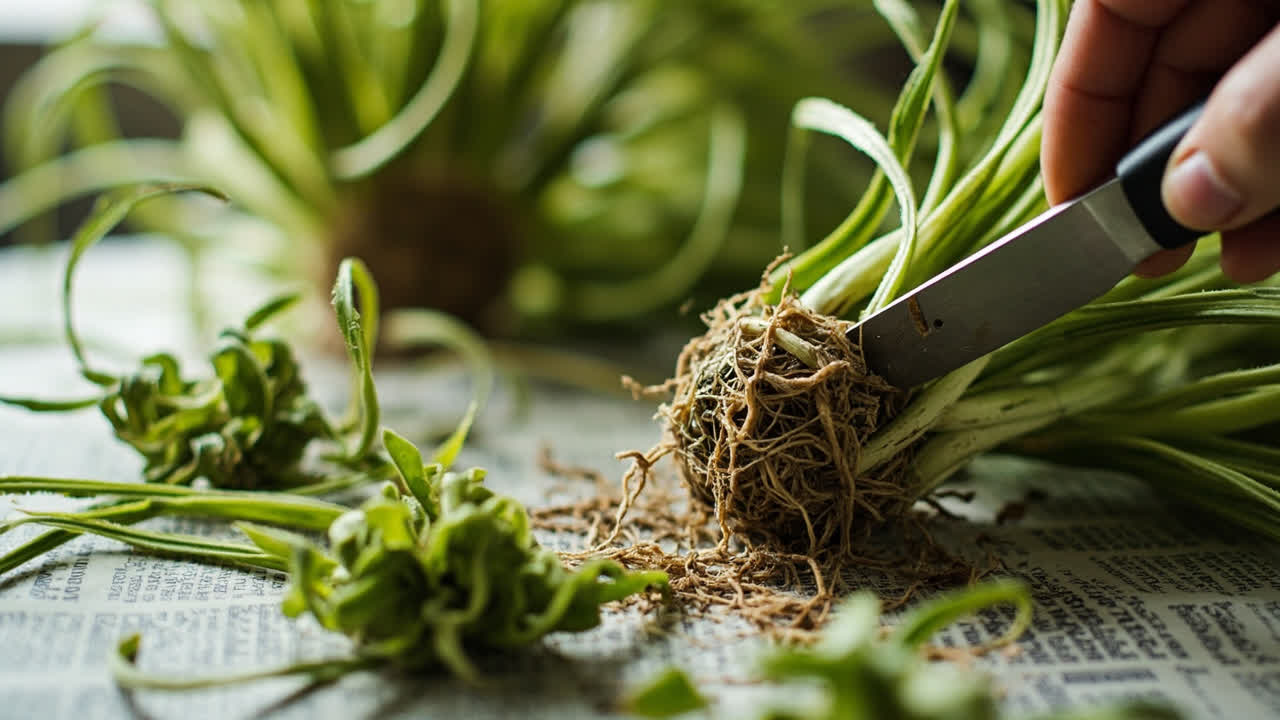
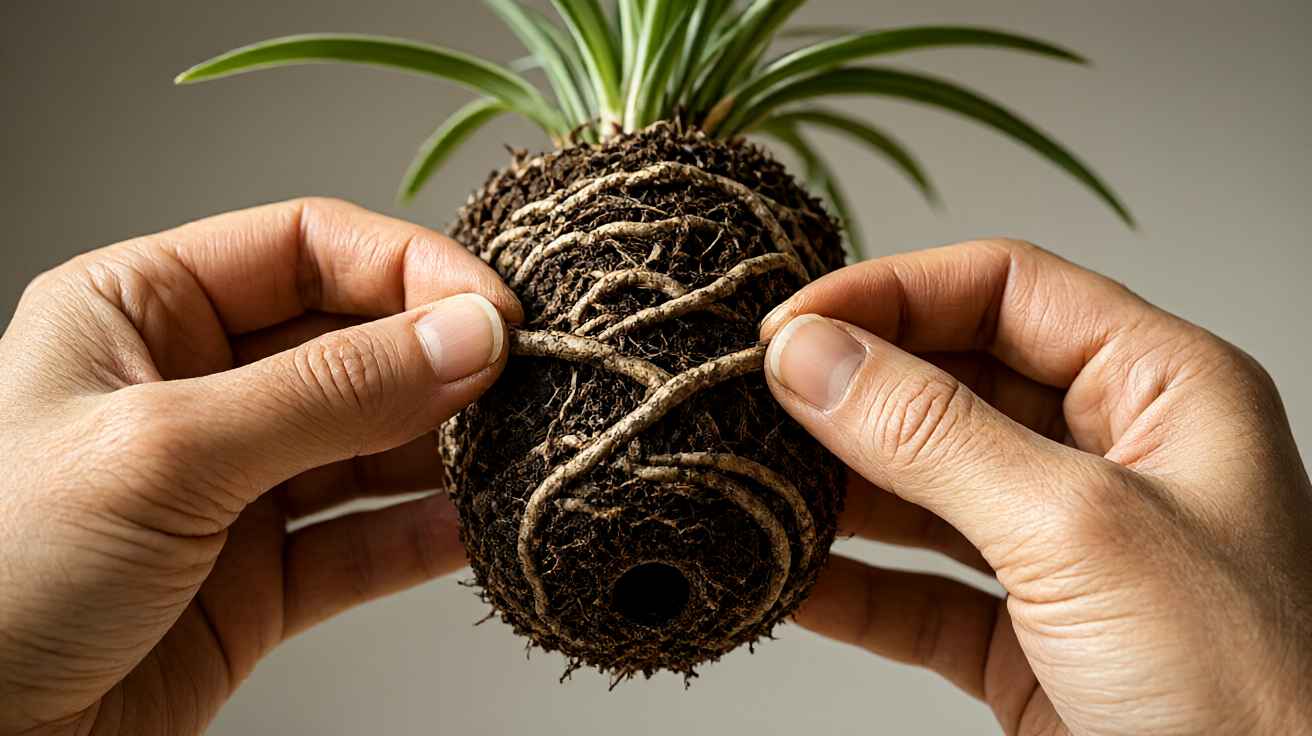
Tease the circling roots apart with your fingers, cutting any that will not loosen. Add fresh potting mix to the same pot or a slightly larger one, and water in. This resets the root environment without the shock of a major repot.
If severely root bound
Repot into a container one size larger. Step up gradually; a pot that is too large holds excess water and invites rot. Use fresh, well-draining mix, position the plant at the same depth, and water in. Our how to repot a spider plant guide covers the full procedure, and when to repot a spider plant helps with timing.
If you choose not to repot
A root-bound spider plant can be maintained by increasing watering frequency and fertilizing lightly during the growing season. This is a compromise: the plant survives but does not thrive, and spiderette production stays low. It is acceptable for a plant you want to keep small, but not for one you want to grow.
Root Bound vs. Other Problems
Root bound is often confused with overwatering and nutrient deficiency. The key distinction is soil moisture. A root-bound plant dries out fast and wilts in dry soil. An overwatered plant wilts in wet soil. A nutrient-deficient plant shows specific discoloration patterns, usually yellowing between leaf veins, rather than uniform decline.
If you are unsure, unpot and inspect. Roots tell the truth faster than leaves. Our spider plant overwatering guide covers the wet-soil case, and spider plant leaves curling covers drought stress that mimics root bound.
Prevention
Repot every one to two years, or when roots fill the pot, whichever comes first. Use a pot only one size larger each time. Choose a well-draining mix and a container with drainage holes. Avoid the temptation to put a small plant in a large pot to save future repotting; excess soil holds water the roots cannot reach.
Spider plants tolerate being slightly root bound, and many growers find they produce more spiderettes when snug. The goal is not maximum root space but a balance between root health and soil capacity. For the full care baseline, see our spider plant care guide, and if root bound is one of several problems, our spider plant problems index helps sort the picture.
From PDF to Excel in one click
Forget retyping line by line. Upload any bank statement, get a spreadsheet you can actually use. Your files are never stored, and you can test the converter with 3 free conversions.
Try it free