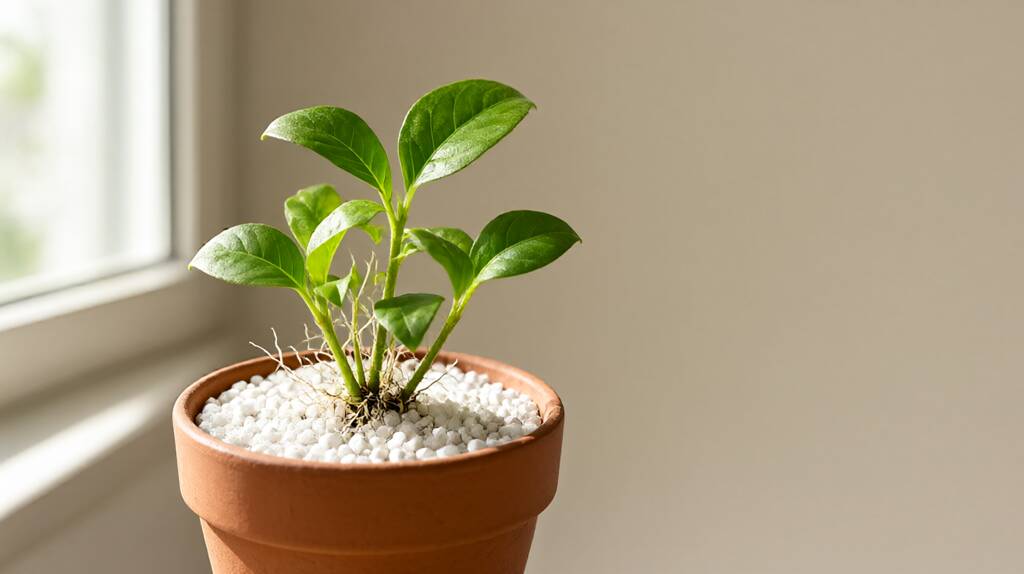

Perlite is one of the most reliable media for rooting plant cuttings, and the reason is mechanical rather than chemical. A cutting has no roots, so it cannot draw water from the medium. It must absorb water through the cut stem and the base of the cutting while simultaneously taking in oxygen through the same surface. A medium that is too wet suffocates the cutting. A medium that is too dry desiccates it. Perlite sits in the narrow zone between those two failures because it holds a thin water film while leaving most of its volume as air space.
The goal when using perlite for propagation is not to keep the cutting wet. It is to keep the base of the cutting moist and aerated at the same time. That balance is why particle size, moisture management, and monitoring matter more than any ratio.
Why Aeration and Moisture Balance Matter During Rooting
A cutting without roots has no way to regulate water uptake. It loses water through transpiration from the leaves and absorbs water through the cut surface. If the medium is saturated, the cut surface sits in water and oxygen cannot reach the tissue. Root initials fail to form, and the cutting rots. If the medium is too dry, the cutting loses more water than it absorbs and wilts.
Perlite’s structure addresses both problems. The particle surface holds enough water to keep the cut surface moist, while the pore space between particles supplies oxygen. The result is a medium that supports root initiation without the waterlogging risk of peat or the drying risk of pure sand.
When Pure Perlite Is Suitable
Pure perlite suits cuttings that root readily and tolerate some drying between waterings. Succulent cuttings, many houseplant cuttings, and semi-hardwood cuttings work well in pure perlite. The medium drains fast enough that overwatering is unlikely, and the aeration supports rapid root development.
Pure perlite is less suitable for cuttings that need consistent high moisture, such as soft herbaceous cuttings or tropical species that wilt quickly. For those, a blend of perlite and peat or coco coir holds more moisture while still providing aeration.

Preparing the Medium
Wet the perlite thoroughly before filling the container. Dry perlite repels water initially and creates dust. Once wet, it holds the water film consistently. Fill the container to within 2 centimeters of the rim, then tap gently to settle the particles without compacting them.
Use a container with drainage holes. Even though perlite drains fast, a container without drainage can accumulate water at the bottom and create a saturated zone. A small pot or propagation tray with holes is sufficient.
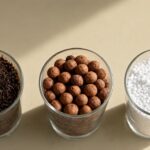
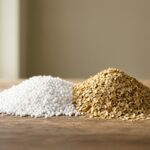
For grade selection, fine to medium perlite suits propagation. Coarse perlite drains too fast and leaves gaps that dry out the cutting base. The perlite particle sizes and grades guide covers selection in detail.
Managing Moisture
After inserting the cuttings, water the medium once more to settle it around the stems. Then allow the surface to dry slightly between waterings. The test is to lift the container. If it feels light, water. If it feels heavy, wait.
A humidity dome or plastic cover over the container reduces transpiration and extends the interval between waterings. This is useful for cuttings with large leaves that lose water quickly. Remove the cover for a few minutes each day to allow air exchange and prevent mold.
Overwatering in perlite propagation usually means watering too frequently rather than using too much water at once. Because perlite drains so fast, excess water leaves the container. The problem is keeping the medium saturated by watering before it has had time to dry.
Monitoring Root Development
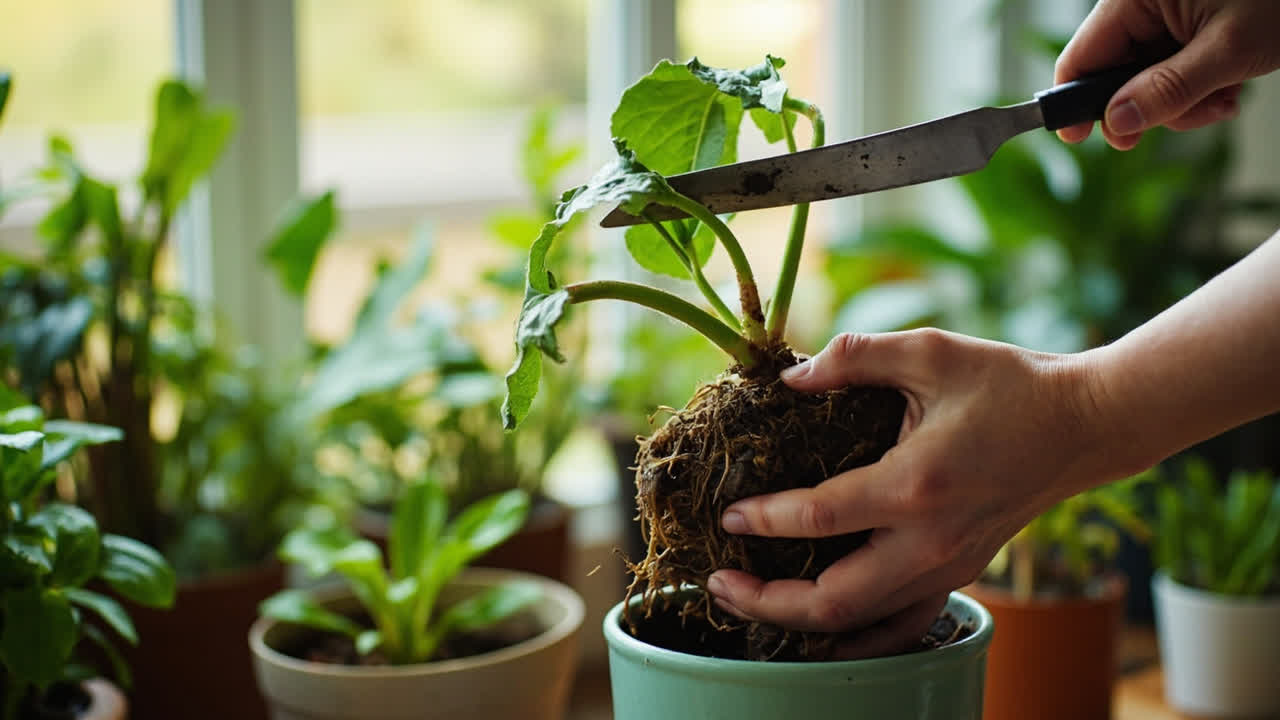
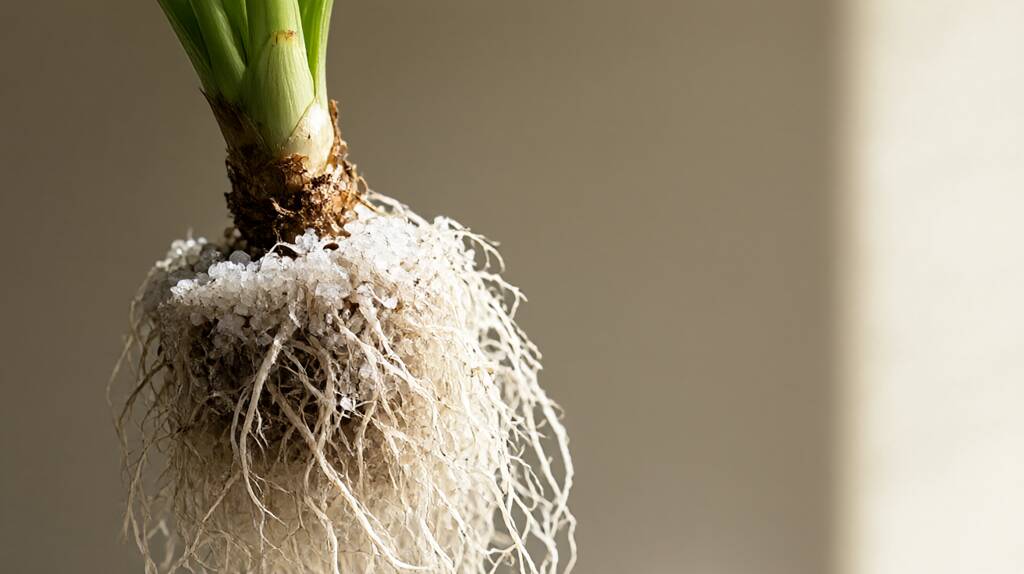
Check for root development by gently tugging the cutting after two to three weeks. Resistance indicates roots. Do not pull hard, as new roots are fragile. Some cuttings root in one week, others take six. Patience matters more than intervention.
If the cutting wilts despite moist medium, the problem is usually transpiration exceeding uptake. Reduce light intensity, increase humidity, or remove some leaves to reduce water loss. If the cutting rots at the base, the medium is too wet or the cutting was inserted too deeply.
Common Failure Conditions
The most common failure is using a medium that is too wet. This happens when the grower treats perlite like soil and waters on a soil schedule. Perlite dries faster than soil, but it also drains faster, so the watering rhythm must be adjusted to the medium, not to the plant.
The second failure is using too coarse a grade. Coarse perlite drains too fast for unrooted cuttings and leaves the base dry. The third failure is inserting cuttings too deeply, which buries the stem in a saturated zone. Insert cuttings just deep enough to stand upright, typically 2 to 3 centimeters.
The fourth failure is not sanitizing the medium or containers. Perlite is sterile when purchased, but containers and tools can introduce pathogens. Clean containers and use clean cutting tools.
When Another Propagation Medium Is More Suitable
Perlite is not the best medium for every cutting. Soft herbaceous cuttings often root better in a perlite-peat blend or in water. Some tropical species root better in sphagnum moss, which holds more moisture and provides a different root environment. For a comparison of propagation media, see sphagnum moss vs perlite for air layering.
The choice depends on the cutting type and the grower’s ability to manage moisture. Perlite rewards growers who can monitor and adjust. Blends and moss are more forgiving but slower to drain and harder to reuse.
Seed Starting as a Related Application
Perlite is also useful for seed starting, though the requirements differ from cutting propagation. Seeds need consistent moisture contact and gentle aeration. A fine to medium grade perlite at 25 to 50 percent in a fine base mix improves aeration without drying out small seeds.
The key difference is that seeds do not transpire, so moisture management is simpler. The medium should be kept consistently moist but not saturated. A cover or humidity dome helps maintain moisture until germination. For general seed-starting medium guidance, see growing medium for seed starting and propagation.
For general perlite properties and how it behaves in mixes, see what perlite is and its properties and how to use perlite in potting soil.
Last reviewed on November 9, 2026
Sources and further reading: Perlite Institute, horticultural applications and propagation; Oklahoma State University Extension, soilless growing media.