You’ve had your jade plant in the same pot for three years. It’s grown noticeably, the roots might be starting to circle the bottom, and you’re wondering if it’s time to move it up a size. It probably is — but the timing and how you do it matters more than most people realize.
Jade plants don’t need frequent repotting, and they actually tolerate being slightly root-bound better than many houseplants. But when they do need it, doing it correctly means the difference between a plant that resumes growing within weeks and one that sits sulking for months.
When to Repot a Jade Plant
The right time to repot is during active growth — spring and early summer, when the plant has the energy reserves to recover from root disturbance. Fall and winter repotting is risky because the plant is either entering dormancy or already in it, and recovery is much slower.
Specific signals that it’s time to repot:
Roots coming out of the drainage holes is the clearest sign. If you see white roots visibly escaping the bottom of the pot, the root system has filled the container.
Water running straight through the pot without retention also signals root-bound soil — the roots have displaced enough soil that moisture no longer hangs around the root zone.
Growth stalling despite good light, water, and fertilizer. If your jade plant has been in the same pot for 2-3 years and stopped producing new growth in spring, a root-bound pot may be the limiting factor.
The pot tippping over easily is a structural sign — when the root system is top-heavy relative to the soil volume, the plant becomes unstable. This is particularly common in small nursery pots that weren’t designed for long-term growth.
How Often Jade Plants Typically Need Repotting
A young jade plant in active growth may need repotting every 1-2 years. A mature jade plant that has slowed its growth rate can often go 3-5 years between repottings. The frequency depends entirely on how fast the individual plant is growing, not a fixed calendar schedule.
When in doubt, check the roots rather than guessing from the plant’s age. Tip the plant out of its pot — the roots will tell you everything.
What Size Pot to Use
Never jump more than one pot size up. Going from a 4-inch pot to a 10-inch pot is too much — the excess soil volume holds moisture that the reduced root system can’t draw up, creating a prolonged wet period that promotes root rot.
Move up one pot size at a time. If the plant is in a 6-inch pot, move to an 8-inch pot. If it’s in an 8-inch pot, move to a 10-inch pot. For mature jade plants in large decorative containers, you may only need to refresh the top 1-2 inches of soil rather than repotting into a larger vessel.
Terra cotta is the preferred pot material for jade plants. The porous clay allows the soil surface to dry faster, which reduces the risk of overwatering between waterings. The tradeoff: terra cotta dries out more quickly in hot, dry conditions, so you may need to water slightly more often in summer.
Drainage Is Non-Negotiable
Whatever pot you choose must have drainage holes. This is not optional for jade plants. A pot without drainage holes is a guaranteed problem — water accumulates at the bottom and the roots sit in saturated soil. Self-watering pots and decorative pots without holes are not suitable for jade plants unless you use them as outer cache pots and never let water sit in them.
The Repotting Process Step by Step
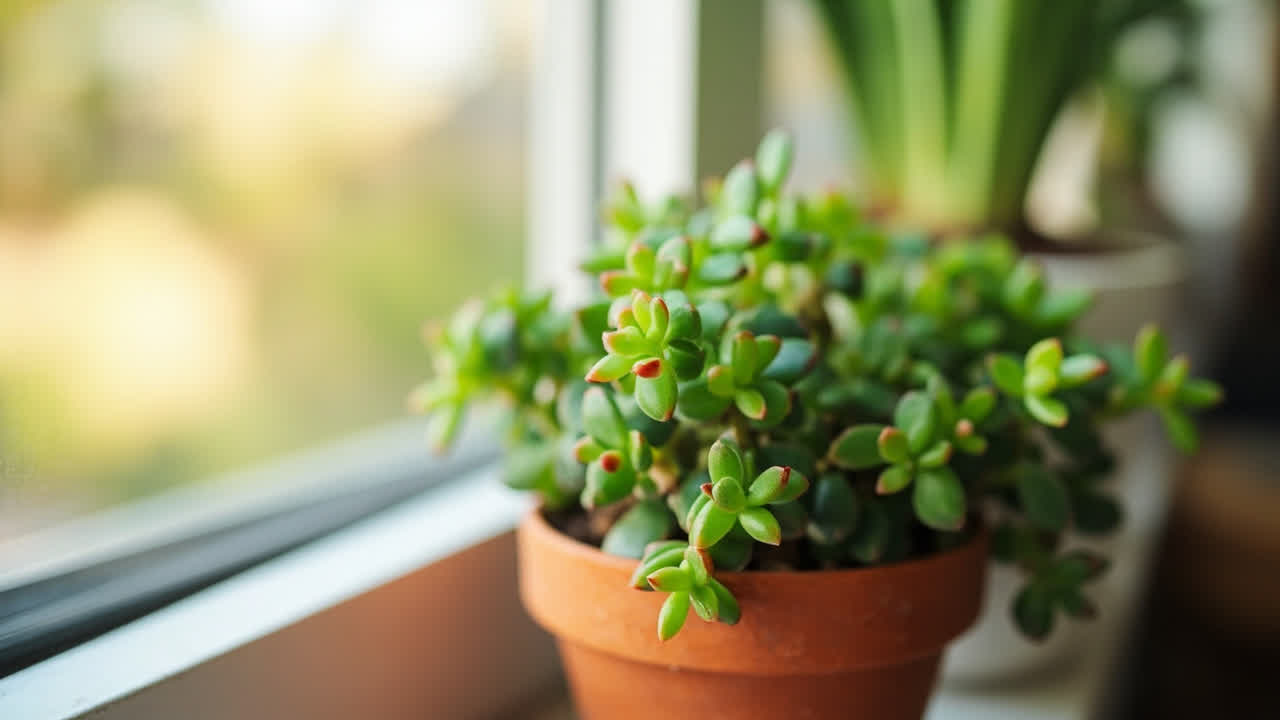
Step 1: Water the Plant 2-3 Days Before
Repotting is less stressful for the plant when the soil is slightly dry, not sopping wet. Water 2-3 days before you plan to repot. The roots will be more pliable, the root ball will hold together better, and there’s less risk of root damage during extraction.
Step 2: Prepare the New Pot and Soil
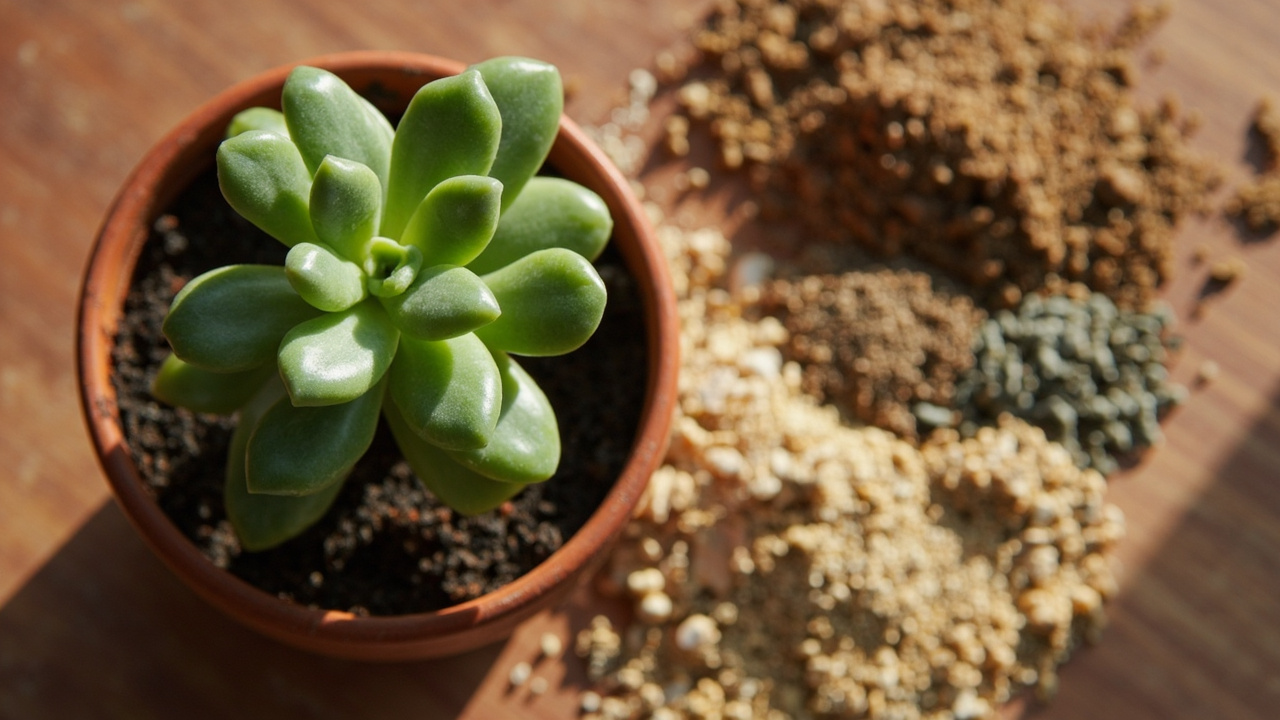
Fill the new pot with a layer of fast-draining succulent soil mix — roughly 1-2 inches of base layer, depending on the pot depth. The jade plant’s root ball should sit about 1 inch below the pot rim when placed in. Have everything ready before you remove the plant from its current pot.
For the soil mix: use a commercial succulent and cactus mix, or blend your own with roughly 50% standard potting soil and 50% perlite or coarse sand. The goal is drainage — the mix should dry out within 24-48 hours of watering.
Step 3: Remove the Jade Plant from Its Current Pot
Turn the pot on its side or upside down, supporting the plant with one hand at the base. Gently work the root ball loose — you can squeeze the pot slightly if it’s flexible, or run a knife around the inside edge if it’s rigid. Don’t yank the plant by the stem.
If the plant is severely root-bound and won’t come out, water it again and wait a day. Trying to force a root-bound plant out risks snapping the main stem.
Step 4: Inspect and Pot the Root Ball
Once out, examine the roots. Healthy jade roots are firm, off-white to tan, and somewhat fibrous. If you see dark, mushy roots, this is a root rot situation — address it using the root rot treatment steps before continuing with the repot. Light-colored circling roots that are not yet dark or soft can be gently teased apart with your fingers to encourage them to grow outward into the new soil.
Place the jade plant in the new pot, positioning it so the root ball sits at the correct depth. Fill around the sides with fresh soil, pressing gently to eliminate air pockets. Do not compact the soil aggressively — loose settlement is fine. Water lightly once after repotting to settle the soil, then leave the plant alone for 2-3 weeks before watering again.
Post-Repotting Care
The most common post-repotting mistake: watering too soon. The newly disturbed roots need time to heal before they can handle moisture. Wait 2-3 weeks before the first watering after repotting. During this period, the plant is using its existing leaf water reserves to stay turgid — this is normal.
Place the repotted jade in bright indirect light — not direct sun while it’s recovering. Direct sun adds stress. After 2-3 weeks, gradually move it back to its normal bright light position. You should see signs of new growth within 4-6 weeks in spring and early summer.
Do not fertilize until at least 4-6 weeks after repotting, and resume at half the normal strength. The damaged roots need time to re-establish before they can handle nutrients.
Common Repotting Mistakes to Avoid
The two biggest mistakes are repotting in the wrong season and watering too soon. Both extend the recovery period and increase the risk of problems.
Choosing a pot that’s too large is the third most common mistake. Excess soil volume holds moisture that the reduced root system can’t draw up, creating conditions for root rot before the roots have regrown to fill the container. If you need to understand the full watering dynamics that lead to this, the watering requirements guide explains the soil drying cycle in detail.
Not using fast-draining soil in the new pot is the fourth. Even if the original soil was correct, people sometimes reach for standard potting soil out of convenience. Standard potting soil retains too much moisture for jade plants — stick with the succulent mix.
Turn any PDF statement into a clean sheet
Skip the typos and the hours of copying. Our converter handles any bank statement format and outputs Excel, CSV, or QBO for QuickBooks. No file retention, free to try.
Convert your statement