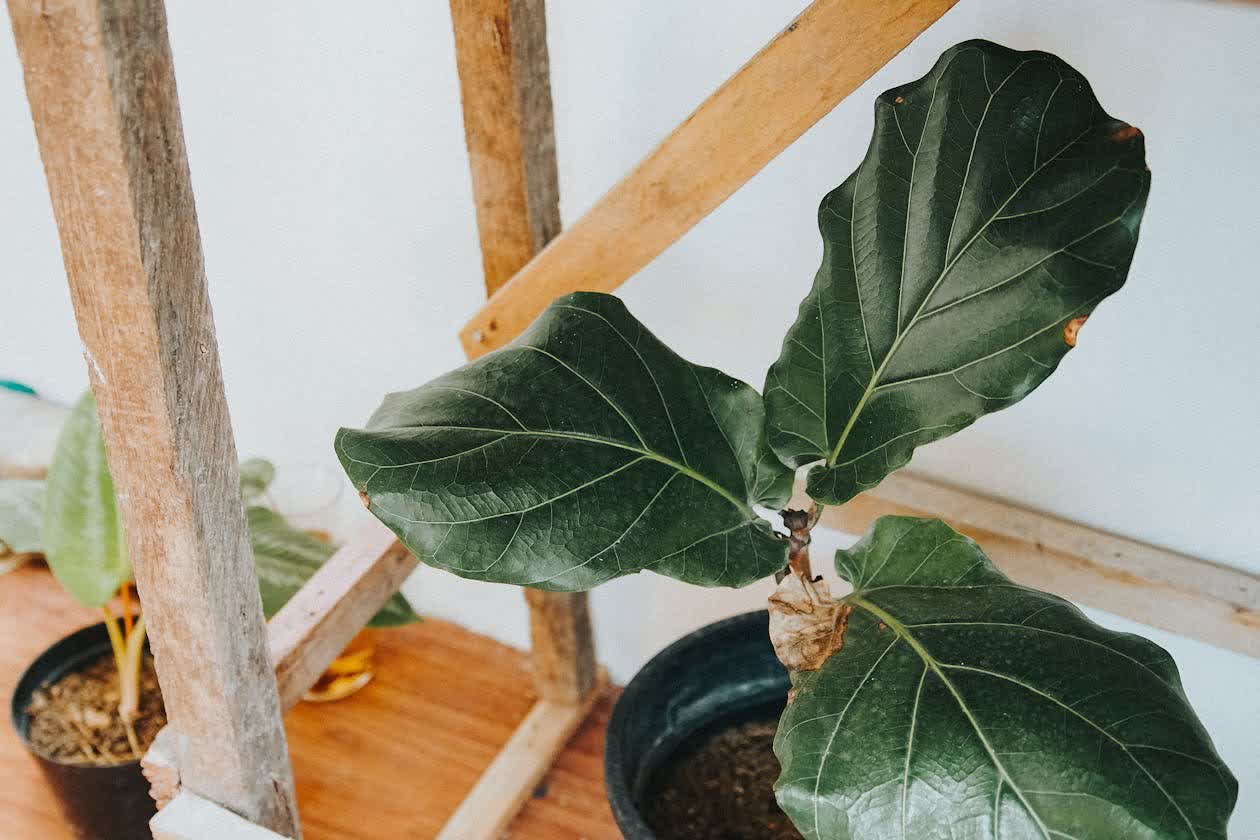

You brought your fiddle leaf fig home and it looked magnificent for three weeks. Then the edges of the leaves started going brown and crispy, and you assumed it was underwatering. So you watered more. The edges got worse. You watered more. Within a month, the new growth was coming in small and deformed. Sound familiar?
Temperature stress in fiddle leaf figs produces some of the most commonly misdiagnosed symptoms in houseplant care. Crispy leaf edges are usually attributed to low humidity or underwatering — and while those can contribute — temperature is the hidden culprit that most guides underemphasize.
What Fiddle Leaf Figs Need From Temperature
Fiddle leaf figs (Ficus lyrata) are native to the tropical rainforests of West Africa, where they grow as understory trees. They evolved in consistently warm, humid conditions with filtered light and protection from wind and temperature extremes. What they didn’t evolve for is the temperature variability of an indoor environment near drafty windows, heating vents, or air conditioning flows.
Their comfort zone: 65-80°F / 18-27°C during the day, with night temperatures that don’t drop more than 10°F / 5-6°C below the daytime reading. They can tolerate brief excursions outside this range, but prolonged exposure to temperatures below 55°F / 13°C or above 90°F / 32°C causes measurable stress.
The Draft Problem: Where Most Indoor Temperature Damage Happens
The most common source of temperature stress in fiddle leaf figs isn’t extreme cold or heat — it’s drafts. A fiddle leaf fig placed within 3 feet of a frequently opened front door, a window that leaks cold air in winter, or an air conditioning vent that blows directly on the leaves is experiencing a temperature event every time that draft activates. If you’re unsure whether your fiddle leaf fig is getting enough light to handle temperature stress, the light requirements guide covers what they actually need.
The damage shows up as brown edges on the leaves facing the draft source — often asymmetrically, affecting one side of the plant more than the other. Since this pattern also appears with underwatering and low humidity, people miss the temperature cause and try to fix it by changing watering or adding humidity.
How to Identify Temperature Stress
Brown Leaf Edges
The classic symptom of temperature stress is brown, crispy leaf edges on the newest or most exposed leaves. This happens when the leaf cells closest to the temperature source freeze (in cold drafts) or cook (in hot direct air flow). The damage is permanent on the affected leaf but doesn’t spread automatically to new growth if the temperature issue is resolved.
The key diagnostic is location: if the crispy edges are worse on leaves facing a window, a door, or a heating/cooling vent, the cause is almost certainly temperature — not underwatering or humidity.
Leaf Drop
Sudden leaf drop — losing multiple leaves within a week rather than one leaf every few weeks — is a temperature stress signal, almost always from cold damage. A fiddle leaf fig that loses 3-4 leaves after a cold snap in winter has experienced a temperature event that damaged the leaf cells. If the stems are still firm and the growing tip at the top is intact, the plant will recover. For more on diagnosing leaf drop, the fiddle leaf fig problems guide has the full breakdown.
What isn’t temperature-related: dropping a single lower leaf every few weeks during active growth. This is normal. Dropping leaves in the middle of the plant while the top stays intact is more serious and warrants a full root inspection.
Stalled Growth
A fiddle leaf fig that stops producing new leaves — even though it looks otherwise healthy and you’re watering correctly — is often experiencing subtle temperature stress. The plant isn’t dying, it’s pausing. If the room temperature is consistently below 65°F / 18°C, growth slows or stops even if the plant has adequate light and water.
In winter, some growth stall is normal as the plant responds to lower light. But if your fiddle leaf fig has been in the same spot for years and growth has genuinely slowed with no other explanation, the temperature where the plant lives may be lower than you think.
Turn any PDF statement into a clean sheet
Skip the typos and the hours of copying. Our converter handles any bank statement format and outputs Excel, CSV, or QBO for QuickBooks. No file retention, free to try.
Convert your statementCommon Temperature Problem Spots in the Home
Near Windows in Winter
Cold window glass in winter can be 15-20°F / 8-11°C colder than the ambient room temperature. A fiddle leaf fig placed in a sunny south-facing window in January might be in 60°F / 15°C air at the leaf surface while the thermostat reads 72°F / 22°C. The leaf closest to the glass is essentially experiencing near-dormancy conditions while the rest of the plant isn’t.
The fix: move plants back 12-18 inches from window glass in fall and winter, or use a sheer curtain as insulation. This one change prevents the most common winter temperature issue.
Air Conditioning Vents
A direct AC vent on a fiddle leaf fig is one of the fastest ways to cause temperature stress damage. The air coming from a vent can be 15-20°F / 8-11°C colder than the rest of the room, and the constant flow creates a microclimate around the plant that the thermostat doesn’t reflect. Plants near AC vents in summer may be experiencing temperature swings of 20°F / 11°C over 24 hours.
If your fiddle leaf fig is within 4 feet of an operating AC vent and the leaves on that side look stressed, redirect the airflow or move the plant.
Outdoor Summer Moves
Moving a fiddle leaf fig outdoors for summer is one of the most beneficial things you can do for it — more light produces spectacular growth. But bringing it back inside too early in fall is where people go wrong. A fiddle leaf fig left out when night temperatures drop below 55°F / 13°C experiences cold stress that shows up as leaf damage 1-2 weeks later. Bring it inside when nighttime temperatures are forecast to drop below 60°F / 15°C.
How to Manage Temperature for Healthy Fiddle Leaf Figs
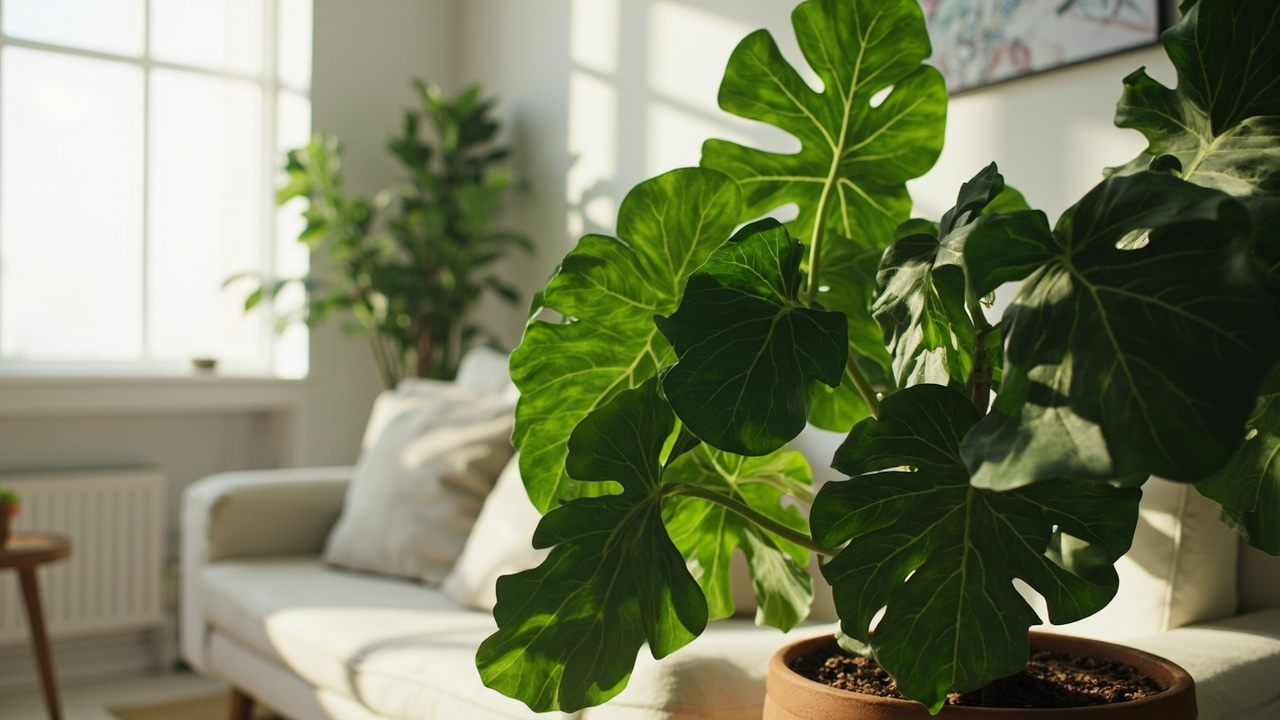
Finding the right spot matters more than adding gadgets. The ideal location for a fiddle leaf fig is a bright room with consistent temperatures between 65-80°F / 18-27°C, away from any HVAC vents, exterior doors, or drafty windows. A living room with a consistent temperature, a few feet from a south or east-facing window (but not touching the glass), is typically the ideal environment.
If you must place your fiddle leaf fig near a window, use a thermometer to verify the actual temperature at leaf level before assuming the thermostat reading is accurate. A handheld digital thermometer with a probe lets you check the temperature exactly where the plant lives.
Seasonal adjustments: in winter, when heating systems are running, the air nearest the floor can be significantly colder than at head height. If your fiddle leaf fig is on the floor, it’s probably experiencing a different temperature than the same plant on a shelf. This matters — floor-level placements in heated rooms in winter are one of the most commonly overlooked sources of temperature stress.