Blackcurrant care comes down to three things: cool roots, consistent moisture, and annual pruning. Get these right and a single bush will produce 4 to 5 kilograms (10 to 12 pounds) of fruit every year for well over a decade. Blackcurrants are easier to grow than blueberries in most climates — they tolerate heavier soil, need less acidity, and handle partial shade that would starve a blueberry bush.
Blackcurrants are having a 2026 resurgence. New varieties bred for fresh eating — like ‘Ben Tirran’, ‘Big Ben’, and ‘Ben Sarek’ — are sweet enough to eat straight from the bush without sugar. The Royal Horticultural Society named them as a top trend for 2026, and for good reason: they are hardy, productive, and packed with vitamin C (four times more than oranges by weight).
This guide covers the full home growing foundation. For specific topics, the linked guides go deeper on planting, pruning, problems, and harvest.
Light and Position: Cool Roots, Not Full Sun
Unlike most fruit bushes, blackcurrants do not need full sun. They produce well in partial shade — 4 to 6 hours of direct light is sufficient. In hot climates, afternoon shade actually improves fruit quality by reducing heat stress on the developing berries.
The key requirement is cool roots. Blackcurrants originate from northern European forests where the root zone stays cool under leaf litter and shade. In the garden, replicate this by mulching heavily (3 to 4 inches of compost, bark chips, or straw) around the base of the bush. The mulch keeps soil temperature down, retains moisture, and feeds the soil biology.
Plant in a north-facing spot if you are in a warm climate, or under the light shade of a deciduous tree. Avoid south-facing walls or hot, exposed positions. The planting guide covers spacing, soil preparation, and the best time to plant bare-rooted bushes.
Soil and Watering: Moist but Never Waterlogged
Blackcurrants need rich, moisture-retentive soil that drains well. They tolerate heavier soil than blueberries but will not survive in waterlogged ground. The ideal is a deep, fertile loam with plenty of organic matter worked in before planting.
Soil pH should be between 6.0 and 7.0. This is less demanding than blueberries, which need acidic soil below 5.5. If your soil is already suitable for vegetables, it is almost certainly suitable for blackcurrants. Work in a bucketful of compost per planting hole at planting time.
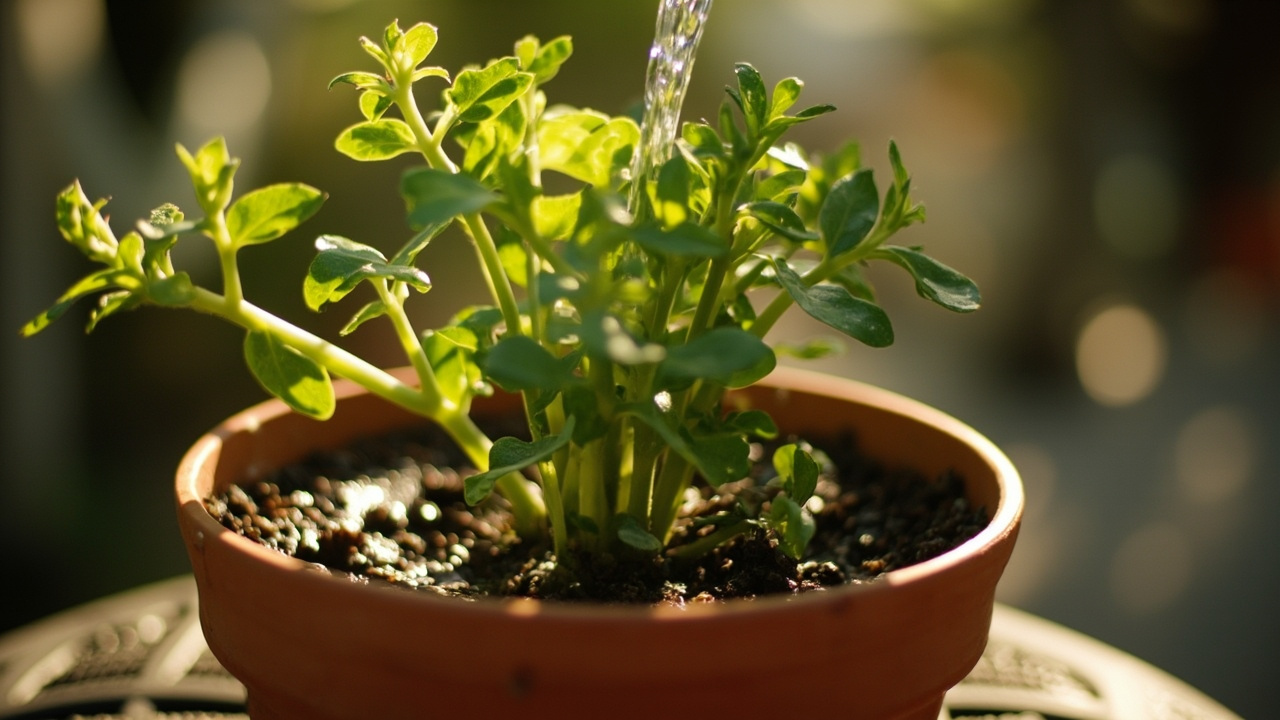
Water regularly during fruit development (late spring through summer). The soil should feel like a wrung-out sponge — moist but not dripping. In dry spells, a deep soak once a week is better than light daily watering. Stop watering once the fruit is ripe and picked.
For comparison, the blueberry growing guide covers a similar plant with different soil needs — blueberries need acidic soil and more sun, while blackcurrants tolerate a wider range of conditions.
Feeding: Nitrogen in Spring, Potash After Fruiting
Feed blackcurrants twice a year. In early March, apply a high-nitrogen fertilizer (fish, blood and bone, or pelleted chicken manure) around the base of the bush. This drives the new cane growth that will carry next year’s fruit. A handful per bush is sufficient — do not over-feed, as excessive nitrogen produces soft growth that is vulnerable to mildew.
After harvest in July or August, apply a potash-rich feed (sulphate of potash or tomato feed). This helps the new wood ripen and set fruit buds for the following season. Do not feed after late August — late feeding pushes soft growth that will not survive winter.
An annual mulch of well-rotted compost in spring provides slow-release nutrients and reduces the need for synthetic fertilizer. Over a decade of growing, a well-mulched bush needs very little additional feeding beyond the annual spring nitrogen top-up.
Pruning: The Key to Heavy Crops
Blackcurrant fruit is borne on one-year-old and two-year-old wood. Three-year-old and older wood produces less fruit and should be removed. The goal of pruning is to maintain a steady supply of young, productive canes while clearing out the old.
Prune in late winter or early spring while the bush is dormant. Remove any cane that is more than three years old — you can identify old wood by its darker bark and thicker diameter. Cut it to the base. Aim to leave 8 to 12 strong canes of varying ages: a mix of one-year-old, two-year-old, and a few three-year-old canes.
Also remove any weak, damaged, or inward-growing canes. The bush should be open in the center, allowing air circulation and light penetration. Good airflow reduces the risk of fungal disease, which is the main threat to blackcurrant production.
The pruning guide covers the technique in detail with step-by-step instructions for newly planted and established bushes.
Common Problems and Where to Get Help
Three issues account for most blackcurrant problems. Big bud mite is the most common — affected buds become swollen and rounded in late summer instead of staying pointed. Pick off and destroy affected buds. In severe cases, the mite also transmits reversion virus, which causes distorted leaves and reduced fruiting. Reversion-affected bushes should be removed entirely.
American gooseberry mildew appears as a white powdery coating on young leaves and shoot tips in late spring. It is worse in dry conditions with poor air circulation. Prune to open the center of the bush, water at the base (not overhead), and remove affected shoot tips. Resistant varieties like ‘Ben Sarek’ and ‘Ben Tirran’ are rarely affected.
Currant clearwing moth larvae bore into the center of canes, causing wilting and dieback. Cut back affected canes to below the damage and destroy the prunings. The problems guide covers identification and treatment in detail.
Blackcurrants are among the most reliable home fruit crops. Plant two or three bushes, give them cool roots and rich soil, prune annually, and you will be picking buckets of dark, vitamin-rich berries every summer for years to come. The harvest guide covers when and how to pick at peak ripeness.
From PDF to Excel in one click
Forget retyping line by line. Upload any bank statement, get a spreadsheet you can actually use. Your files are never stored, and you can test the converter with 3 free conversions.