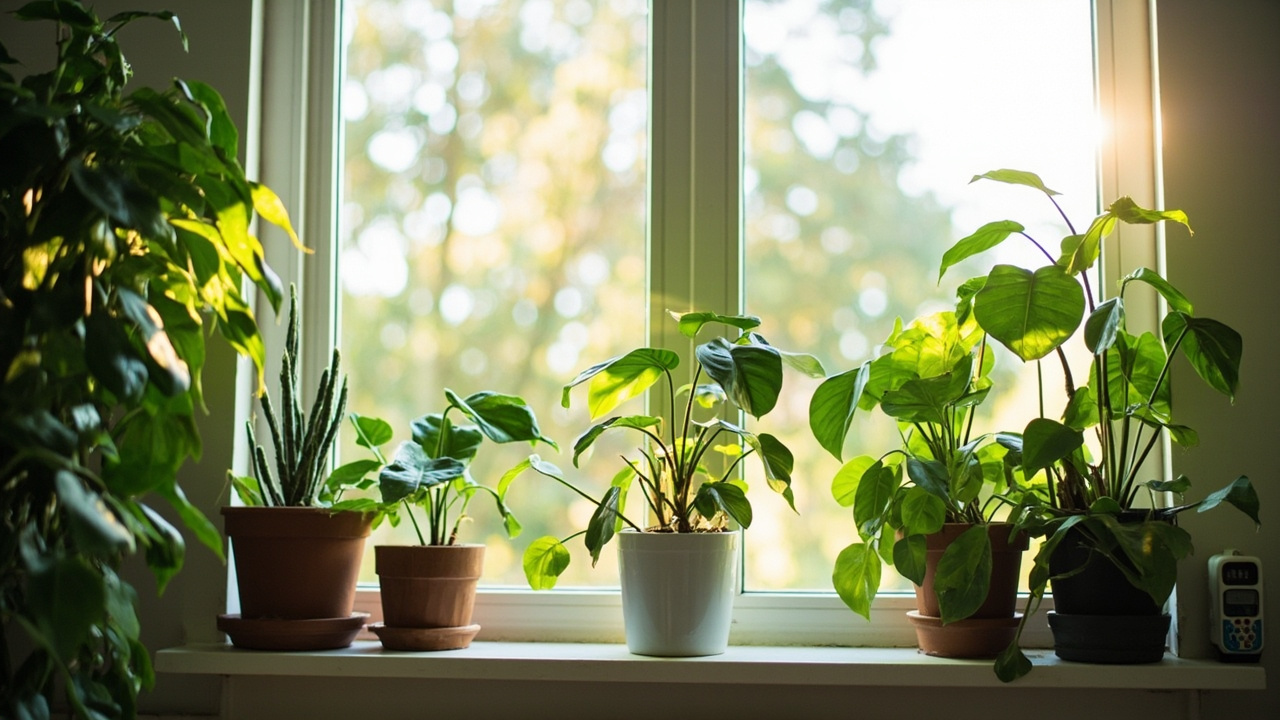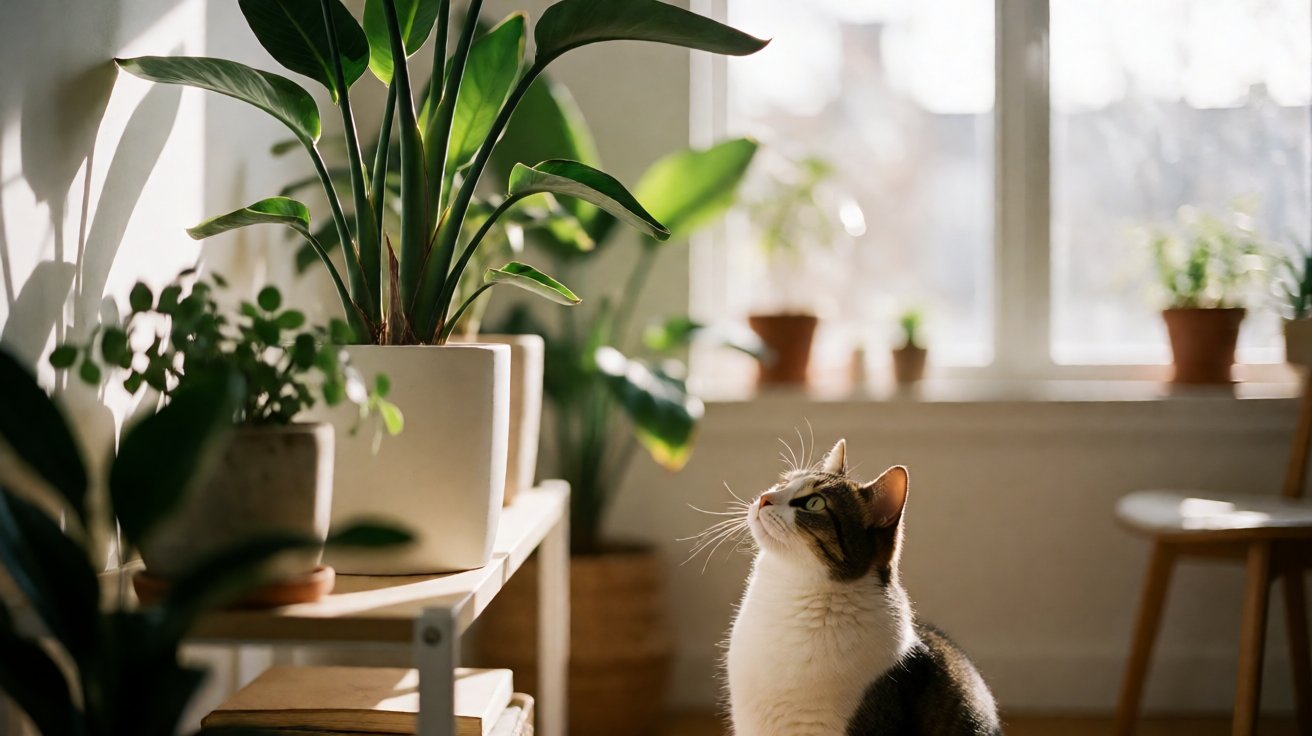

Bird of Paradise toxic to cats and dogs is a real and frequently misunderstood issue, and the misunderstanding is not your fault. The same common name covers at least three unrelated plant species, two of which are toxic and one of which is significantly more toxic than the others. Pet owners who search “is bird of paradise toxic” and skim the first result often walk away with information that applies to the wrong plant. This article uses Strelitzia reginae and Strelitzia nicolai as the focus species (the ones sold as indoor houseplants), and calls out the conflation explicitly so you can tell which “bird of paradise” your search results are actually about.
One honest limit up front: this article is informational and grounded in the ASPCA toxic plant database and the North Carolina State University plant database. It is not a substitute for veterinary advice. If you suspect your pet has eaten any part of a Bird of Paradise, call your veterinarian or the ASPCA Animal Poison Control Center at (888) 426-4435 right now. A consultation fee may apply.
Which “Bird of Paradise” Are You Actually Asking About?
The phrase “Bird of Paradise” is a common name that botanists have been fighting over for a century. At least four distinct plants share the name in commercial trade, and only two of them are Strelitzia. The other two belong to the genus Caesalpinia, in the legume family Fabaceae (also called Leguminosae), and they are more toxic than Strelitzia is. If a search result says “Bird of Paradise is extremely toxic” without specifying a botanical name, it may be referring to the Caesalpinia plants, not the houseplant in your living room.
- Strelitzia reginae, the orange-flowered Bird of Paradise, the most common indoor houseplant. Family Strelitziaceae. Native to South Africa. Listed as toxic to dogs, cats, and horses by the ASPCA.
- Strelitzia nicolai, the giant or white Bird of Paradise, also sold as an indoor plant but larger and tree-like. Same family Strelitziaceae. North Carolina State University’s Plants database classifies it as a low-severity poison to humans, dogs, cats, and horses.
- Caesalpinia gilliesii (also sold as Poinciana gilliesii), sometimes called “Bird of Paradise,” “Yellow Bird of Paradise,” or “Desert Bird of Paradise.” Family Leguminosae. This is the species the ASPCA warns about as “more toxic.”
- Caesalpinia pulcherrima. “Pride of Barbados,” “Dwarf Poinciana,” or sometimes “Red Bird of Paradise.” Family Fabaceae. Toxic.
The rest of this article focuses on Strelitzia reginae and Strelitzia nicolai, the two species sold as indoor houseplants. If your plant is a Caesalpinia, the toxicity profile is different and the rest of this guide does not apply.
What the ASPCA Actually Says About Bird of Paradise
The ASPCA maintains the most widely cited toxic-plant database in the United States. Its entry for “Bird of Paradise Flower” lists Strelitzia reginae (with the additional common names Crane Flower and Bird’s Tongue Flower) as toxic to dogs, toxic to cats, and toxic to horses. The toxic principles are gastrointestinal irritants. The clinical signs the ASPCA documents are mild nausea, vomiting, and drowsiness, and they note explicitly that the symptoms are caused mainly by the fruit and seeds.
The ASPCA entry also contains a direct warning that matters for readers: “Should not be confused with Caesalpinia or Poinciana gilliesii, which is also known as Bird of Paradise and is more toxic.” That sentence is the single most useful thing the database says, because it tells you that the simple “Bird of Paradise is toxic” answer is incomplete if you have not identified the species.
The ASPCA does not maintain a separate entry for Strelitzia nicolai. The genus-level reasoning and the NC State extension record both put S. nicolai in the same toxicity tier: low severity, same GI-irritant mechanism, same first-line clinical signs. If you keep a giant white Bird of Paradise indoors and your dog chews the leaf, treat it the same way you would treat S. reginae exposure.
The Mechanism: Why Strelitzia Upsets a Cat or Dog’s Stomach
The toxic load in Strelitzia comes from tannins and other gastrointestinal-irritant compounds concentrated in the seed coat and the aril (the bright orange fleshy part that splits open to expose the black seeds after a flower is pollinated). The leaves and stems contain smaller amounts of the same compounds. When a pet chews any part of the plant, the tannins irritate the lining of the mouth, esophagus, and stomach. The animal’s body responds by trying to expel the irritant, which is what produces the vomiting and nausea that the ASPCA lists as the clinical signs. Drowsiness is secondary and usually follows the GI distress.
Two practical points follow from this mechanism. First, the fruit and the seeds are the highest-risk parts of the plant, not the leaves. A cat that brushes past a Bird of Paradise is not at risk; a dog that eats a fallen seed pod is. Second, the symptoms are dose-dependent. A small amount of leaf material may produce no visible signs at all; a chewed seed pod or several bites of fruit will reliably produce mild GI upset in a cat or a small dog. No reliable threshold has been published, and the conservative approach is to treat any ingestion as worth a phone call to your vet.
NC State University’s database entry on Strelitzia nicolai also notes that the plant sap can cause contact dermatitis in sensitive individuals, including humans who handle cuttings without gloves. That same sap irritation can affect the lips and mouth tissues of a pet that chews the plant, which is one reason drooling sometimes shows up alongside the vomiting.
What To Do If Your Pet Ate Bird of Paradise
The first hour is the one that matters. Calm, sequenced action beats frantic googling. Here is the protocol that lines up with what the ASPCA Poison Control hotline and most small-animal emergency clinics recommend.
- Move the plant out of reach. Take the chewed-on part away, gently remove any visible plant material from your pet’s mouth, and put the plant in another room. Do not pull plant material out of the throat.
- Do not induce vomiting unless a vet specifically tells you to. For tannin-based GI irritants, vomiting is usually the body’s own response and does not need help. Hydrogen peroxide or salt can burn the esophagus on the way back up and make the situation worse.
- Call your veterinarian or the ASPCA Animal Poison Control Center at (888) 426-4435. The hotline is staffed 24 hours a day and can advise on whether your pet needs to be seen immediately or can be monitored at home. A consultation fee may apply.
- Tell the vet or the hotline the botanical name. “Strelitzia reginae” or “Strelitzia nicolai”, not just “bird of paradise.” The hotline operator may need to distinguish it from Caesalpinia species.
- Estimate how much was eaten and when. A few bites of leaf and a chewed seed pod are different situations. Watch the clock; symptoms usually show within two hours.
- Bring a sample of the plant or a photo. A leaf or a clear photo of the flower and the seed pod lets the clinic confirm what was eaten.
Watch for drooling, repeated swallowing, lip-licking, vomiting, loss of appetite, and unusual lethargy over the next two to six hours. If any of these signs develop or worsen, transport the animal to the clinic even if you already spoke to the hotline. For horses, the same protocol applies; equine veterinarians are accustomed to calls about garden plants.
Common Mistakes Pet Owners Make with Bird of Paradise
A handful of repeated patterns show up in pet-toxin calls about Bird of Paradise. Knowing them in advance gets you past them faster.
- Assuming the plant is safe because it is sold as a houseplant. It is not. The ASPCA entry has been stable for years, and the plant is sold in every garden center in the country. Retail availability is not a safety signal for pets.
- Confusing the Strelitzia species with the Caesalpinia species. A 30-foot landscape shrub called Bird of Paradise, with feathery leaves and yellow flowers, is a different plant and a more toxic one. Identify by botanical name before acting on any source.
- Waiting for symptoms before calling. The hotline exists for the early call, when the pet seems fine. By the time vomiting starts, you have lost useful triage time. Call as soon as you see the chew marks.
- Inducing vomiting with hydrogen peroxide. This is a frequent home remedy. For Bird of Paradise specifically, the toxin is a GI irritant and the body is already trying to clear it; peroxide adds esophageal injury without speeding recovery.
- Putting the Bird of Paradise on a high shelf and calling it done. Cats reach high shelves. The plant needs to be in a room the pet cannot enter at all, ideally with the door closed, or replaced with a non-toxic alternative if the household has a persistent chewer.
If the household has a cat or dog that chews plants regardless of placement, the honest move is to swap the Bird of Paradise for a non-toxic alternative. Calathea orbifolia (rattlesnake plant) gives a similar big-leaf tropical look and is non-toxic to cats and dogs per the ASPCA; the parlor palm (Chamaedorea elegans) gives the indoor-tropical canopy and is also ASPCA non-toxic. Both want the same bright indirect light as a Bird of Paradise.
What to Expect Once the Plant and the Pet Are Separated
For the indoor growing setup behind a Bird of Paradise that lives in a pet-free room, our bird of paradise indoor care guide covers the light, water, humidity, and seasonal rhythm that keep the plant healthy. If your pet has chewed the plant and you are now troubleshooting drooling or vomiting, the common Bird of Paradise problems guide has a recovery checklist, and our save a dying Bird of Paradise recovery guide covers the long-term rehab timeline if your plant, not your pet, took the hit.
If the pet ate only a small amount of leaf, the outcome is usually self-limiting GI upset that resolves within 24 hours with rest and a bland diet. If the pet ate fruit or seeds, the recovery timeline stretches to 48 hours and may require subcutaneous fluids and anti-nausea medication from the vet. Fatalities from Strelitzia ingestion are rare and usually involve large amounts of seed material combined with an underlying health condition; the ASPCA classifies the toxic effect as mild, not life-threatening, for typical exposures in healthy adult animals.
If you do the four things that matter, move the plant, do not induce vomiting, call the hotline with the botanical name, and watch for symptoms over the next six hours, the pet is almost certainly going to be fine. The role of this article is to make the call easier and faster, not to replace the call. Keep the ASPCA Animal Poison Control number (888-426-4435 saved in your phone, and keep a leaf or a photo of the plant accessible before you need it.
For the indoor growing setup behind a Bird of Paradise that lives in a pet-free room, our bird of paradise indoor care guide covers the light, water, humidity, and seasonal rhythm that keep the plant healthy, and our Strelitzia reginae vs Nicolai comparison helps you pick the right species if you are buying. If you are choosing between keeping the plant and bringing a new pet home, the safer order is plant first, pet later, and keep the door closed.
From Bank Statement to QuickBooks-Ready File
That manual cleanup you just read about? This tool skips it. Turn your PDF into QBO for QuickBooks without storing your data anywhere.
Start Converting