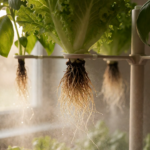

A strawberry runner is a horizontal stem that grows out from a mother plant and drops a baby plantlet at every node, and it is the single most common decision point that beginner and intermediate strawberry growers get wrong. The runner is not a weed, and it is not automatically free plants either. It is a question about what you want from the bed, and the answer changes with the goal you set.
The short version is this. If your goal this year is the largest possible harvest from the bed you already have, cut the runners as close to the mother crown as you can, early and often. If your goal is to multiply the bed for next year, keep two or three of the strongest runners per mother, pin them into small pots of potting mix, and sever them once rooted. If your goal is to replace an aging mother plant, keep one runner rooted in place and plan to remove the declining mother next spring. Everything else on this page explains which branch to take in your specific situation, and which details matter more than they look.
Why strawberry plants send out runners (and what they cost the mother plant)
A strawberry runner is the plant’s asexual escape route, also called a stolon. The stolon grows out from the mother plant, the nodes along the stolon root wherever they touch soil, and the plantlet at the tip of the stolon becomes the next generation. From the plant’s point of view this is the cheapest way to reproduce. From the gardener’s point of view, every runner is energy the mother plant did not spend on flowers and fruit.
On a first-year June-bearing plant, leaving the runners on can cut fall fruit production noticeably because every runner you keep is energy the mother did not put into flower buds. Runners also cost the mother in airflow. A mother plant that is surrounded by rooted daughter plants stays wet longer after rain or watering, and wet leaves plus still air is the recipe for gray mold (Botrytis cinerea) on the fruit. So the runner decision is really a trade-off. New plants next year, or more fruit and less disease pressure this year.

The three goals a runner can serve
The reason most “should I cut strawberry runners” answers feel wrong is that they assume one goal. There are really three, and they push in opposite directions. Before you reach for the pruners, pick which of these three you actually want this season.
- Maximize fruit this season. Cut most runners early so the mother plant pours energy into flowers and ripening berries. This is the right call for a healthy June-bearing bed in years two and three, and the call that produces the largest harvests in home garden trials.
- Propagate new plants for next year. Pin a few runners down into small pots while they are still attached to the mother. Once rooted, snip the stolon and you have a free, already-established daughter plant that will transplant cleanly because the root system never had to re-establish from scratch.
- Replace an aging mother plant. Keep one or two of the strongest runners and let them root in place next to the mother. Next year you remove the declining mother and promote the daughter, which is faster and cheaper than buying new bare-root stock.
Which variety you are growing changes the volume of runners you will see. June-bearing types send out many. Everbearing and day-neutral types send out fewer, and the few runners they do send out are usually worth keeping because the total count is low. If you do not yet know what you are growing, the strawberry varieties guide covers the runner-volume differences in plain terms, and that one fact alone will keep you from making the runner decision with the wrong frame.
Decision rule by plant age and growing system
The decision rule splits cleanly across three situations, and once you place yourself in one of them, the answer for each runner is mechanical.
- First-year June-bearing plants in an in-ground bed. Remove all runners the first season. The mother is establishing roots and crown, and pulling energy into runners on top of that is what produces a small first-year harvest. Most extension guides converge on this rule because it is the single change with the largest year-one yield gain.
- Established bed (year 2 and beyond). Keep two to three of the strongest runners per mother to fill gaps between plants, and remove the rest. The strawberry pruning guide has the full renewal-pruning sequence if you want to renovate the whole bed at the end of the season, and removing surplus runners is part of that sequence.
- Container, hanging basket, or limited space. Remove all runners. A daughter plant rooted in a small pot drains the mother and the pot at the same time, and the harvest drop is severe because both plants are now nutrient and water limited. If your bed is crowded year after year, the fix is usually spacing and bed layout rather than more daughter plants. The strawberry soil requirements page covers the bed-prep step that prevents the crowding in the first place, and reading it once will save you from treating symptoms (excess runners) instead of causes (too-close spacing).
How to remove a runner cleanly (and when not to)
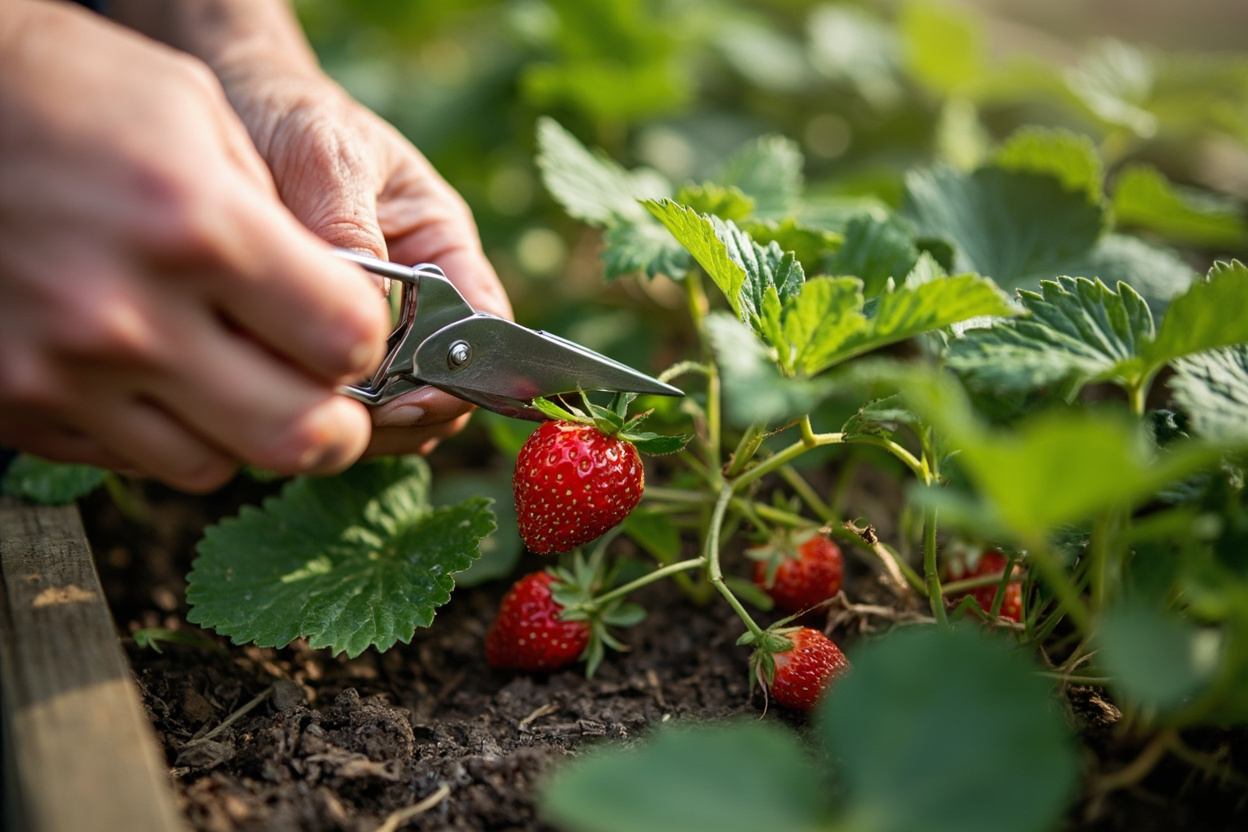
Cut the stolon at its base, as close to the mother plant’s crown as you can, with clean pruners or scissors. Do not tear it. Tearing leaves a ragged wound that does not heal cleanly, and on a wet spring that wound is one of the easier entry points for crown rot. The same cut point is the one to use when you are harvesting a daughter plant you have already rooted, so this is a transferable technique. See the strawberry runner propagation page for the full pin-down method if your goal is the propagation branch instead.
Do not remove runners in the heat of midday in summer. Cut them in the cool of the morning so the mother plant is not losing water through a fresh wound in peak transpiration, and so the wound has the rest of the day to dry before night humidity returns. The old leaves at the base of the mother will hide where the runner attaches, so push them aside and locate the crown before you cut. The runner comes off at the crown-side junction, not in the middle of the stolon, and that one detail is the difference between a clean removal and a stub that dies back into the crown.
If the runner has already rooted a daughter plant in the soil and you do not want that daughter, cut the stolon at both ends, lift the daughter with a hand fork, and either pot it up or compost it. Do not leave a rooted daughter in the bed if you are running the max-fruit branch, even if it looks small. By August it will be the size of the mother, and by next spring it will be the size of the mother and competing for the same row.
When keeping a runner IS the right call
Most strawberry articles treat runner keeping as the rule for the lazy gardener, but there are four specific situations where keeping a runner is genuinely the right call, not the lazy one.
- The mother plant is in year 3 or older. Older crowns decline in fruit production because the crown has used up its productive lifespan. A new daughter rooted beside the mother is a planned succession, and it costs less than buying new bare-root stock the next spring.
- The bed has gaps from winter kill. A rooted daughter filling a gap is faster than buying new bare-root stock and replanting, and it is also better adapted to your soil than a mail-order plant will be in its first season.
- You want free plants for a new bed. Pin two or three runners into 4-inch pots while still attached, sever them once rooted, and you have already-established plants for fall planting. This is the cheapest way to start a second bed, and the only way to multiply a variety you like without going back to the nursery.
- The variety you are growing rarely produces runners (some day-neutral and alpine types, including many Fragaria vesca cultivars). When a runner does appear on a low-runner variety, it is worth keeping because you may not get another one that season.
In every other situation, including a first-year bed, a healthy year-2 plant, a container or hanging basket, or a reader who just wants the most berries this summer, the runner is costing you more than it is giving you. The economic break-even for keeping a runner, when measured against the forgone berries on the mother, runs about two seasons out. That is why the four situations above are the right calls, and the rest are not.
A one-line rule you can apply today
Pick the goal, then act. Each branch below is the entire decision for one of the three goals from earlier in the page, and you can apply it the next time you walk past the bed.
- Goal: max berries this season. Cut all runners as close to the mother crown as you can, early and often. Do this throughout the growing season, not just at one cleanup pass.
- Goal: propagate for next year. Keep two to three of the strongest runners per mother, pin them into small pots of sterile potting mix, sever once rooted, and overwinter the daughters in a protected spot.
- Goal: replace an aging mother. Keep one runner rooted in place beside the mother and remove the mother next spring, just as the daughter breaks dormancy.
That is the whole decision. The runner is not a weed. It is a question about what you want from the bed, and once you answer that, the answer for each runner on each plant is mechanical. For everything else strawberry (variety selection, pruning, planting depth, the diagnostic chapters on yellow leaves and curling leaves), the complete strawberry care guide is the pillar anchor.
From PDF to Excel in one click
Forget retyping line by line. Upload any bank statement, get a spreadsheet you can actually use. Your files are never stored, and you can test the converter with 3 free conversions.