The strawberry you grow matters more than almost any other decision you make. Plant a variety that is wrong for your space or climate, and you will spend the season fighting low yields, poor fruit, and disease. Plant the right one, and strawberries are among the lowest-effort, highest-reward crops a home gardener can grow.
Every strawberry variety falls into one of three fruiting categories: June-bearing, everbearing, and day-neutral. The category determines your harvest pattern, which varieties work in containers, and how much runner management you will need. This guide breaks down each category, compares specific named varieties, and identifies the best picks for container growing.
For container-specific recommendations, use the table in Section 4 to compare varieties side by side. For a full explanation of how light and soil affect fruit production, see our strawberry care guide.
June-Bearing Strawberries: One Big Harvest Each Summer
June-bearing varieties initiate flower buds during short days in autumn and produce one concentrated harvest over 2–4 weeks in early summer. They produce the highest yield per plant during that window — often 1–2 pounds of fruit — but once the flush ends, no more flowers appear until the following year.
The trade-off is clear: June-bearers give you the most fruit on the fewest days, making them ideal for preserving, freezing, and jam-making. They also produce the most runners of the three types, which means more propagation material if you want to expand your patch. On the downside, a late spring frost during flowering can destroy an entire year’s crop because the plant produces only one round of buds.
Because June-bearers need a cold dormancy period to fruit reliably, they perform poorly in regions with mild winters or in warm indoor containers. For a home grower without a true winter season, choose a different type.
Everbearing Strawberries: Two to Three Harvests Per Season
Everbearing varieties produce two to three distinct flushes across the growing season — typically in late spring, midsummer, and early fall. Each flush yields less than a June-bearing peak, but the extended harvest window gives you fresh berries across several months without preserving.
Unlike June-bearers, everbearers are less dependent on day length for flower initiation, which makes them more adaptable to varying light conditions and indoor growing. They produce fewer runners than June-bearers, putting more energy into fruiting. The trade-off is total seasonal yield is lower than a June-bearing peak, and individual berries tend to be slightly smaller unless the plant receives consistent water and potassium during each flush.
Everbearers work well for gardeners who prefer a handful of fresh berries daily throughout the summer rather than a single overwhelming harvest. They are also a reasonable second choice for container growing when day-neutral varieties are unavailable.
Day-Neutral Strawberries: Continuous Fruiting from Spring to Frost
Day-neutral varieties fruit continuously from late spring through first frost, regardless of day length. Individual berries tend to be slightly smaller than June-bearing types, but the cumulative yield over a season is the highest of the three categories because the plant flowers and sets fruit constantly during favorable conditions.
The mechanism is day-neutral varieties do not require a specific photoperiod to initiate buds — they flower when temperatures are between 35–85°F (2–29°C) regardless of hours of daylight. This makes them the most flexible type for containers and indoor growing where light duration is controlled or inconsistent.
Day-neutral varieties produce moderate runners — fewer than June-bearers but more than everbearers. This constant energy split between fruiting and runner production means runner management is still needed if you want maximum berry size. For propagation guidance, see our guide to strawberry runner propagation.

Top Variety Picks Compared
The table below compares the most widely available strawberry varieties for home growing, based on university extension trials and multi-season performance data. Disease resistance ratings are relative within each category and reflect performance in the Northeast and Midwest US — resistance may vary in warmer southern climates.
| Variety | Type | Best For | Flavor | Disease Resistance | Container |
|---|---|---|---|---|---|
| ‘Earliglow’ | June-bearing | Fresh eating, preserving | Sweet, classic | Good | Poor (needs ground) |
| ‘Jewel’ | June-bearing | Fresh eating, freezing | Sweet, balanced | Very good | Good |
| ‘Honeoye’ | June-bearing | Jam, preserving | Tart-sweet | Very good | Fair |
| ‘Ozark Beauty’ | Everbearing | Multiple harvests | Sweet | Good | Very good |
| ‘Fort Laramie’ | Everbearing | Cold climates | Sweet | Good | Very good |
| ‘Albion’ | Day-neutral | Continuous harvest | Sweet, firm | Very good | Excellent |
| ‘Seascape’ | Day-neutral | Beginners, containers | Sweet, mild | Very good | Excellent |
| ‘Cabrillo’ | Day-neutral | Heavy yields | Very sweet | Excellent | Excellent |
| ‘Eversweet’ | Day-neutral | Hot climates | Sweet | Very good | Excellent |
‘Seascape’ is the most popular day-neutral variety for containers and beginners because it tolerates a wide range of soil conditions while producing consistently sweet fruit. ‘Albion’ is the commercial favorite but performs equally well in home gardens. ‘Cabrillo’ offers the highest disease resistance in the day-neutral category, making it the best choice for humid climates where strawberry leaf problems are a recurring concern. For June-bearers, ‘Jewel’ remains the most reliable all-purpose variety, and ‘Honeoye’ is the best early-ripening pick in cold climates.
Best Strawberry Varieties for Containers
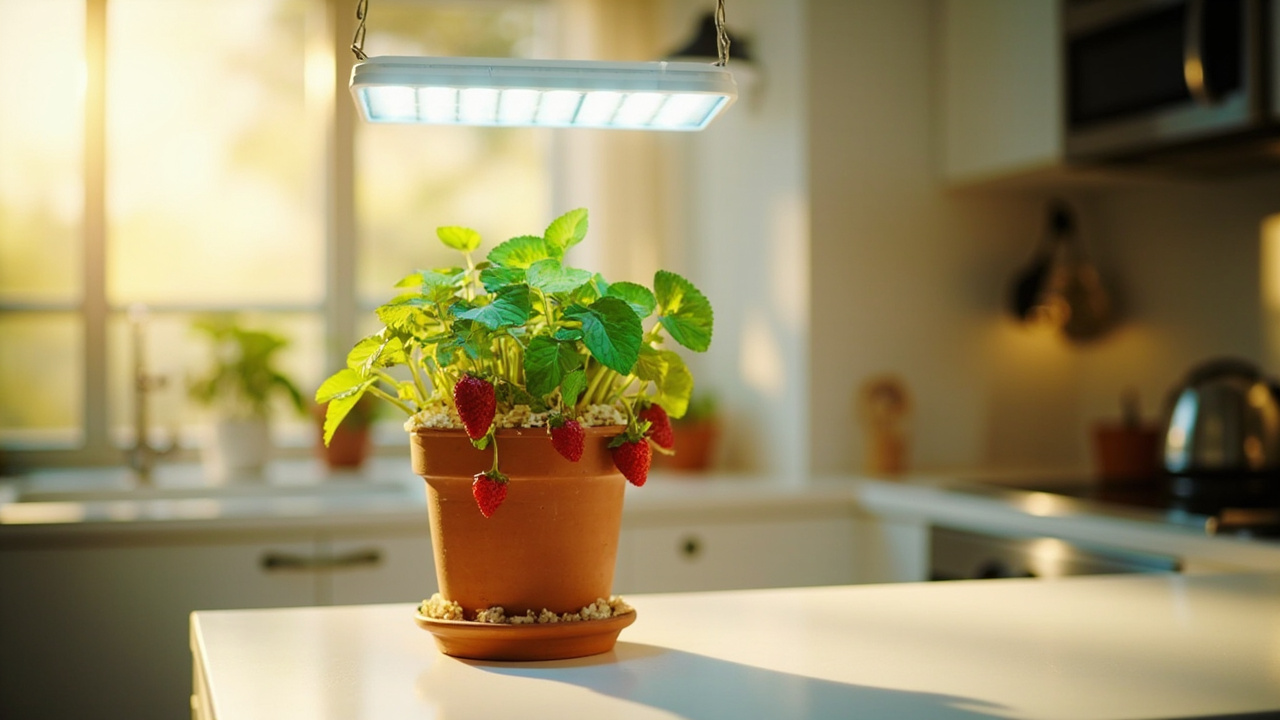
When growing strawberries in containers, choose varieties with three traits: compact runner production, strong disease resistance in humid microclimates, and tolerance for the shallow root zone of pots. Day-neutral and everbearing types dominate the recommendations because they adapt better to the constrained root zone and do not require deep soil for dormancy signaling.
‘Albion’ is the top container pick for most growers — it produces few runners, fruit continuously, and handles the variable moisture of container soil better than most. ‘Seascape’ is the runner-up recommendation for its mild sweetness and broad adaptability. For hanging baskets specifically, ‘Eversweet’ trails well and tolerates the faster drying cycle of exposed baskets.
Avoid June-bearing varieties in containers unless you are growing in large half-barrels with deep soil. June-bearers need consistent moisture across a larger root zone — something small pots cannot reliably provide.
If you are unsure which type to choose, start with ‘Seascape’ and ‘Ozark Beauty.’ They produce within weeks of planting, forgive beginner mistakes, and establish quickly from bare-root transplants. Once you have grown one season successfully, switch to more specialized varieties based on your preferred harvest pattern.
For step-by-step planting instructions, see our strawberry planting guide. For ongoing watering and light requirements, see our strawberry watering guide and strawberry light requirements pages.