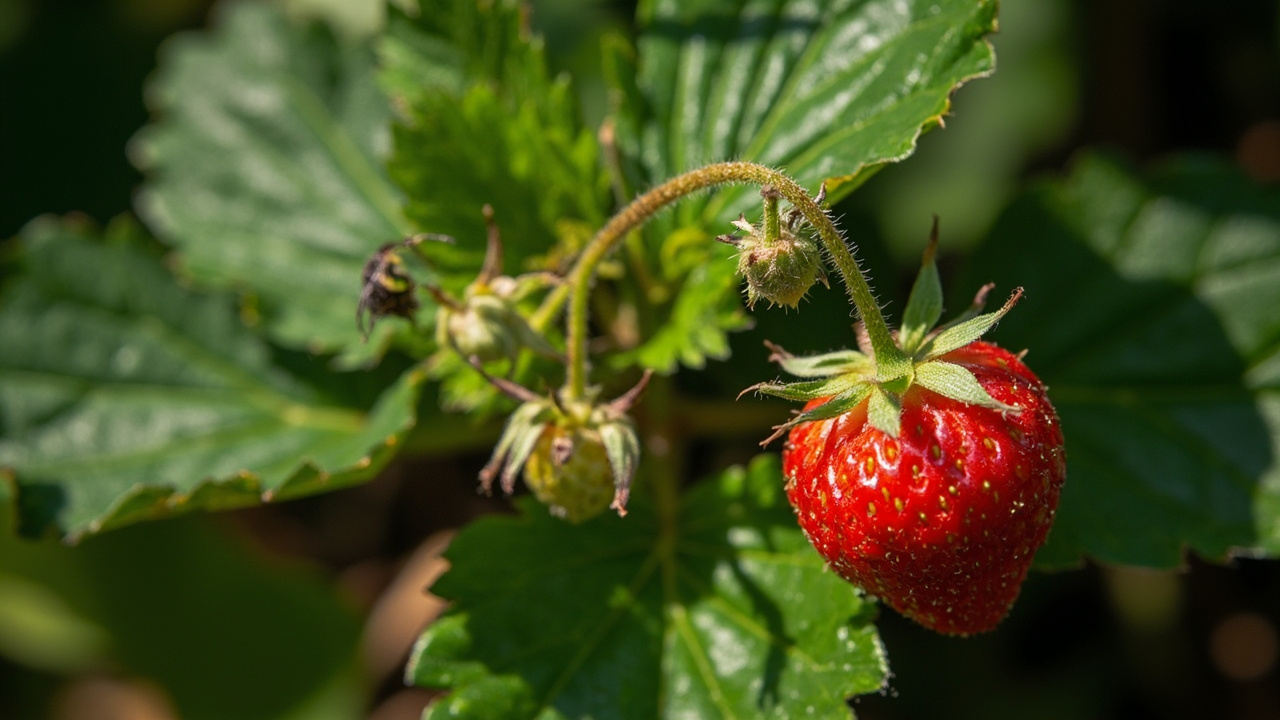
Strawberry runners are the plant’s way of reproducing themselves, long horizontal stems that reach out from the mother plant and produce daughter plants at their tips. For the home grower, this is a steady supply of free new plants. The skill is knowing which runners to select, how to root them so they actually survive, and when to separate them from the mother.
The single most important rule: keep the runner attached to the mother plant while the daughter roots. Cutting it off too early is the number-one reason runner propagation fails. This guide covers both the pot method (recommended) and the ground method, with specific timing and aftercare so your new plants establish successfully.
You will need small 3 to 4 inch pots, fresh potting mix, a sharp knife or scissors, and landscape staples or wire pins (bent paper clips work). The whole process takes 6 to 8 weeks from setup to a fully independent plant.
Choosing the Right Runner: Selection Criteria for Strawberry Propagation
Not all runners are equally worth propagating. Select runners that are first or second generation from the mother plant; these produce higher yields than later generations. The ideal daughter plant has 3 to 5 mature leaves and a visible crown diameter of roughly 2 inches. Cornell Cooperative Extension notes that mature runners root at approximately 90% success rate, while immature runners with only 1 to 2 leaves succeed only about half the time.
Inspect the runner itself. A healthy runner is thick, firm, and green, not thin, pale, or dried out at the tip. Check the daughter plant at the end for any sign of disease: spots on leaves, wilting, or discoloration. Never propagate from a sick daughter plant; you will only transfer the problem to your new planting. If the mother plant shows any leaf problems, consult our strawberry leaf problems guide before taking runners.
Early-season runners, those that appear in late spring, establish fastest because they have the full growing season ahead. Late-season runners that appear in August or September can be rooted but often need overwintering indoors before they fruit reliably the following year. For the earliest fruit, propagate runners from May plantings.
First-generation runners come from the mother plant itself; second-generation runners come from a first-generation daughter that is still attached. By the third generation, vigor drops noticeably: smaller crowns, fewer leaves, slower rooting, and eventually lower yield. If your goal is fruit production rather than just plant numbers, cap propagation at second generation and replace the mother plant every 3 to 4 years with a fresh nursery start. For the variety-level context on which choices perform best in your zone, see our strawberry varieties guide.
Pot Method: Rooting Strawberry Runners in Containers
- Fill a 3 to 4 inch pot with moist but not saturated potting mix. Do not use garden soil, because it compacts and may carry fungal spores.
- Select the runner you have chosen and gently guide the daughter plant into the center of the pot. Keep the runner attached to the mother plant at all times during this step.
- Pin the runner in place using a U-shaped wire staple, landscape pin, or bent paper clip pushed into the soil over the runner stem, not through the daughter plant itself. The daughter plant must sit flat on the soil surface with its crown visible above the mix.
- Position the pot close enough to the mother plant so the runner is not under tension. If the runner bends sharply, move the pot closer.
- Keep the potting mix consistently moist. In warm weather, this means watering every 2 to 3 days. In cooler weather, every 4 to 5 days. Do not let the mix dry out completely; severed daughter plants have no backup root system.
- After 3 to 4 weeks, gently tug the daughter plant. If you feel resistance, roots have formed. Wait another 2 weeks before severing the runner to ensure the root system is well-established.
Do not bury the daughter plant’s crown below the soil surface; keep it at the same level as it was on the runner. Burying the crown causes the same rot you would get from planting a nursery strawberry too deep. For a full overview of mature plant requirements, see our strawberry care guide.
The choice of potting mix matters more than most beginners expect. A soilless mix of peat moss and perlite drains fast enough that the new roots do not sit in water, which is the most common cause of crown rot during the rooting window. Garden soil holds too much moisture and compacts around the developing roots, which restricts their ability to spread. If you only have garden soil available, lighten it with a 1:1 ratio of perlite or coarse sand before using it for a runner pot. For the broader soil-pH and organic-matter context that applies after the daughter plant is moved to its permanent spot, see our strawberry soil requirements guide.
Ground Method: Planting Runners Directly in the Garden
Direct ground rooting requires no pots; the daughter plant roots in its permanent position. The downside is less control over soil moisture and increased risk of pest damage to the establishing roots.
- Choose a spot near the mother plant where the daughter will have room to spread; allow 12 inches minimum from the mother and from any neighboring plants.
- Prepare a small patch of loose, compost-enriched soil 6 inches in diameter where the daughter will sit.
- Pin the runner in place over the prepared soil using a U-shaped staple. Press the daughter plant gently into the surface; do not bury it.
- Water the ground around the daughter plant every 2 to 3 days for the first four weeks. If the soil is heavy clay, consider mounding it slightly to improve drainage around the new plant.
- Check rooting after 4 weeks by very gently tugging the daughter. Wait until you feel firm resistance before severing the runner.
The ground method works best in loamy soil with consistent moisture. In sandy soil that dries out fast, use the pot method instead; consistent moisture during the rooting window is non-negotiable.
Soil pH is the hidden variable in ground rooting. Strawberries establish fastest when the surrounding soil is between 5.5 and 6.5, and when organic matter is already worked into the top 6 inches. If the spot is heavy clay and you cannot mound, a 2-inch layer of compost tilled in below the daughter’s footprint will lift the root zone enough to drain. Avoid fresh manure or fresh wood chips; both will burn the new roots the same way fertilizer burn does. For the planting-window context that determines when in the season this whole process starts, see our strawberry planting guide.
When and How to Sever the Runner
- Confirm the daughter plant is rooted by gently tugging it. Firm resistance means roots are established below the mix.
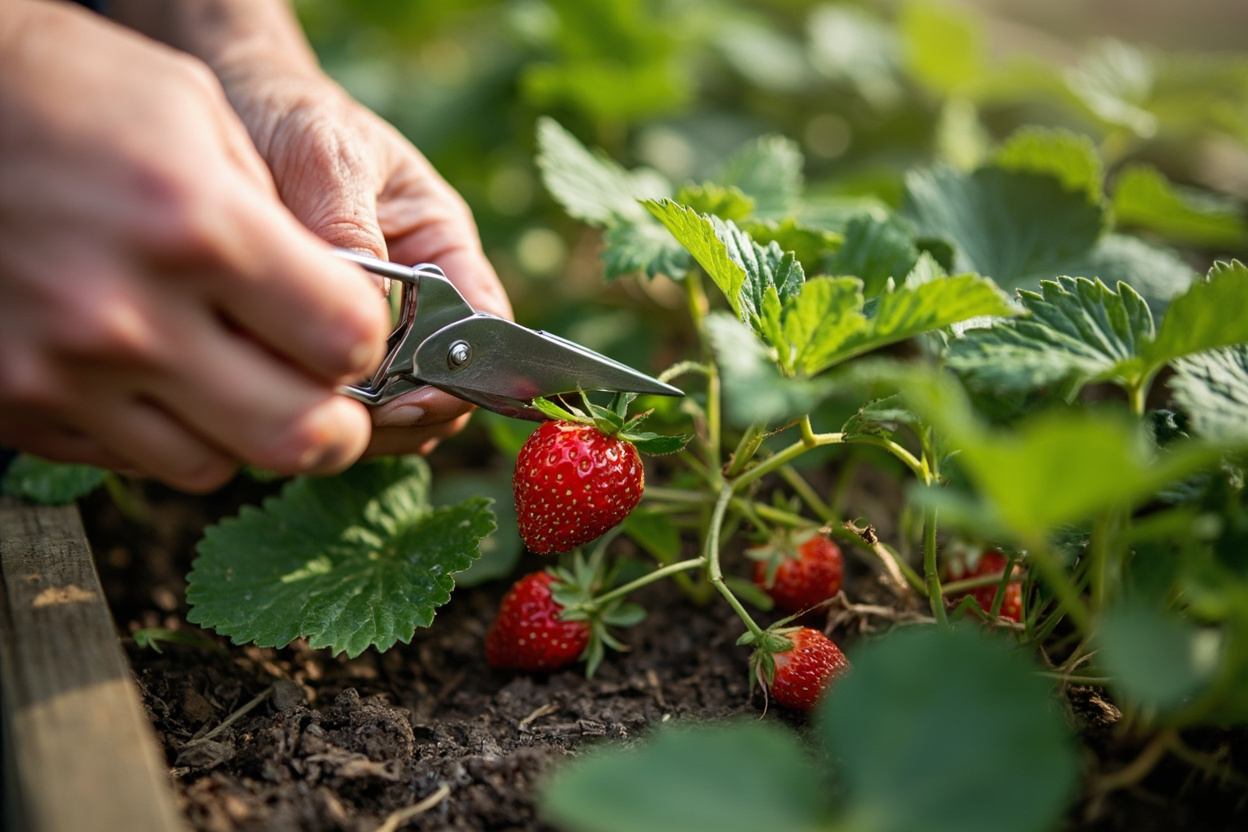
- Cut the runner stem 1 to 2 inches from the daughter plant using a clean, sharp knife or scissors. Do not pull or twist the runner; you can damage the new roots.
- Leave the wire staple in place if it is not damaging the daughter plant. If it is pressing into the stem, remove it carefully.
- Do not fertilize the newly separated daughter plant for 2 to 3 weeks. The tender new roots are sensitive to concentrated nutrients and can burn easily.
- Watch for wilting in the first few days. Some wilting is normal as the plant adjusts. If leaves wilt severely, move the pot to a shadier location for 3 to 4 days, then gradually reintroduce it to its intended light level.
After severing, water the daughter plant lightly every 2 to 3 days for the first two weeks. Gradually reduce frequency as the root system expands into the surrounding soil. Within 4 weeks of separation, the daughter plant should be growing new leaves independently.
The fertilizer-burn risk during the first 2 to 3 weeks is real and worth respecting. The new feeder roots are short and live close to the surface, in direct contact with whatever salts end up in the potting mix. A half-strength balanced fertilizer at week 3 is a safer starting point than full strength at week 2. If the daughter plant’s leaf margins start to brown or scorch, flush the pot thoroughly with plain water and pause feeding for another 10 to 14 days.
Aftercare for Rooted Daughter Plants
Newly rooted strawberry plants need 4 to 6 weeks of steady moisture and indirect light before they are ready for their permanent planting location. If you rooted in pots in a sheltered spot and the plants are 6 to 8 inches wide, they can go into the garden or a larger container.
Harden off outdoor-bound plants by placing them in dappled morning sun for 3 days, then full sun for 3 more days. Sudden exposure to 6+ hours of direct sun causes sunburn on leaves that were previously shaded. Once hardened off, plant at the same depth they were growing in the pot, no deeper.
Do not expect fruit from runner-propagated plants in their first 8 weeks after separation. The plant is establishing roots, not producing flowers. Day-neutral varieties will fruit 10 to 12 weeks after rooting if light and nutrients are sufficient. Everbearing and June-bearing varieties skip fruiting entirely in their first year and produce from the second year onward; this is normal and not a sign of poor health.
Transplant shock shows up most often as a wilted daughter plant in the first 3 to 5 days after being moved to the garden. The leaves droop even when the soil is moist, because the new roots are still adjusting to the native soil’s structure and microbial population. The fix is patience: keep soil moisture steady, hold off on fertilizer, and the plant will right itself within 7 to 10 days. If the wilt continues past two weeks, dig gently and check the root zone; root-bound daughter plants sometimes need a slice through the outer root mass before they will extend into the surrounding soil.
Turn That PDF Into a Spreadsheet in Minutes
You've seen how to do it manually — now let the tool handle the heavy lifting. Upload your bank statement and get Excel, CSV, or QBO in a few clicks.
Try It Free