Something is wrong with your begonia. The leaves are yellowing, or dropping, or there’s a white powder on the foliage, or the whole plant looks leggy and sad. Before you spend time and money on treatments, figure out what’s actually going on — begonia problems have clear causes, and matching the right diagnosis to the right solution means the difference between fixing the issue in weeks and watching it get worse for months.
The good news: most begonia problems fall into four broad categories — water issues (too much or too little), light issues (wrong intensity), humidity issues (too low or inconsistent), and fungal or disease problems. This page helps you work through each one so you land on the right cause. Once you know what’s wrong, the fix is usually straightforward.
A diagnostic habit that pays off: before assuming any specific disease, check the soil. Overwatering and underwatering cause symptoms that overlap with several fungal problems. If you rule out water issues first, most of the remaining diagnostic possibilities narrow considerably.
Begonia Diagnostic Framework: Start Here
When something goes wrong with a begonia, work from the most common causes to the less likely ones. In most indoor situations, the following triage order will lead you to the answer faster than guessing:
- Yellowing leaves: Check soil moisture first. Is it wet? → overwatering. Is it bone dry? → underwatering. Has it been months since you fed? → possible nitrogen deficiency.
- Leaf drop: Is the plant near a cold draft, air conditioning vent, or open window? → temperature shock. Is the soil wet and the stem soft at the base? → root rot. Is the air very dry? → low humidity.
- White powder on leaves: Most likely powdery mildew — caused by still humid air without circulation.
- Leggy, stretched growth: Insufficient light. The plant is reaching toward whatever light source it can find.
- Crispy brown edges: Low humidity (most common) or inconsistent watering. Check the heating situation in the room.
For prevention and the full care framework that keeps most problems from developing in the first place, see the begonia care guide for prevention.
Yellowing Leaves: The #1 Begonia Complaint
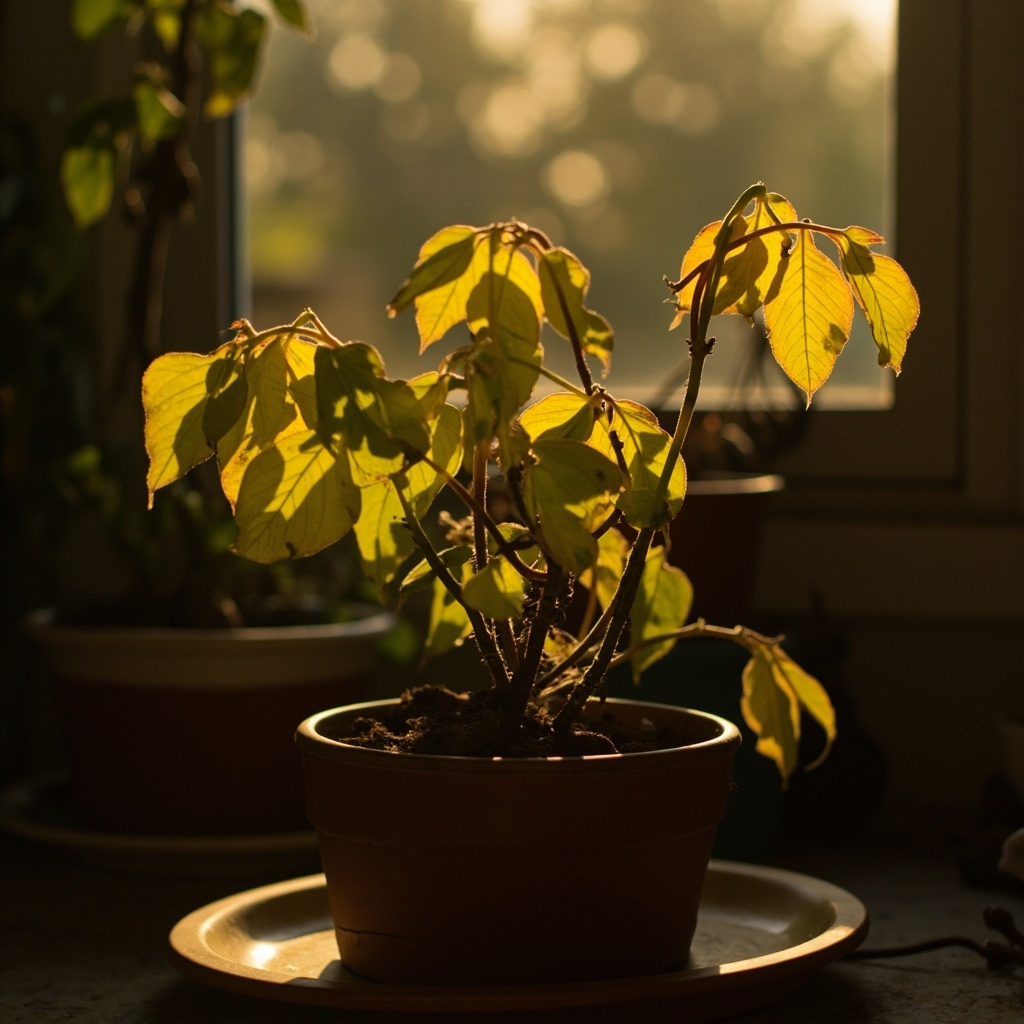
Yellow leaves on begonias almost always trace back to water in one direction or another — either too much or (less commonly) too little. The specific pattern of yellowing gives you the diagnosis.
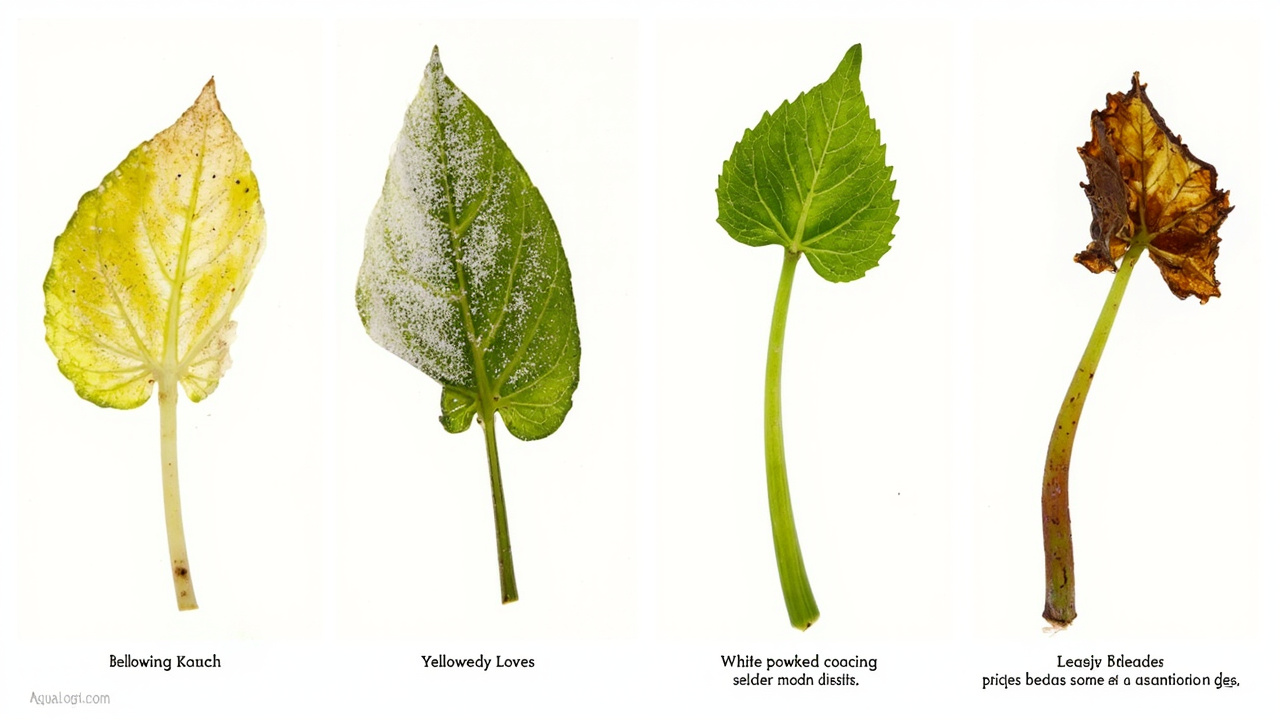
Overwatering: The most common cause. When begonias sit in wet, poorly draining soil for extended periods, the roots begin to rot and lose their ability to uptake water and nutrients. The plant responds with yellowing leaves — often starting with the lower, older leaves first — accompanied by soft stems at the base of the plant. If you tip the plant out of its pot, the roots will look brown and mushy rather than white and firm. The fix: stop watering immediately, let the soil dry out, and if root rot is confirmed, repot into fresh, well-draining soil after trimming the affected roots.
Nitrogen deficiency: Also causes yellowing, but the pattern is different — it starts on the older, lower leaves and the yellowing is more uniform across the leaf blade rather than patchy. The plant also shows slow overall growth. If the soil is dry and the plant hasn’t been fed in months, a balanced fertilizer at half strength is the remedy.
Occasional yellow lower leaf: Completely normal. Begonias shed their oldest leaves as they grow — one or two yellowing lower leaves at a time is not a problem. When yellowing is sudden and affects multiple leaves or the whole plant, it’s a real problem.
For a detailed breakdown of yellowing causes and treatments, see the fixing yellowing begonia leaves guide.
Leaf Drop: When Leaves Fall Suddenly
Acute leaf drop — where leaves fall rapidly rather than aging off one at a time — is a sign of stress. The plant is responding to a sudden change in its conditions, usually environmental.
Temperature shock: The most common trigger. Begonias are sensitive to sudden cold — a window open on a cool evening, the plant being moved from a warm room to a cold hallway, or air conditioning blowing directly on the foliage. Leaf drop from temperature shock usually happens within hours of the cold event and affects multiple leaves at once. If you catch it quickly and move the plant to a stable, warm position, recovery is usually complete within a few weeks.
Root rot from overwatering: If the stem is soft or mushy at the base and the soil is wet, the plant is dropping leaves because its root system is compromised and can’t supply water to the foliage. See the root rot page for the full fix.
Very low humidity: In heated rooms in winter, or in air-conditioned spaces, begonias can drop leaves due to chronic low humidity. The leaves dry out at the margins first, then fall. Raising humidity using a humidity tray or room humidifier prevents further drop.
Note that recovering from root rot takes weeks — the plant won’t look immediately better even with correct treatment. This is normal. The key metric for recovery is: no new leaves falling, and new growth appearing within a few weeks.
If leaves drop immediately after repotting, wait at least two weeks before concluding something is wrong — some leaf drop after repotting is normal adjustment, not a new problem.
Powdery Mildew and Fungal Problems
Powdery mildew is one of the most recognizable begonia problems: a white or grayish powdery coating that starts as small discrete dots and gradually covers entire leaf surfaces, stems, and flower buds. It’s caused by the fungal pathogen Erysiphe, which thrives in conditions of moderate to high humidity (50 to 70 percent) combined with still, stagnant air. The fungus doesn’t need free water on the leaf surface to establish — it’s one of the few foliar diseases that spreads well in dry-air interiors because it grows in the humidity that plants transpiration naturally create in their immediate vicinity.
Treatment: first, improve airflow around the plant — a small fan on low speed in the same room makes a significant difference. Remove all visibly affected leaves and dispose of them (don’t compost). Apply an organic fungicide such as neem oil or a sulfur-based product, following label instructions. Most importantly: fix the airflow. Without improved circulation, powdery mildew returns even after treatment.
Botrytis (gray mold): A gray, fuzzy mold that typically affects flowers and flower stems rather than foliage. It’s a sign of very still, humid conditions and poor air circulation. Remove affected parts immediately and improve airflow.
Bacterial leaf spot: Causes water-soaked brown spots with yellow halos, distinct from the dry crispy patches of sunburn or the powdery coating of mildew. Bacterial leaf spot spreads in wet conditions and requires removal of affected leaves and improved ventilation to prevent spread.
Leggy, Stretched Growth: Not Enough Light
Leggy begonias — elongated stems with widely spaced leaves, smaller leaf size, and often pale or washed-out coloring — are almost always the result of insufficient light. The plant is literally stretching toward whatever light source it can find, diverting energy to stem elongation rather than compact, healthy foliage growth.
The telltale sign is stems that lean noticeably toward a window. Begonias in the center of a room or in north-facing positions without supplementary light will almost always become leggy over time.
The fix is straightforward: move to a brighter position. East or west-facing windows work well. Under fluorescent or grow lights, begonias will maintain compact growth even in rooms without natural windows. Note that existing leggy stems won’t shrink back — the improvement comes from new growth at the corrected light level. Prune back the leggy stems once the plant is in better light and it will branch more densely from the cut points.
The opposite problem — too much direct light — produces bleached, faded leaves and crispy brown scorch patches. Crispy patches on the side of the plant facing the window are the signature sign. Filter south or west-facing windows with a sheer curtain for begonias in those positions.
For more on begonia light requirements including practical window placement guidance, see the begonia light requirements guide.
Crispy Leaf Edges and Low Humidity Problems
Brown, crispy leaf edges on begonias are almost always a humidity problem — specifically, the air is too dry for the plant to maintain healthy leaf tissue. This is particularly common in winter when indoor heating drops relative humidity dramatically, often to 20 to 30 percent in centrally heated homes. Crispy edges develop fastest on the oldest leaves (lowest on the plant) and on leaves closest to heat sources like radiators or heating vents.
The mechanism: begonias lose water through their leaves (transpiration) continuously. When the surrounding air is very dry, the rate of water loss exceeds the plant’s ability to draw water up from the roots. The leaf edges — the thinnest part of the leaf — desiccate first, turning brown and crispy.
Edema: A related condition that produces raised, cork-like bumps on the undersides of leaves. Edema is caused not by low humidity but by inconsistent watering combined with high humidity — the plant takes up water faster than it can transpire, and the excess pressure ruptures individual cells. It shows up as small raised bumps, often on the leaf undersides, and is more common in overwatered plants in humid conditions. Unlike the dry crispy edges of low humidity, edema bumps feel slightly raised and corky rather than dry to the touch.
The fix for crispy edges is straightforward: raise the humidity using a humidity tray, room humidifier, or by grouping plants together. Crispy-edged leaves will not recover — remove them once you’ve corrected the humidity so the plant’s energy goes into new healthy growth rather than trying to maintain damaged tissue.
For more on the watering practices that reduce humidity-related problems, see the begonia watering guide.
Turn PDF Bank Statements Into Workable Spreadsheets
Your bank statement is a mess of numbers, but your books shouldn't be. Use our converter to get Excel, CSV, or QBO files — ready for QuickBooks.
Try It Free Now