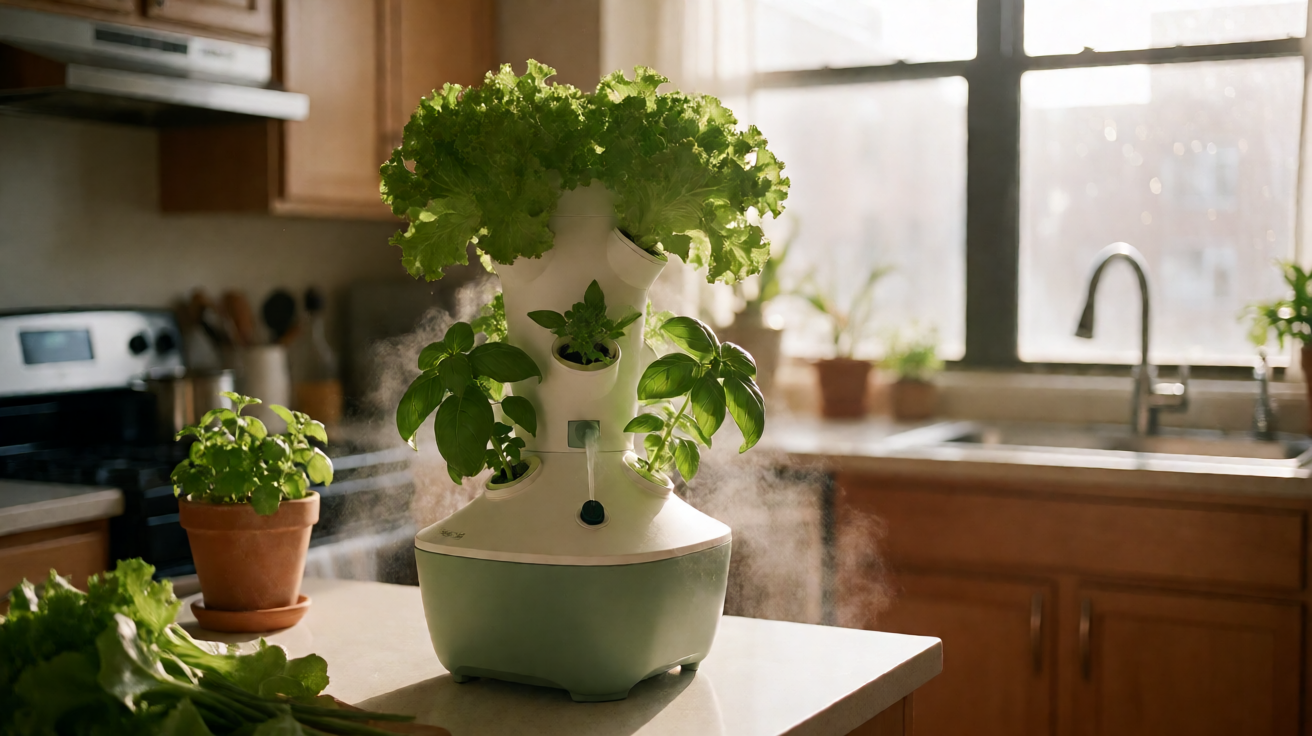
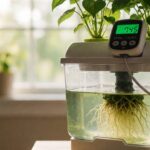
Not every plant belongs in an aeroponic misting system. The setup — roots hanging in air, fed by timed bursts of nutrient fog — is genuinely high-performance for some crops and a real struggle for others, and the difference comes down to root architecture, water demand, and how the plant handles a constant wet-to-dry cycle on its exposed roots. Before you load a tower with seedlings, it is worth knowing which plants are reliable in this environment, which ones work if you accept the trade-offs, and which ones will simply underperform no matter how clean your misters are.
This page covers the plant categories that genuinely thrive in an aeroponic system — leafy greens, culinary herbs, and a select group of fruiting crops — with honest notes on growth rate, yield expectations, and the practical limitations for each. It does not cover system construction, nutrient chemistry, or crop-by-crop growing schedules; the goal is to help you decide what is actually worth putting in the root chamber before you start a cycle.
Why Aeroponics Changes the Plant List
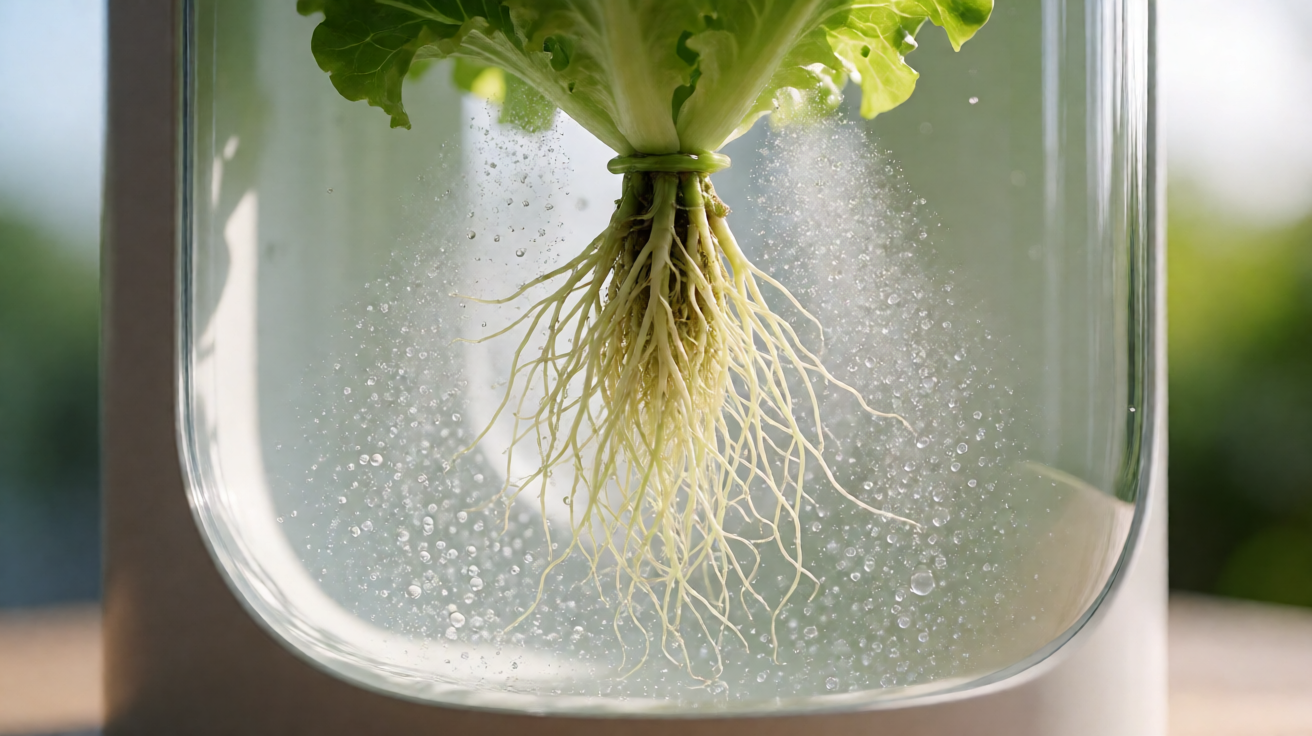
An aeroponic system is not just hydroponics with a different delivery method — the root environment is fundamentally different, and that changes which plants perform well. In a typical hydroponic setup, roots sit in a film of solution, in a bucket of oxygenated water, or in a moist medium. In aeroponics, the roots hang in a dark, enclosed chamber and receive periodic bursts of fine mist. Between mist cycles, the roots are exposed to air.
That air exposure is the entire point. Roots need oxygen to take up water and nutrients, and the maximum-oxygen environment of an aeroponic root chamber is what produces the fast growth rates the method is known for — commonly 30 to 50% faster than equivalent hydroponic setups, and significantly faster than soil. But the same exposure that accelerates growth also means roots have no buffer: a missed mist cycle will kill the plant far faster than in any other system. The plant categories that thrive in aeroponics are the ones whose root structures tolerate rapid wet-dry cycles, take up water and nutrients quickly, and don’t require heavy structural support from a growing medium.
Plants that evolved in waterlogged or heavy-soil environments — and plants that develop large, water-storing fruits on heavy vines — often struggle in an aeroponic system for reasons that have nothing to do with your nutrient mix. The list below is organized by performance tier: plants that excel, plants that work with caveats, and plants that are genuinely poor choices for this method.
Tier 1: Leafy Greens : The Core Aeroponic Crop
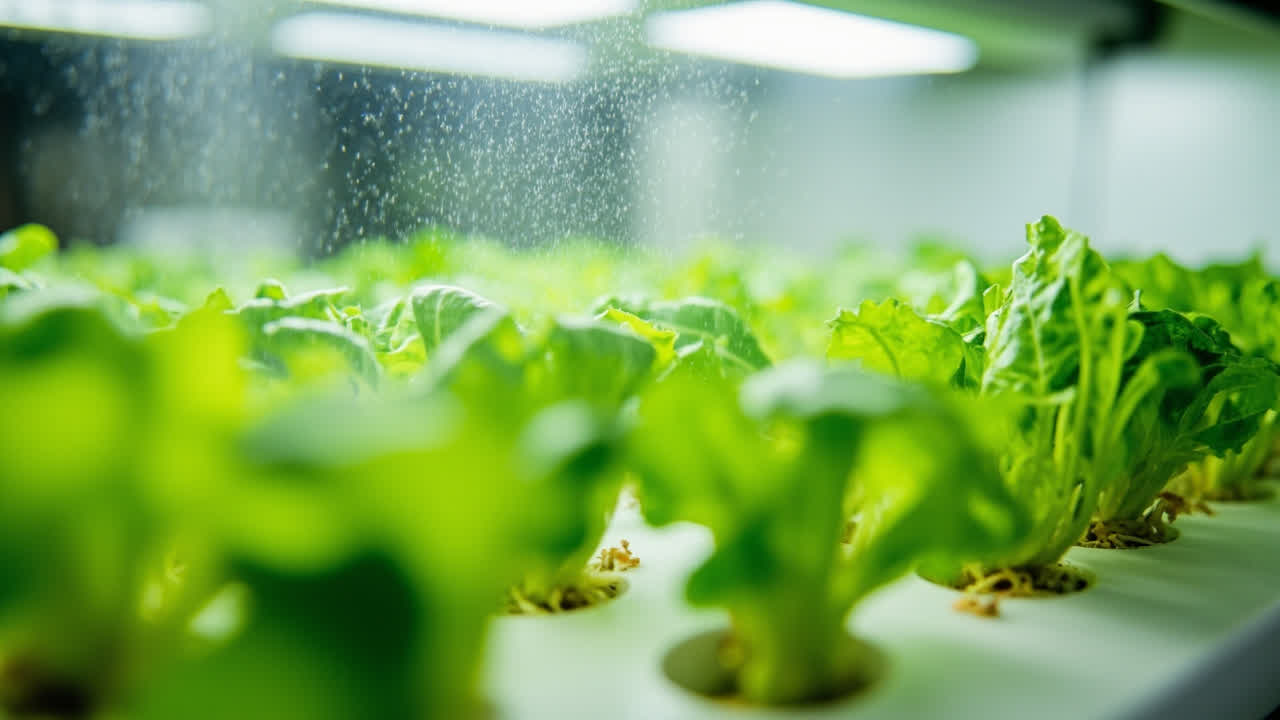
If you grow only one category in an aeroponic system, grow leafy greens. Lettuce, arugula, spinach, kale, bok choy, tatsoi, mizuna, and Swiss chard all perform exceptionally well in a misting system. The reasons are structural: their root systems are relatively small, fibrous, and high-surface-area — exactly the architecture that responds to constant misting. Their water demand is moderate, they don’t need structural support for heavy fruit, and their growth cycle is short enough that the aeroponic advantage compounds across multiple harvests per year.
Head lettuces like butterhead, romaine, and loose-leaf varieties are the most forgiving entry point. Seedlings transplanted into net cups with their roots hanging into the mist chamber typically show visible new growth within 3 to 5 days and reach harvest size in 25 to 35 days depending on variety and ambient conditions. Expect crisp, clean leaves with very little grit — because there is no growing medium to wash off, post-harvest processing is minimal. Romaine tends to be slightly slower than loose-leaf but produces a denser, heavier head; butterhead is the fastest of the three and the most forgiving of small environmental variations.
Arugula and other brassica-family leafy greens perform equally well. Arugula’s growth rate is particularly notable — you can go from transplant to first cut in roughly 21 to 28 days, and the plant responds well to cut-and-come-again harvesting. Mizuna and tatsoi are similar: fast, productive, and well-suited to the high-oxygen root environment. If you are building a vertical aeroponic tower specifically for salad production, these are the crops to design around.
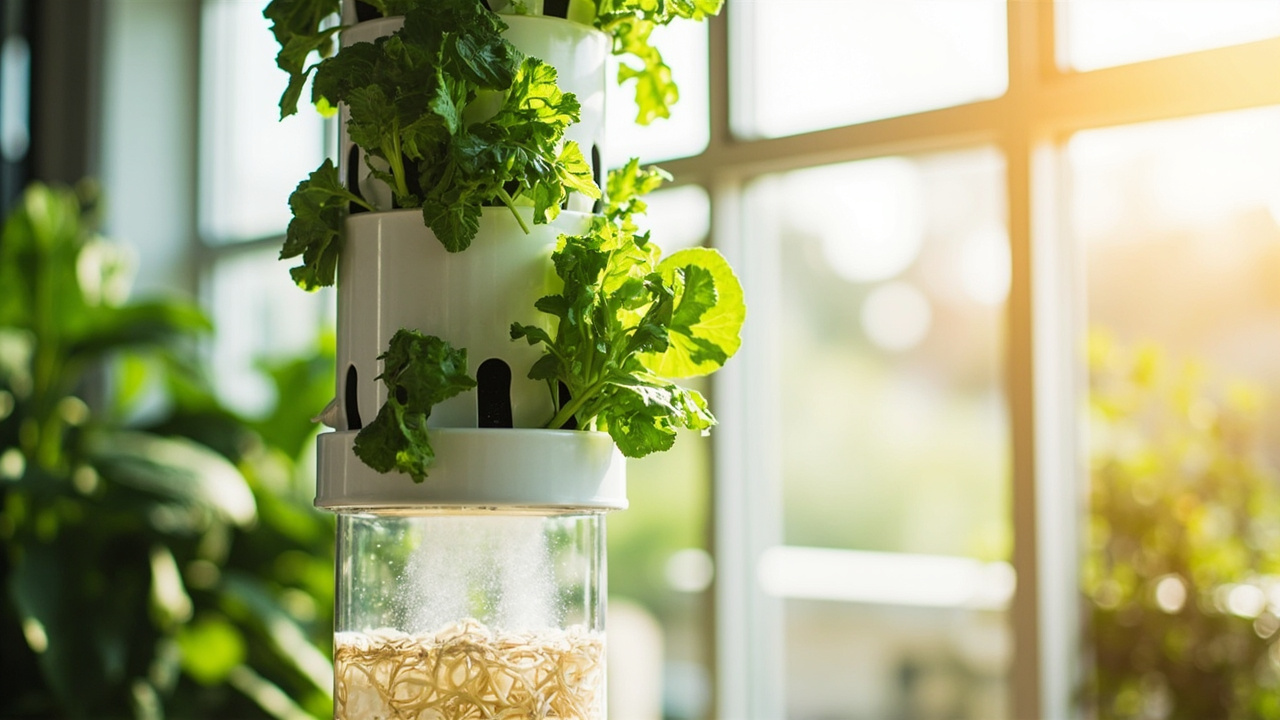
Kale and Swiss chard occupy a different position in this tier: they are slightly slower to reach harvest (35 to 50 days) but produce over a much longer window. A single kale plant can keep producing leaves for 2 to 3 months in a well-maintained aeroponic system, and Swiss chard even longer. The trade-off is that their root systems are heavier, so they need more vertical clearance in the root chamber and slightly longer mist cycles to keep the larger root mass fully hydrated. The aeroponic tower garden setup most growers build is optimized for this category of crop, and it shows in the typical plant spacing and chamber depth that DIY designs settle on.
Tier 1: Culinary Herbs : Fast, Fragrant, Productive
Culinary herbs are the second category where aeroponics genuinely excels, and for many home growers they are the most rewarding crop to grow this way. Basil, mint, cilantro, parsley, dill, chives, oregano, thyme, and rosemary all perform well, though with some variation in how the system handles them.
Basil is the standout. Its root system is moderate in size, fibrous, and responds to the high-oxygen environment with rapid growth. A basil cutting propagated in the mist chamber will develop a dense white root mass in 7 to 10 days, which is the standard aeroponic cloning cycle used in commercial propagation operations. Once transplanted into a tower, the plant reaches a harvestable size in 3 to 4 weeks and continues producing through regular pinching for several months. Sweet basil, Genovese, Thai, and lemon basil all behave similarly. The plant prefers warm conditions — daytime air temperature around 70 to 85°F (21 to 29°C) — and struggles below 60°F (15°C), so basil is best grown in a climate-controlled indoor setup or in warmer months if grown outdoors.
Mint is the easiest herb to grow aeroponically and arguably the most productive. Its root system is aggressive and the plant tolerates a wide range of conditions — it is one of the few crops that will continue to thrive even if your mist cycle drifts slightly off target. Mint’s main risk in aeroponics is the opposite of most crops: its roots grow so vigorously that they can clog misting nozzles if you let the plant mature without pruning the root mass back. Plan to thin mint roots every 4 to 6 weeks in a tower setup, or grow it in a separate chamber with wider nozzle spacing.
Cilantro, parsley, dill, and chives are reliable secondary herbs. Cilantro is fast but bolts quickly in warm conditions, so it is best grown in cooler air temperatures (60 to 70°F / 15 to 21°C) and harvested young. Parsley is slower to start but produces heavily once established. Chives and oregano are perennial-style herbs that establish well in the system and produce over many months. Thyme and rosemary are woody herbs with slower root development — they work in aeroponics but expect the first 3 to 4 weeks after transplant to be a slow establishment phase before the plant begins pushing meaningful new growth.
Tier 2: Fruiting Crops : Possible With Real Caveats
Fruiting crops are where aeroponics gets complicated. Tomatoes, peppers, strawberries, and cucumbers can all be grown in a misting system, and they benefit from the high-oxygen root environment, but each of them comes with structural, nutritional, and pollinator-related constraints that are much easier to manage in soil or in a media-based hydroponic setup.
Tomatoes are the most commonly attempted fruiting crop in aeroponics and the one with the longest track record. They grow well, they fruit heavily, and the high-oxygen root environment does produce rapid vegetative growth. The problems are mechanical. A mature tomato plant in fruit is heavy — a single plant can reach 6 to 8 feet tall and carry 10 to 20 pounds of fruit at peak — and the aeroponic root chamber is not designed to support that weight. You need an external trellis or support frame, separate from the tower itself, and the plant has to be tied and trained as it grows. Second, indeterminate tomato varieties need consistent access to calcium, magnesium, and potassium in the right ratios, and a misting system is less forgiving of nutrient imbalances than a deep water culture setup where the roots sit in a large reservoir of solution. If you want to grow tomatoes aeroponically, plan on a more sophisticated nutrient regimen and active monitoring of pH and EC.
Peppers — both sweet and hot varieties — perform similarly to tomatoes but with less weight stress. A pepper plant rarely exceeds 3 to 4 feet, and the fruit is lighter, so the support problem is easier to solve. The pollination requirement is the same: in an outdoor setup, insects and wind handle this; indoors, you will need to hand-pollinate or run an oscillating fan to move pollen between flowers.
Strawberries are a popular aeroponic choice, particularly in vertical tower setups where the cascading fruit is attractive and easy to pick. They work — the root system is small enough to fit in a standard net cup, and the plant’s water and nutrient demand matches what a misting system delivers. The main caveat is that strawberry yields in aeroponic systems are typically lower than in soil or in a well-managed NFT setup, because the constant air exposure to the root crown can lead to drying and crown rot if the mist cycle is not dialed in correctly. Expect 0.5 to 1 pound of fruit per plant per season in a typical home aeroponic tower, compared to 1 to 2 pounds in soil. The taste is often better — concentrated flavor from the precise nutrient delivery — but the yield trade-off is real.
Cucumbers and other vining crops can be grown in aeroponics but are rarely the right choice for a home system. They are heavy feeders, they sprawl, and they need a trellis structure that takes up more space than the tower itself. A DIY aeroponic tower is generally better used for the crops it actually excels at — greens and herbs — than for vining fruit that requires a separate support structure to perform.
Tier 3: What Not to Grow Aeroponically
Some plants are genuinely poor choices for an aeroponic system, and recognizing them up front will save you the cost of a failed cycle. The common reasons fall into three categories: root architecture that doesn’t suit misting, water demand that overwhelms the system, or growth habits that conflict with a vertical or enclosed root chamber.
Root vegetables — carrots, beets, turnips, radishes, parsnips — are the first category to skip. The edible portion of the plant is the root, and the entire aeroponic system is designed around the assumption that the root is structural infrastructure, not a harvest. There is no practical way to grow a full-sized carrot or beet in a misting chamber; the root needs to push through soil or a loose medium as it develops. Even short radish varieties, which are the closest to viable, produce distorted roots in aeroponics and are not worth the effort compared to a simple soil bed.
Large fruiting plants with heavy fruit — full-size melons, winter squash, pumpkins, large cabbage varieties — are the second category. The mechanical problem is the same as with tomatoes, but the weight is much greater, and the trellis structure required to support a 10 to 20 pound melon is impractical for a home setup. These plants are also heavy feeders, and the nutrient demand can outpace what a recirculating mist system can replenish between cycles.
Plants with extremely high water demand — watercress, certain rice varieties, and a few aquatic herbs — are the third category. They evolved in continuously saturated conditions, and a misting cycle — even at high frequency — does not provide the constant saturation these plants need. They will survive in aeroponics but will not thrive, and they are better suited to a true deep water culture or NFT setup.
Trees and long-lived woody perennials are out of scope for a home aeroponic system for practical reasons: the root mass of a mature plant overwhelms the chamber, and the structural support required is far beyond what the system provides. If you want to propagate a tree cutting, the aeroponic cloning cycle used in commercial nurseries will produce roots in 7 to 14 days — but the resulting plant needs to be moved to soil or a larger media-based system once roots develop.
Practical Expectations and Limits
Across all plant categories, the honest summary of aeroponic performance is this: leafy greens and herbs are the crops that justify the system. If your goal is to produce a steady supply of salad greens and culinary herbs year-round, an aeroponic tower is one of the most efficient and productive ways to do it. If your goal is to grow fruiting crops as a primary harvest, the system is workable but the trade-offs — support structures, pollination, nutrient management — make it less practical than media-based hydroponics or a well-managed soil garden for those specific crops.
For the crops that do work, expect 4 to 6 harvest cycles per year from a single tower of leafy greens, with each cycle producing roughly 0.5 to 1 pound of greens per planting site. A typical 20 to 30 site vertical tower, kept fully planted and rotated, can produce 30 to 50 pounds of greens and herbs per year in a home setup. That is a meaningful volume of fresh produce from a footprint smaller than a parking space, and it is the actual benchmark to plan against.
The other side of that performance is maintenance. Aeroponic systems are not set-and-forget. Misters clog, pH drifts, nutrient reservoirs run low, and root masses need to be managed. The realistic operational picture is 15 to 30 minutes per week of active monitoring and adjustment once the system is stable, more during initial setup and tuning. If that level of attention is workable for you, the crops this system is designed for — the greens and herbs in the first two tiers above — will perform at a level no other method matches. If you are looking for a lower-maintenance setup, the same crops grow well in a simple aeroponic system for beginners with larger reservoir volume, but the daily check-in is still required — it is the price of the method.
For a complete picture of the system itself — chamber design, mist cycle tuning, nutrient delivery, and routine maintenance — the aeroponic system maintenance guide covers the operational side in detail. The plant-side decision is what this page is for, and the short version is: lean into the crops the system is built for, and you will get the results the method is famous for.
Turn PDF Bank Statements Into Workable Spreadsheets
Your bank statement is a mess of numbers, but your books shouldn't be. Use our converter to get Excel, CSV, or QBO files — ready for QuickBooks.
Try It Free Now