Fiddle leaf figs are dramatic. When something is wrong, they show it immediately — usually by dropping leaves at an alarming rate, leaving you with a bare trunk and a lot of worry. The good news: most fiddle leaf fig problems are fixable if caught early. The bad news: by the time you notice the problem, it is usually the result of something that happened weeks ago. Understanding what causes fiddle leaf fig problems helps you prevent them in the first place.
Leaf Drop
Leaf drop is the most reported fiddle leaf fig problem and the one that causes the most panic. The plant drops leaves in response to stress — a natural defence mechanism inherited from its rainforest origins. Before treating leaf drop, identify the type of stress:
Overwatering is the most common cause. When the roots sit in waterlogged soil, they begin to rot and cannot supply water to the leaves. The plant responds by cutting off supply to the oldest leaves — the lower leaves — and dropping them to conserve resources. If the soil is wet and the lower leaves are yellowing and dropping, this is overwatering. Reduce watering immediately, let the soil dry out more between waterings, and check the roots if the problem persists. If the roots are dark, mushy, or smell bad, treat for root rot.
Underwatering causes leaf drop too, but the pattern is different. The plant looks generally thirsty — the leaves feel limp before they drop, not yellow. The soil will be bone dry. Water thoroughly and the leaf drop should stop within a few days.
Environmental change is the most frustrating cause. Fiddle leaf figs are famously sensitive to being moved. Even moving the plant a few feet or rotating it can trigger leaf drop. If your plant was fine yesterday and started dropping leaves after you moved it, put it back immediately. The plant needs time to adjust to a new position — typically two to four weeks — before you should expect it to stabilize.
Cold drafts cause leaf drop in winter. Open doors, drafty windows, and air conditioning vents that blow cold air directly onto the plant will cause rapid leaf drop. Move the plant away from any cold air source.
Brown Spots
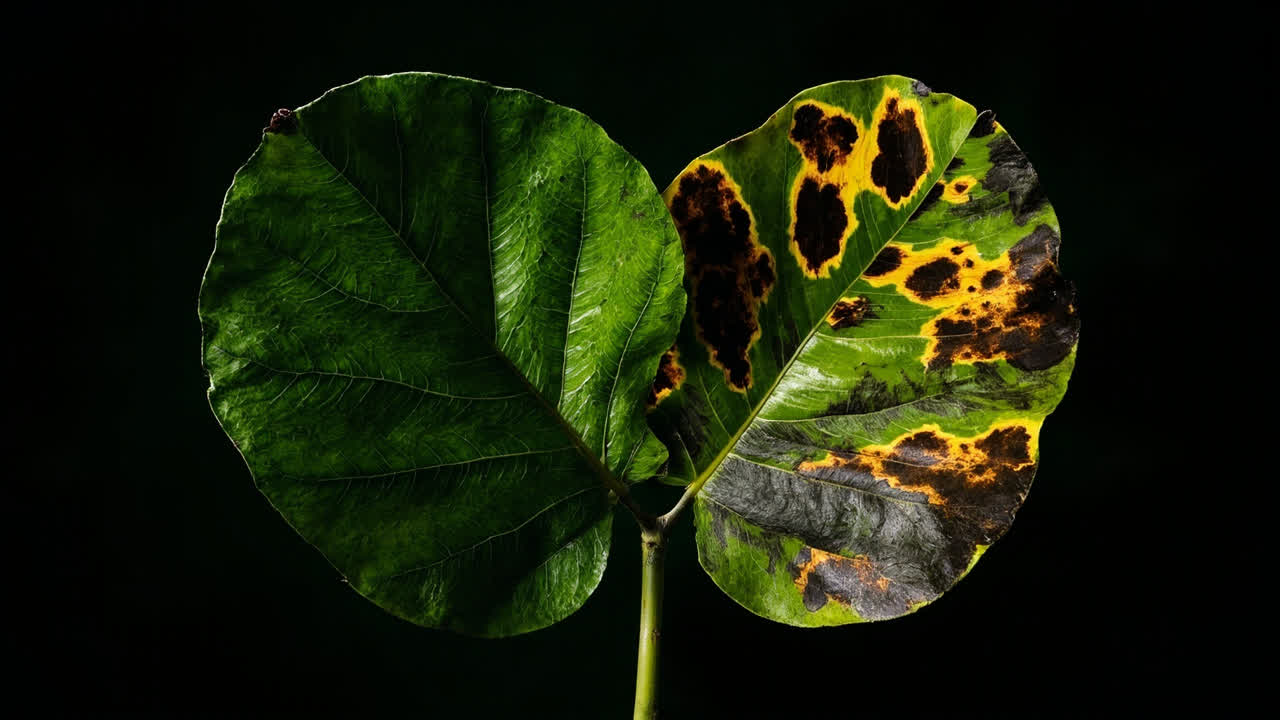
Brown spots on fiddle leaf fig leaves have different causes depending on their location and pattern:
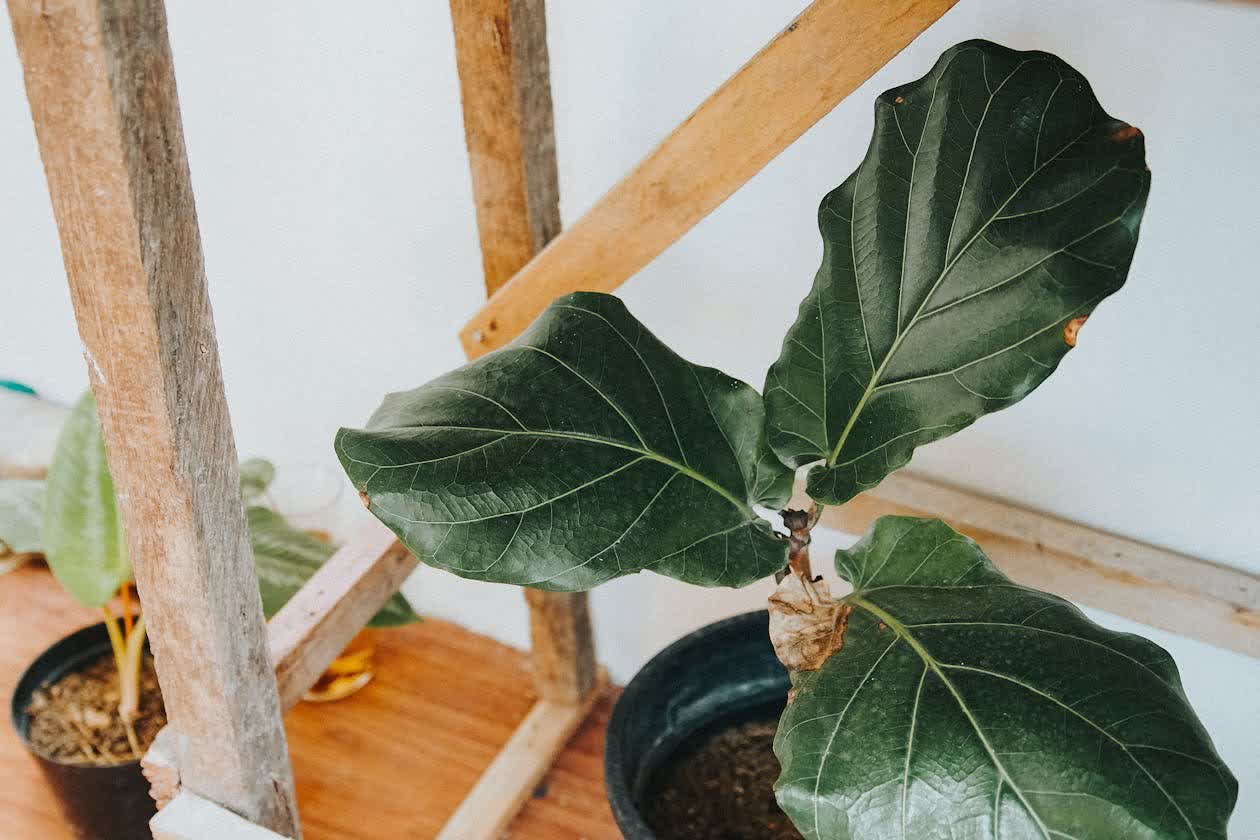
Sunburn spots appear on the part of the leaf facing the window — large, light brown or tan patches, sometimes with a yellow border. The fix: move the plant back from the window or filter the light with a sheer curtain. The existing damaged leaves will not heal but the plant will produce clean new growth once it is in a better position.
Water stress spots — brown edges and tips with yellow halos — indicate inconsistent watering or low humidity. Either the soil is drying out too much between waterings, or the air is too dry. Establish a consistent watering routine, use a pebble tray to raise humidity, and keep the plant away from heating and cooling vents.
Root rot spots appear as dark, wet-looking brown patches — often starting at the base of the leaf near the stem. These patches spread and the leaf feels soft rather than crispy. This is a serious condition caused by overwatering and sitting water. Remove affected leaves immediately, repot in fresh fast-draining soil, and water very sparingly while the plant recovers. If most of the leaves are affected, the plant may not be salvageable.
Fungal infection causes small brown spots with dark borders, often spreading in a pattern across multiple leaves. These spread over days and weeks rather than appearing overnight. Remove affected leaves promptly, reduce watering, improve air circulation, and consider applying a fungicide designed for houseplants if the spread is rapid.
Yellow Leaves
Yellowing on fiddle leaf figs almost always starts from the lower, older leaves. If a few lower leaves turn yellow and the rest of the plant is healthy, this can be natural aging — remove the affected leaf and monitor.
Widespread yellowing — especially if multiple leaves are yellowing simultaneously — indicates a more serious problem. Overwatering is the most common cause. The soil should be allowed to dry out between waterings and the pot must have drainage. Nutrient deficiency in long-established plants that have not been fertilized can also cause yellowing — apply a balanced liquid fertilizer at half strength during the growing season.
Slow or Stunted Growth
A fiddle leaf fig that is not growing at all, or is producing very small new leaves, is usually telling you something is wrong with its conditions. The most common causes of slow growth:
Insufficient light is the primary cause. A fiddle leaf fig in a low-light position will survive but not grow. It needs bright, indirect light to be active. If your plant has been in the same position for months with no new growth, try moving it to a brighter spot and watch for new leaves emerging over the following weeks.
Root bound conditions restrict growth. If the plant has not been repotted in several years and the roots are coiling inside the pot, growth will slow dramatically. Repot in spring into a pot 2 inches larger in diameter with fresh soil.
Overwatering suppresses growth by damaging roots. Even if the plant is not showing obvious leaf drop, chronically wet soil prevents root function and therefore growth. Let the soil dry out more between waterings.
Curling Leaves
Leaves that curl inward — becoming convex rather than flat — indicate the plant is losing water faster than it can absorb it. This is usually underwatering or excessive heat. Check the soil: if it is dry, water thoroughly. If the soil is moist, the plant is too hot — move it away from direct heat sources or afternoon sun.
Curling can also indicate low humidity. Increase humidity with a pebble tray or room humidifier and monitor whether the curling eases on new growth.
Brown Tips
Brown tips on otherwise healthy-looking leaves are almost always caused by inconsistent watering — the soil drying out too much between waterings, or fluctuation between very dry and very wet conditions. The fix is a consistent watering routine: check the soil every few days, water when the top 2 inches are dry, and water thoroughly when you do. This is a habit change as much as a plant care fix.
Low humidity can also cause brown tips, particularly in winter. A pebble tray or humidifier addresses this. Fluoridated tap water can cause brown tips in sensitive plants — if your water is heavily treated, switch to filtered water.
Preventing Fiddle Leaf Fig Problems
The consistent theme across every fiddle leaf fig problem is inconsistency in care. These plants respond best to stable conditions: a fixed position, a consistent watering routine based on soil moisture rather than a schedule, and steady warmth and humidity. Once you have established the conditions your plant thrives in, the most important thing you can do is maintain them.
A fiddle leaf fig that is happy and growing is one of the most rewarding houseplants you can own. It grows fast — you can see new leaves emerge over weeks — and a mature specimen with large, glossy, undamaged leaves is genuinely impressive. The effort is in getting the conditions right at the start. Once you have, the plant takes care of itself.