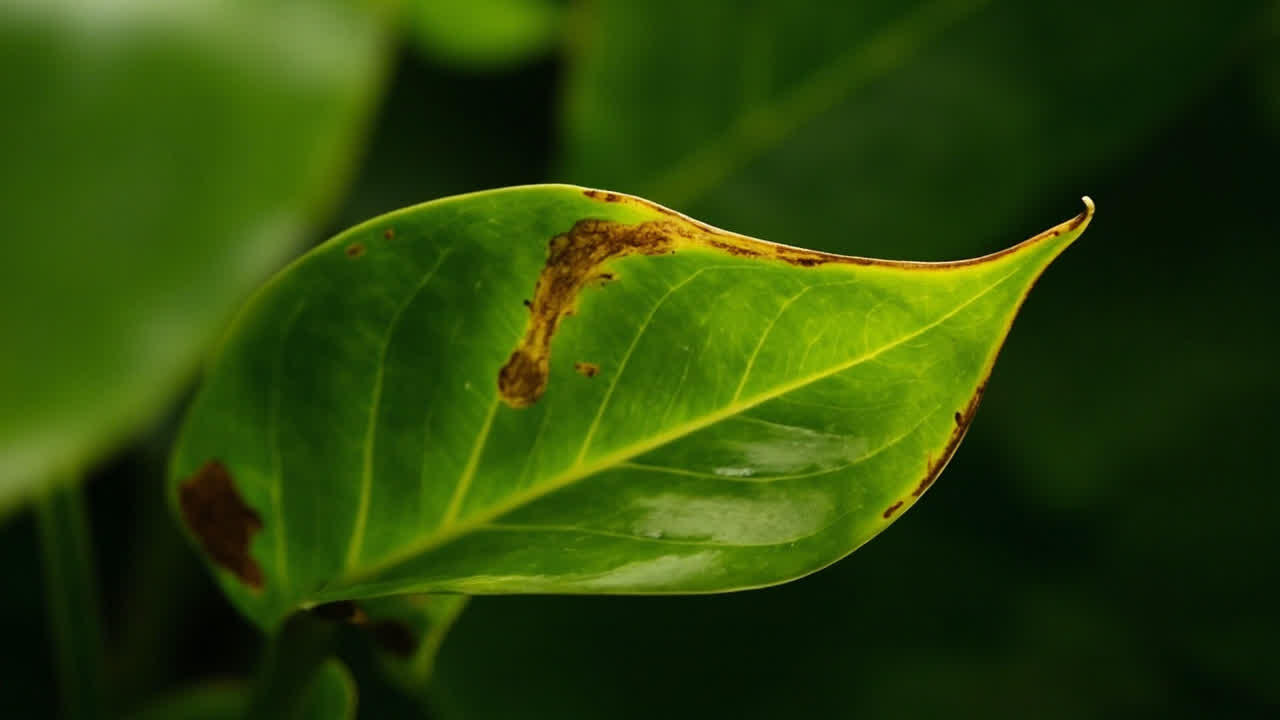
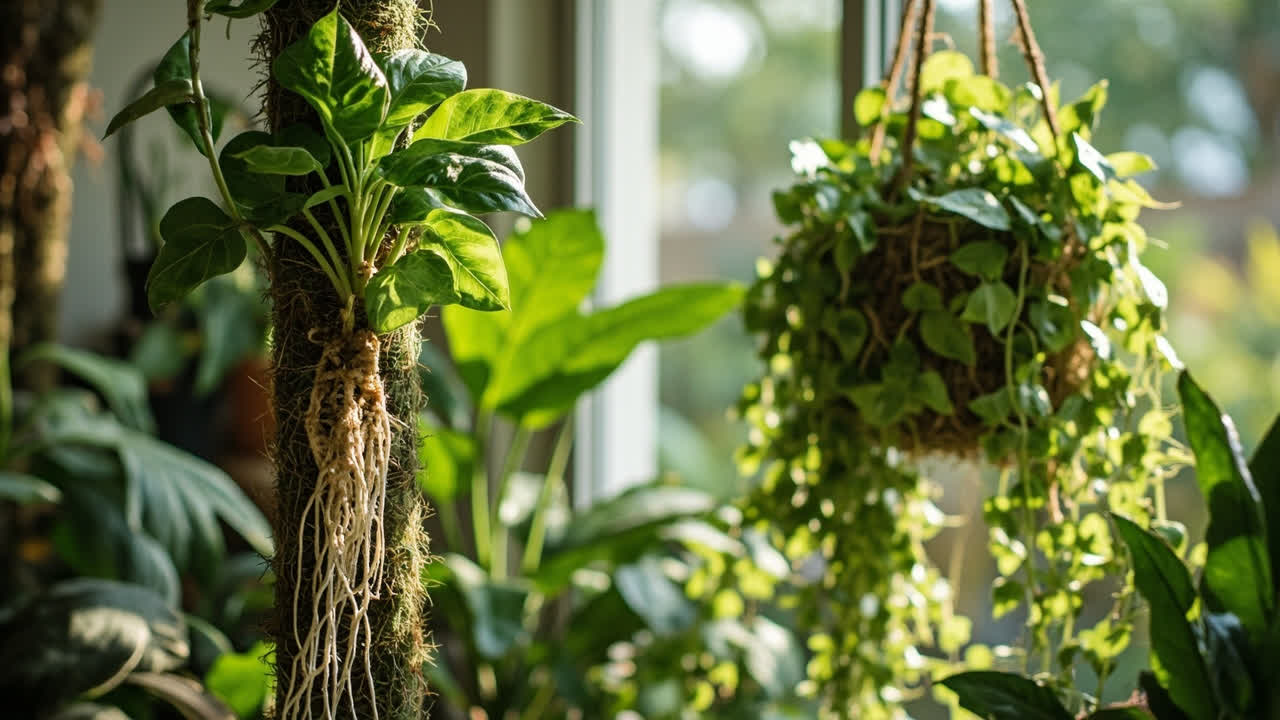
A mature Pothos vine can stretch two to three metres, trailing from a shelf, climbing a moss pole, or cascading from a hanging basket. How you display it changes both the look of the plant and how it grows. Trailing and climbing are not just aesthetic choices — they reflect different growth habits, and choosing the right approach for your space makes the difference between a Pothos that looks messy and one that looks intentional.
Trailing : The Natural Growth Habit
Pothos grows as a trailing vine in its natural habitat — climbing trees and spreading across the forest floor. When you let a Pothos trail from a high shelf or hanging position, you are replicating this natural growth habit. Trailing vines grow downward, the leaves tend to be smaller and more widely spaced on older stems, and the plant maintains a full, cascading appearance.
The advantage of trailing is that it requires no support structure — you simply place the pot at elevation and let gravity do the work. The disadvantage is that as vines age, the sections closest to the pot lose their leaves, leaving bare stems with a tuft of leaves at the end. This is normal Pothos behaviour and is one of the reasons regular pruning helps keep trailing plants looking full.
Climbing : Encouraging Larger Leaves
When a Pothos climbs — attached to a moss pole, trellis, or wooden board — it produces measurably larger leaves. This is not cosmetic. In the wild, a climbing Pothos receives more light at the leaf level and has access to better air circulation as it rises through the canopy. The aerial roots attach to the support and draw additional moisture and nutrients, which supports more vigorous growth.
A Pothos on a properly maintained moss pole will produce leaves two to three times larger than the same plant trailing freely. A juvenile leaf that would be 5 to 8 cm on a trailing vine can reach 15 to 20 cm on a climbing specimen. This difference is significant enough that many serious Pothos collectors grow at least one plant on a moss pole specifically for the leaf size.
What You Need for Climbing
A moss pole — a cylindrical rod wrapped in sphagnum moss, available at Singapore nurseries or easily assembled from a coir pole and sphagnum moss wrapped around it. Insert the pole into the potting mix at the base of the plant. As the vine grows, loosely tie the stem to the pole with plant tie tape or soft twine. Do not force the vines — allow them to find the pole naturally.
Aerial roots will eventually attach themselves to the moss pole if the moss is kept slightly moist. Mist the moss pole every few days, or wrap it in clear plastic film to retain moisture while allowing the roots to grip. Once the roots have attached, the tie can be removed — the plant supports itself.
Managing Long Vines on a Trailing Pothos
When trailing vines grow too long and bare at the base, you have two options:
Prune and propagate. Cut the long bare sections back to a node near the base of the plant. Use the cuttings to start new plants or add them back to the same pot for a fuller appearance. This is the cleaner option — it keeps the trailing vine length manageable and produces new plants for free.
Train the vine to a secondary anchor point. If the vine has grown to the floor and keeps extending, you can redirect it — tape it to a nearby wall, a bookshelf edge, or another shelf at a different height. The vine will continue growing from the tip. This works well for filling vertical space but requires ongoing management to keep it looking intentional rather than messy.
Hanging Basket Setup
For hanging displays, the pot should be high enough that the trailing vines have room to fall without touching the floor or furniture. Two to three metres of hanging space is ideal for a mature Pothos with vines reaching their full length. The vines will grow downward from the basket and should be allowed to space themselves naturally — do not try to weave or arrange trailing vines into patterns. Pothos trails in the direction it grows and will find its own rhythm.
Hanging positions near east or north-facing windows give the trailing plant the best light. South and west-facing windows can work but watch for direct sun on the leaves — a trailing plant near a window may get more direct sun than one placed on a shelf at the same height.
Combining Trailing and Climbing on the Same Plant
One practical approach that works well in Singapore homes: grow one or two vines up a moss pole for the larger leaves, and allow the remaining vines to trail freely. This gives you the leaf size benefit from the climbing vines while maintaining the cascading aesthetic of the trailing sections. The contrast between the large-leaved climbing sections and the flowing trailing vines creates an interesting, layered look that works in most interior settings.
For care guides, see the Pothos Plant Care guide and the Pothos Pruning guide for managing long vines.
Turn any PDF statement into a clean sheet
Skip the typos and the hours of copying. Our converter handles any bank statement format and outputs Excel, CSV, or QBO for QuickBooks. No file retention, free to try.