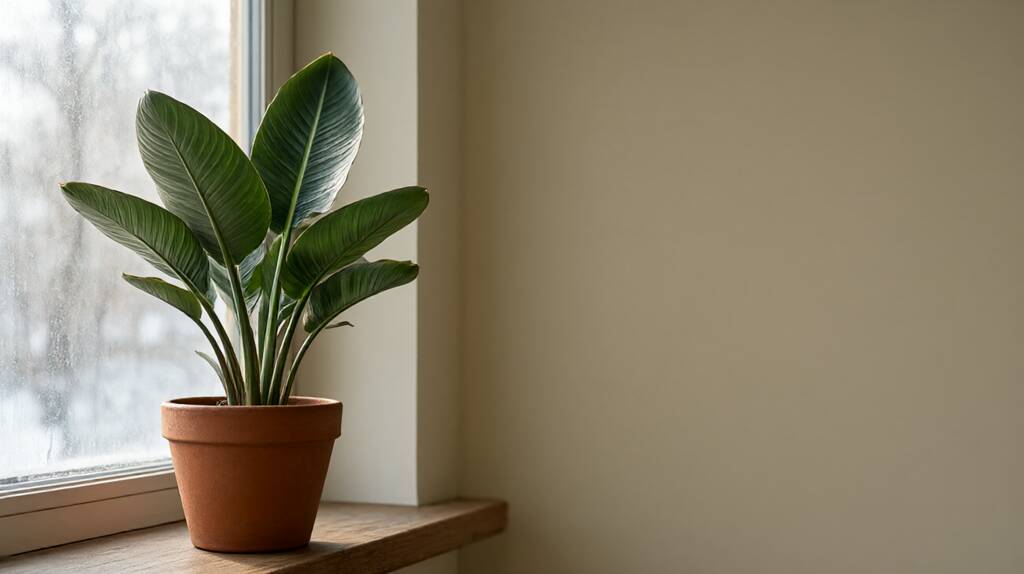

A bird of paradise does not die in winter. It waits. The plant reads the short days and the cool nights as a signal to slow down, and it spends the season resting on the energy it stored during the summer. The grower’s job in winter is not to keep the plant growing. It is to let it rest without letting it die. Those are different jobs, and confusing them is the most common cause of winter loss in an otherwise healthy plant.
Two failure modes follow. The first is treating winter like summer: feeding, watering, and keeping the plant in a warm room, which produces soft, leggy growth that collapses in spring. The second is treating winter like a threat: moving the plant to a cold garage, withholding all water, and letting the roots freeze, which kills the plant outright. Both come from not understanding what the plant is actually doing between November and March.
Most growers also get the move wrong. They bring the plant inside too late, after a cold night has already damaged the roots, or they leave it outside too long, hoping for one more week of growth. The plant survives both errors, but it loses a season of flowering each time.
What Winter Does to a Bird of Paradise
Strelitzia reginae is a subtropical plant from the eastern coast of South Africa, where winters are mild and frost is rare. It did not evolve to survive freezing temperatures. It evolved to slow down when the days get short and to resume when they lengthen. In a temperate climate, that rhythm is imposed on a plant that would rather keep going.
The slowdown is driven by day length, not temperature. As the days shorten, the plant reduces its growth rate, drops fewer new leaves, and shifts its energy from producing foliage to storing carbohydrates in the rhizome. This stored energy is what fuels the spring growth flush and, eventually, the flower. A plant that does not rest does not flower, because it never builds up the reserves to fund the bloom.
Temperature modulates the slowdown. Below 10 degrees Celsius, growth stops almost entirely. Above 18, the plant continues to grow, though slowly. The ideal winter rest is 10 to 15 degrees Celsius, cool enough to slow the plant but not cold enough to damage the roots. This is cooler than most living rooms, which is why a spare room or an enclosed porch is often a better winter spot than the living room.
The difference between rest and dormancy
Bird of paradise does not go fully dormant. It does not drop its leaves or die back to the ground. It slows. The leaves stay green, the roots stay active at a reduced rate, and the plant continues to take up small amounts of water. Calling it dormant is misleading. Calling it resting is accurate. A resting plant needs less care, not no care.
Winter is rest, not death. Let the plant slow down without letting it die.
When to Bring It Inside
The trigger for bringing a bird of paradise inside is night temperature, not the calendar. When night temperatures drop below 10 degrees Celsius, the plant should come in. Do not wait for a frost warning. A single cold night damages the roots before it damages the leaves, and the damage is invisible until spring.
In practice, this means bringing the plant inside in late September or early October in most temperate climates, and in November in milder ones. The plant can stay outside longer if the nights stay warm, but the risk of an unexpected cold snap increases as autumn progresses. It is safer to bring it in a week early than a day late.
Before bringing the plant inside, inspect it thoroughly for pests. Scale, mealybugs, and spider mites hide in the leaf bases and travel inside with the plant. A pest problem that is minor outdoors becomes a major problem in a warm, dry winter room. Treat any infestation before the plant comes in. For the full pest inspection and treatment method, see our guide to bird of paradise pests and diseases.
The hardening-off reversal
A plant that has lived outdoors all summer cannot go straight into a dim room. It needs to adjust gradually, the same way it adjusted when it went outside in spring. Move it to a bright spot indoors first, then reduce the light over a week or two. The leaves will yellow slightly during the transition, which is normal. Severe yellowing means the drop in light was too abrupt.
Bring the plant inside when nights drop below 10 C, not when frost threatens.
The Winter Spot: Light, Temperature, and Humidity
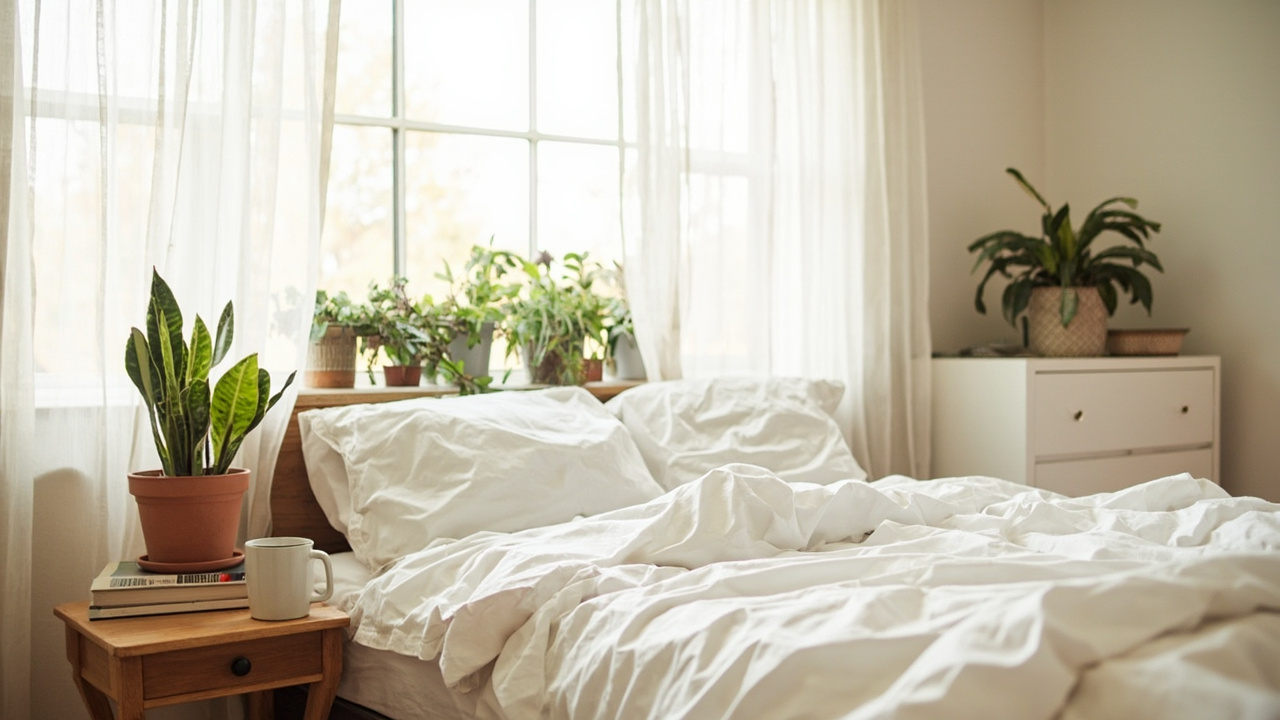
The winter spot should be bright, cool, and not too dry. Bright means as much light as possible: a south or west window, or a spot under a grow light. Cool means 10 to 15 degrees Celsius, which is cooler than most living rooms. Not too dry means above forty percent humidity, which is higher than most heated rooms in winter.
Finding a spot that satisfies all three is the challenge. A south-facing window in a spare room that is not heated is often the best option. The window provides light, the unheated room provides cool temperatures, and the plant’s own transpiration provides some humidity. A humidifier or a pebble tray raises the humidity further if needed.
If the plant must stay in a warm living room, it will not rest fully, and flowering the following spring will be reduced. The workaround is to reduce watering and feeding even more aggressively, to compensate for the lack of cool temperatures. The plant will not rest as well, but it will not grow as much either, which is the next best thing.
Humidity in winter: the silent stressor
Indoor heating drops humidity to twenty to thirty percent in winter, and a bird of paradise in a dry room loses leaf tips and edges. The fix is not misting, which does not raise ambient humidity. The fix is a humidifier, a pebble tray, or grouping plants together. For the full humidity method, including target ranges and how to measure, see our guide to bird of paradise humidity requirements.
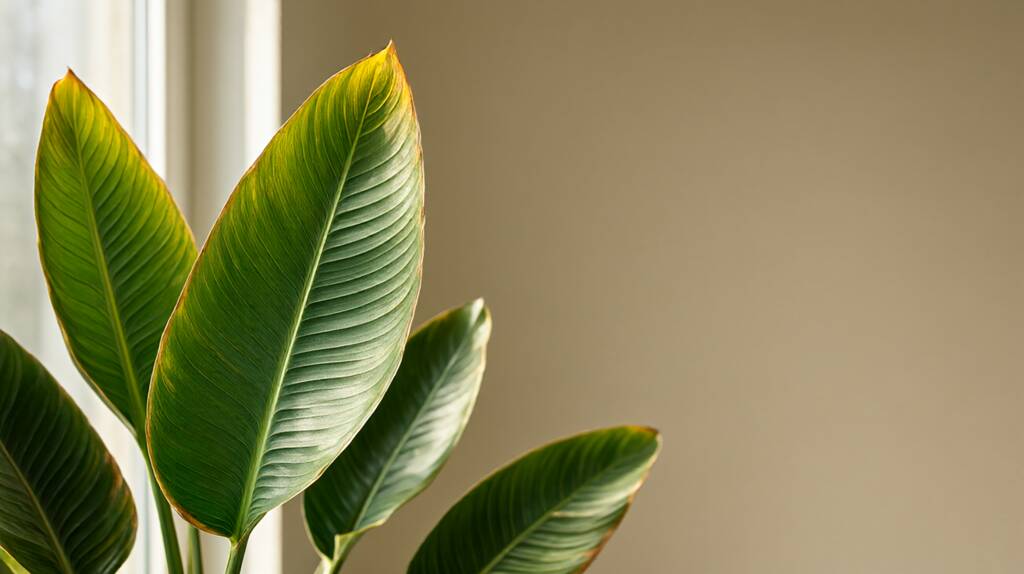
The winter spot should be bright, cool (10-15 C), and above 40% humidity.
Winter Watering and Feeding
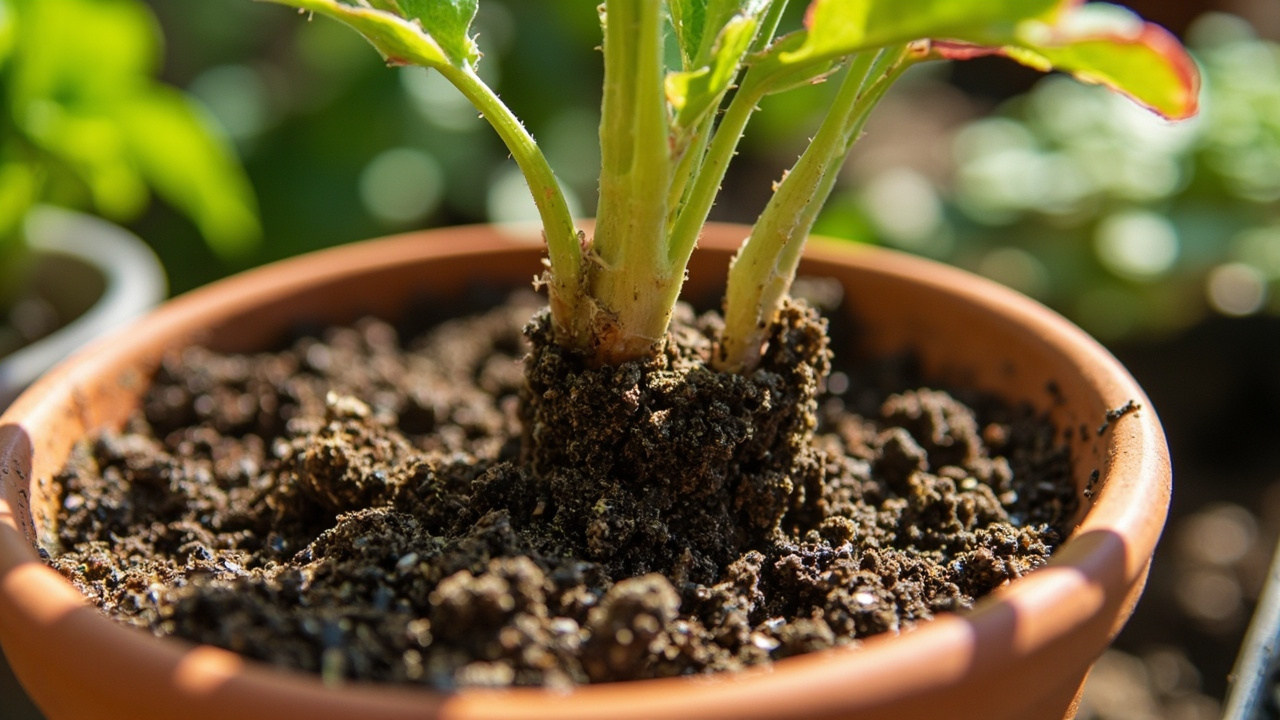
Winter care is reduced care. Watering drops to once every two to three weeks, and only when the soil is dry 5 centimeters down. The plant is not growing, so it is not using water, and wet soil in winter is the fastest way to rot the roots. When in doubt, wait. A slightly dry plant in winter is healthier than a slightly wet one.
Feeding stops entirely in winter. The plant cannot use nutrients when it is not growing, and fertilizer on a resting plant accumulates in the soil and burns the roots when growth resumes. Resume feeding only when the first new leaf appears in spring, which is the signal that the plant is out of rest. For the full feeding schedule, see our guide to bird of-paradise fertilizer schedule.
The exception is a plant under a grow light that is continuing to grow in winter. If the plant is actively producing new leaves, it needs water and feed at the summer rate, even if the calendar says winter. The calendar is a reminder, not a rule. The plant decides. For the full seasonal schedule, see our guide to bird of paradise seasonal care schedule.
The winter watering test
Push a finger or a wooden skewer 5 centimeters into the soil. If it comes out dry, water. If it comes out damp, wait. If it comes out wet, you have overwatered, and the plant needs to dry out before the next watering. In a cool room, this may mean watering only once a month. That is fine. The plant is resting.
Water every 2-3 weeks in winter; stop feeding entirely.
Spring Transition: Waking the Plant Up
Spring is the restart. As the days lengthen and the soil warms, the plant comes out of rest and begins to push new growth. This is the moment to resume feeding, to repot if needed, and to move the plant to its summer position. Do all three in the same week, and the plant has the whole growing season ahead of it.
Resume feeding with a balanced formula at half strength, every two weeks. Increase to full strength after the first new leaf appears. Watering increases gradually, from once every two weeks to once a week, then to twice a week as the days lengthen. Do not jump straight to summer watering, because the roots are not yet active enough to use the water.
If the plant spent the winter indoors, move it outside only when night temperatures stay above 12 degrees Celsius, and harden it off first. A plant that has lived indoors cannot go straight into full sun. The leaves are not adapted to UV, and they burn within hours. For the full hardening-off protocol and planting timing, see our guide on when to plant bird of paradise.
The first new leaf is the signal
The first new leaf after winter is the signal that the plant is out of rest and can use water and nutrients. It usually appears between February and April, depending on the light and temperature. If it appears earlier, the plant was not fully resting. If it appears later, check the roots and the light. For the full cultivation method, see our growing guide for bird of paradise.
Resume care only when the first new leaf appears in spring.
Outdoor Overwintering: Protecting In-Ground Plants
In USDA zones 9 and 10, bird of paradise can stay in the ground year-round, though it may lose some foliage in a cold winter. In zone 8, it is marginal, and in-ground plants need protection. In zones 7 and below, it is not reliably hardy and should be grown in containers that come inside.
For in-ground plants in marginal zones, the winter protocol is: mulch heavily around the base with 10 to 15 centimeters of organic mulch, wrap the plant in frost cloth or burlap if temperatures are forecast to drop below 5 degrees, and water sparingly, because wet roots in cold soil rot. The leaves may brown and die back, but the rhizome usually survives if the soil does not freeze.
If the foliage dies back completely, do not dig up the plant. Cut the dead leaves to the ground and wait. The rhizome will push new growth in spring when the soil warms. Cutting too early, before the plant has finished storing energy, reduces the spring recovery. For the full outdoor care method, including frost protection and watering, see our guide to bird of paradise outdoor care.
The post-winter assessment
In spring, assess the plant after the last frost. If new growth is emerging from the base, the plant survived. If nothing appears by late spring, the rhizome may be dead. Dig carefully and check. If the rhizome is firm and white inside, give it more time. If it is soft and brown, it is dead, and the plant needs to be replaced.
In-ground plants in marginal zones need mulch and frost cloth.
From Overwintering to the Rest of the Cluster
Overwintering is the winter chapter of the seasonal cycle, and it connects to every other topic in this cluster. Temperature tolerance sets the limits. The seasonal schedule sets the calendar. Humidity and light set the indoor environment. Watering and feeding set the reduced-care rhythm. When spring arrives, the growing guide and the planting guide take over. The plant remembers the rain forest. Your apartment just needs to remind it.
Overwintering is the winter chapter of the seasonal cycle.
Key thresholds: 10 C bring-inside trigger, 10-15 C winter rest, 12 C spring move-out, 5 cm winter water test, 2-3 week winter water, 4-8 week recovery, 10-15 cm mulch depth, 5 C frost threshold.
| Zone | Winter strategy | Protection |
|---|---|---|
| USDA 10-11 | Stay outdoors | Light mulch |
| USDA 9 | Stay outdoors with protection | Frost cloth below 5 C |
| USDA 8 | Marginal, protect heavily | 10-15 cm mulch + wrap |
| USDA 7 and below | Bring indoors | Bright cool spot, 10-15 C |
For the transition protocol between indoors and outdoors, see our guide to bird of paradise acclimation.
Sources and further reading
- Royal Horticultural Society, Strelitzia reginae: winter care and hardiness notes.
- University of Florida IFAS Extension, Strelitzia reginae: cold tolerance and winter management.
- United States Department of Agriculture, Plant Hardiness Zone Map, zone 8-11 guidance.
Last reviewed on 2026-11-24.