
A bird of paradise is a tough plant, and that toughness is part of the problem. It tolerates neglect well enough to hide a pest infestation for months, and by the time the leaves show the damage, the population on the undersides has already peaked. The species is not immune to the usual houseplant pests. It is just slow to complain about them, which means the grower usually discovers the problem at the worst possible moment, when the plant is already stressed and the pest is already established.
Two failure modes follow. The first is treating a pest problem as a watering problem, because the early symptoms, yellowing leaves and stunted new growth, look identical. The second is treating a disease problem as a pest problem, spraying neem oil on a plant that is actually rotting at the roots, which wastes time and adds chemical stress to a plant that needs drainage, not pesticide.
Most growers also get the inspection wrong. They look at the top of the leaves, where the plant looks fine, and miss the undersides and the leaf bases, where the pests actually live. A weekly inspection of the undersides takes thirty seconds and catches ninety percent of infestations before they become visible from above.
The Pest and Disease Landscape for Strelitzia
Bird of paradise is not a pest magnet, but it is not immune either. The same pests that attack most tropical houseplants attack it: spider mites, scale, mealybugs, and aphids. The difference is that Strelitzia’s thick, waxy leaves give pests more surface to hide on and more time to establish before the damage shows. A spider mite colony on a thin-leaved fern is visible in days. On a bird of paradise it can run for weeks.
Diseases are less common indoors than outdoors, but they are more serious when they happen. Root rot from overwatering is the number one killer of indoor bird of paradise, and it is almost always misdiagnosed as a watering problem in reverse, with the grower watering more to revive a plant that is drowning. Fungal leaf spot and bacterial soft rot appear when humidity is high and air circulation is poor.
The practical division is this. Pests live on the plant. Diseases live in the soil or in the air around the plant. Pests are treated on the leaves. Diseases are treated at the roots or in the environment. Getting the division right is half the battle, because the treatments are different and a wrong diagnosis makes the problem worse.
Why indoor plants suffer more than outdoor ones
Indoor plants live in a closed system. Outdoor plants have wind, rain, and natural predators that keep pest populations in check. Indoor plants have none of these, so a single aphid that rides in on a new plant can build a colony in weeks. The dry air of heated rooms also favors spider mites, which thrive below forty percent humidity. For the full humidity picture, including target ranges and how to measure, see our guide to bird of paradise humidity requirements.
Pests live on the plant; diseases live in the soil or air. Treat them differently.
Spider Mites: The Most Common Indoor Pest
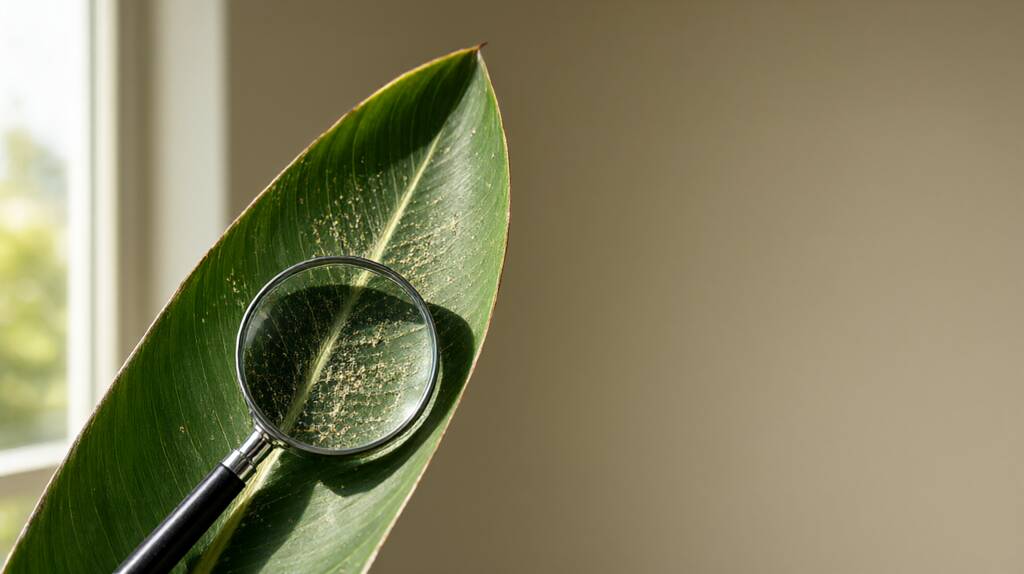
Spider mites are the pest most likely to attack an indoor bird of paradise, especially in winter when the air is dry. They are tiny, barely visible to the naked eye, and they live on the undersides of leaves, where they pierce the cells and suck out the contents. The damage shows as a fine stippling on the upper surface, a dusty, faded look that is easy to mistake for sun scorch or nutrient deficiency.
The diagnostic test is simple. Hold a white piece of paper under a leaf and tap the leaf sharply. If tiny moving specks fall on the paper, you have spider mites. The specks will be red, brown, or pale, depending on the species. A magnifying glass confirms it: spider mites look like eight-legged dots, and they move.
Treatment starts with water. A strong spray of lukewarm water on the undersides of the leaves, repeated every three to four days for two weeks, dislodges most of the population and breaks the breeding cycle. For a heavy infestation, follow with neem oil or insecticidal soap, applied to the undersides, repeated weekly for three weeks. Systemic miticides are a last resort and should be used only when the plant is severely infested.
Prevention is easier than treatment
Spider mites hate humidity. Raising the ambient humidity above fifty percent and misting the undersides of the leaves weekly makes the plant a less attractive host. Quarantining new plants for two weeks before placing them near the bird of paradise is the single most effective prevention measure, because most infestations arrive on new plants, not on the plant itself.
Spider mites thrive below 40% humidity and hide on leaf undersides.
Scale and Mealybugs: The Hidden Pests
Scale insects are the stealth pests. They attach to the leaf bases and stems, cover themselves with a hard waxy shell, and sit there feeding. They do not move, and they are easy to mistake for part of the plant. The first sign is usually a sticky residue on the leaves below, called honeydew, which is the waste product of the scale. Ants are attracted to honeydew, so a sudden ant problem near the plant is a scale warning.
Mealybugs are related to scale but softer. They look like small white cottony masses, usually in the leaf axils and at the base of the leaf stalks. They also produce honeydew. They are easier to see than scale but harder to remove, because they hide in crevices and reproduce quickly.
Treatment for both is mechanical first. Wipe the insects off with a cotton swab dipped in rubbing alcohol, working carefully into the crevices. For a larger infestation, spray with neem oil or insecticidal soap, covering all surfaces including the undersides and the base of the stalks. Repeat weekly for four weeks, because the eggs hatch in cycles and one treatment will not catch them all.
When to escalate to systemic treatment
If the infestation persists after four weeks of topical treatment, the pests have moved into the soil or the root zone, and topical sprays cannot reach them. A systemic insecticide, applied as a soil drench, is the next step. Use it sparingly, follow the label, and isolate the plant from other houseplants during treatment. For the full rescue method for a plant that has been damaged by pests, see our guide to saving a dying bird of paradise.
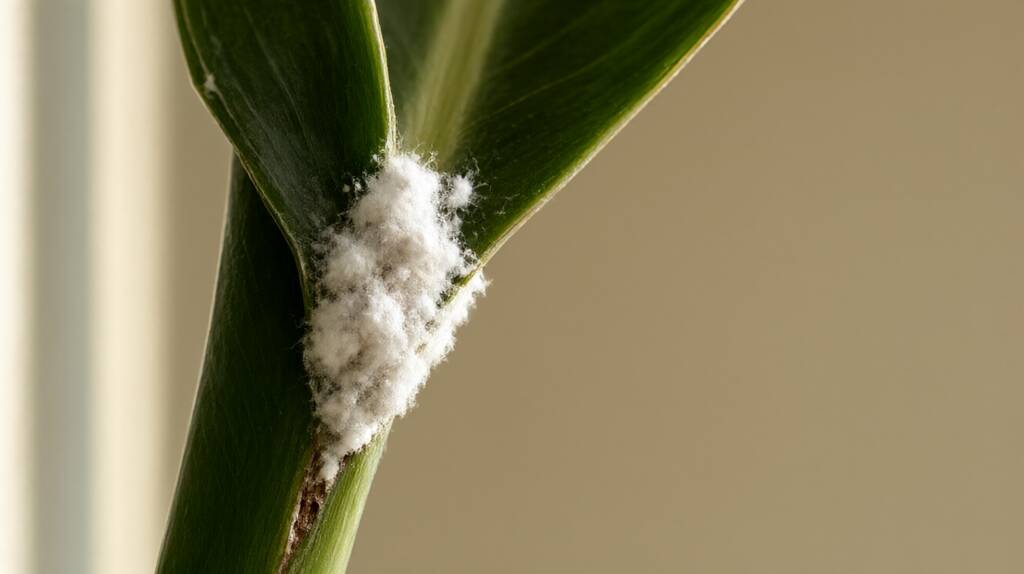
Scale and mealybugs produce honeydew; ants are the warning sign.
Root Rot: The Silent Killer
Root rot is the most common cause of death in indoor bird of paradise, and it is almost always caused by overwatering, not by a pathogen. The roots sit in wet soil, the oxygen is displaced, and the root tissue dies. Once the roots are dead, the plant cannot take up water, so it wilts and yellows, which looks exactly like underwatering, and the grower responds by watering more, which accelerates the rot.
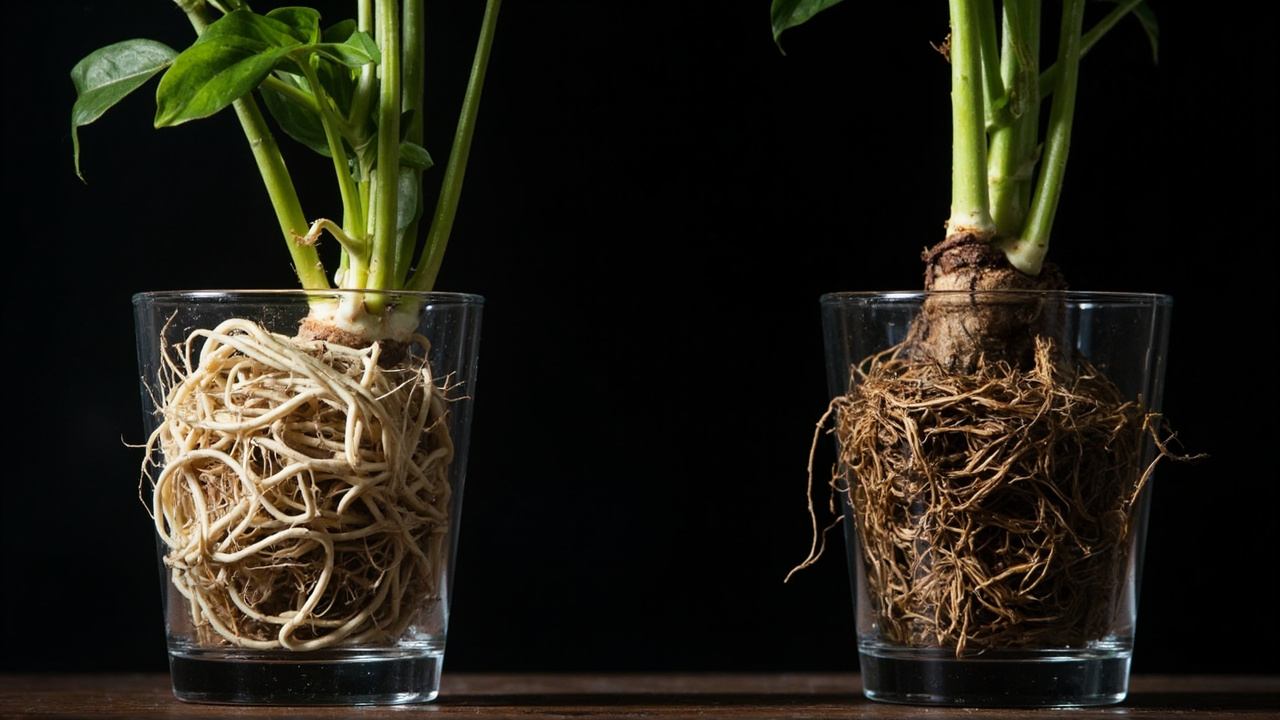
The diagnostic is the smell and the roots. Tip the plant out of the pot and look at the root ball. Healthy roots are white or tan and firm. Rotted roots are brown or black, soft, and they smell sour or musty. The soil around them will be wet and may have a gray or white fungal growth on the surface.
Treatment is surgical. Unpot the plant, remove all the rotted root tissue with clean scissors, cutting back to firm white tissue.
Remove as much of the wet soil as possible without damaging the remaining roots. Repot into a smaller pot with fresh, well-draining mix, and do not water for a week. For the full repotting method, including pot size and soil mix, see our guide to bird of paradise soil and repotting. For the watering rhythm that prevents rot, see our guide on how often to water bird of paradise.
The first two weeks after root surgery
A plant that has lost half its roots is in shock. It needs indirect light, not full sun, and steady but reduced moisture. Do not fertilize. The plant cannot use nutrients until the roots recover, and fertilizer on damaged roots burns them. Recovery takes four to eight weeks, and the first sign of success is a new leaf emerging from the center.
Root rot is overwatering, not a pathogen. Surgery, not spray.
Fungal and Bacterial Diseases
Fungal leaf spot appears as brown or black spots with yellow halos on the leaves, usually starting at the tips and edges. It is caused by fungi that thrive in high humidity and poor air circulation. The spots do not spread rapidly, but they are unsightly and they weaken the plant over time.
Treatment is environmental first. Improve air circulation, reduce humidity if it is above seventy percent, and remove the most affected leaves. A copper-based fungicide or neem oil spray can slow the spread. The key is to fix the conditions that allowed the fungus to establish, because spraying without fixing the environment only delays the next outbreak.
Bacterial soft rot is more serious. It appears as a wet, mushy, foul-smelling rot at the base of the plant or on the leaf stalks. It spreads fast and can kill the plant in days. There is no cure once it is established. The only treatment is to cut away all affected tissue, sterilize the cut with cinnamon or a fungicide, and repot in fresh soil. Prevention, through good drainage and avoiding water on the crown, is the only reliable strategy.
When to discard and start over
If the rot has reached the rhizome, the plant is unlikely to recover. The rhizome is the storage organ, and if it is soft and brown, the plant has no reserves to draw on. In that case, take a healthy division from the outer edge of the clump if one exists, and discard the rest. For the full diagnosis of a plant that is failing, see our guide to bird of paradise common problems and our rescue guide for saving a dying bird of paradise.
Fungal leaf spot needs better air and lower humidity, not just fungicide.
Prevention: The Weekly Routine
Prevention is simpler than treatment. A weekly routine of thirty seconds of inspection plus basic hygiene prevents most pest and disease problems before they start. The routine is: inspect the undersides of the leaves, check the soil surface for mold or fungus gnats, wipe the leaves with a damp cloth to remove dust, and remove any dead or yellowing leaves at the base.
Quarantine is the second line of defense. Any new plant that enters the home should spend two weeks in a separate room before joining the collection. This catches pests that are not yet visible and prevents them from spreading to the bird of paradise and the rest of the collection.
Environment is the third line. Good air circulation, appropriate humidity, and correct watering eliminate most disease pressure. A plant that is watered correctly, in well-draining soil, in a room with moving air, rarely develops fungal problems. A plant that is overwatered, in a sealed room, with still air, is a disease waiting to happen. For the full environmental picture, see our guides to bird of paradise humidity requirements and bird of paradise temperature tolerance.
The quarantine protocol in detail
Place the new plant in a bright spot away from other plants. Inspect it visually on arrival, checking the undersides and the soil. Repeat the inspection weekly. If no pests appear after two weeks, the plant can join the collection. If pests appear, treat before introducing. This simple protocol has prevented more infestations than any spray.
Prevention is thirty seconds of weekly inspection plus quarantine.
From Pests and Diseases to the Rest of the Cluster
Pests and diseases are the failure modes of care, and they connect to every other topic in this cluster. Overwatering leads to root rot. Dry air leads to spider mites. Poor light leads to weak growth that attracts pests. The care guides for watering, humidity, temperature, and light are the prevention. This guide is the cure. When something goes wrong, start here, then move to the specific care guide that addresses the underlying cause.
The plant remembers the rain forest. Your apartment just needs to remind it.
For the winter protocol and cold protection, see our guide to overwintering bird of paradise.
Pests and diseases are the failure modes of care; the care guides are the prevention.
Key thresholds: 40% humidity spider-mite floor, 3-4 day spray interval, 50% humidity target, 4-8 week recovery, 70% fungal threshold, 2 week quarantine, 5 cm root check.
| Pest/Disease | Sign | Treatment |
|---|---|---|
| Spider mites | Stippled leaves, webbing | Water spray + neem oil |
| Scale | Sticky honeydew, bumps | Alcohol swab + neem |
| Mealybugs | White cotton masses | Alcohol swab + soap |
| Root rot | Soft brown roots, sour smell | Surgery + repot |
| Fungal spot | Brown spots with yellow halo | Air flow + fungicide |
Key thresholds: 40% humidity floor, 3-4 day spray interval, 50% humidity target, 4-8 week recovery, 70% fungal threshold, 2 week quarantine, 5 cm root check, 40% humidity, 30 sec inspection, 10 cm repot.
For the transition protocol between indoors and outdoors, see our guide to bird of paradise acclimation.
Sources and further reading
- University of Florida IFAS Extension, Strelitzia reginae: culture and pest management notes.
- Royal Horticultural Society, Strelitzia reginae: pests and diseases.
- North Carolina State Extension, Strelitzia reginae: plant profile and common problems.
Last reviewed on 2026-11-24.