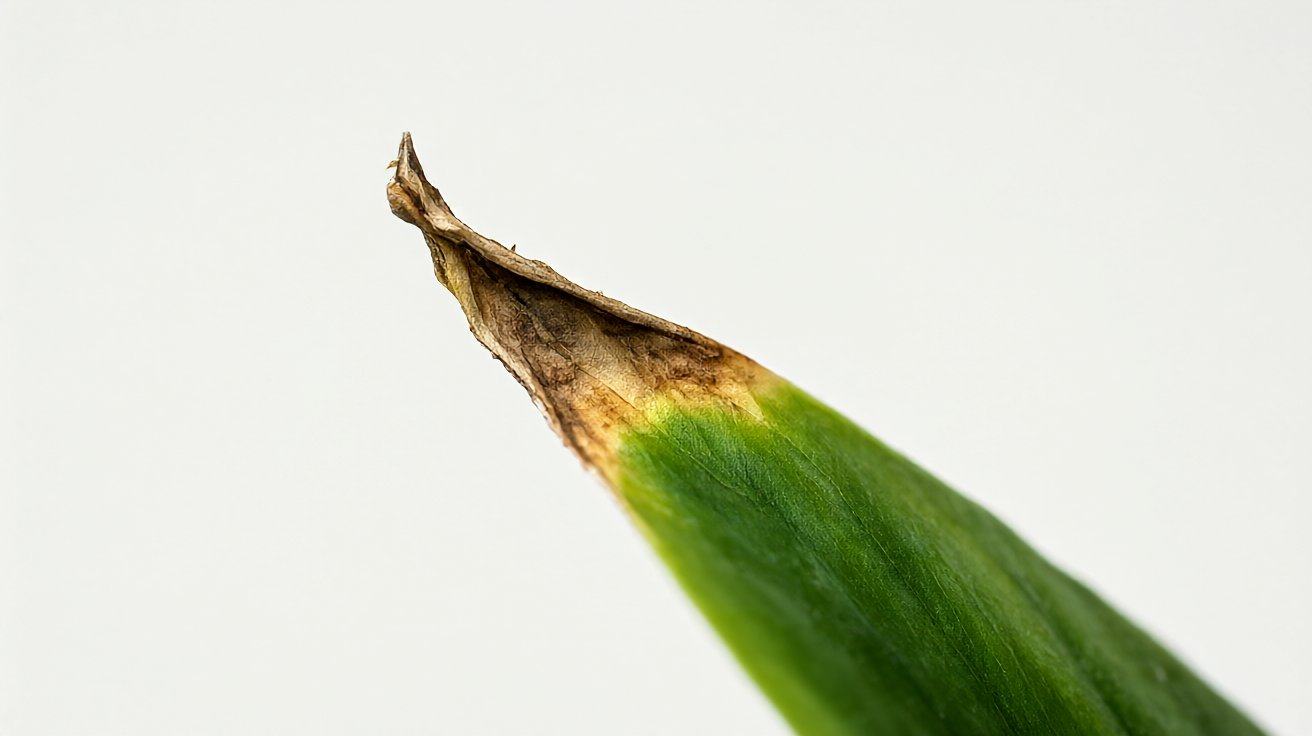

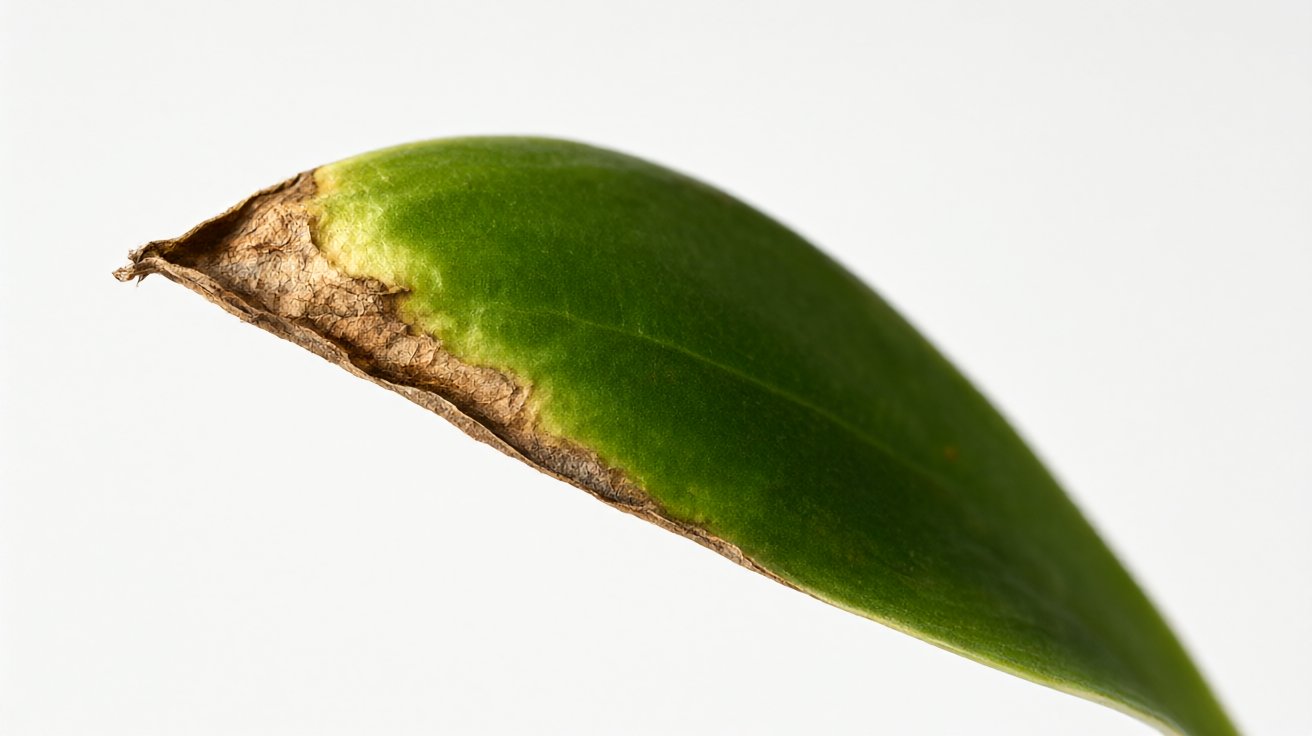
Brown tips on houseplant leaves are the most common cosmetic complaint in indoor gardening, and they are almost never a sign that the plant is dying. The tip of a leaf is the last place water and nutrients reach, so it is the first place to show stress when something in the growing environment is slightly off. In most cases the plant is healthy below the brown edge and will keep growing for years if you identify the specific cause and adjust one variable. The brown tissue itself will not turn green again, but you can prevent new damage and trim the affected tips for appearance.
Five causes account for nearly all brown-tip cases on houseplants: low humidity, salt buildup from fertilizer or tap water, underwatering, tap water chemicals (fluoride and chlorine), and over-fertilizing. Each produces a slightly different pattern on the leaf, and each has a different fix. The decision tree below takes about three minutes and tells you which cause matches your plant and your growing conditions.
Brown-Tip Diagnostic Decision Tree
Work through these checks in order. Stop at the first check that matches your plant, because multiple causes can produce brown tips and the first match is usually the dominant one.
Check 1: The Humidity Test
Hold your hand about 6 inches above the soil surface for 10 seconds. If the air feels dry and your skin tightens, the humidity around the plant is likely below 40 percent. Most tropical houseplants, including peace lilies, calatheas, and ferns, need 50 to 60 percent humidity. Below 40 percent, the leaf tip loses moisture faster than the roots can replace it, and the tissue dies from the tip inward. The brown edge is dry and papery, not mushy. If this matches, skip to the humidity fix in the protocol section.

Check 2: The Salt Ring Test
Look at the inside rim of the pot and the surface of the soil. A white or yellowish crust on the pot rim or soil surface indicates salt buildup from fertilizer or hard tap water. Salts accumulate because water evaporates from the soil surface and leaves dissolved minerals behind. When salt concentration in the root zone exceeds 2.0 dS/m (measured as EC), the roots cannot absorb water efficiently, and the leaf tip browns from osmotic stress. If you see a crust, the cause is salt buildup regardless of humidity.
Check 3: The Soil Moisture Test
Insert a finger or moisture meter to the bottom third of the pot. If the soil is bone dry at depth, the plant has been underwatered. Underwatering causes brown tips because the plant sacrifices the oldest, most distant tissue, the leaf tip, to conserve water for the roots and new growth. The brown edge is dry and crispy, and the soil pulls away from the pot sides. If the soil is uniformly moist, underwatering is ruled out.
Check 4: The Water Source Test
If humidity is adequate, no salt crust is visible, and soil moisture is normal, consider your water source. Municipal tap water often contains fluoride at 0.7 to 1.2 ppm and chlorine at 1 to 4 ppm. Fluoride accumulates in leaf tissue over months and causes brown tips on sensitive species, especially dracaenas, spider plants, and calatheas. The damage appears on the oldest leaves first and progresses slowly. If your plant is one of these sensitive species and you use tap water, fluoride is the likely cause.
Check 5: The Fertilizer Schedule Test
Review how often and how much you fertilize. Applying full-strength fertilizer more than once a month, or using a high-nitrogen formula at every watering, raises the salt concentration in the root zone above 2.0 dS/m. The symptom is brown tips on new growth, not old growth, because the fertilizer salts damage the youngest, most metabolically active root tips first. If you fertilize weekly or at full strength, over-fertilizing is the cause.
How Brown Tips Differ From Other Causes
Brown tips are a symptom, not a diagnosis. Several other conditions produce brown or damaged leaf tissue and lead to the wrong fix if you skip the checks above.
| Symptom pattern | Likely cause if soil is dry | Likely cause if soil is moist | First fix |
|---|---|---|---|
| Brown crispy tips, firm soil | Underwatering or low humidity | Salt buildup or tap water chemicals | Soil moisture test, then flush or humidify |
| Brown mushy tips, soft tissue | Fungal or bacterial infection | Overwatering with poor drainage | Inspect roots, improve drainage |
| Yellow leaves with brown tips | Nutrient deficiency plus dry soil | Overwatering damaging roots | Check roots first, then adjust watering |
| Brown spots in leaf center, not tips | Sunburn from direct light | Fungal leaf spot | Move away from direct sun, remove affected leaves |
| Brown tips on new growth only | Over-fertilizing | Over-fertilizing with excess salts | Flush soil, reduce fertilizer |
The counterintuitive point: brown tips on a plant that is otherwise growing well and producing new leaves are almost never an emergency. The plant is healthy enough to keep growing; it is simply telling you that one environmental variable is slightly off. Correcting that variable stops the damage, and the plant outgrows the cosmetic imperfection within one to two growing seasons.
Fix Protocols by Cause
Once you have identified the cause from the decision tree, apply the matching protocol. Each protocol targets the specific mechanism behind the symptom.
Low Humidity Fix
Group plants together to create a shared humidity microclimate. A cluster of three to five plants raises the local humidity by 5 to 10 percent through transpiration. Place a pebble tray under the pot: a shallow tray filled with pebbles and water, with the pot sitting on the pebbles above the water line. The evaporation raises humidity at leaf level by 10 to 15 percent. For severe cases, a small humidifier running for 4 to 6 hours daily near the plant raises ambient humidity to 50 to 60 percent. Avoid misting leaves directly, because water droplets on foliage encourage fungal growth and do not raise ambient humidity meaningfully. Recovery appears as new growth without brown tips within 2 to 4 weeks.
Salt Buildup Fix
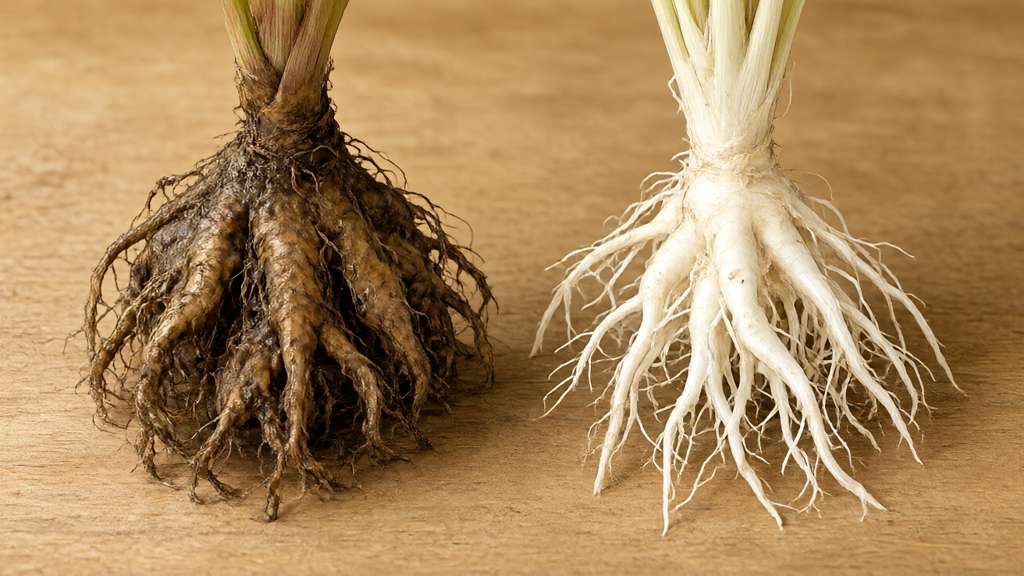
Flush the soil to leach accumulated salts. Take the plant to a sink or bathtub. Pour water slowly through the soil until water runs freely from the drainage hole, using a volume equal to twice the pot volume. For a 6-inch pot, pour about 2 liters of water over 5 to 10 minutes. Let the pot drain completely. Do not let the plant sit in the runoff. Repeat this flush once every 3 to 4 months as prevention. After flushing, do not fertilize for at least 4 weeks to let the root system recover from osmotic stress. New growth should appear without brown tips within 3 to 6 weeks.
Underwatering Fix
Water thoroughly until water runs from the drainage hole, then let the top 2 inches of soil dry before watering again. For a plant that has been chronically underwatered, the soil may have become hydrophobic and water runs off the surface without penetrating. In that case, bottom-water: place the pot in a basin of water for 30 to 45 minutes so the soil absorbs water from below. Remove and let drain. Establish a consistent schedule based on soil moisture, not calendar days. Most houseplants need watering every 7 to 14 days depending on light, temperature, and pot size. Recovery appears as new growth without browning within 2 to 3 weeks.
Tap Water Chemicals Fix
Switch to filtered water, distilled water, or rainwater for sensitive species. If you must use tap water, let it sit in an open container for 24 hours to allow chlorine to off-gas. Fluoride does not off-gas and requires filtration or distilled water. For dracaenas, spider plants, and calatheas, the switch to filtered water typically stops new brown tips within one watering cycle. Existing brown tips remain but do not spread. A simple carbon filter pitcher removes most chlorine and some fluoride; a reverse osmosis system removes both completely.
Over-Fertilizing Fix
Stop all fertilizer immediately. Flush the soil using the salt buildup protocol above. Do not fertilize again for 6 to 8 weeks. When you resume, use a balanced liquid fertilizer at half the recommended strength, applied once every 4 to 6 weeks during the growing season (spring through early autumn). Never fertilize a plant that is stressed, dormant, or recently repotted. The root system needs time to recover from salt damage before it can process nutrients again. New growth should appear healthy within 4 to 6 weeks.
Species-Specific Brown-Tip Notes
Brown tips behave differently across species because leaf anatomy, root sensitivity, and water requirements vary.
Dracaena (Corn Plant, Mass Cane)
Dracaenas are the most fluoride-sensitive common houseplant. Even 0.5 ppm fluoride in tap water causes brown tips over 3 to 6 months. Switch to distilled or filtered water immediately. Dracaenas also prefer dry soil between waterings; overwatering causes yellowing before browning. If brown tips appear alongside yellow lower leaves, check soil moisture before blaming the water source.
Spider Plant (Chlorophytum comosum)
Spider plants develop brown tips from fluoride, chlorine, and salt buildup simultaneously. They are sensitive to all three. Use filtered water, flush soil every 3 months, and fertilize at quarter strength. Spider plants also produce more brown tips in dry winter air; a pebble tray or humidifier helps during heating season.
Calathea and Maranta (Prayer Plants)
Calatheas need 60 percent or higher humidity and are extremely sensitive to tap water. Brown tips on calatheas almost always indicate low humidity combined with tap water chemicals. Use distilled water, maintain humidity above 60 percent, and avoid direct sunlight. Calatheas also dislike cold drafts; a plant near an air conditioning vent will develop brown tips within weeks even if humidity is adequate elsewhere in the room.
Peace Lily (Spathiphyllum wallisii)
Peace lilies show brown tips from low humidity, underwatering, or over-fertilizing. They are less sensitive to tap water than dracaenas or calatheas. A peace lily that wilts dramatically, recovers after watering, but has brown tips is likely underwatered or in low humidity. Check the soil moisture pattern before adjusting fertilizer.
Palms (Areca, Parlor, Kentia)
Palms develop brown tips from salt buildup, low humidity, and over-fertilizing. They are particularly sensitive to potassium deficiency, which causes browning at the leaf tip that spreads inward along the margin. If brown tips appear alongside yellowing of older fronds, test soil EC and consider a palm-specific fertilizer with micronutrients. Palms also need consistent moisture; letting the soil dry completely between waterings stresses the root system and produces brown tips within 2 to 3 weeks.
Prevention: 5 Habits That Stop Brown Tips
Prevention is simpler than treatment. These five habits address the root causes rather than the symptom.
- Water with filtered or distilled water for sensitive species (dracaenas, spider plants, calatheas, palms). For tolerant species, tap water is fine if you let it sit 24 hours for chlorine off-gassing.
- Flush soil every 3 to 4 months with a volume equal to twice the pot volume. This prevents salt accumulation regardless of water source or fertilizer type.
- Fertilize at half strength once every 4 to 6 weeks during the growing season. Skip fertilizing entirely during autumn and winter when growth slows.
- Maintain humidity above 50 percent for tropical species. Group plants, use pebble trays, or run a humidifier during heating season.
- Water when the top 2 inches of soil are dry, not on a fixed calendar schedule. Soil moisture varies with light, temperature, and season, so a weekly schedule often leads to either overwatering or underwatering.
Should You Trim Brown Tips?
Trimming is cosmetic, not curative. If you trim, use clean sharp scissors and cut just inside the brown tissue, leaving a thin brown margin. Cutting into green tissue creates a new wound that may brown again. Do not trim more than 20 percent of the leaf area at once, because removing too much photosynthetic surface stresses the plant. If the entire leaf is brown and crispy, remove it at the base rather than trimming. Trimming is worth doing for appearance, but the fix is environmental, not surgical.
Last reviewed on 2026-11-10
Sources and further reading
University of Maryland Extension, “Houseplant Problems: Brown Leaf Tips,” extension.umd.edu. Clemson Cooperative Extension, “Houseplant Care: Water Quality and Salt Buildup,” clemson.edu/extension. University of Florida IFAS Extension, “Environmental Stress on Indoor Plants,” edis.ifas.ufl.edu. Royal Horticultural Society, “Houseplant Care: Humidity and Temperature,” rhs.org.uk.