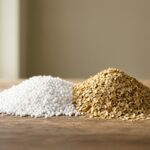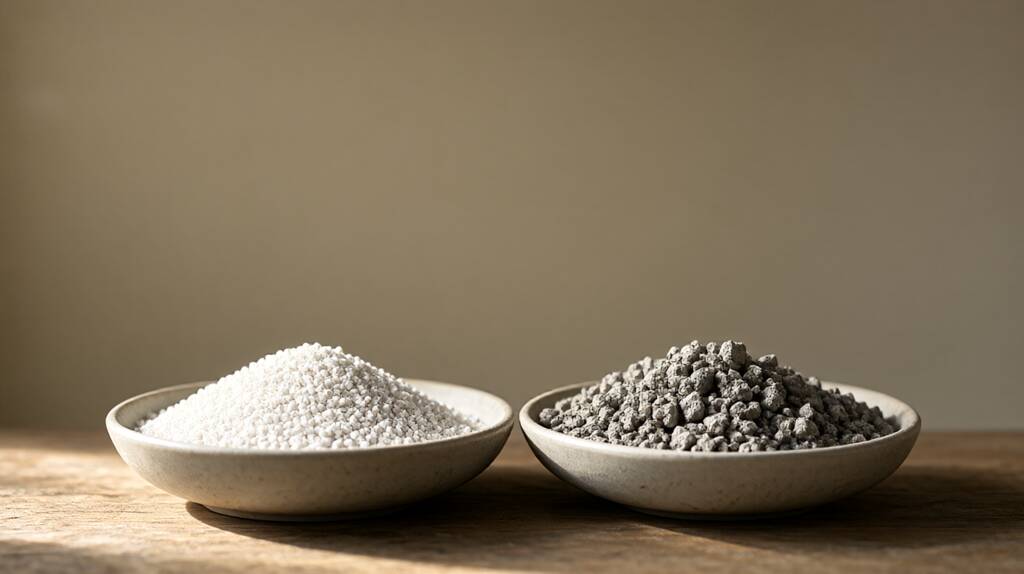

Perlite and pumice do the same job in a potting mix. Both create air channels so roots can breathe. Both improve drainage. Both are mineral-based and do not decompose. The difference is physical, and it shows up over time.
Perlite is featherlight, cheap, and floats. Pumice is denser, more expensive, and stays where you put it. For plants you repot every year, perlite is the sensible buy. For long-cycle pots, pumice earns its higher price.
What Each One Does
Perlite is expanded volcanic glass. It is extremely light, with high porosity and fast drainage. It holds a thin water film on its surface but releases most water under gravity. It does not hold moisture inside the particle.
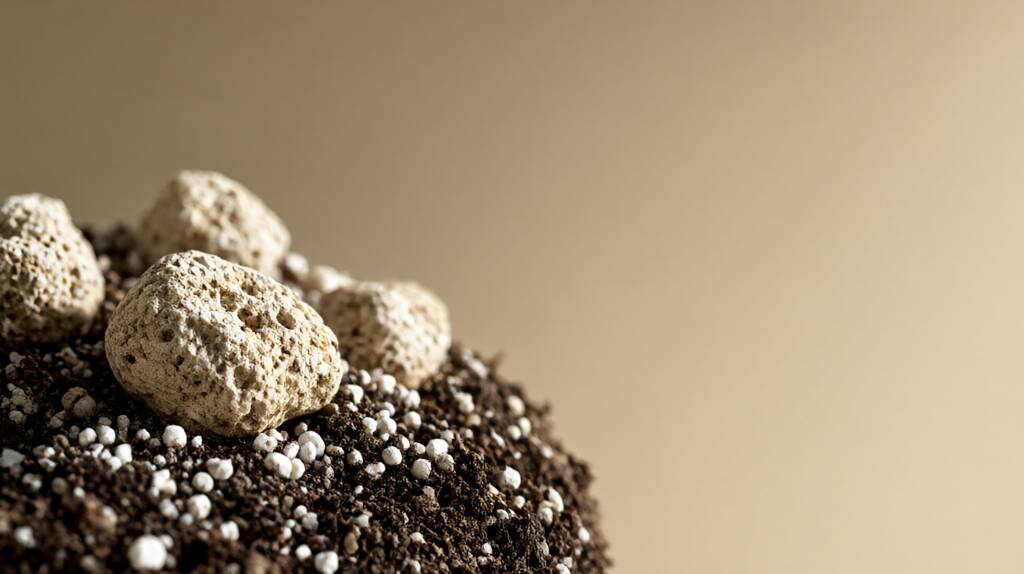
Pumice is a volcanic rock that is naturally porous. It is heavier than perlite and holds water inside its pores, releasing it slowly. It is more durable and does not break down or float.
Both improve aeration and drainage. The difference is in weight, durability, and how they handle water over time.
Weight, Durability, and Floating
Perlite floats. Every time you water from the top, more perlite migrates to the surface. Within a year, a visible white crust of perlite sits on top of the mix. This is cosmetic but also means the aeration is no longer distributed through the root zone.
Pumice stays in place. It does not float, and it does not break down. A pumice-amended mix keeps its structure for years, which matters for plants that stay in their pots for multiple seasons.
Perlite also crushes. Its particles are fragile and break down under the weight of watering and root growth. Pumice resists compaction and lasts longer in the pot.

Water Retention Differences
Perlite holds water only on its surface. It drains fast and does not provide moisture between waterings. Pumice holds water inside its pores and releases it slowly, providing a moisture buffer.
This makes pumice better for plants that prefer steady moisture without sogginess, such as alocasias, anthuriums, ferns, and calatheas. Perlite is better for plants that need fast drainage and dry cycles, such as succulents, cacti, and most aroids in chunky mixes.
Which Plants Prefer Which
Perlite suits succulents, cacti, propagation, and seed starting. Its lightness makes it easy to mix in large volumes, and its low cost makes it practical for short-cycle pots. It is the default for most houseplant mixes because indoor plants die more often from overwatering than underwatering.
Pumice suits aroids, bonsai, orchids, and long-term pot setups. Its durability and stability make it the better choice when the plant stays in its pot for years. It also adds ballast to top-heavy plants in light pots.
For a detailed guide on perlite in potting mixes, see how to use perlite in potting soil and perlite particle sizes and grades.
Can You Use Both Together
Yes. A common ratio for high-performance houseplant mixes is 60 percent peat-free houseplant compost, 20 percent pumice, 10 percent perlite, and 10 percent fine bark. The pumice holds moisture and stays put, the perlite adds extra aeration in the short term, and the bark contributes coarse structure.
The blend works because the two materials complement each other. Pumice provides the long-term structure, perlite provides immediate aeration, and the organic component provides water and nutrients.
How to Choose
Choose perlite when the pot turns over quickly. Annual repottings, propagation boxes, seed starting, and vegetable containers never live long enough for crush-down or floating to matter, so perlite’s price advantage wins.
Choose pumice when the pot is a long-term home. Chunky aroid mixes, top-heavy plants, succulents in gritty blends, and any mix you intend to rinse and reuse favor pumice. Paying more for the fraction that never wears out is the honest math when the organic fraction is the only part that needs replacing.
The particle size matters more than the material. Coarse grades, 2 to 6 millimeters, create more air space. Fine grades pack tighter and hold more water. Match the grade to the plant’s root habit and container depth.
Last reviewed on November 9, 2026
Sources and further reading: Grow Tropicals, perlite vs pumice for houseplants; The Plant Seed, perlite vs pumice mix ratios; Garden Guides, perlite vs pumice.